Pickleball tips: Parris Todd's two-handed backhand counter
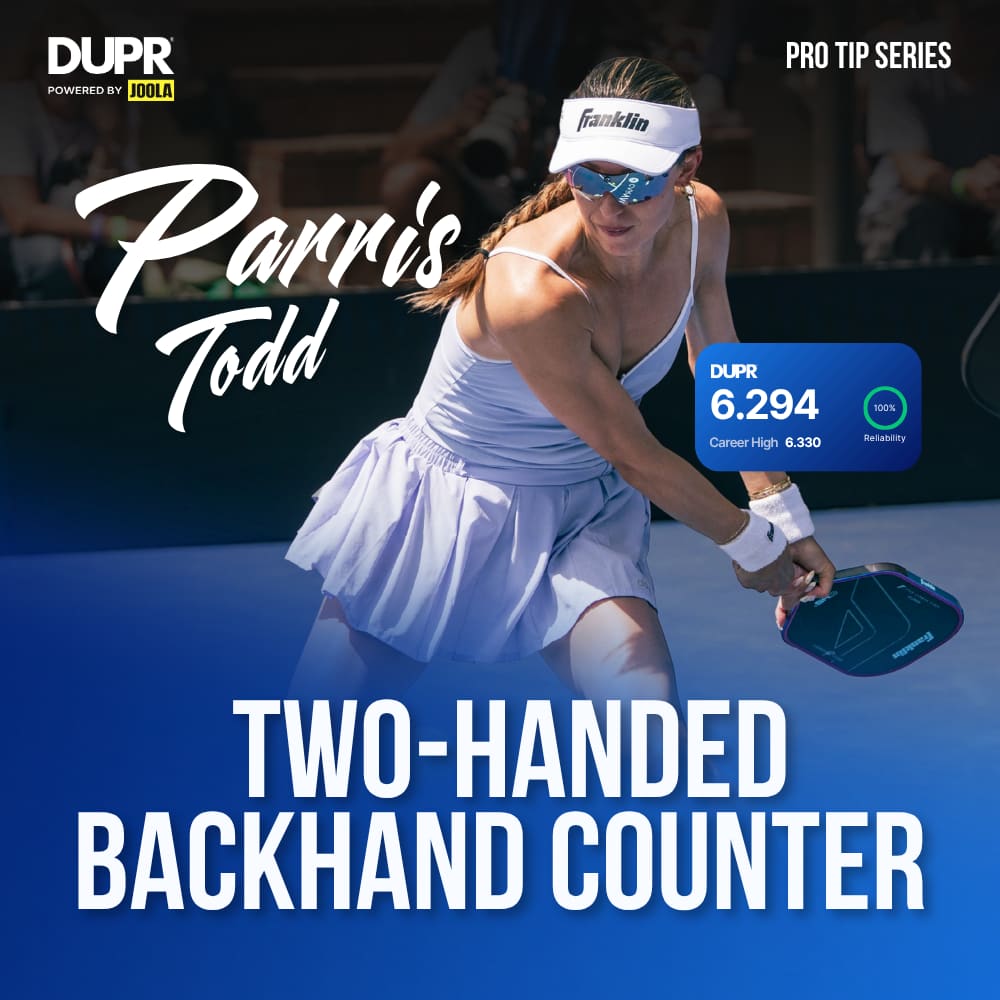
Your opponent loads up on a dink, and a split second later the ball is at your chest. You get jammed, pop it up, and the point is over. PPA pro Parris Todd lives for that moment.
Todd's two-handed backhand counter is her signature shot, and in a recent video lesson she broke down exactly how she hits it. These pickleball tips cover what to watch for, where to stand, how to generate power without a big swing, and the mistakes most players make.
Step 1: Read the speed-up before it comes
The counter starts before your opponent makes contact. Todd watches the player across from her, not just the ball.
"If I feel like you're taking a slightly bigger swing, then I'm going to make sure I load my body, I get ready, and I recognize that it's coming towards me," she says.
A bigger backswing during a dink rally is the tell. Once you see it, shift your body slightly, then turn to set up the counter. The earlier you recognize it, the more time you have.
Step 2: Take away your opponent's easiest shot
Where you stand matters as much as how you swing. When the ball is in front of you, cover the line. Speeding up down the line is the easiest shot for your opponent, and speeding up across their body is the hardest.
So when you dink to the line, follow the ball and shift over. If you dink there and stay put, "I give you all of this court opening," Todd says.
Here's a simple cue: wherever your dink bounces on your opponent's side, get your chest in front of it. That puts you in line with the most likely speed-up.
This only works with a partner who moves with you. When one player shifts wide, sometimes even off the court, the other needs to squeeze the middle. Drift apart and you leave a gap your opponents will find.
Step 3: Turn your core instead of swinging
This is where most players go wrong. They see a fast ball and take a big swing at it. Todd's counter is compact.
Start in a ready position with your paddle in the middle, hands about belly-button height. When you recognize the speed-up, turn your body. That turn loads your core, and it's where the power comes from while you absorb your opponent's pace.
Why not swing bigger? "If I took a big swing on this shot, I would probably be late on the ball," Todd says. Counters come back fast, and an oversized swing means you either miss or aren't ready for the next ball.
Step 4: Hit flat and push through
Todd makes contact in line with her hips and belly button, then pushes the ball forward. Her shoulders stay square to the net. She doesn't finish over her shoulder or rotate too far.
She also hits it mostly flat. With today's faster paddles and balls, trying to come under the ball for spin is a timing risk. "I'd rather just make contact directly here, a little bit more flat, and then push it through," she says.
There's one exception. If the ball is below the net, you need to brush up on it to get it over. Hit a low ball flat and "you're either going to hit it 10 feet out or you're going to hit it in the net."
- Ball at hip height or higher: come straight across and push
- Ball below the net: brush up to add shape
How to avoid getting jammed
What about a speed-up aimed right at your body? Todd starts sliding as soon as she sees the bigger swing, before she knows exactly where the ball is headed.
"I kind of guess in the beginning slightly, and then if I'm wrong, I just clean it up and reset," she says.
On the right side, she favors her backhand and slides to create space for it. If the ball still catches her in the body, she takes one more step or switches to a forehand. And if she's late, she resets instead of forcing the counter.
The mistakes Todd sees most
When Todd critiqued a player's counter during the lesson, she spotted two mistakes that show up at every level:
- Brushing under a fast ball. Spin takes time you don't have at the kitchen line. Come straight across instead.
- Pulling away at contact. Stay with the ball as it comes to you, then push. Your follow-through should finish in front of you, not all the way across your body.
How a better counter shows up in your DUPR rating
Hands battles decide a lot of points, and winning more of them changes your scores even in matches you lose. That matters because DUPR measures how you perform compared to what's expected based on the ratings on court.
Turning a few jammed pop-ups per game into clean counters or resets can be the difference between an 11-7 loss and an 11-9 loss. DUPR notices that gap. To see how specific scores could move your rating, check DUPR Impact in the app's Forecast tab.
Start with one piece. Next time you drill, have a partner speed up from the dink and focus only on turning instead of swinging. Then take it into a rated match, log it in DUPR, and see how your scores respond. If you want eyes on your technique, find a DUPR coach near you.

OTRAS HISTORIAS DESTACADAS
Consulte nuestras otras historias que pueden interesarle