How to Make Your Opponents Miss More: 5 Tips by Ashley Griffith

You don't always need a winner to win the point. Sometimes the best shot is the one that makes your opponent uncomfortable enough to miss.
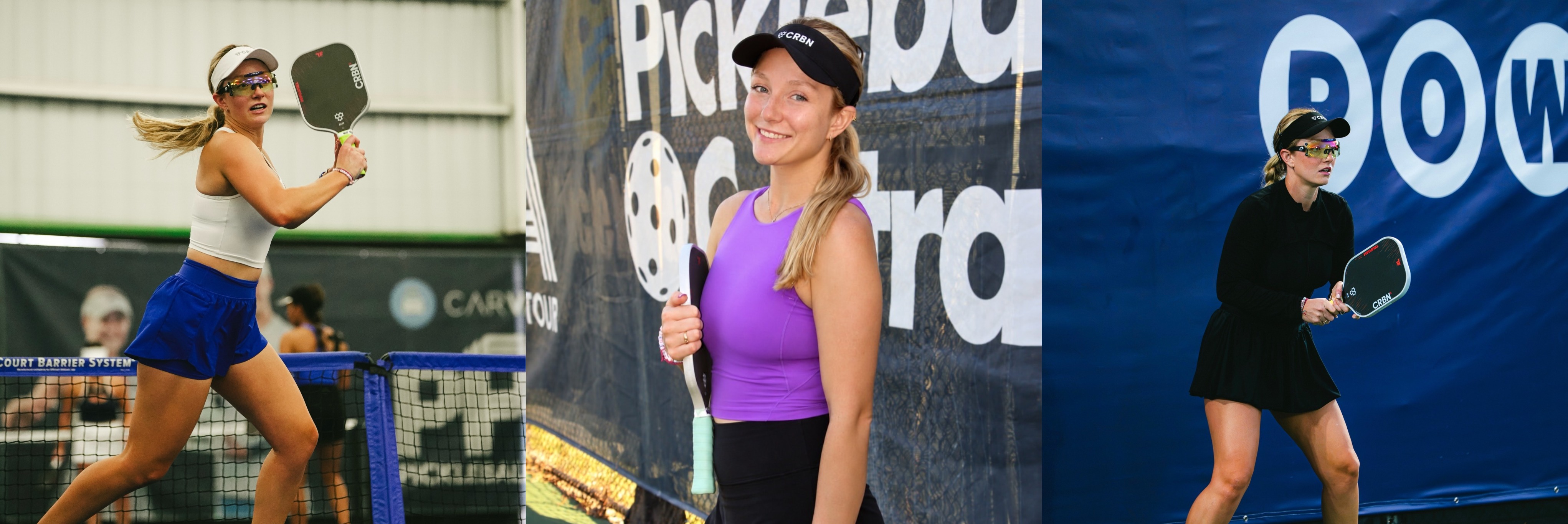
That's the idea behind PPA Tour pro and coach Ashley Griffith's latest video, "5 Pickleball Tricks That Make Your Opponents Miss More" on YouTube. She breaks down five simple ways to get more mistakes from the other side of the net, and you can start using every one of them the next time you play. Whether you're a 3.0 or working toward a higher pickleball rating, these are the habits that separate players who wait for errors from players who create them.
And stick around for tip #5. Ashley calls it the most important one, and it has nothing to do with hitting a better shot.
Tip #1: Make Them Hit on the Move
Anyone can miss, but it's a lot harder to mess up when you're balanced and in perfect position. So take that away from your opponents.
Ashley's goal on every ball is to have the other side on one foot, falling back, or running forward. Never make it easy for them.
- Hit where they're not. It sounds obvious, but it's the number one way to move someone.
- Pair deep with short. If they're falling back after a deep ball, bring them forward next.
- Be intentional. Don't just get the ball back for the sake of getting it back. Ask yourself what the hardest shot for them is right now.
Pro insight: Keeping your opponent off balance doesn't just earn errors. It also means the balls they do get back come in weaker.
Tip #2: Make Them Contact the Ball Low
This one goes hand in hand with tip #1. Low balls are hard to hit, whether it's a reset, a reach, or a dig at your feet. High, floaty balls are easy to attack.
Keep it low from every part of the court:
- At the kitchen: low dinks, drives, and drops are much harder to handle than ones that sit up.
- In the transition zone: a ball at their feet is far tougher than one they can take at waist height.
- From the back court: the higher and loopier the bounce, the easier it is for them to drive it through.
Quick tip: Aim for your opponent's feet in every area of the court. The lower their contact point, the harder it is for them to come forward.
Tip #3: Find the Shot They Don't Want to Hit
This is more strategy than technique. No matter how good or bad your opponents are, there's always a shot they don't want to hit. Your job is to find it fast and make them hit it again and again.
Ashley shared an example from the first round of women's doubles at her last tournament, where she scouted each opponent separately:
- Opponent one wasn't comfortable with rolled dinks, so Ashley kept roll dinking to her.
- Opponent two didn't move as well, so Ashley focused on moving her instead: dropping her when she was back and giving her different balls at the kitchen.
Then she stayed mindful of both weaknesses for the rest of the match.
Pro move: Look for the weak shot during the warm-up, the first few points, or by watching them play beforehand. As you target the weakness, the errors start to pile up.
Tip #4: Break Their Rhythm
Ashley calls this one super underlooked. Every opponent has a rhythm they like, and your goal is to disrupt it:
- Against a banger: hit lots of drops, soft shots, and slice.
- Against a soft, reset-heavy player: speed it up and drive more balls at them.
- Against someone who takes their time between points: keep the pace of play fast.
- Against someone who plays fast: slow it down with a towel break, a timeout, or retying your shoe.
It applies within rallies too. If your opponent is loving their forehand cross-court dink, change the pattern and send it somewhere else.
Pro insight: It works both ways. If your own rhythm is working, whether that's playing fast or staying soft, stick with it. Stay in your comfort zone and pull them out of theirs.
Tip #5: Make Them Play One More Ball
Ashley's most important tip: consistency over everything. You can't control when an opponent hits a great shot, but you can control your unforced errors, and her number one priority is getting them as close to zero as possible.
A lot of players get caught up chasing the perfect shot. Ashley's order of operations:
- Before the fancy topspin serve, be able to make 100 flat serves.
- Before the speed-up at the kitchen, make a lot of solid dinks.
- Before perfect target, spin, or pace, make one more ball.
Pro move: Stay aggressive and go for your shots, but in your next match, prioritize just getting one more ball in. The difference is huge.
Ready to Make Them Miss?
You don't need harder shots to create pressure. You need smarter ones. Move them, keep their contact point low, find their weaker shot, break their rhythm, and make them play one more ball. As Ashley puts it, you can create a lot of pressure with simple shots as long as you choose them with purpose, and your DUPR rating will show it.
Put these tips to work. Use the DUPR app to find players at your level, then sign up for a pickleball tournament and see how many errors you can force. Want more from Ashley? Check out her 5 pickleball IQ tips.
Follow Ashley on YouTube and Instagram for regular coaching tips. And for the latest on ratings, tournaments, and the pickleball community, follow DUPR on Instagram.

OTRAS HISTORIAS DESTACADAS
Consulte nuestras otras historias que pueden interesarle