No matching results.
Search results
December 18, 2025
Introducing DUPR Replay: Your 2025 Pickleball Season, Replayed
Your 2025 DUPR Replay is officially live in the DUPR app and it’s your personal recap of the year, built entirely from real match data.
DUPR Replay gives you a full breakdown of how you performed on court this year, highlighting the matches, moments, and milestones that defined your season. No estimates. No guesses. Just your data.
What You’ll See in Your DUPR Replay
Your Replay includes a detailed snapshot of your year in pickleball, including:
- Total match count
- Overall win–loss record
- Your highest DUPR rating of the year
- How many times you played at your club
- Your most frequent playing partner
- A few surprises we think you’ll love
👉 View Your DUPR Replay in the App
* A minimum of 5 matches is required in each category
* Users must have the latest version of the DUPR app
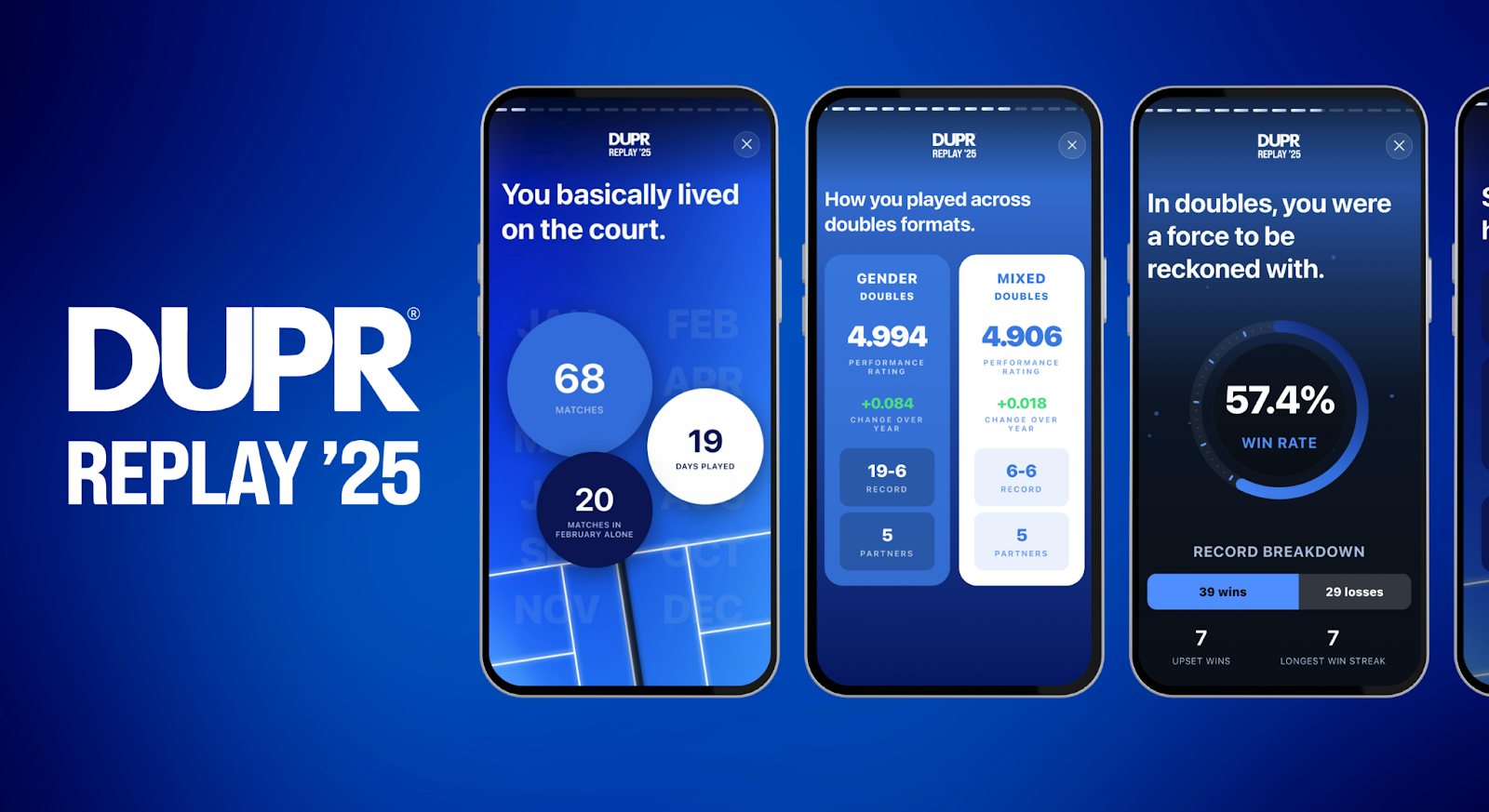
Put Your Stats on Display
Your season deserves to be shared.
You can now easily share your DUPR Replay directly to Instagram and Facebook. Tag @duprpb, show off your stats, and let your performance do the talking.
We’ll be featuring Replays from players across the community from rec warriors to tournament grinders.
Want Even More Insights?
DUPR Replay is just the beginning.
DUPR+ subscribers unlock access to deeper data, advanced trends, and ongoing performance insights, plus continuous Replay updates as you keep competing.
Upgrade to DUPR+ and turn every match into meaningful progress.
Community
DUPR Ratings
December 17, 2025
‘Legal’ vs. ‘Illegal’ Pickleball Paddles
Understanding the Difference Between Approved and Non-Approved Paddles
What You Need to Know Before Your Next Match
If you’ve ever played in a pickleball tournament, you’ve probably heard players talking about approved vs. non-approved paddles. As pickleball technology continues to advance, governing bodies and event organizers are placing greater emphasis on paddle compliance to ensure fair competition.
What “Approved” Actually Means
Approved paddles meet specific standards set by the sport’s governing bodies. These standards ensure the paddle performs within acceptable limits for:
- Surface roughness
- Deflection and stiffness
- Spin production
- Material durability
- Noise concerns on certain courts
- Overall design specifications
When a paddle is approved, it means it has passed testing to ensure it does not provide an unfair advantage.
In contrast, non-approved paddles may exceed limits for grit, core compression, deflection, or use materials that don’t pass testing protocols. While these paddles can be fun to use in recreational play, they are not legal for structured or regulated competition.
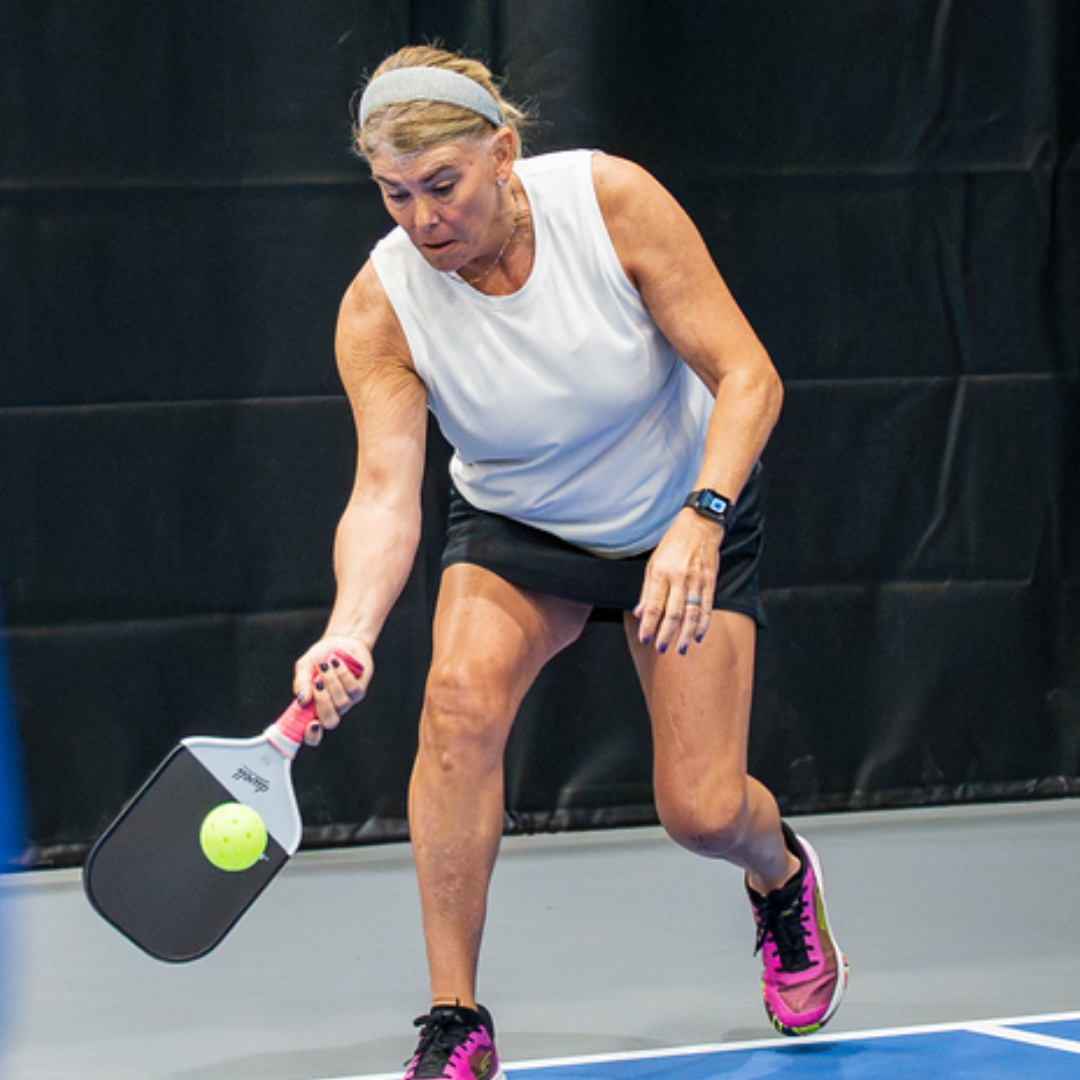
Why Paddle Approval Matters
Any regulated event requires paddles to be on an approved list to maintain an even playing field. Small differences in paddle design can significantly affect ball speed, spin, and control. Here’s why approval matters:
- Competitive fairness: All players compete within the same equipment boundaries.
- Match integrity: Results recorded in systems like DUPR reflect skill, not equipment advantages.
- Eligibility: Many events require approved paddles for matches to count.
- Consistency: Approved paddles are tested to ensure predictable performance.
What Makes a Paddle Non-Approved
Official pickleball rules allow paddles with a maximum combined length and width of 24 inches (60.96 cm) and a maximum length of 17 inches (43.18 cm). Some of the most common reasons a paddle may be considered illegal include:
- Excessive surface roughness: Produces too much spin and creates imbalance.
- Deflection or power levels that are too high: Stores and releases energy beyond allowed limits.
- Unregulated materials: Certain composites or internal structures may not meet specifications.
- Manufacturing inconsistencies: Variations in production can push performance outside limits.
- Post-purchase modifications: Sanding, weighting, or surface alterations can invalidate approval.
Approved vs. Non-Approved: What Players Experience
Approved Paddles
- Consistent performance across batches
- Controlled spin and power within limits
- Predictable sweet spot behavior
- Eligible for tournament and league play
Non-Approved Paddles
- Often feel “hotter” with extra spin or power
- Can be fun in casual play
- Risk of disqualification or match reversal in events
- Matches may not count toward DUPR ratings
How to Know If Your Paddle Is Approved
Here are a few ways to check your paddle’s status:
- Check the manufacturer’s website: Reputable brands list approved models. All the paddles for sale at shop.dupr.com are approved as well.
- Inspect the paddle: Many approved paddles include a certification stamp.
- Confirm with the event organizer: Some tournaments publish approved equipment lists.
- Avoid modifications: Even approved paddles can become illegal if altered.
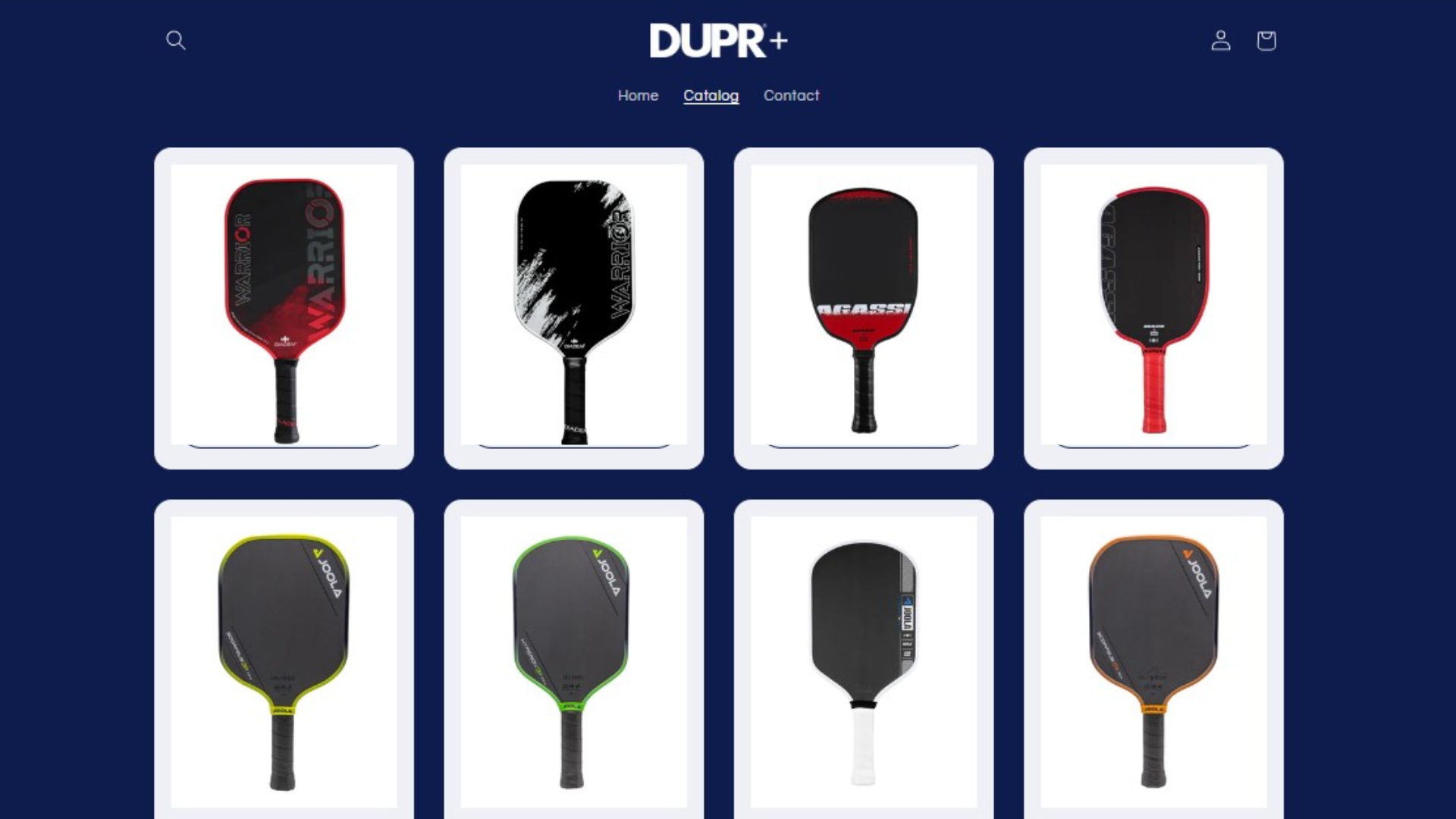
What This Means for DUPR and Tournament Play
While recreational play is flexible, structured events rely on equipment integrity. Since match data affects ratings, rankings, and qualification, organizers aim to ensure all players compete with compliant equipment.
Using a non-approved paddle in competitive play may result in:
- Warnings
- Paddle inspections
- Match disqualification
- Results not counting toward your DUPR rating
Final Takeaway
The difference between approved and non-approved paddles comes down to fairness, integrity, and consistency. Approved paddles meet established standards designed to create an even playing environment, while non-approved paddles may offer unintended performance advantages.
If you plan to play in leagues, DUPR events, or tournaments, using an approved paddle ensures your equipment is eligible, your matches count, and your competitive experience stays smooth and interruption-free. DUPR+ players have access to huge discounts on pickleball paddles. Check out the DUPR shop and get the best paddle for you today.
Pickleball Rules
Pickleball Tips
Pickleball Tournaments
December 15, 2025
DUPR Announces Plan to Integrate AI-Powered Ratings in 2026
Today, DUPR is taking a major step forward with the launch of DUPR AI.
By partnering with some of the best video and hardware technology providers in the world, we are beginning to unlock a new layer of understanding in pickleball performance. When a match is captured on video, DUPR Vision enables AI-driven analysis that goes well beyond basic results.
This technology allows us to start identifying patterns such as:
- Shot selection and success rates
- Miss frequency and error types
- Targeting tendencies
- Consistency under pressure
- Relative performance within a match
Over time, this creates the foundation for deeper insights into how games are actually played, not just how they end.
DUPR AI opens the door to integrating these analytics responsibly into the rating ecosystem. As the data matures, video-backed performance signals can help inform how matches are weighted, how reliability evolves, and how we continue to improve rating accuracy at scale.
This is about building the future of measurement, one layer at a time.
More details, partners, and applications coming shortly.
The next chapter of pickleball analytics starts now.
Community
DUPR Ratings
Data
December 14, 2025
The Pickle Co Becomes the First DUPR Verified Club in Mexico City
Opening Dec 29, 2025
On December 29, The Pickle Co (MX) will open its first courts in Mexico City, officially becoming the first DUPR Verified Club in Mexico. Located in Polanco, one of the city’s most active and international neighborhoods, Pickle Co MX is designed to bring structure, accessibility, and a more professional pickleball experience to one of the largest cities in the world.
How Pickle Co MX Got Started
Founder Conor McGeehan and his fiancée started playing pickleball about two years ago and quickly fell in love with the sport. For them, pickleball became the first athletic activity they could truly enjoy together, since it was competitive yet accessible, and social but still skill-driven. That’s why many players see pickleball as the new Tinder as seen in this article.
But playing regularly in Mexico City wasn’t easy.
At the time, there were very few courts available, and reaching them often meant long drives through heavy traffic. For a city with nearly 22 million people, access to pickleball was extremely limited.
“What started as a personal frustration slowly turned into the idea of building something bigger,” Conor explains.
That idea eventually became The Pickle Co.
A Venue Built for Pickleball
Unlike many early pickleball locations that adapt existing spaces, The Pickle Co is being built specifically with pickleball in mind.
The club sits on a large lot in Polanco and will feature:
- 8 to 10 courts.
- Proper spacing around each court to allow free movement and competitive play
- A championship court with additional viewing space
- Plans for a pro shop, bar, and food options
- Full amenities including bathrooms and showers as the build-out continues
The goal is to create a space where players can play at a high level without feeling constrained by walls, tight layouts, or makeshift designs, while also offering a welcoming environment for new players.
Programming Focused on Growth
In its early stages, The Pickle Co is prioritizing one key objective: introducing more people to pickleball.
Mexico City has a large population of tennis players, padel players, ping-pong players, and people who have tried pickleball while traveling in the U.S. or Mexican beach towns, but many don’t currently have a convenient place to play.
Early programming will focus on:
- Beginner-friendly sessions and open play
- Introducing pickleball to players from other racket sports
- Creating easy entry points for people trying the sport for the first time
As the community grows, Pickle Co MX plans to expand into:
- Competitive open play
- Minor League Pickleball Leagues
- Singles-focused programming
- More structured competitive pathways
Why The Pickle Co Became a DUPR Verified Club
Becoming the first DUPR Verified Club in Mexico was a strategic decision.
Today, many strong pickleball players in Mexico either don’t have a DUPR rating or have ratings with low reliability scores due to the limited number of DUPR events in the country. This makes it difficult for players to enter rated tournaments, compete internationally, or accurately assess their level.
“We want players who care about competition to have a clear understanding of where they stand,” Conor says.
As a DUPR Verified Club, The Pickle Co aims to:
- Help players establish accurate DUPR ratings
- Improve competitive structure at the local level
- Reduce mismatches in tournaments and leagues
- Create better competitive experiences overall
Most players need a pickleball rating, and The Pickle Co wants to provide the structure and opportunities to make it happen.
A Long-Term Vision for Pickleball in Mexico
The DUPR club aims to become a flagship venue for pickleball in Mexico City, with long-term goals of expanding access to the sport and contributing to the growth of competitive pickleball across Mexico. Recent events like the Mexico Cup and international competition have already shown what Mexican players are capable of, and The Pickle Co hopes to help build on that momentum.
“Our goal is simple,” Conor says. “Get more people playing pickleball and give them a place where they can grow.”
Opening Timeline
- December 29: First courts open
- Early access available for founding members
- Additional courts and amenities to follow
- A larger formal opening planned for early 2026
More details on programming and opening events will be announced soon.
As a DUPR Verified Club, The Pickle Co gives its members access to DUPR Verified Events and a DUPR+ subscription, meaning Verified matches played at their club count 50% more toward their pickleball ratings.
Are you interested in becoming a DUPR Verified Club? Click here to apply.
Clubs
Community
December 12, 2025
2025 The Dink Minor League Pickleball National Championship: The Biggest Amateur Team Event in the World Wraps in Dallas
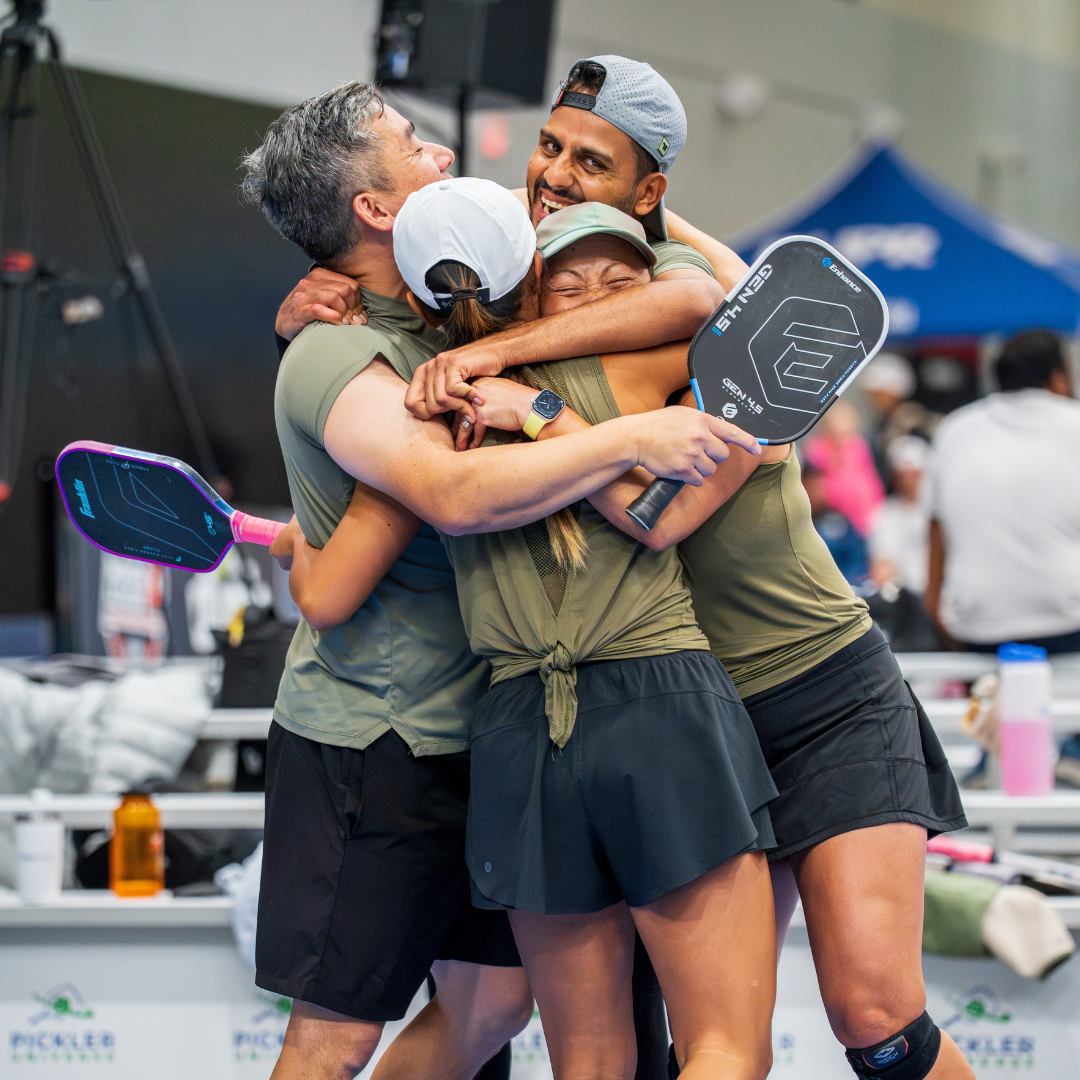
Dallas… WOW. What just happened at Pickler Universe was nothing short of historic. From the first serve to the final trophy lift, the 2025 The Dink Minor League Pickleball National Championship delivered everything that makes pickleball special: competition, community, and moments you’ll be talking about all year.
After five jam-packed days in Dallas, the world’s largest amateur team pickleball tournament officially wrapped with:
- 1,000 players
- 318 teams
- 9 international teams
- 35 U.S. states
- Players from 23 countries
- $100,000 prize purse
The medals have been handed out. The costumes are packed away for next year. And the last piece of confetti has been swept off Championship Court.
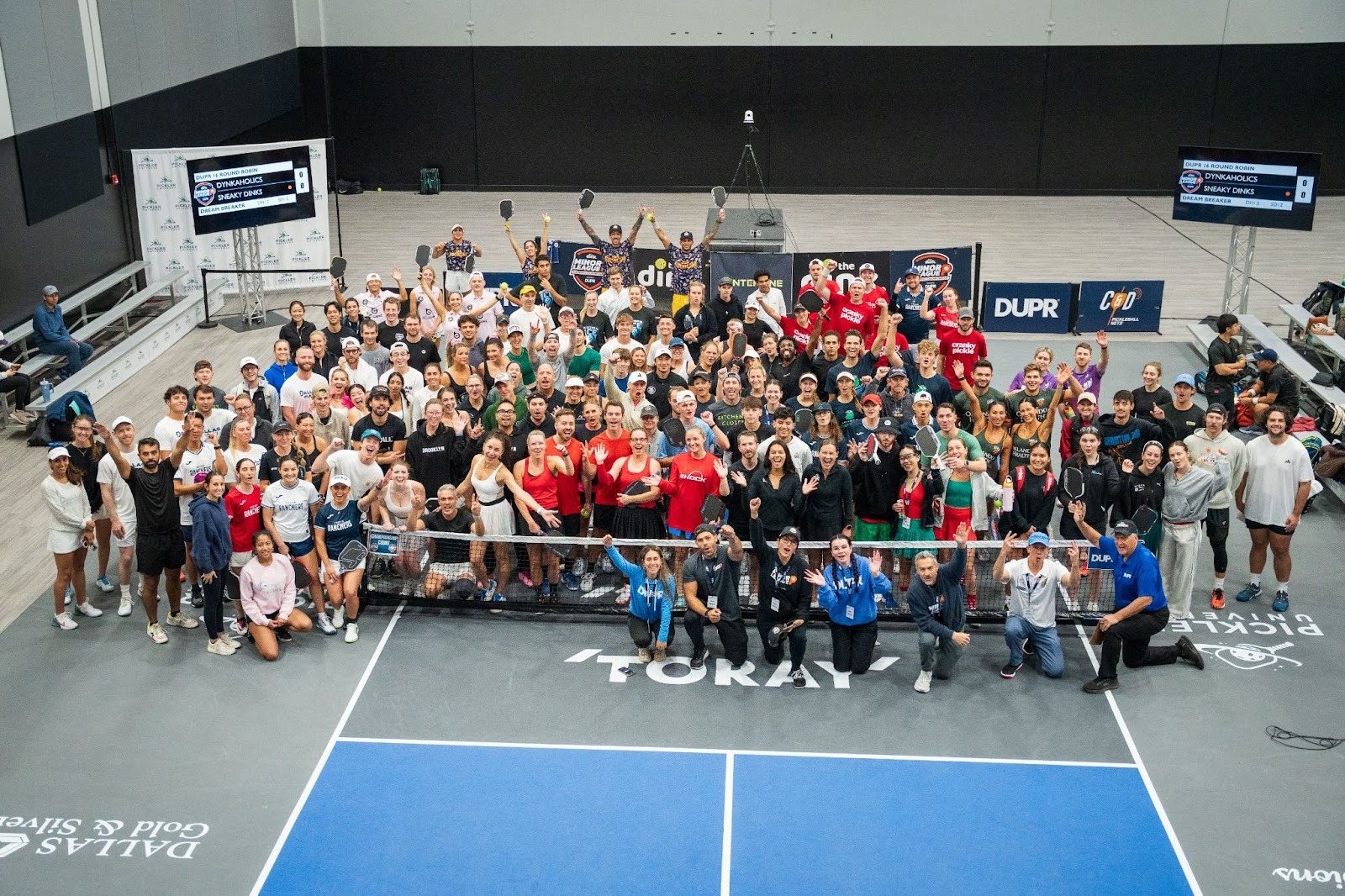
A Truly Global Championship
Pickleball players traveled to Dallas from every corner of the globe, turning the National Championship into a true international celebration of the sport’s explosive growth. We welcomed competitors from Romania, Israel, Japan, Latvia, Puerto Rico, Argentina, Venezuela, Brazil, Colombia, China, India, Australia, Italy, New Zealand, the Philippines, and many more, each bringing their own culture, passion, and competitive fire to MiLP’s biggest stage.
And the diversity didn’t stop there.
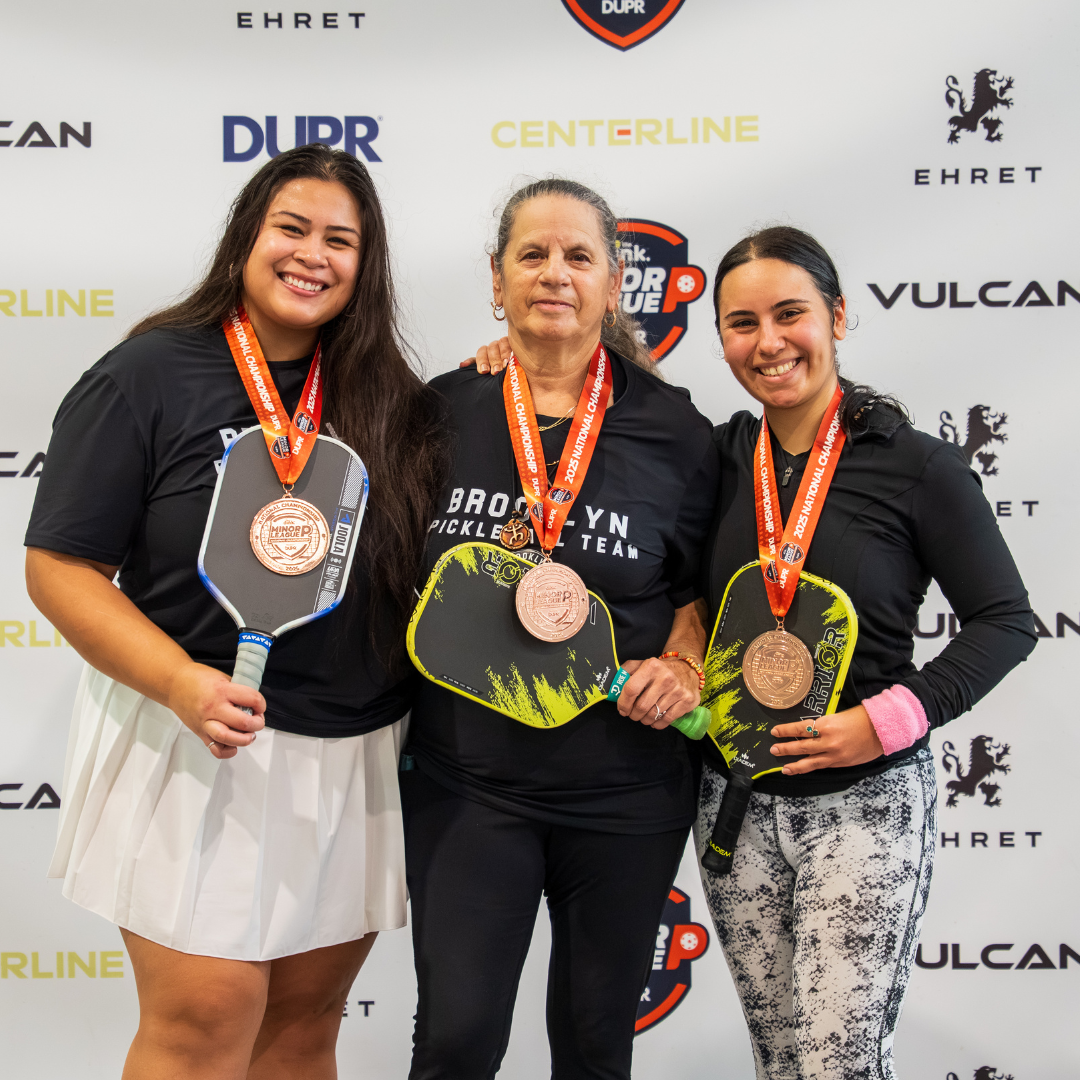
This championship showcased pickleball at every age and every level. Players ranged from just 10 years old to 76, proving once again that this sport truly is for everyone. At 76, Rochelle Martinez earned a bronze medal with her team in the Women’s DUPR 9 V3 category, an inspiring reminder that competitive pickleball has no age limit.
“I always knew that if I keep playing any kind of sport, it would keep me young…One of my friends took me to play pickleball, which I really didn’t want to play, but once I started playing it, I loved it” - Rochelle Martinez shared.
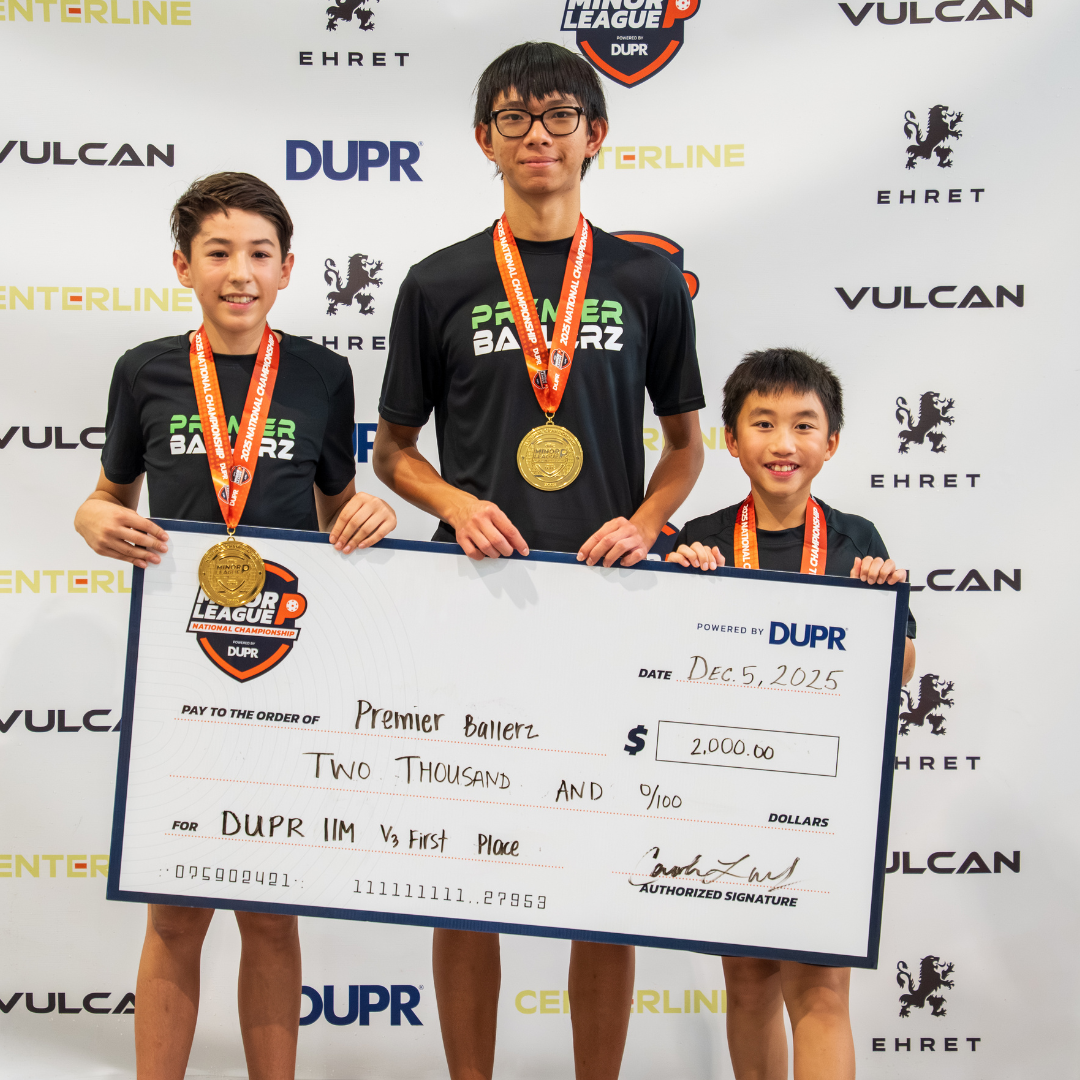
On the other end of the spectrum, 11-year-old Carsen Ngo captured a gold medal in both the Men’s DUPR 11 V3 division and DUPR 14 open age division, showing that the future of the sport is already here.
From rising juniors to seasoned competitors, the courts in Dallas reflected the full spectrum of what pickleball has become: a global, inclusive, and fiercely competitive community.
This Year By the Numbers
This was the largest MiLP National Championship in history:
- 1,300 total registrations
- 1,000 unique competitors
- 318 teams across all divisions
- Nearly 200 athletes competed in multiple events
- Youngest competitor: 10
- Oldest competitor: 76
And perhaps the most impressive stat of all…
It was the tournament with the most DreamBreakers!
Let’s be honest. Who doesn’t love a spicy DreamBreaker? MiLP Nationals 2025 delivered a lot of them.
This year’s championship set a new record for the most DreamBreakers played across all divisions, and it showed just how competitive the field really was. Match after match came down to those pressure-packed tiebreakers where singles skills take over, nerves get tested, and momentum can flip in seconds.
And that’s the point. When you see this many DreamBreakers, it’s a strong sign that the DUPR algorithm is doing exactly what it’s supposed to do: creating fair, balanced matchups where every game, and every point, matters.
One of the most unforgettable moments came from one of the 28 Cranky Pickle teams competing at the event. In the DUPR 14 division, the Cranky Pickle Opossums were staring at a 12–20 deficit in the DreamBreaker. Most teams would have called it there. They didn’t.
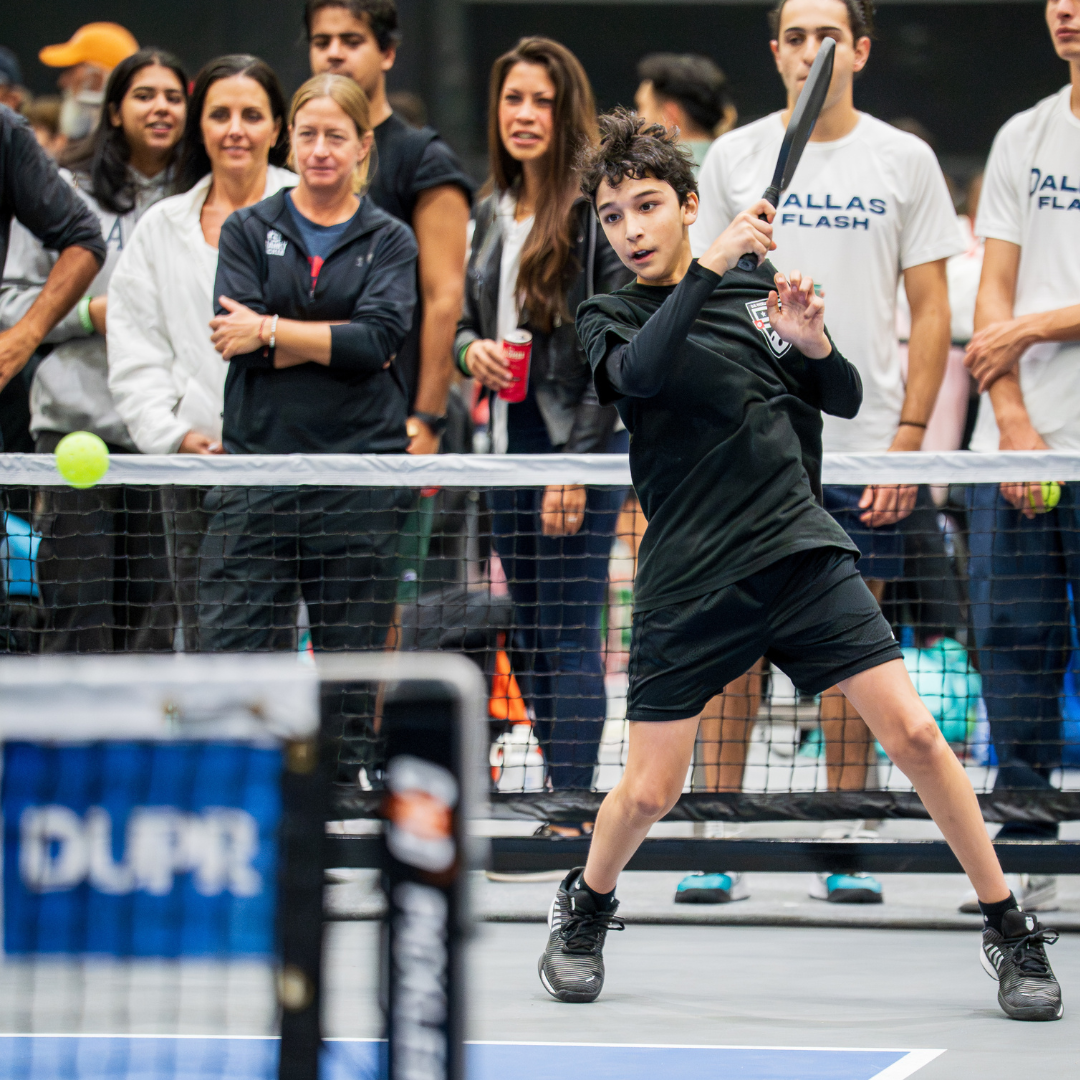
Point by point, they clawed their way back and pulled off an incredible 23–21 comeback. It was the kind of moment that reminds you why no lead is ever safe at MiLP Nationals, and why DreamBreakers are some of the best drama pickleball has to offer.
Top Moments of the Week
You’ve probably already seen a few of these, but if not, pause what you’re doing and catch up. These moments defined MiLP Nationals 2025.
🎥 An 11-Year-Old Hits the ATP of the Year
Carson Ngo delivered an all-time ATP that lit up the internet and instantly became one of the most talked-about highlights of the entire championship. Watch it here.
🎥 From 12–20 to 23–21: A DreamBreaker Comeback for the Ages
One of the wildest momentum swings of the week. Down big in the DreamBreaker, this team refused to fold and pulled off a comeback that had the entire venue buzzing. Check it out here.
🎥 Two Ernes, One Point — Ricardo Torres (Puerto Rico)
Ricardo Torres put on a show in the DUPR 16 division, landing not one but two Ernes in the same point to seal it for his team. Pure confidence, perfect timing. Watch it here.
🎥 Nationals… in Jeans?
Yes, really. Josiah Watje from the Brooklyn Pickleball Team picked up a win at Nationals while playing in jeans, proof that confidence might be the most important piece of equipment out there. See the show.
All Divisions, All Champions
From DUPR 12–22 to 3v3 V3 divisions to our 50+ brackets, competition was fierce across all categories.
Open Age Divisions (DUPR 12–22)
- DUPR 14: Premier Ballerz
- DUPR 16: You Got Served
- DUPR 18: Fawkes Phoenix
- DUPR 20: Brooklyn Pickleball Team
- DUPR 22: Netflicks
3v3 Gendered Divisions
- V3 DUPR 9: Queens of the Court
- V3 DUPR 11 Men: Premier Ballerz
- V3 DUPR 11 Women: Premier Ballerz
- V3 DUPR 13 Men: Bikini Bottom Broskis
- V3 DUPR 13 Women: Pretty Tough (Puerto Rico)
- V3 DUPR 15 Men: Crank’d Up
- V3 DUPR 15 Women: The Better Netflicks
- V3 Open: Colorado Cuties
50+ Divisions
- 50+ 12: The Oldies Crew (Puerto Rico)
- 50+ 14: Pickled Pink
- 50+ 16: Austin Ballers
- 50+ 18: Cranky Pickle OG
Uniform & Costume Contests: $1,000 on the Line
MiLP brings serious competition, but the fun is just as real.
This year’s Uniform and Costume Contests were bigger, bolder, and more creative than ever. From coordinated team fits to over-the-top themes, Championship Court was full of personality all week long.
The teams with the most votes took home $1,000!
Best Team Uniform: Los 111 DEL West
Best Team Costume: See You Next Tuesday
Check out their costumes here.
Be sure to check out the full gallery to see the best fits, wildest outfits, and team themes that made this year’s championship unforgettable.
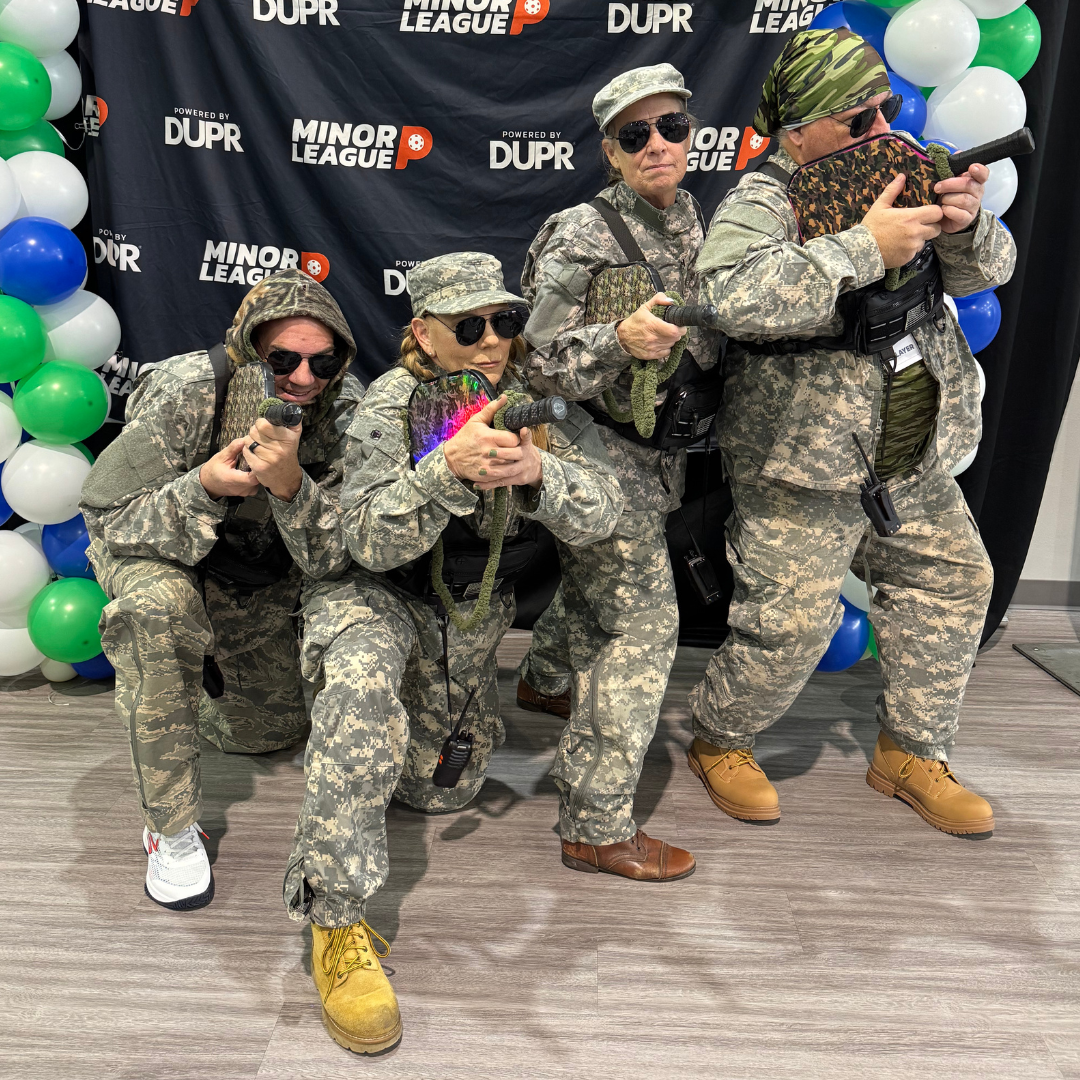
MiLP Nationals wouldn’t be complete without the costumes, and this year, Net Force (DUPR 14 50+) absolutely raised the bar. Known for pushing boundaries on and off the court, Net Force showed up with one of the most innovative costumes we’ve ever seen at Nationals, blending creativity, humor, and serious team spirit. If you haven’t seen it yet, check it out here
MLP Teams Showing Up at MiLP Nationals
One of the biggest signs of MiLP Nationals’ continued growth was the strong presence of Major League Pickleball (MLP) teams who brought MiLP squads to compete on the national stage. This year, teams representing STL Shock, Dallas Flash, Brooklyn Pickleball Club, Texas Ranchers, DC Pickleball Team, Miami Pickleball Club, Columbus Sliders, Chicago Slice, Orlando Squeeze, LA Mad Drops, Atlanta Bouncers, and Florida Smash all sent teams to Nationals, highlighting the powerful connection between MiLP and the professional league. Their involvement not only raised the level of competition but also reinforced MiLP Nationals as a true proving ground for rising talent across the country.
Thank You to Our Sponsors, Partners & Vendors
MiLP Nationals wouldn’t be possible without the incredible support of the brands and partners who showed up for the players and the sport.
Sponsors & Partners
A big thank you to Centerline, Reign Storm, No Apologies / C&D Nets, Erne, and Vulcan for backing this championship and helping elevate the competitive experience on and off the court.
Vendors & Event Supporters
We also appreciate the vendors who brought energy, products, and value to the event experience:
Pickleball Fanatics, HotShotz Reusable Heat Packs, Rheum Therapeutics, The Peak Well, Complete Health & Wellness, Centerline, Ehret Winery, Reign Storm, and Ryze.
Your continued support plays a major role in growing amateur pickleball and creating unforgettable moments at events like MiLP Nationals.
📸 Relive the Moments
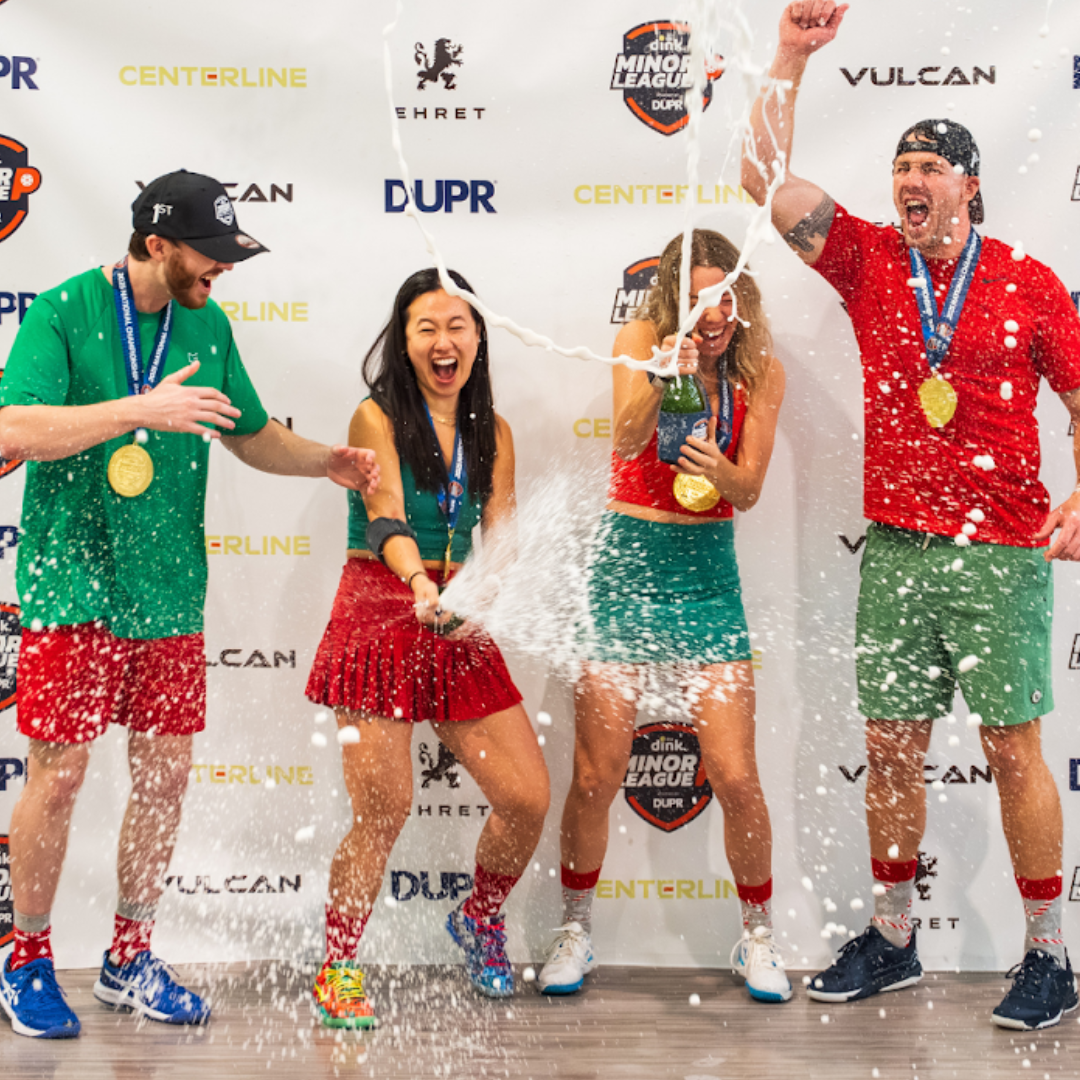
From championship points and DreamBreaker drama to team celebrations and unforgettable fits, we captured it all. Check out our shareable photo album (password: MiLP2025!) to find your team, download your favorite shots, and relive the best moments from MiLP Nationals 2025.
Did you snap a great photo or video during the event? We’d love to see it; submit your shots here to be included and help us tell the full story of MiLP Nationals from every angle.
The Dink MiLP
December 10, 2025
Pickleball Manager Adopts DUPR as Its Official Rating System
Pickleball Manager, a popular platform for clubs and tournament organizers, has adopted DUPR as its official rating system.
Pickleball Manager helps directors run leagues and tournaments with simple brackets, flexible formats, and fast court assignments. With DUPR built in, it’s easy for organizers to send match results straight to the rating system. The platform’s Open Play bracket also lets clubs turn casual play into DUPR-rated sessions, so new players can get matches logged quickly and experienced players know they’ll face others at a similar level.
By integrating with DUPR’s universal rating system, Pickleball Manager aims to give players and organizers a clearer and more consistent way to understand skill levels across different environments. As Pickleball Manager’s founder Kurtis Campbell added: “Our goal is to make events easier to manage and more enjoyable for players. Including DUPR gives our users access to a trusted rating option that fits into the tools they already use.”
Pickleball Manager helps clubs and event organizers run leagues, ladders, and tournaments with simple scheduling and score-reporting tools. It also includes a wide range of bracket and team-match customization options, all without adding extra complexity. With DUPR available in the system, recorded results can now be linked to a player’s rating, giving users an easy way to track improvement.
“DUPR’s mission is to support a united rating standard across the sport,” said Tito Machado, CEO of DUPR. “Seeing Pickleball Manager bring DUPR into their workflow helps players get a fair and reliable sense of their level, no matter where they play.”
This partnership reflects DUPR’s continued growth across digital, club, and recreational pickleball spaces, supporting a consistent rating experience for players of all ages and levels.
About Pickleball Manager
Pickleball Manager is an event-focused platform built to help administrators efficiently manage leagues, open play, and tournaments. With easy-to-use bracketing tools and simple score
reporting, it supports clubs of all sizes. Learn more at https://pickleballmanager.net.
About DUPR
DUPR (Dynamic Universal Pickleball Rating) is the premier global pickleball rating system and technology platform, trusted by the world's leading clubs, tournaments, leagues, and players. Its dynamic system evaluates players on a 2.000–8.000 scale across age, gender, and location. DUPR is the official rating system of the United Pickleball Association (UPA), PPA, Major League Pickleball (MLP), Pickleball.com, Life Time, The Picklr, National Team Pickleball League, and National Pickleball League. It also owns and operates Minor League Pickleball and Collegiate Pickleball, two of the largest amateur circuits in the sport. For more information, visit https://www.dupr.com.
Partners
December 10, 2025
DUPR Becomes the Official Rating System of the India Pickleball Association
New Delhi, December 1, 2025: DUPR and the India Pickleball Association (IPA), the official governing body of pickleball in India, announced that all IPA events and results will now feed directly into the DUPR system. This marks a major step for the growth of pickleball in India and across Asia. It brings every player under one rating scale and supports fair, consistent competition nationwide.
The move strengthens the sport’s path toward a unified global standard. With thousands of players across India and a fast-growing tournament scene, adopting DUPR creates a clear, trusted way to measure skill and track progress.
“This partnership is a major milestone for the sport in Asia,” said Tito Machado, CEO of DUPR. “IPA’s decision to adopt DUPR across all events shows a strong commitment to fairness, transparency, and player growth. We’re proud to help bring a unified rating experience to every player in India.”
“Working with DUPR raises the competitive level of our events and provides players with ratings they can trust,” said Suryaveer Singh Bhullar, President of the India Pickleball Association. “As pickleball grows across the country, having one consistent rating system helps connect our community and ensures every match counts.”
Starting in 2026, all IPA events will now run as DUPR Verified Events, which follow higher standards for fairness and score reporting. Players must have a DUPR+ subscription and phone authentication. Organizers must follow strict DUPR standards for reporting and conduct, creating a reliable competitive environment and better ratings for players.
This partnership brings India closer to the global pickleball community and supports DUPR’s mission to give every player, everywhere, one unified, fair rating.
About India Pickleball Association
Recognized by the Ministry of Youth Affairs and Sport, The Indian Pickleball Association (IPA) is the official organization dedicated to promoting and developing the sport of pickleball across India. Established with the mission to introduce, nurture, and advance pickleball, the IPA serves as the governing body for the sport within the country. For more information, visit www.ipaofficial.com
About DUPR
DUPR (Dynamic Universal Pickleball Rating) is the premier global pickleball rating system and technology platform, trusted by the world's leading clubs, tournaments, leagues, and players. DUPR's dynamic rating system unifies pickleball across age, gender, and location by analyzing match results to accurately evaluate all players across a 2.000 - 8.000 scale. DUPR is the official pickleball rating of leagues, tournaments and clubs around the world, including United Pickleball Association (UPA), PPA, Major League Pickleball (MLP), Pickleball.com, Life Time, The Picklr, National Team Pickleball League, National Pickleball League. It also owns and operates Minor League Pickleball and Collegiate Pickleball, two of the biggest amateur leagues in the sport. Players and operators can visit www.dupr.com to sign up and learn more.
Media Contact:
DUPR
Kyrill Hartog
VP Marketing & Communications
kyrill@mydupr.com
Partners
Community
December 9, 2025
Stop the Spiral: Control Your Emotions and Play Your Best Pickleball
By Susie Reiner, PhD, Erik Korem, PhD, & Alex Auerbach, PhD
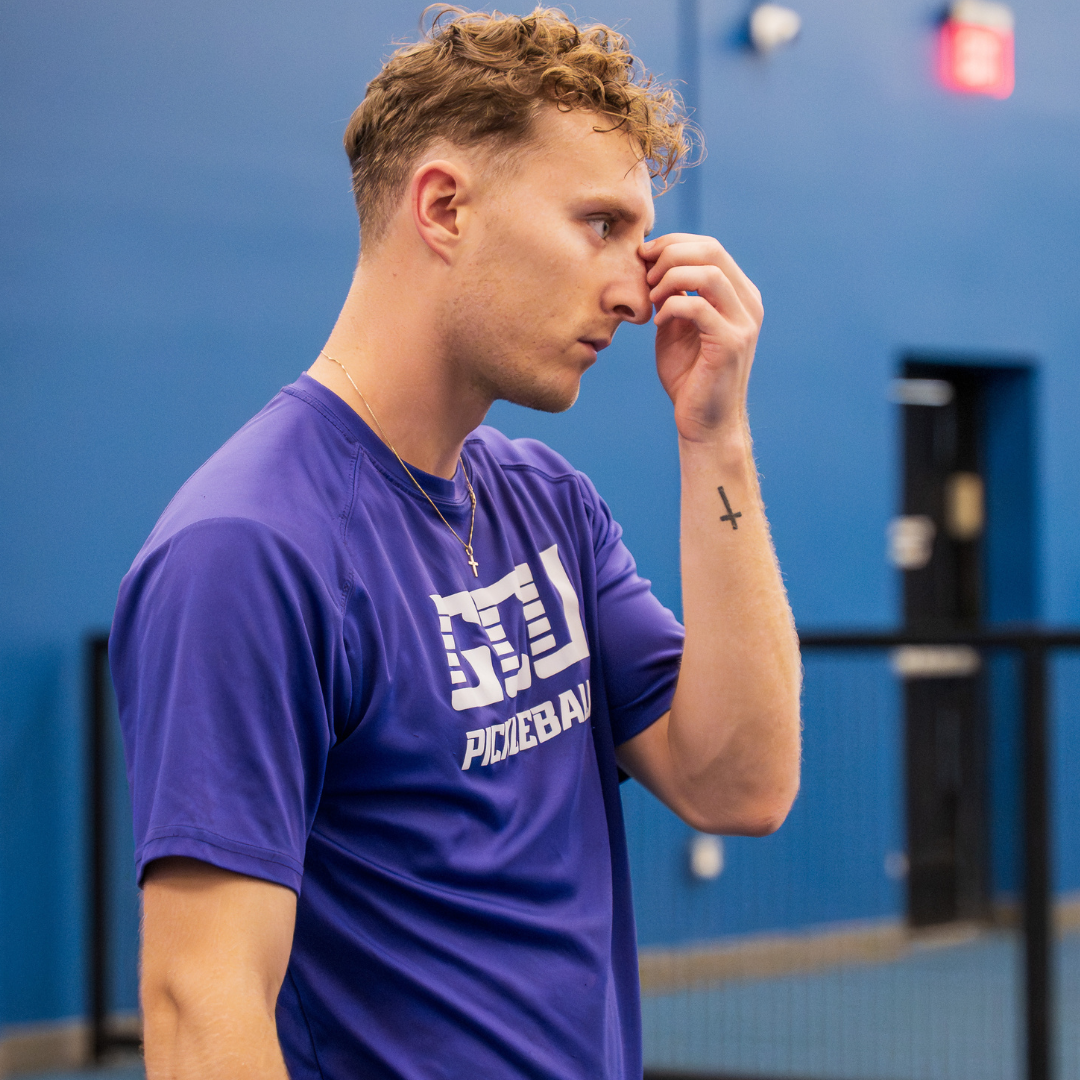
Have you ever been in total control of a match when suddenly one bad shot throws everything off? You miss an easy dink, start overthinking, and before you know it, you’ve gone from confident to completely rattled. The momentum disappears, and the game slips away, not because your skills vanished, but because your mind lost its rhythm.
If that sounds familiar, you’re not alone. This scenario plays out on pickleball courts everywhere. What separates players who bounce back quickly from those who unravel is not talent or athleticism, but how they manage their thoughts and emotions under pressure. The most consistent players don’t avoid mistakes; they’ve learned how to respond when things go wrong.
Why Good Players Lose Focus After Mistakes
When you make a mistake in sport, your brain’s instinct is to analyze it. That instinct helps you learn over time, but during competition, it can work against you. Instead of letting the point go, your mind replays the error on a loop: How did I miss that? What was I thinking? While you’re stuck on the previous shot, your focus on the next one fades.
This pattern is known as a rumination loop. In sports psychology, rumination means getting caught in repetitive, negative thoughts about performance. When that happens, your attention divides between what already happened and what’s about to happen. That split focus weakens your ability to perform in the present moment.
A study published in Mindfulness by Josefsson and colleagues (2017) found that athletes who ruminated more had greater difficulty regulating emotions and coping under pressure, while those who trained to reduce rumination performed better in competition (1). Similarly, Roy et al. (2016) reported that elite team-sport athletes with lower rumination scores maintained steadier performance and longer competitive careers (2).
Physiologically, frustration after mistakes triggers a chain reaction in the body. Heart rate increases, breathing shortens, and muscles tense. These changes disrupt coordination and decision-making, two qualities critical to pickleball. Research shows that mental fatigue and negative self-focus reduce both technical precision and tactical accuracy in athletes under pressure (3).
When you miss a shot, your attention splinters, your body tightens, and the next point becomes harder to execute. That reaction doesn’t mean you’re weak; it simply reflects how the brain and body respond to stress. The good news is that you can train your mind to interrupt that pattern and recover faster.
The Release-Reset-Refocus Framework
Developed by sports psychologist Dr. Alex Auerbach and grounded in decades of research on performance psychology, this three-step process helps athletes break out of the mental loop, regain composure, and return to the present moment.
Step 1: Release
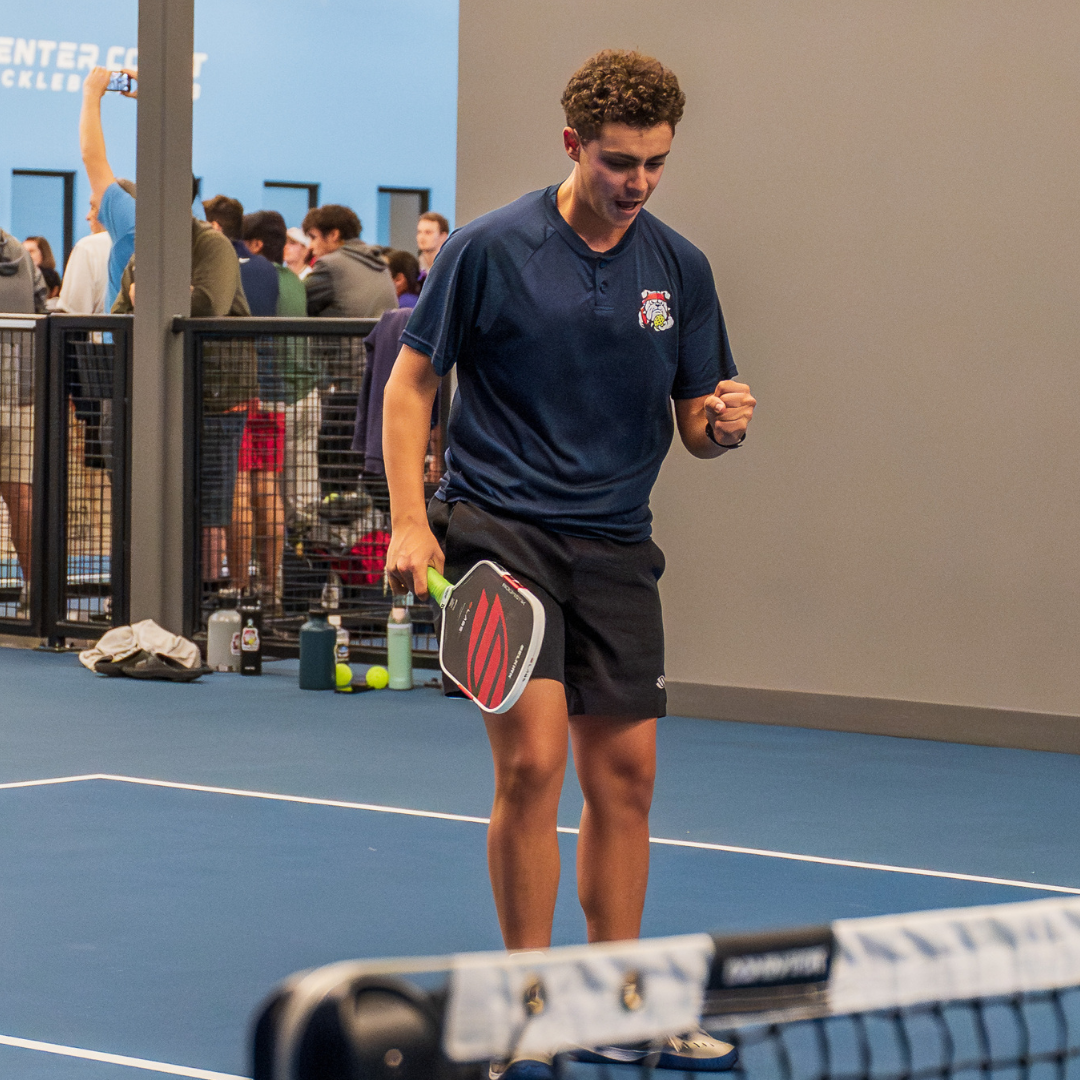
Start by consciously letting go of the mistake. Create a quick, deliberate cue that signals to your brain, “That point is finished.” You might clap your hands, tap your paddle against your thigh, or use a phrase like “Next point.”
In psychological terms, this cue acts as a circuit breaker. The physical action interrupts the mental replay, creating a separation between the past and the present. Consistency matters most. When you use the same cue each time, your brain begins to associate it with emotional reset and recovery.
Step 2: Reset
Next, bring your attention and body back to the present. This step reconnects your physical state with your mental focus.
Take a slow breath, wiggle your toes, or notice the feel of your paddle in your grip. These small sensory anchors re-establish control and calm. Research on mindfulness-based interventions shows that simple grounding actions can restore concentration and reduce performance anxiety in athletes (4).
Step 3: Refocus
Finally, focus on what’s relevant now. Ask yourself: What matters in this next moment?
That might mean checking your opponent’s position, visualizing your serve target, or focusing on a key tactical cue, such as “stay balanced” or “place it deep.” Task-focused attention, rather than self-focused thought, keeps your decision-making sharp. Studies show that athletes who maintain an external, task-oriented focus under pressure perform more consistently and avoid “choking” effects (5).
These three steps—Release, Reset, and Refocus—train you to shift quickly from a reactive state to an intentional one. You’re not ignoring the emotion, but you’re giving it a pathway so it doesn’t interfere with performance.
Using Reset-Refocus Between Every Point
While the full Release-Reset-Refocus sequence is valuable after mistakes, you can use the Reset and Refocus steps between every point to keep your concentration sharp throughout a match.
Between points, build a quick, consistent mini-routine:
- Take a deep, controlled breath.
- Feel your paddle in your hand or tap your foot on the court to stay grounded.
- Then refocus: identify your next target, check your opponent’s stance, and remind yourself of a single tactical cue such as “play deep” or “stay aggressive.”
This between-point habit works like maintenance for your mental game. It keeps your attention tuned to the present and prevents emotional buildup from earlier points. Over time, this routine will help you stay composed even when matches get tight.
Making It Automatic
The Release-Reset-Refocus method only becomes effective when it’s practiced until automatic. If you try it for the first time during competition, it will feel unnatural. Begin using it during drills and practice matches so it becomes as routine as your warm-up.
Here’s how to make it stick:
- Integrate it into training. Each time you miss a shot in practice, use your Release cue and move directly into Reset-Refocus before the next rep.
- Keep cues consistent. Your brain thrives on repetition. Choose one cue and stick with it until it becomes second nature.
- Simulate pressure. During training, add small stakes—such as restarting a rally after an error—to mimic competitive tension. Practice recovering under these conditions.
- Reflect after matches. Note when you used your process and how quickly you regained focus. Self-awareness accelerates learning.
With consistent use, this method will become automatic. When you make a mistake, you’ll transition seamlessly into your mental reset rather than spiral into frustration.
Practical Tips for Pickleball Players
- Choose your trigger. Decide on a consistent Release action, such as a clap, a paddle tap, or a short phrase.
- Anchor your Reset. Use breath, physical awareness, or a simple grounding cue after every point.
- Direct your Refocus. Before each serve or return, remind yourself of one controllable objective.
- Practice deliberately. Rehearse the whole routine during every training session.
- Track your recovery time. Count how many points it takes to settle mentally after a mistake and work to shorten that number.
The Takeaway
Mistakes do not determine the outcome of a match. The way you respond to them does. Emotional spirals are predictable, which means they are also preventable. The Release-Reset-Refocus framework provides a structured, evidence-based approach to staying composed, recovering quickly, and performing your best under pressure.
To further strengthen your mental game, explore the AIM7 app, which offers personalized tools for focus, emotion regulation, and performance resilience. By mastering this process, you’ll turn frustration into focus and play with the calm confidence that defines great athletes.
References
- Josefsson, T., Ivarsson, A., Lindwall, M., Gustafsson, H., Stenling, A., Böröy, J., Mattsson, E., Carnebratt, J., Sevholt, S., & Falkevik, E. (2017). Mindfulness Mechanisms in Sports: Mediating Effects of Rumination and Emotion Regulation on Sport-Specific Coping. Mindfulness, 8(5), 1354–1363. https://doi.org/10.1007/s12671-017-0711-4
- Roy, M. M., Memmert, D., Frees, A., Radzevick, J., Pretz, J., & Noël, B. (2016). Rumination and Performance in Dynamic, Team Sport. Frontiers in psychology, 6, 2016. https://doi.org/10.3389/fpsyg.2015.02016
- Sabzevari, F., Samadi, H., Ayatizadeh, F., & Machado, S. (2023). Effectiveness of Mindfulness-acceptance-commitment based approach for Rumination, Cognitive Flexibility and Sports Performance of Elite Players of Beach Soccer: A Randomized Controlled Trial with 2-months Follow-up. Clinical practice and epidemiology in mental health : CP & EMH, 19, e174501792303282. https://doi.org/10.2174/17450179-v19-e230419-2022-33
- Noetel, M., Ciarrochi, J., Van Zanden, B., & Lonsdale, C. (2019). Mindfulness and acceptance approaches to sporting performance enhancement: A systematic review. International Review of Sport and Exercise Psychology, 12(1), 139-175.
- Vine SJ, Lee D, Moore LJ, Wilson MR. Quiet eye and choking: online control breaks down at the point of performance failure. Med Sci Sports Exerc. 2013 Oct;45(10):1988-94. doi: 10.1249/MSS.0b013e31829406c7. PMID: 23542893.
Pickleball Tips
Community