No matching results.
Search results
July 16, 2025
How To Start a Pickleball Club at Your College
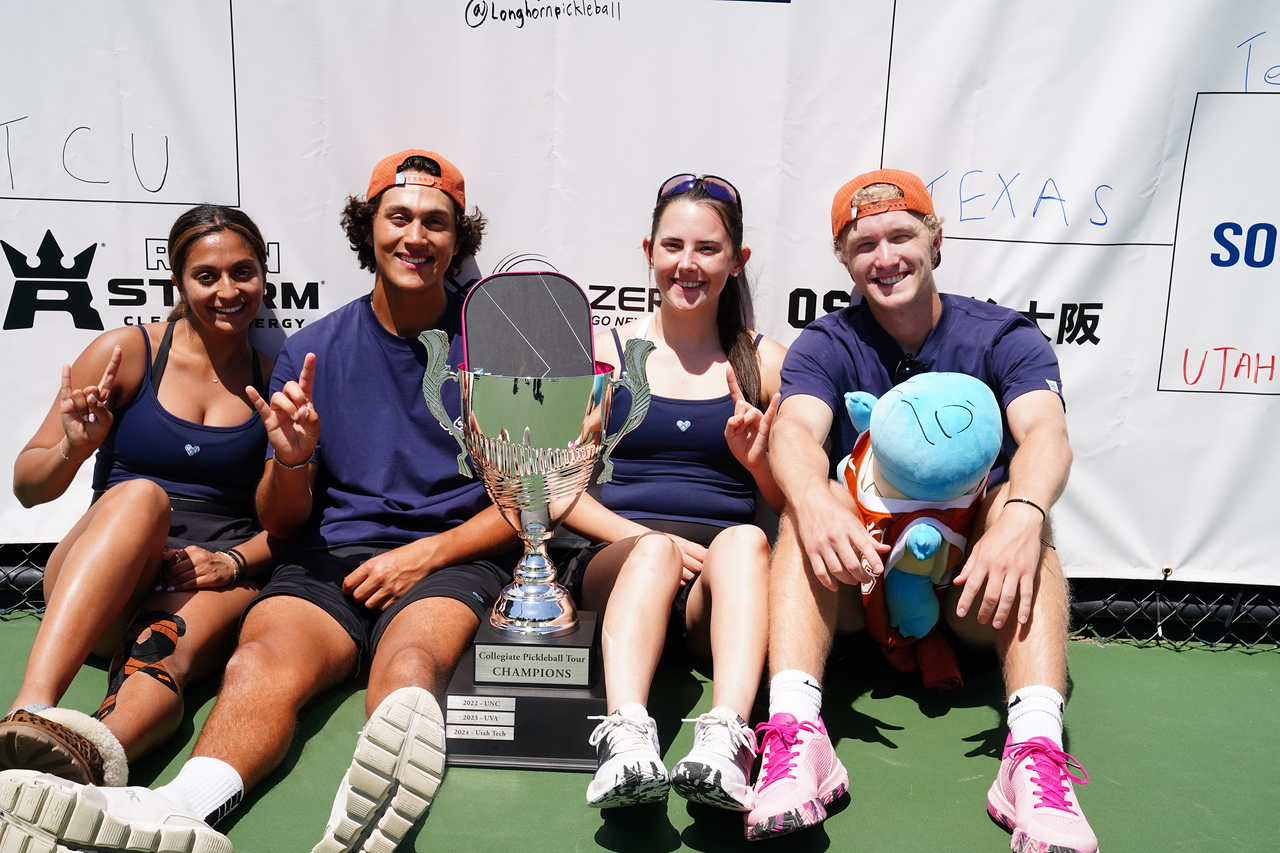
Thinking about starting a pickleball club at your university? You’re not alone. With over 300 colleges in the U.S. already on board, the sport is booming, and your school could be next. Whether you're looking to play for fun, build a competitive team, or just grow the pickleball community on campus, this step-by-step guide will walk you through how to make it happen.
Step 1: Check Your School’s Club Requirements
Every college has its own process for approving new student organizations, so your first move is to find out what your school requires.
A quick search like “[Your School Name] how to start a club” will usually point you in the right direction.
Key things to look for:
- Registration deadlines
- Required leadership roles
- Minimum number of members
- Whether you need a faculty or staff advisor
Quick Note: Most colleges distinguish between “student organizations” and “club sports.” You’ll usually need to register as a student organization before applying for club sport status, so start there to save time.
Once you’ve submitted everything and your application is approved, congrats! You’ve got an official pickleball club on campus. Now it’s time to build it.

Step 2: Recruit Consistent Members
In the early stages, it’s all about momentum. Use whatever equipment and space you have access to and get creative with recruiting.
Here are some great ways to find players:
- Visit pickleball classes on campus and invite students
- Show up at intramural tournaments and talk to participants
- Participate in your school’s club fair
- Build a simple website or social media presence so people can find you online. Choose a username or domain clearly linked to your school and pickleball club.
- Post flyers and add a QR code linking to the social media account or talk to players at local pickleball courts
- Reserve tennis/pickleball courts on campus or ask local facilities for discounted court time
Create a group chat or email list to keep everyone connected and informed. Be proactive: if someone shows interest, invite them personally. Make new players feel welcome by pairing them with others at their level and offering to teach the basics. This is what builds community and keeps them coming back.
Step 3: Grow Your Club
Once you have a core group, it’s time to scale.
- Set Weekly Practice Times: Establish consistent meetups to create structure. It also gives you a clear answer when someone asks, “When can I join?”
- Build Your Equipment Supply: Start collecting paddles, balls, portable nets, and hoppers. Ask experienced players or alumni if they can donate gear. You can also contact local businesses for sponsorships or fundraising support.
💡 Special Tip: Create a DUPR Digital Club to manage your members and track match results. It gives your club a professional presence and makes it easier to organize games, display your location, and help players improve with accurate ratings.
Start your Digital Club for FREE here.
Step 4: Compete with Other Schools
Once you have enough players and equipment, take things to the next level: college competition.
- Connect with nearby schools that have clubs
- Use social media or the DUPR club directory to find opponents
- Organize scrimmages or join round robins and tournaments
- Start incorporating drills to strengthen your team’s skills
- Invite local coaches or high-level players to run clinics
Starting a pickleball club at your school is one of the most rewarding ways to make an impact, meet new people, and grow the game. It doesn’t take much to get started. All you need is a few players, some paddles, and a little passion.
Check out the Collegiate Pickleball Tournament (CPT) calendar to find upcoming events. CPT matches are co-ed and formatted for teams of 2 men and 2 women. Schools can bring multiple teams, and top performers may even earn scholarships or bids to the Collegiate National Championship in April.
Want even more help? Download our 24-page Collegiate Pickleball Club Guide, written by past and present club presidents. It’s full of detailed strategies, sample meeting templates, fundraising ideas, and practice plans that worked at real schools.
📩 Have questions? We’ve got answers. Email us at college@mydupr.com
Let’s get your school on the map. 🏓
College
Community
July 14, 2025
Serving Rules in Pickleball
The serve starts every point, and it sets the tone for the entire rally. While it’s not about overpowering your opponent like in tennis, a well-placed serve in pickleball can throw them off balance and give you the upper hand in any pickleball tournament. It’s all about precision, consistency, and control.
Still, serving can be confusing, especially for newer players. Can you serve underhand or sidearm? Can you throw the ball up on a volley serve?? What about drop serves, time limits, or serving into the kitchen? And does pickleball even have a “let” rule?
We break it all down in this guide, answering the most common questions and clearing up the gray areas.
Let’s settle it once and for all: What are the serving rules in pickleball?
Official Pickleball Serve Rules (2025 Update)
1. Volley Serves
A volley serve is when you hit the ball before it bounces, and you can throw the ball up for a volley serve. When you hit the ball, your arm must be in an upward arc, contact can't be made above the waist, and the paddle head must stay below the wrist.
2. One Foot Behind the Baseline
At least one foot must remain behind the baseline and on the ground until the ball is struck. The other foot can't be on the ground outside the service area. Stepping on the line during the serve is a fault.
3. Diagonal Placement
The serve must land in the opposite diagonal service box. If it lands outside the lines or on the kitchen line or in the kitchen (non-volley zone), it’s a fault.
4. Drop Serve Is Legal
The drop serve is still legal.. Yep, you heard that right!
Without applying any force to the ball, you can simply let it drop and hit it after it bounces—offering a more flexible and strategic serving option. Your feet must remain in the same position as for a volley serve, but you can drop the ball anywhere, and none of the three volley serve requirements apply.

5. Single Attempt Only
Unlike in tennis, there are no second chances. If you commit a single fault on your serve, you lose the rally.
6. No Spin Allowed
You can’t spin the ball with your hand or paddle before hitting it. Only a natural rotation is accepted on the release but, when you hit the ball, put all the spin you want on it!
Serve Rules for Singles vs Doubles
- In singles, the server switches sides after each point scored, always serving from the right when the score is even and from the left when it's odd. Only the serving person can score points.
- In doubles, only the serving team can score points. Each player on the team gets a turn to serve, except at the start of the game, when only one player serves for the first team.
Service Sequence in Doubles
Let’s break it down with an example:
- Team I: Player A and Player B
- Team II: Player C and Player D
Players A and C are the starting servers for their teams. When their team's score is even, they will serve from the right side of their court.
- Game starts with Player A serving from the right side of the court.
- Each time Team I scores a point, they switch sides (right to left, left to right) and Player A continues serving.
- When Team I makes a fault, they lose the serve.
Since it's the start of the game, only Player A serves for Team I. Then it’s a side out.
- Player C (Team II) now serves from the right side.
- Just like before, if Team II scores, the players switch sides and Player C keeps serving until they commit a fault.
- After Player C faults, their partner, Player D, gets to serve.
- Player D serves from the appropriate side based on the score (not necessarily the right side).
- Once both players on Team II lose their serves, it’s a side out, and Team I regains serve; this time, starting on the right, with whichever player matches their score (if their score is even it will be Player A, odd will be Player B), and now both partners will get to serve in that turn.
This rotation continues throughout the match, with each player on a team getting a chance to serve—except for the first team to serve, where only one player serves before the side out.
Common Pickleball Serving Faults
Avoid these errors to stay legal:
- Hitting the ball above waist level
- Serving into the kitchen or on the kitchen line
- Stepping on the baseline when you make contact with the ball.
- Missing the cross-court service court!
Being aware of these serving faults helps prevent easy point losses, especially when your pickleball rating and performance in pickleball tournaments are on the line.
👉 90% of players get these pickleball rules wrong. Don’t be one of them.
Pickleball Rules
Pickleball Tips
July 11, 2025
DUPR Coach Rates 150 Players in Just 2 Months
When Tommy Welch first picked up a pickleball paddle during the pandemic, he had no idea it would lead to a complete career shift. As a former college baseball player and coach, Tommy was used to the dugout and batting cages. But just a couple of weeks after giving pickleball a try, he was all in, coaching players, and eventually helping grow one of the fastest-growing pickleball clubs in the country: Pickleball Kingdom.
From 0 to 400 Members in Just 2 Months
Charleston’s Pickleball Kingdom only has nine courts, which are enough for 36 players at a time; so managing court access efficiently is key. According to Tommy, the club hit 400 members just two months after opening, and he’s already rated over 150 of them as a certified DUPR Coach.
Since DUPR ratings are required to join skill-based open play sessions at the biggest pickleball clubs, unrated players are encouraged to either play in a tournament or download the MyDUPRCoach app to book an in-person or virtual rating session.
“With this many members, you’ve got to be organized and efficient,” Tommy said. “DUPR helps make sure players are matched by skill, so the games stay fun and competitive, and everyone gets the most out of their time on court.
Players Crave Structure
According to Tommy, players don’t just want to play, they want to know what’s happening and when.
“Everyone wants structure,” he said. “They want to know the schedule for open play, what levels are playing when, and what to expect when they show up.”
That structure doesn’t just help the players, it helps the coaches too. If you’re running clinics, coaching sessions, or even tournaments, having an organized system makes it easier to plan and coach effectively.
Unfortunately, Tommy has noticed that not every club is run by people who really understand pickleball.
“There are clubs where the people in charge don’t even know how to play. It makes everything harder,” he said.

Managing a pickleball club isn’t like running other sports programs.
Success comes down to understanding your players and offering the right kind of programming. When you register as a DUPR Club (which is totally free), you’ll be paired with a dedicated account manager who can help you design programs that actually fit your club’s needs and player base.
From Baseball Coach to Pickleball Coach
For Tommy, coaching is coaching, no matter the sport.
“I love seeing people progress. That’s what I loved about baseball, and that’s what I love about pickleball too,” he said.
He now spends several days a week running DUPR rating sessions, evaluating four players every 30 minutes. It’s not just about the numbers, either. He watches how players move, how they respond under pressure, and what they can improve on.
“A lot of people overestimate their DUPR,” Tommy admitted. “But that’s what the rating system is for. It’s not meant to be a trophy, it’s meant to help you find better matches and improve.”
A Success Story That Hits Home
One of Tommy’s favorite stories is about Noah Winningham. Noah was a baseball player too, and under Tommy’s coaching, he went from unrated to a 5.0 DUPR in just about two years. That kind of improvement is what gets Tommy fired up.
“If you’ve got good hand-eye coordination and the right mindset, you can go far in pickleball,” he said.

What to Do When Your Students Surpass Your Rating?
Coaching isn’t about ego. It’s about insight, structure, and being able to explain things in a way that sticks.
For Coach Tommy, coaching is about helping others improve. And sometimes, that means watching your students pass you on the rating ladder.
Tommy still coaches players who are rated above him, and he’s proud of it. To him, it’s proof that his coaching works. Helping a player grow to a 5.0 or beyond is the real win.
So, if you’re a coach watching your students climb the ratings faster than you, don’t take it personally. Take it as a sign you’re doing something right.
More Than Just Ratings
Tommy sees DUPR ratings as a tool, not a goal.
“When you get rated by a DUPR Coach, you’re not just getting a number. You’re getting feedback, you’re learning, and you’re building confidence,” he said.
For many players, it’s less intimidating than jumping into a tournament and helps them understand where they really stand.
Tommy's advice to those thinking about making a career in coaching pickleball:
“Passion comes first. If you love helping people improve, this is for you.”
Tommy rated over 150 players in just 60 days, proof that the demand for DUPR ratings is real. Want to know how much you could earn by giving official ratings? Use this tool to find out.
Ready to become a certified DUPR Coach? Click here to get started.
Clubs
DUPR Ratings
Community
July 9, 2025
DUPR Algo Update Q&A
Learn about the updated DUPR algorithm: ratings now adjust based on a player’s performance compared to the expected score. You can read the full update details here.
We’ve received a lot of good and thoughtful feedback along with some great questions and concerns. Below, we’re addressing some of the most common comments to help explain the thinking behind the update and what it means for you.
“It doesn’t make sense to go down with a win.”
We know it’s never enjoyable to see your rating drop — especially after a win.
Our goal as a rating system is to most accurately measure skill and predict future performance. DUPR is not a reward system, it’s a rating system.
So while a win may earn you a trophy, a better seed, or advancement in a tournament, it doesn’t always mean your rating should go up. If you scored fewer points than expected, that’s a signal you underperformed relative to your current rating, and we adjust accordingly. The reverse is also true: if you lose but overperform, your rating can rise.
In all cases, your DUPR reflects performance, not just outcomes, because that’s what makes the system more accurate for everyone.
“It makes sense to go up for overperforming in a loss — but not down with a win.”
That sounds nice in theory, but it doesn’t work in practice.
Each player’s rating exists within a larger ecosystem. While we aim to assign the most accurate rating to every individual, we also have to maintain the balance of the overall rating system.
If neither team goes down after a match, the entire distribution would drift upward over time. To keep the system stable and meaningful, one team’s rating goes up and the other’s goes down, based on how each performed relative to expectations, not just the result.
“Elements like net cords, wind, or fatigue make point-level granularity unfair.”
We get it — not every match is played in perfect conditions. Sometimes the wind, net cords, or fatigue work against you. But here’s the reality: those same factors can just as easily work for you in other matches.
Your DUPR is built from the full body of your results, not any single match. One unlucky day won’t define your rating, especially if it’s already well-established. There will always be some natural swings, but over time, your rating will reflect your true level as long as your performance does too.
“This hurts high-rated players — there’s no reason for them to play.”
In each match, both teams have the chance to move up or down based on how they perform compared to expectations.
Our goal as a rating system is to most accurately rate players according to their performance in match results, which is a consistent approach to all levels of players.
“Isn’t this just the old DUPR algorithm?”
It might feel familiar, and that’s intentional. This update reintroduces the idea of performance vs. expectation, which was part of a previous version of DUPR. But it’s not a return to the old system.
DUPR has evolved over time, with updates focused on transparency, user experience, and rating accuracy. Since that earlier version, we’ve added features like near-instant rating updates and more visibility into how each match affects your rating.
This change builds on those improvements, not by going backward, but by combining proven ideas with the features players now expect. We’re committed to continually refining DUPR to best reflect player performance and the evolving game of pickleball.
For more information, check out our How It Works page.
Data
DUPR Ratings
July 8, 2025
DUPR Algo Update: Win or Lose, Your Rating Can Go Up
We’ve made an important update to the DUPR rating algorithm. Starting today, your rating will move based on how you’re actually performing—not whether you win or lose.
What’s Changed?
Your rating now moves based on performance vs. expectation.
Every match has an expected score, calculated from the ratings of the players involved.
If you score more than expected, your DUPR rating will go up - even if you lose. If you score less, it will go down - even if you win.
Whereas before, the winning team would always go up and the losing team would go down.
Doubles Example:
If a team is expected to win 11–3 but wins 11–8, their DUPR rating will go down.
The losing team, which was expected to score fewer points, will go up.
Singles Example:
If you’re a 3.5 playing against a 4.0, we expect the score to be 5-11. If you instead lose 9-11, you’ve overperformed expectations, so you will see your rating go up.

What this recent update solves for
✅ Performance-based
Your rating now reflects how you perform relative to expectations — not whether you win or lose. Every point matters.
✅ More accurate
By going deeper into point-level performance, DUPR delivers a more precise measure of your current skill level.
✅ Fair for everyone
Every player has a chance to improve their rating by overperforming — whether you're the favorite or the underdog.

Bottom line: every point counts. Whether you’re the underdog or the favorite, the algorithm rewards players who perform above expectations. Even if you lose, proving you can compete at a higher level will improve your DUPR rating.
As the rating of the sport, we are committed to constantly improving rating accuracy and player experience — this update shows our continued focus on delivering that commitment.
Have questions? Check out this blog, where we answer the most frequently asked questions regarding the algorithm update.
Thanks for being part of the DUPR community!
👉 Find out more about how the DUPR algorithm is calculated.
Data
July 7, 2025
How to Go Pro in Pickleball: Bobbi Oshiro's Road to Pro Guide
Road to Pro Guide - by Bobbi Oshiro
Just like in any professional sport, going pro in pickleball requires immense time, dedication, and discipline. You have to treat it like a full-time job—balancing a traditional 9-to-5 alongside a serious pickleball career is no longer realistic.
A look at the Top 20 DUPR Rankings in both Men’s and Women’s Doubles shows nearly every athlete has left conventional office work to fully commit to the sport (with the amazing exception of the Kawamoto twins, who still work full-time for the NCAA while competing at the highest level!).
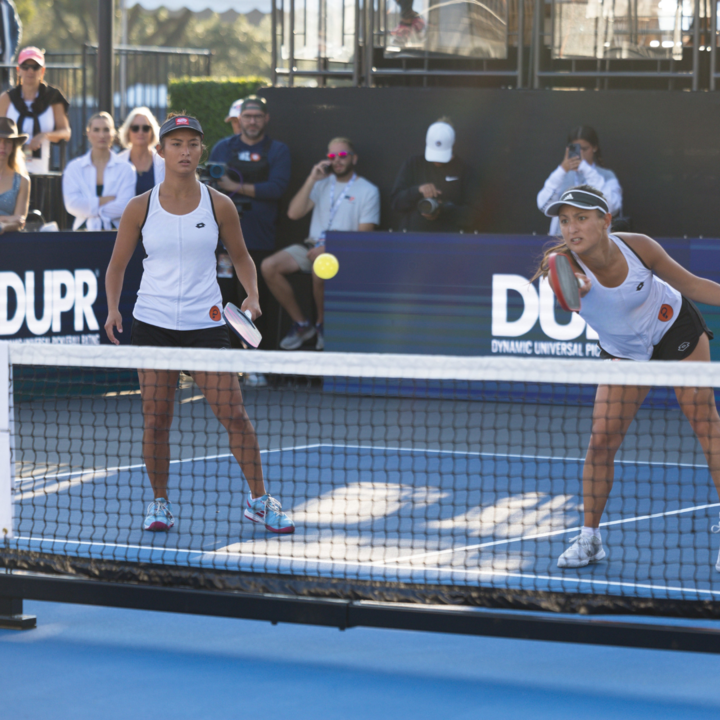
Many professional players also build financial stability through pickleball by creating educational content, becoming influencers, launching podcasts, and teaching camps or clinics.
But hey, if life has taught us anything, it’s that anything is possible with enough passion…and maybe a really good third-shot drop.
Thinking About Going Pro? Here’s How to Get Started
Training & Practices
- Dedicate 20+ hours per week to on-court and off-court work.
- A typical Monday to Friday includes 3 - 4 hours of training per day, split into drills and match play.
- Saturdays and Sundays are often tournament days - if you’re not competing, take at least one day to rest and recover.
- Don’t forget your off-court fitness and recovery - they’re just as important as practicing.
Here’s what a sample week might look like:

Equipment
Be sure to check out what the pros are using. The most trusted paddle brands tend to be the ones that are fully invested in pickleball, not just repurposing tennis tech. Companies like JOOLA, Paddletek, Proton, Franklin and Selkirk focus on the sport and support their pro players, leading the way in innovation and performance.
Competitive Tournament Pathway
A perfect training schedule must go hand in hand with a tailored tournament plan. Choosing the right tournaments is essential to raising your pickleball ratings and gaining valuable experience. If you’re serious about going pro, start targeting these key events:
- Major League Pickleball (MLP)
- APP Tour
- International Tours: Global Sports, PPA Asia, Vietnam Tour
Build a Personal Brand
- Establish a strong social media presence on Instagram, TikTok, YouTube, etc.
- Decide how you want to portray yourself to fans, brands, and the community.
- Network with other pro players, influencers, and industry insiders. Relationships are key.
Track your Progress
If you want to go pro, you need to set clear goals and track your progress. Focus on your plan and trust the process. Identify areas for improvement using the DUPR app, and make film study part of your routine, where you watch top players to analyze patterns, strategies, and shot selections.
With dedication, smart planning, and the right resources, you can set yourself on the path to becoming a professional pickleball player, and maybe one day see your name climbing the DUPR rankings.
Pickleball Tips
Community
DUPR Athletes
July 3, 2025
Over 50% of People Don’t Know The Most Important Shot in Pickleball
When it comes to improving your pickleball game, are you focusing on the shots that really matter? According to a DUPR’s poll of over 1,000 players, more than half of pickleball players are prioritizing the wrong skills—and it could be holding them back from improving their pickleball ratings.
What the DUPR Data Revealed
We asked players what they believe is the most important shot in pickleball. Here’s what over 1,000 players voted:

This means more than 50% of players voted for shots other than the reset, despite top-level coaches and pros consistently naming the reset as the most crucial skill for advancing in pickleball.
What Separates 3.5 from 4.5 Players - according to Bobbi Oshiro
Top pro player Bobbi Oshiro agrees the reset—and its cousin, the third shot drop—are the key skills that separate intermediate from advanced players:
“Being able to hit a third shot drop and reset from transition is what separates 3.5 to 4.0–4.5 players. Most players don’t get up to the kitchen in time to win the point because they don’t have the best drop or reset from transition.”
She also highlights the importance of counters, especially at higher levels:
“Being able to counter and protect your body is another key skill. Recreational players often swing wildly and aim at the opponent’s body. To beat bangers, you need solid counters and the ability to defend your body effectively.”

Why the Reset Shot Matters (And Why Most Players Miss It)
In pickleball, the team that reaches the kitchen line first gains a huge advantage. But thanks to the double bounce rule, the serving team starts at an unfavorable position, since they must let the return bounce before they can advance. That’s why knowing how and when to reset is crucial — the reset is often the hardest, but most important, shot in the game.
If you want to level up, you need to dedicate time every practice session to mastering your resets. Yet many players spend most of their practice working on drives, volleys or dinks, overlooking the importance of the transitioning shot.
The reset is a soft, controlled shot typically executed from the mid-court or transition area. It neutralizes your opponent’s attacks and sets you up to establish position at the kitchen line — the place where most points are won.
Without a reliable reset, you’ll often find yourself stuck in the transition zone or handing your opponents easy put-aways. Master this shot, and you’ll transform your game.
Train Smarter: Prioritize What Really Matters
The DUPR data and testimonials from pro players both point to the same truth: if you want to go from 3.5 to 4.0+, you need to master your reset shot and third shot drop. Focus your practice there, and you’ll start to control more points, protect yourself against hard hitters, and climb the DUPR pickleball ratings faster.
So next time you’re drilling, don’t just bang serves or practice dinks—spend time on resets. Because in pickleball, it’s often the softest shots that make the biggest difference.
Data
Pickleball Tips
July 3, 2025
Asia’s Pickleball Explosion: 812 Million Players and Growing
Pickleball is no longer just America’s fastest-growing sport—it’s quickly becoming Asia’s favorite too. New research from UPA Asia and YouGov Singapore reveals that 1.9 billion people across Asia have heard of pickleball, and 812 million have played it at least once.
A Closer Look at the Numbers
To put that in perspective, the entire U.S. population is around 340 million. That means more people in Asia have played pickleball than the total number of people living in the United States.
Even more impressive? 282 million people in Asia play pickleball at least once a month. That’s the equivalent of more than 80% of the U.S. population engaging with the sport regularly.
The findings are based on responses from over 14,000 participants in 12 Asian markets, including: China, India, Indonesia, Japan, Malaysia, The Philippines, Singapore, South Korea, Hong Kong, Thailand, and Vietnam.
Here’s How Some of the Top Countries Stack Up:
- India takes the crown in total number of monthly players with 178 million.
- China follows with 60 million monthly players.
- Vietnam leads in awareness and participation percentages: 88% of people know about pickleball and 37% play the sport regularly. Vietnam boasts over 16 million frequent players.
- Malaysia ranks #3 in countries with the most DUPR users.
What Does This Mean for Pickleball's Global Future?
The opportunities are huge for brands, federations, and facilities investing in pickleball growth:
- Massive market potential: With hundreds of millions of regular players, the demand for courts, coaches, and equipment is booming across Asia.
- Global expansion strategies: Organizations looking to globalize their pickleball presence need to focus on Asia now more than ever.
- Cultural crossover: Pickleball’s accessibility and low entry cost make it ideal for densely populated, fast-growing regions.
Pickleball isn’t just a U.S. phenomenon—it’s a global movement. With hundreds of millions of players across Asia playing the sport, this isn’t just a trend—it’s a cultural shift. From Vietnam to India, Asia is not only embracing pickleball, it’s shaping its future. Whether you’re a brand, athlete, investor, a player seeking a higher pickleball rating, or fan, the next era of pickleball is being written in Asia.
Community
Data