
When to Drive Your Third Shot (And When the Drop Is the Better Call)
.jpg)
When to Drive Your Third Shot (And When the Drop Is the Better Call)
Let’s clear something up right away:
You don’t have to drop every third shot.
But you also don’t want to drive just because you’re feeling spicy.
The real skill is knowing which ball deserves a drive… and which ball is basically asking you to drop shot it.
So here’s the simplest way to think about it:
The “Green Light” for a Third-Shot Drive
If you’re going to drive your third, you’re usually looking for a return that’s:
✅ Higher
A ball that sits up gives you margin. You can hit through it without launching it.
✅ Shorter
Short return = you’re closer to the kitchen when you hit. Better angle, less time for them to react.
✅ Slower
If the ball is coming in fast and deep, your drive isn’t going to do damage. Your opponent will be set, balanced, and ready to volley it. But when the ball comes slow, it gives you time to position yourself and accelerate towards your target.
Higher + shorter + slower is basically the pickleball version of a green light for a drive.
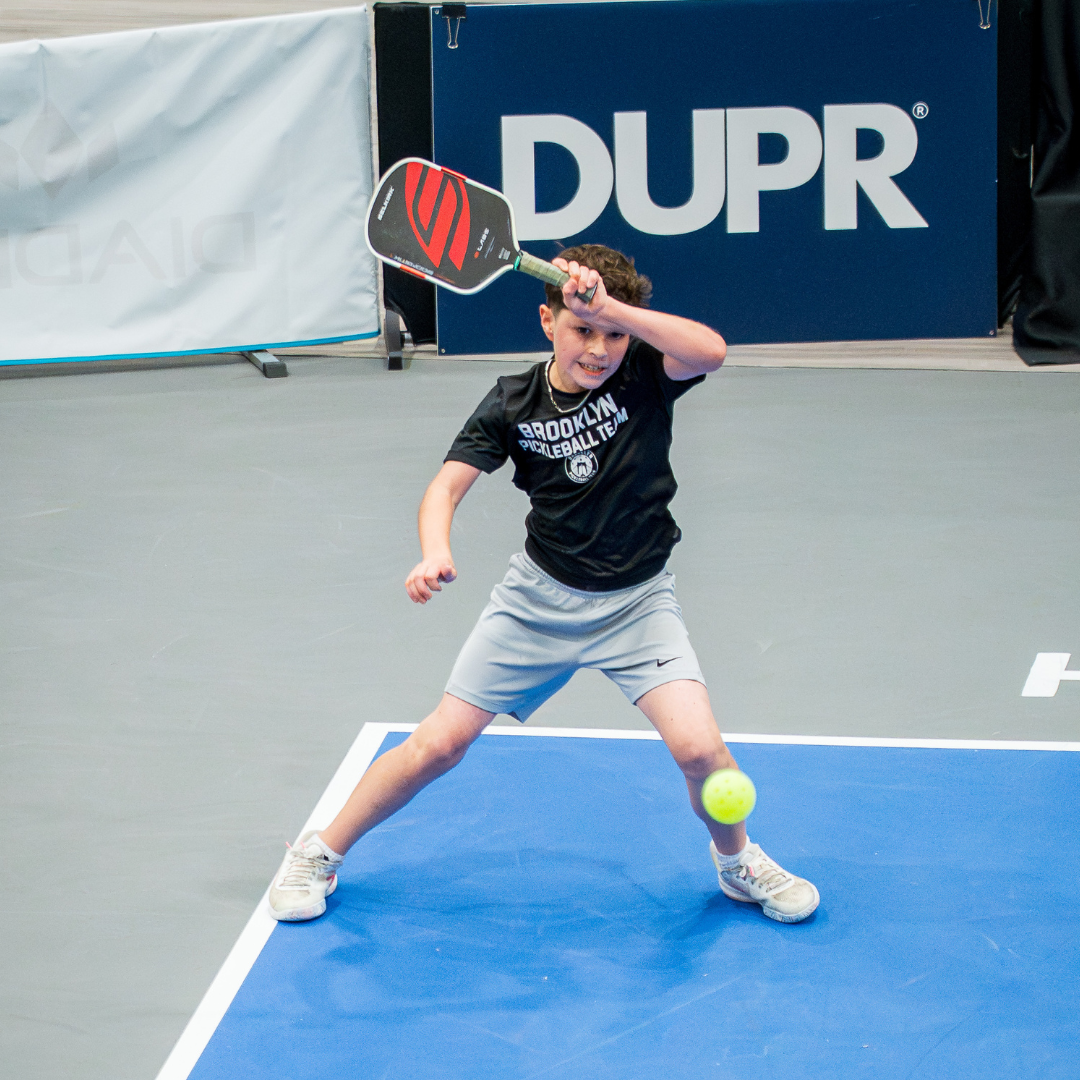
If the return checks those boxes, driving the third can be a great play, because it can:
- force a pop-up
- set up an easier fifth shot
- speed the point up before they’re fully settled
When You Shouldn’t Drive (Even If You Can)
Now the other side.
If the return is deep, low, and fast, driving is usually risky.
Because what happens?
- They block it back easily
- You’re still back / in transition
- Now you have to hit a tougher fifth shot while moving
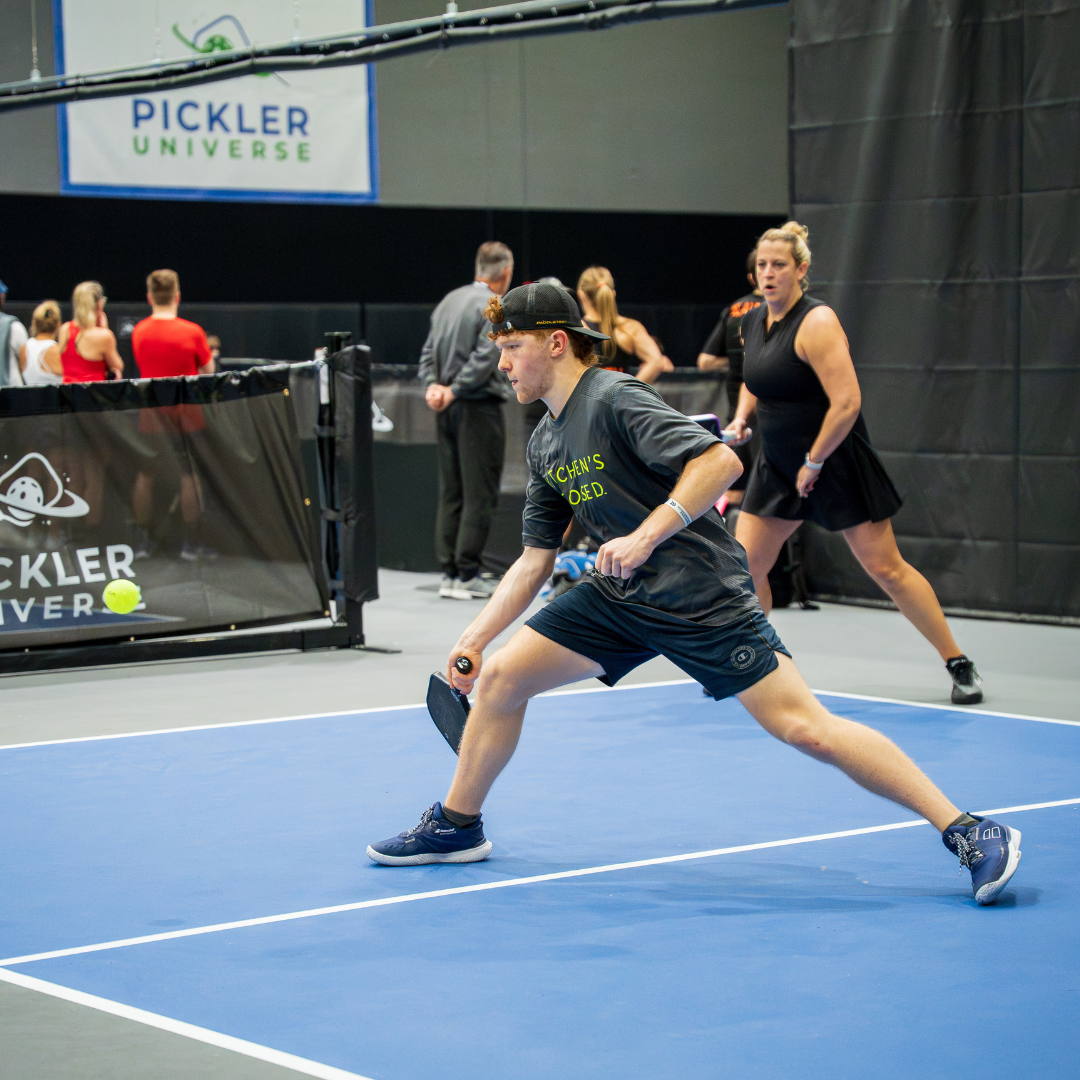
So if you’re driving third shots off good, deep returns, and wondering why you’re always on defense… that’s probably the reason.
Here are some tips from pro pickleball player Bobbi Oshiro on how to stop getting stuck in transition.
Here’s the Part Everyone Misses: Your Drop Doesn’t Need to Be Perfect
A lot of players drive too much because they feel like their third-shot drop has to land on a dime.
It doesn’t.
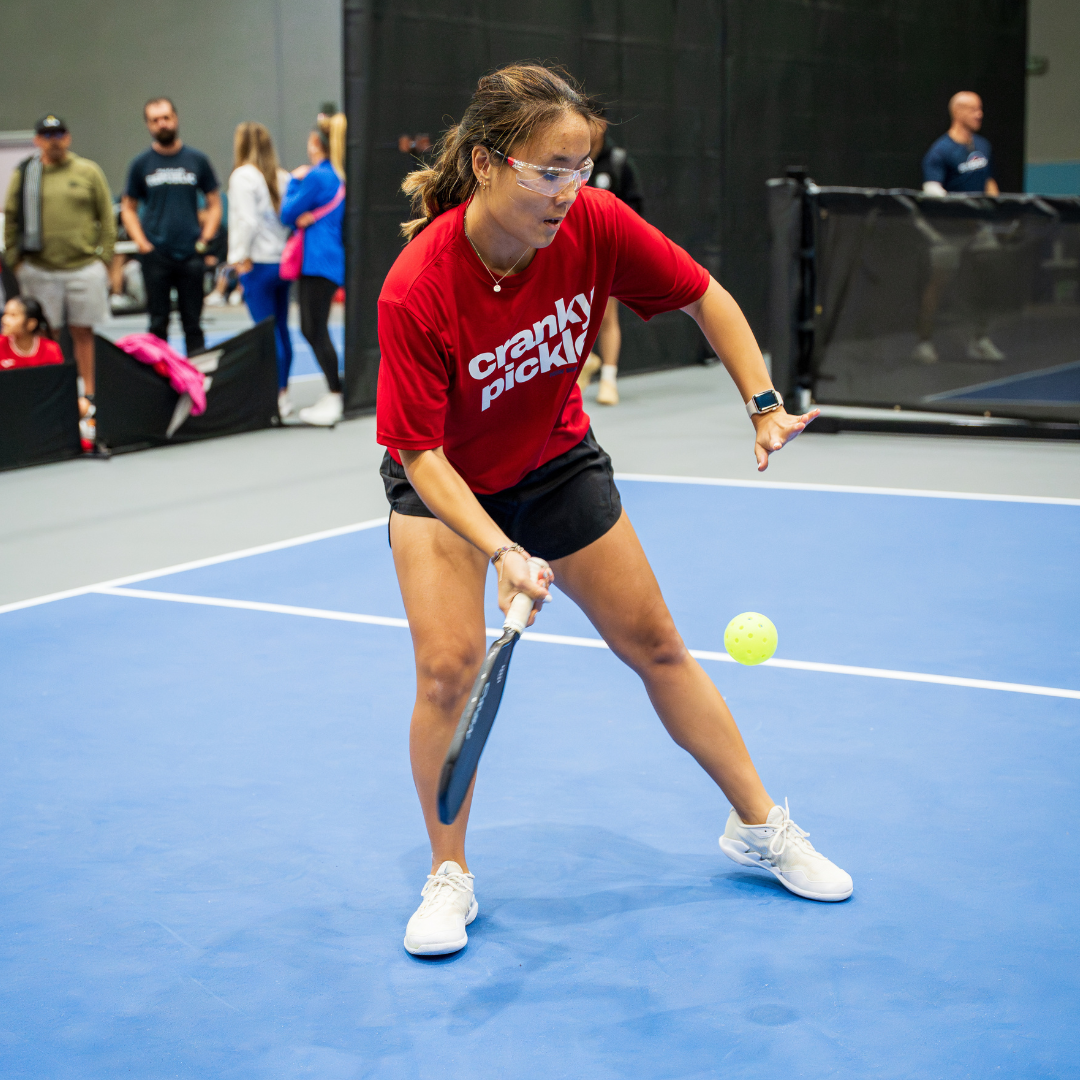
A successful drop is basically any ball that lands within about 0 to 2 feet from the kitchen line (that “2-foot zone”). Why?
Because if it lands in that range, your opponent will be reaching for the ball below the net and be consequently forced to hit up, and that’s the whole point of the drop:
Take away their attack and earn your way forward.
Even if they volley it out of the air sometimes, it’s usually still fine because they’re still hitting up.
Want an Easier Drop? Go Crosscourt.
This is one of those things that’s simple but changes everything:
Crosscourt drops give you more margin.
When you hit crosscourt, the ball travels on an angle, and that angle gives you more “landing zone” to work with (roughly 10% to 25% more room, depending on the angle).
Down-the-line drops are harder because:
- The net is slightly higher near the sideline
- You have less landing zone
- It’s easier to miss long or clip the net
So if you’re struggling with drops, stop trying to paint the down-the-line one. Go crosscourt or middle more often.
Where to Aim Your Drop (So It Actually Helps You)
Two easy targets that make your drop more effective:
Aim crosscourt… and lean toward the backhand
Most players are:
- less comfortable attacking off the backhand
- less likely to speed up cleanly from there
So even if your drop is “just decent,” aiming it to the backhand buys you time.
Quick Drop Checklist (So You Stop Overthinking)
If you’re dropping, don’t try to think about 14 things at once.
Pick one reference point and live with it:
- either focus on where the ball lands
- or focus on how high it crosses the net
Aim “about a foot over the net” and try to land it in that 0–2 ft zone.
That’s enough to level up fast.
So… Drive or Drop?
Here’s the simple rule that works:
If the return is high + short + slow → Drive it.
You’re closer, you have angle, they have less time.
If the return is deep + low + fast → Drop it.
Get it into that 0–2 ft zone and make them hit up.
And if you’re not sure?
Default to the drop because it gets you to the kitchen, and that’s where most points get won.
Your third shot isn’t about being “a drop person” or “a drive person.” It’s about making the smart play based on the ball you’re given.
Drive the ball that deserves it.
Drop the ball that doesn’t.
And if you start using crosscourt + backhand targets, you’ll suddenly feel like you have way more time and way fewer panic shots.
For more pickleball tips, take a look at DUPR’s blogs page here.

OTRAS HISTORIAS DESTACADAS
Consulte nuestras otras historias que pueden interesarle
.jpg)
%20(1).jpg)


