
Mastering the Kitchen: A 3-Step Drill Progression for Consistent Dinking
%20US%20Club%20Rankings%20-%20Top%20ClubsOrg%20(Instagram%20Post)%20(1)%20(1).jpg)
If you want to dictate the pace of play, force more errors, and win more battles at the kitchen line, it all starts with one fundamental skill: consistent dinking. Dinking is not just about getting the ball over the net; it is about accuracy, control, and "feel."
To help you build a rock-solid foundation, we have outlined a three-part drill progression. These exercises are simple but essential for developing the strategic fundamentals needed to raise your DUPR rating.
Drill 1: The Foot-Target Pattern (Down the Line & Crosscourt)
The first step in improving your dinking is learning to hit specific targets based on your opponent's positioning. In this drill, you and your partner start at the kitchen line directly across from one another.
Begin by hitting "inside foot to inside foot" patterns, followed by "outside foot to outside foot" patterns. Once you feel comfortable hitting these targets down the line, move to a crosscourt position and repeat the same foot-to-foot patterns.
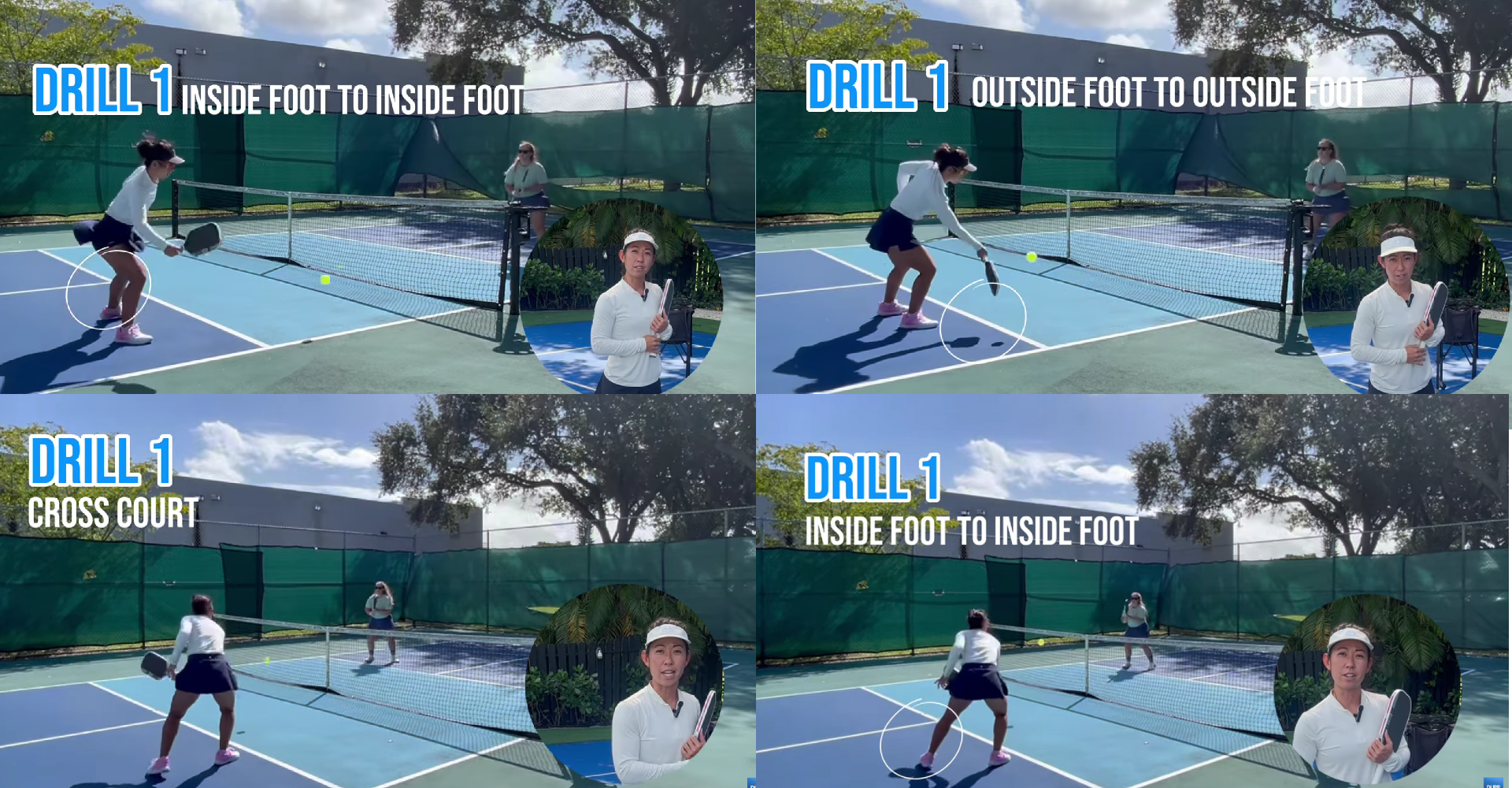
The Goal: Aim for 10 successful dinks in a row or set a timer for 20–30 seconds to see how many successful shots you can make without an error. To keep it fresh, you can alter the pattern the next day, for example, practicing "inside foot to outside foot."
Drill 2: The Figure-Eight Drill
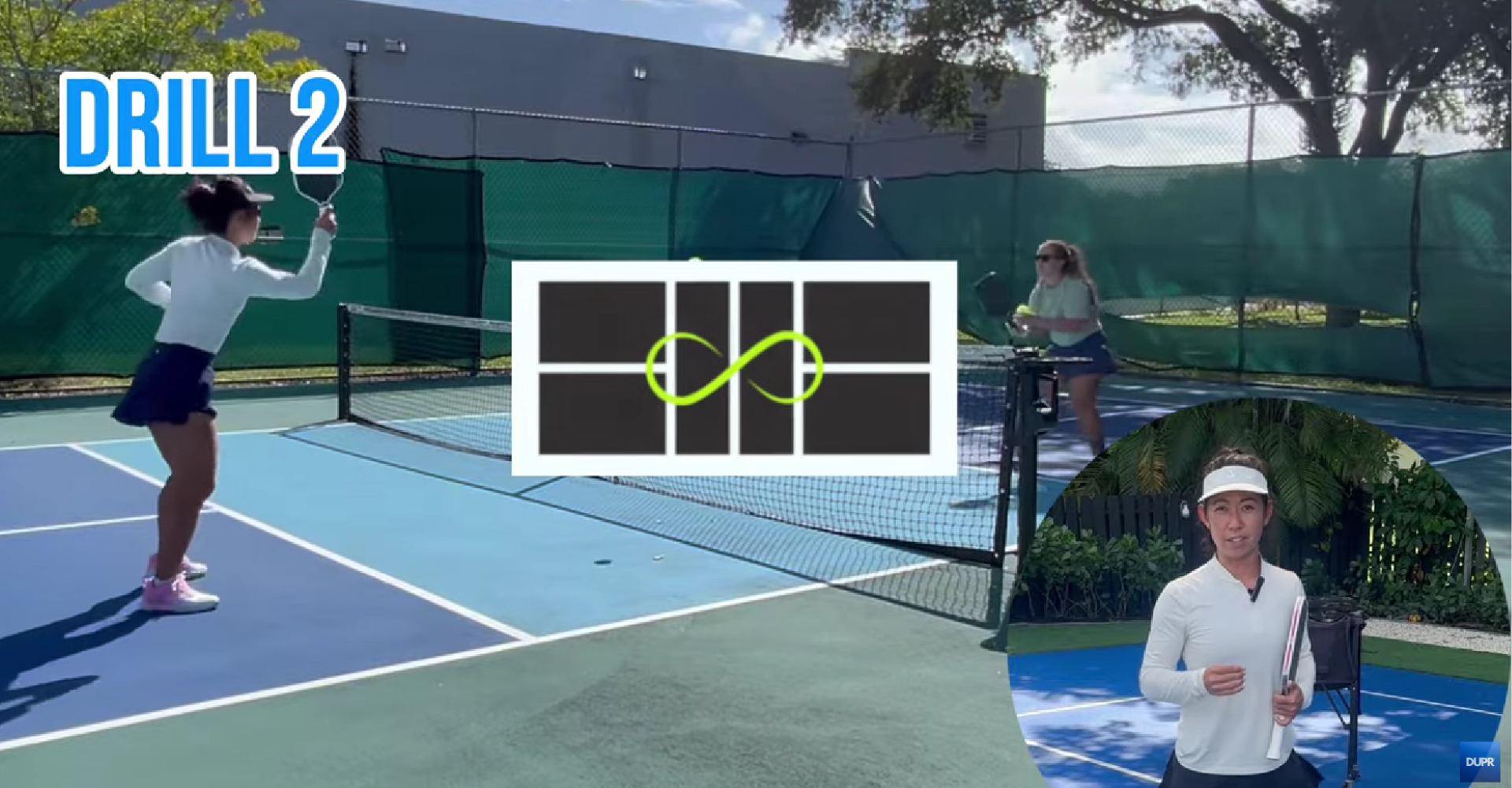
Once you have mastered basic linear patterns, it is time to work on alternating your targets. This drill requires coordination between both players to keep the ball in a continuous "figure eight" motion.
In this setup, your partner follows a steady pattern of hitting inside-to-inside and outside-to-outside foot targets. Your job is to alternate your shots between their inside and outside feet. Because you are constantly changing the angle of your return while your partner remains steady, the ball naturally follows a figure-eight path. This builds the "feel" necessary to move the ball around the court without losing control.
Drill 3: Target Isolation and Movement
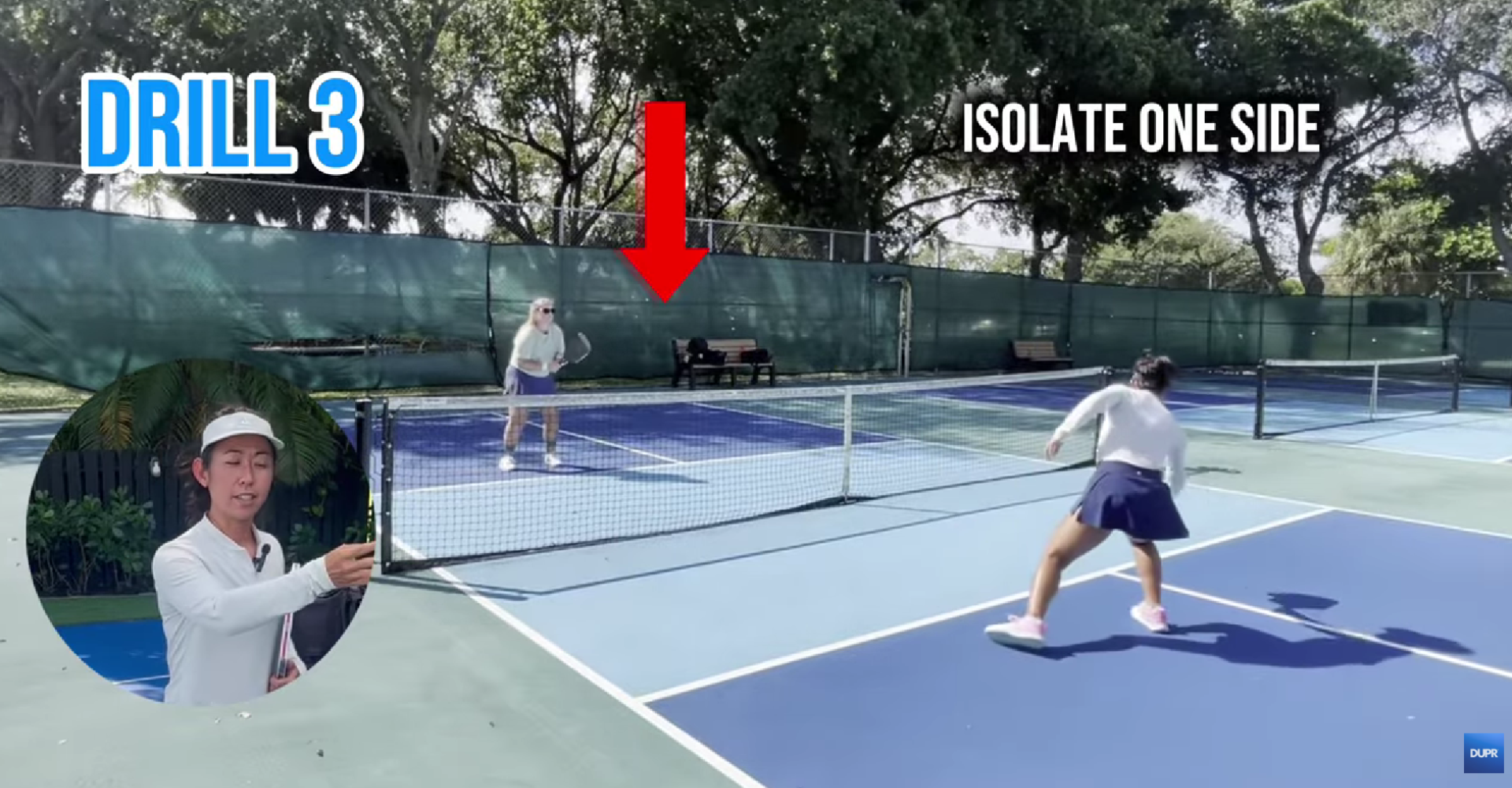
The final phase of this progression focuses on your ability to move the ball intentionally while your opponent tries to stay consistent. This drill teaches you how to "move" your opponent to create openings.
In this exercise, one player isolates a single side (hitting only forehands or only backhands). Their job is to alternate their dinks between your forehand and backhand sides. For example, if your partner is hitting all forehand dinks, you must focus on targeting your returns back to their forehand every time, regardless of where they send the ball.
Pro Tip: Remember to switch sides! It is vital to practice this both down the line and crosscourt, ensuring you spend equal time working on your backhand targets.
Why These Drills Matter for Your Game
These drill progressions can be done in a single practice session or broken up over several days. While they may seem simple, they lay the groundwork for fundamental strategic play. By improving your ability to hit specific targets under pressure, you reduce unforced errors and become a much more formidable opponent at the net.
Consistency at the kitchen is often what separates a recreational player from a tournament-ready competitor. By mastering these patterns, you’ll not only feel more confident on the court but you'll likely see the results reflected in your DUPR rating.
Ready to put these drills into practice? Grab a partner, hit the court, and don't forget to log your match scores on the DUPR app to track your improvement!
For more pickleball tips, check out our blogs page and our Beyond The Baseline Youtube Series, where several pro players share tips and drills to improve your pickleball game.

%20(1).jpg)
%20(1).jpg)
%20(1).jpg)


