
Pickleball counterattack drill: where to aim your counter
%20(2).jpg)
You won the speed up battle. Your paddle got there in time, the ball is going back over the net, and the point is still alive. But where you send that counter decides who wins the next shot.
This pickleball counterattack drill teaches you to stop just hitting the ball back and start placing it. Aim for one specific target and you’ll turn your opponent’s attack into your easiest put-away of the game.
Why placement matters when you counter a speed up
Most players counter a speed up the same way. They react, block it, and send it right back where it came from. That keeps the rally going, but it also gives your opponent a comfortable ball to attack again.
A counter with no target is just survival. A counter with a target puts the pressure back on them. When you place your counterattack well, your opponent has to deal with an awkward ball, and awkward balls tend to float.
How to run the pickleball counterattack drill
You only need a partner and a few minutes at the kitchen line.
- Set up at the kitchen line. You and your partner both start at the non-volley zone line, facing each other.
- Dink until the speed up. Your partner looks for a ball to speed up and drives it at you.
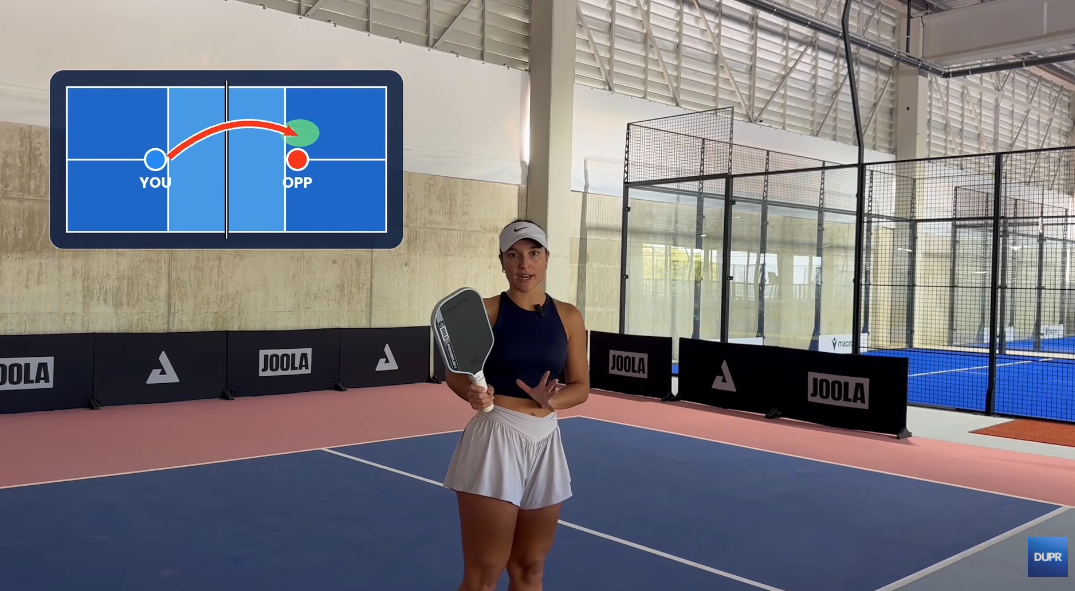
- Counter to the forehand hip. Every time they speed it up, aim your counterattack at their forehand hip.
- Finish the point. If your placement is good, your partner will pop the ball up. Put it away.
Repeat for several reps, then switch roles so you both get practice attacking and countering.
Why the forehand hip is the target
The hip is one of the hardest places on the body to handle a fast ball. It sits right in the gap between a forehand and a backhand, so your opponent has to make a quick decision about which side to use. At kitchen line speed, that split second of hesitation is enough.
On the forehand side, the ball jams them close to the body. They can’t extend their arm or get a full swing on it. The usual result is a defensive block that pops up, and that’s the ball you’ve been waiting for.
Two tips that make your counter work
The target only matters if you can hit it consistently. These two habits help in the drill and in real games.
Keep your swing compact
Speed ups happen fast, and a big backswing makes you late. Keep your paddle out in front and use a short, controlled motion. A compact swing gives you more control over placement and gets your paddle back in ready position sooner.
Use your opponent’s pace
You don’t need to generate your own power on a counter. The ball is already coming at you with plenty of speed. Redirect it with a firm paddle face and let their pace carry the ball to the hip.
Make the drill harder
Once you’re comfortable and hitting the target on most reps, ask your partner to vary where they speed the ball up. Body, backhand side, forehand side, high, low.
Now you have to read the speed up, adjust, and still find the forehand hip. That’s much closer to what happens in a real hands battle, where nobody announces where the attack is coming from.
Counter with a purpose
The goal isn’t just to keep the ball alive. It’s to win the exchange that comes after the counter. Every time you counter a speed up in a game, have a target in mind before the ball even arrives.
Practice this regularly and you’ll start to see more pop-ups, more put-aways, and fewer points lost in fast exchanges at the net. Pair it with Pro Tip Series: Master the Short Hop and Own the Kitchen for a complete kitchen line workout.
Want to see how sharper hands battles show up in your results? Log your next match on DUPR and track how your rating moves as your game improves.

%20(1).jpg)
.jpg)
.jpg)


