No matching results.
Search results
September 25, 2026
Forward Pickleball Builds Community Through Better Competition
The very best thing about Forward Pickleball is not the 12 indoor courts, Pro Shop, entertainment area for corporate events, stretching area, or warm-up and drill wall.
It’s the people.
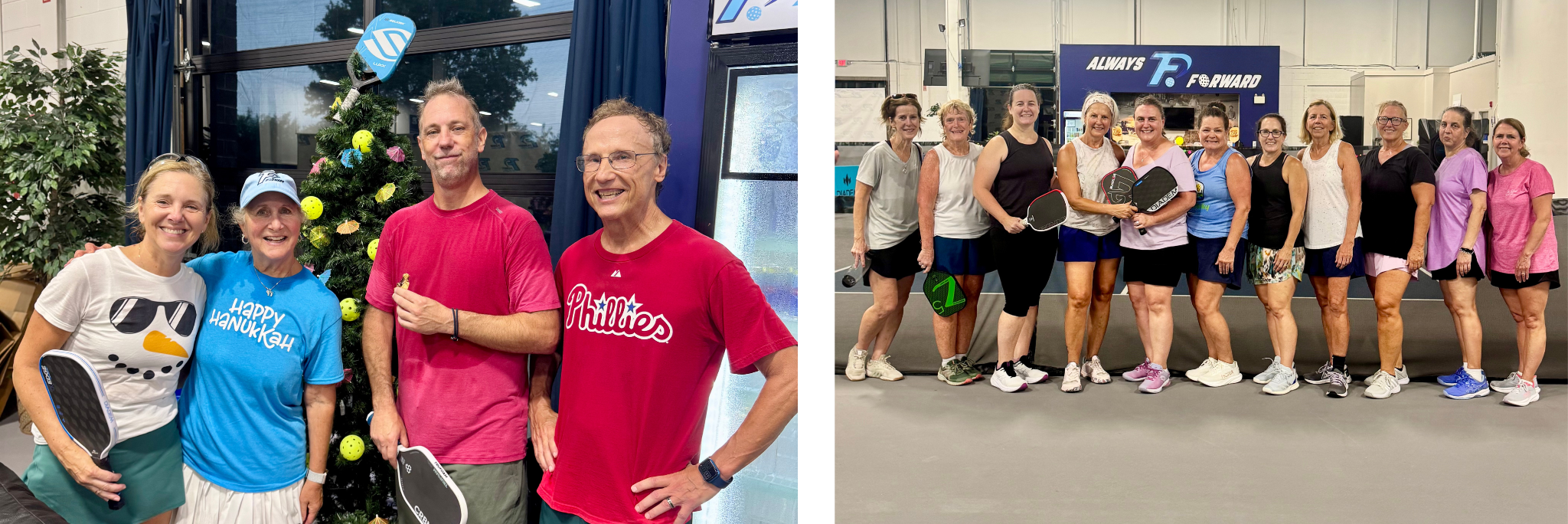
Forward Pickleball, co-founded by Keca and Dave Ward, is built around a culture of fun, friendship, and learning. Located near King of Prussia, Pennsylvania, the club is home to a community of more than 700 members.
“Every club has its own personality,” says co-founder Dave Ward. “Some clubs focus on high-level play, some offer a highly structured franchise experience, and others are more laid-back. Our personality is simple: come learn the game, make new friends, and have a great time.”
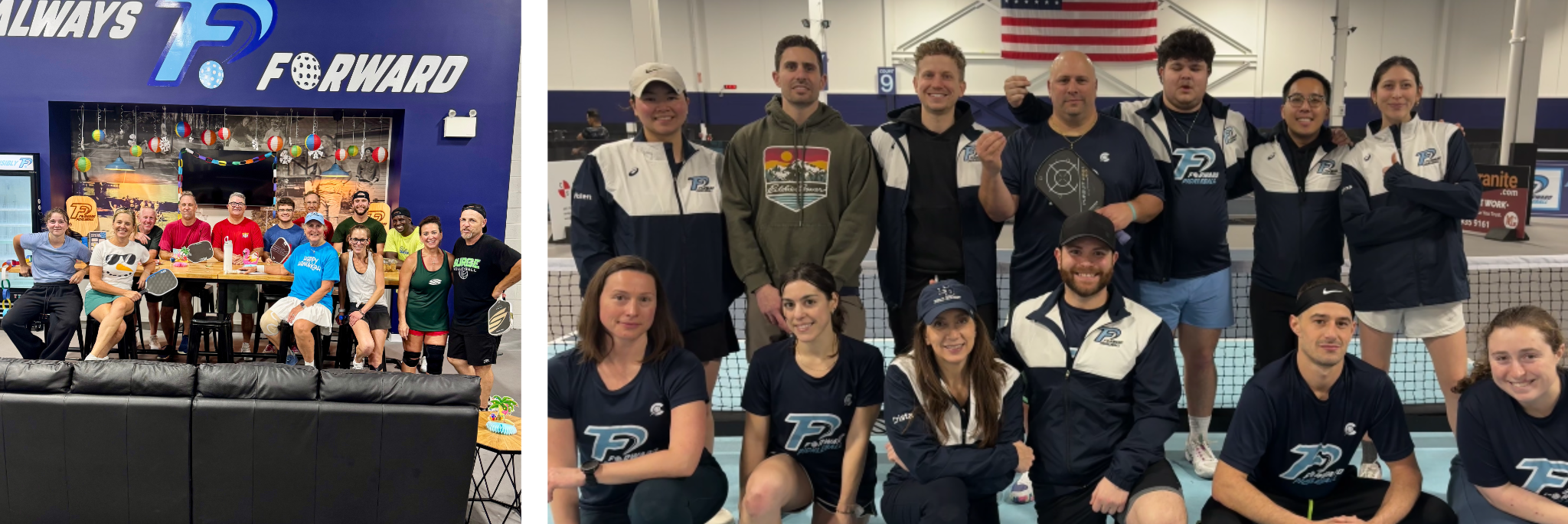
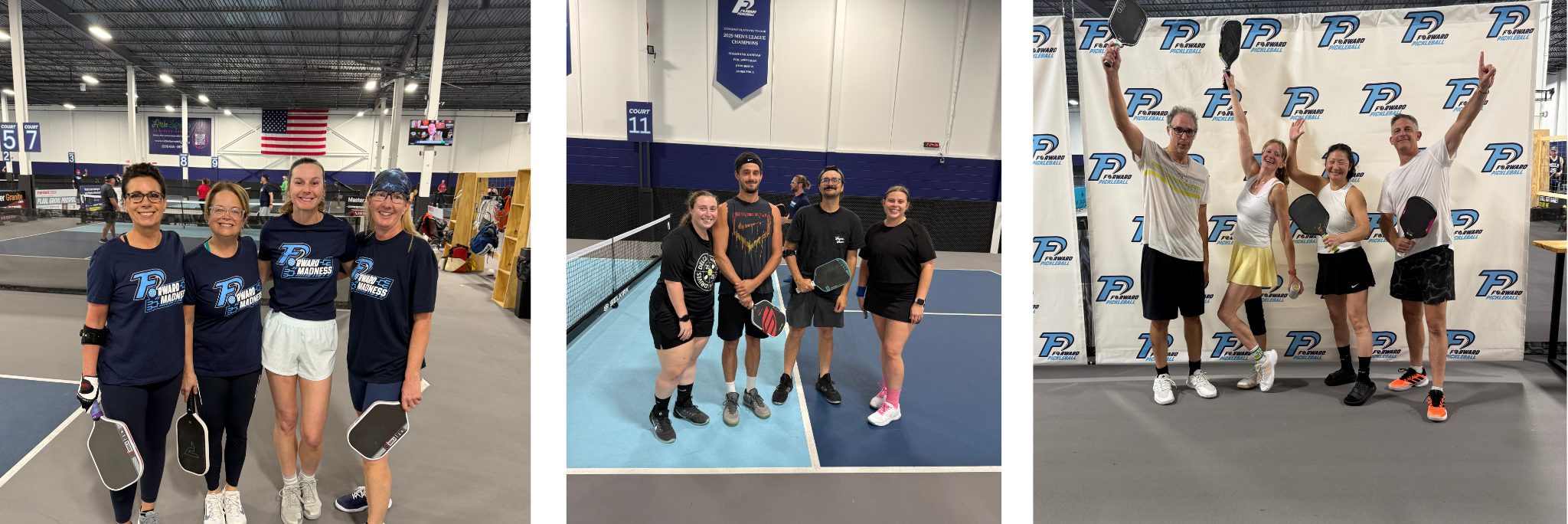
That fun and friendly atmosphere is reflected throughout the entire facility. Members know one another, socialize and interact with each other, and many stay before or after games to spend time together.
One story illustrates what the club has become.
About a year ago, one of the owners asked a member how he had spent Thanksgiving. The member said he had invited a fellow Forward Pickleball member, John, over.
When asked whether the two had been friends before becoming members of Forward Pickleball, the member replied that they had not.
They met through Forward Pickleball, became good friends, and now spend holidays together and occasionally go out for dinner and drinks.
This is exactly the kind of community Forward Pickleball wanted to create.
From Tape on a Court to a 12-Court Pickleball Facility
Forward Pickleball started on a much smaller scale.
In 2022, Keca was teaching pickleball lessons in a small multipurpose gym at a local 4-H club. Before each four-week session, Dave laid out the court lines with black electrical tape, then tracked down the janitor to make sure the tape would remain in place each night.
It was a humble beginning: one taped court with a portable net in a multipurpose gym and the first signs of a growing pickleball community.
As interest grew, Keca’s classes went from one per week to two per night, three nights per week.
The demand was clear.
From there, Keca and David began researching the pickleball industry to identify what they believed a successful facility would need: high ceilings, plenty of space around the courts, ample parking, and a great location.
In January 2024, they found the right site in Audubon, just outside King of Prussia. The Wards believe a successful facility depends on three things: the right lease, the right location, and the right people. With ample parking and easy access from several major highways, the Audubon location made Forward Pickleball convenient for players throughout the region.
The facility was designed around the player experience, with ample space to hang bags, a dedicated warm-up and stretching area, and several places to relax and socialize before or after play. Construction began on July 4, 2024, and Forward Pickleball officially opened on November 7.
“We’ve gone full speed ahead ever since,” Dave says.
A Partnership Built on Complementary Skills
Both Keca and Dave entered the pickleball industry after spending several decades in the corporate world.
Keca spent many years in human resources, including founding and operating several staffing companies and working in the startup world. Dave spent nearly 30 years in financial technology.
Sports, however, had always been a major part of both of their lives. They spent years playing, coaching, officiating, and watching sports. So when they discovered pickleball, they naturally gravitated toward it.
Their roles at Forward Pickleball reflect their individual experience and strengths.
Keca oversees programming, staffing, corporate events, and member relations. Dave manages facility operations and vendor relationships.
Dividing responsibilities allows each of them to focus on the areas where they can contribute most.
How Forward Pickleball Uses DUPR
As Forward Pickleball grew, the team decided to use DUPR to help create more reliable and competitive play for its members.
One of the first initiatives Forward Pickleball introduced was DUPR Score Submission Nights. These take place on the first and last Monday of every month.
By establishing a regular schedule, Forward Pickleball has seen increased adoption of DUPR. The club has also focused on making it easier for players to submit their scores.
After completing their games, players have access to a pro who can assist them with submitting their results and answer any questions they may have about DUPR ratings.
Ultimately, Forward Pickleball hopes to help players establish reliable DUPR ratings, better understand their current skill levels, and participate in more competitive, level-based play.
DUPR ratings are based on actual match results and allow players to monitor their progress and find opponents at an appropriate skill level.
Creating More Competitive Open Play Using DUPR
Forward Pickleball offers DUPR Verified Open Play sessions alongside self-rated open play sessions.
Attendance at the DUPR-based sessions has continued to grow.
For Forward Pickleball, creating competitive games becomes much easier when the guesswork around skill levels is reduced. DUPR ratings give players greater confidence that they are registering for sessions that match their level.
When players give us two hours, we want it to be the best two hours of their day—something they look forward to and keep thinking about after they leave. Good, competitive games are a big part of that experience, and DUPR helps us create them.
This goal aligns closely with DUPR’s mission of supporting both clubs and players.
DUPR allows clubs to build communities, add match results, manage player ratings, and create programming based on measurable skill levels. Currently, more than 8,500 clubs use the platform for programming.
For Forward Pickleball members, having a reliable rating makes it easier to decide which open play session to register for, which league to join, or which tournament to enter.
Reliable ratings also help club operators create more consistent programming.
Rather than relying only on player self-assessment, systems such as DUPR use match results to create a dynamic rating that changes as players compete. Club-, league-, and tournament-verified matches can also carry greater weight when determining a player’s rating and reliability.
This additional structure helps Forward Pickleball create the type of competition its members are looking for: competitive games without unnecessary mismatches.
“As we stated earlier, players lead busy lives.
If players choose to dedicate two hours of their time to Forward Pickleball, we want those two hours to be meaningful.”
Future Opportunities With DUPR+
Forward Pickleball also hopes to explore the additional opportunities available through DUPR+.
“I think we’re probably most excited about the additional benefits DUPR+ can deliver to our members,” Forward Pickleball’s owners say. “From additional perks such as access to DUPR-sanctioned events, exclusive discounts on gear, and an ad-free app experience, we hope it will give our members more ways to enjoy the sport and connect with the larger pickleball community.”
Clubs
September 25, 2026
PLINKY PLONK and DUPR: ratings, live in every format
PLINKY PLONK, the UK marketplace for court sports, now has a DUPR integration built right into the app. Players can link their DUPR account, carry their rating across the app and see DUPR woven through every format in PLINKY PLONK's Organise suite.
By the numbers
- 5 formats in PLINKY PLONK's Organise suite where DUPR is part of the experience: Fixtures, Round Robins, Quickfire Tournaments, Leagues & Box Leagues, Ladders
- 177 UK venues listed right now (live figure as of September 23, 2026)
- 2 players needed to confirm a score before it goes across
What went live with the DUPR integration
DUPR is the rating system most competitive pickleball players already use. From today, a PLINKY PLONK player can link their DUPR account and have their rating and their results move between the two without any manual admin.
Linking runs through DUPR's own hosted login. A player signs in to DUPR inside PLINKY PLONK, PLINKY PLONK never sees their password, nothing is shared until they choose to connect and they can disconnect at any time from their account settings.
Your rating, wherever you play
Once an account is linked, the player's DUPR rating shows on their PLINKY PLONK dashboard and profile, along with the date it last moved. DUPR pushes rating changes through to PLINKY PLONK, so the number stays current on its own. Nobody has to retype a rating or screenshot an app.
DUPR, in every format
Round Robins, Leagues & Box Leagues, and Ladders all submit scores to DUPR once they're recorded and confirmed. A casual Tuesday night box league in Kent counts towards a player's rating the same way a tournament does.
Fixtures let an organiser require a DUPR membership level to join, so a session can be kept at the standard it's meant for. Quickfire Tournaments uses each player's DUPR rating behind the scenes to balance the pools when they're drawn, so pool play stays competitive from the first match.
Nothing reaches DUPR on one person's word. A score only goes across after someone on the other side of the net confirms it. Either player can flag a result instead, which routes it to the PLINKY PLONK team for review rather than to DUPR.
"Most people never play a tournament. They play on a Tuesday night with three mates. This makes those games count."
Wayne Cohn, Founder, PLINKY PLONK
Nobody gets locked out
Players without a DUPR account can still find courts, book, pay, join sessions and record scores exactly as before. The DUPR layer is additive. It rewards the players who want a rating and stays out of the way of everyone else.
"The UK pickleball scene is growing fast, and most of that growth happens at club nights and local leagues. PLINKY PLONK makes it easy for those games to count toward a player's DUPR rating, which means more accurate ratings and better matches for everyone."
Tito Machado, CEO, DUPR
Get connected
Already on PLINKY PLONK? Connect your DUPR account and your rating will follow you into every league, ladder and round robin. New to DUPR? Create your free account and start building your rating from your next match.
About PLINKY PLONK
PLINKY PLONK is the UK marketplace for court sports: pickleball, padel and tennis in one place. Players find a court, book it and pay in about a minute, with no booking fees. Coaches and venues use the same platform to run sessions, programmes and payments. More at plinkyplonk.app.
About DUPR
DUPR (Dynamic Universal Pickleball Rating) is the premier global pickleball rating system and technology platform, trusted by the world's leading clubs, tournaments, leagues, and players. DUPR's dynamic rating system unifies pickleball across age, gender, and location by analyzing match results to accurately evaluate all players across a 2.000 - 8.000 scale. DUPR is the official pickleball rating of leagues, tournaments and clubs around the world, including USA Pickleball (USAP), Global Pickleball Federation (GPF), United Pickleball Association (UPA), Professional Pickleball Association (PPA), Major League Pickleball (MLP), Pickleball.com, Life Time, The Picklr, National Team Pickleball League, National Pickleball League. It also owns and operates Minor League Pickleball and Collegiate Pickleball, two of the biggest amateur leagues in the sport. Players and operators can visit www.dupr.com to sign up and learn more.
Partners
September 23, 2026
Why did my DUPR rating go down after I won a match?
You won. You shook hands at the net, packed your bag, and opened the app expecting a bump. Instead, your number dropped.
If you're asking "why did my DUPR rating go down," you're not alone. It's one of the most common questions we hear. The answer comes down to one idea: DUPR measures how you played compared to how you were expected to play. Here's what that means, the five most likely reasons behind your drop, and what to do about it.
Why did my DUPR rating go down? The short answer
Before every match, DUPR calculates an expected score based on the ratings of everyone on the court. After the match, it compares that expectation to what actually happened.
Beat the expectation, and your rating goes up. Fall short of it, and your rating goes down. That's true even if you won.
Here's a simple example. You're expected to win 11–3, but you win 11–8. You won on the scoreboard, but you underperformed the expectation, so your rating dips. For the full breakdown, read how your DUPR rating is calculated.
5 reasons your rating dropped after a win
1. You won by less than expected
This is the most common reason. Margin matters in the DUPR algorithm. A close win against a team you were supposed to beat comfortably tells DUPR you didn't play at your expected level that day.
2. Your opponents were rated well below you
The bigger the rating gap, the bigger the expected margin. If you're a 4.5 and you narrowly beat a 3.0, that's a win on the bracket sheet. But the score tells a different story, and DUPR reads that story.
3. Your team was favored in doubles
In doubles, DUPR looks at both teams' ratings to set the expectation. If you and your partner were heavily favored, the bar for a good result was high. A narrow win can still land below it.
4. Other matches counted too
Your rating is built from your full body of results, not one match. If you played several matches at the same event, your rating change reflects all of them together. Check your full match history before blaming one game.
5. Your match history is still thin
Early on, a single result can move your rating noticeably. As you log more matches, each one has a smaller relative impact. DUPR recommends at least 10 to 15 matches before fully trusting your number.
Why DUPR works this way
DUPR is not a reward system. It doesn't hand out points for wins the way a tournament bracket does.
Think about what would happen if it did. If every winning team always went up and every losing team always went down, ratings would drift upward over time and stop meaning anything. One team goes up, one team goes down, based on performance against expectation. That balance is what keeps your rating accurate and comparable everywhere you play.
It also works in your favor. Lose a close match to a higher-rated team, and your rating can go up. The same logic that stings after a narrow win rewards you when you compete above your level.
How to protect your rating next time
A dip after a win isn't a punishment. It's information. Here's how to use it:
- Check DUPR Impact before you play. In the Forecast tab of the DUPR app, you can adjust scorelines and see how each outcome would move your rating. You'll know what margin you need before the first serve. Learn more about DUPR Impact.
- Play every point. Don't coast when you're up big. Every point you give away against a lower-rated team can cost you.
- Play up when you can. Competing against higher-rated opponents gives you more room to beat expectations.
- Stay consistent. More matches mean a more stable rating, so one off day has less pull on your number.
Quick answers
Can my DUPR rating go down if I win?
Yes. If you win by less than expected based on everyone's ratings, your rating can go down.
Can my DUPR rating go up if I lose?
Yes. If you lose by less than expected, especially to a higher-rated opponent, your rating can go up.
Does one bad result ruin my rating?
No. Once you have an established match history, a single result is one data point among many.
Keep playing, keep climbing
A rating drop after a win feels unfair in the moment, but it's DUPR doing exactly what it's built to do: measuring your real level, match by match. Open the DUPR app, check your match history, and run a Forecast before your next game. If you're not on DUPR yet, create your free account and start building your rating today.
DUPR Ratings
September 23, 2026
Connecting Thailand’s growing pickleball community
Delray Beach, Fla. - September 26 - DUPR, the global rating system for pickleball, today announced a partnership with DIP, Thailand’s pickleball community and competition platform, to help connect more players, clubs and competitions across the country and bring more rated play to Thailand’s growing pickleball community.
Thailand’s pickleball community is expanding rapidly, with players and clubs increasingly looking for better ways to find games, connect with other players and measure their progress. Through the partnership, DIP’s local playing network will connect with DUPR’s global rating system, helping players carry their rating across clubs, events and competitions.
Making it easier to find and play
DIP brings Thailand’s pickleball communities together in one platform. Players can discover nearby clubs, courts, open play sessions, coaches and tournaments, whether they are playing in Chiang Mai, Phuket, Pattaya, Hua Hin or elsewhere in Thailand.
Clubs and organizers can use DIP to publish events, manage registrations, communicate with players and organize play. For open play, organizers can create sessions, manage player capacity, check players in and generate singles or doubles matchups based on player levels or their own preferences.
The result is a more structured way to organize games while preserving the social experience that makes pickleball unique.
Bringing DUPR to more matches in Thailand
The DUPR integration gives players a trusted, global rating that can travel with them wherever they play.
Players can connect their DUPR account through DIP and display their singles and doubles ratings when joining eligible events. Organizers can use DUPR ratings to better understand player levels, create competitive matchups and support more balanced play.
Eligible match results can also be submitted to DUPR, meaning a match played at a local club in Thailand can contribute to a player's DUPR Rating and broader playing history.
“As pickleball continues to grow in Thailand, we want to make sure players have the tools to play more, connect more easily and understand where they stand,” said Johnnie Carmichael, Director of Global Partnerships at DUPR. “DIP has built an important platform for the local pickleball community, and connecting it with DUPR gives players a way to take their rating with them across clubs and competitions. We’re excited to help make more matches in Thailand count.”
For players, this means more opportunities to build a rating through everyday play, track their progress and find games with players at a similar level. For clubs and organizers, it provides another tool to create more competitive and engaging experiences for their communities.
“DIP was built to make pickleball easier to discover, organize and play across Thailand,” said Mr. Chankasem. “Our partnership with DUPR adds another important layer by giving players a trusted way to measure their game and make every match more meaningful. Together, we can help connect Thailand’s growing pickleball community with the wider global sport.”
About DIP
DIP is Thailand’s pickleball community and competition platform. It helps players discover clubs, venues, coaches, open play and tournaments; register and pay for events; book courts; join skill-appropriate matches; record scores; follow rankings; and track their progress. For clubs and organizers, DIP provides tools to manage members, courts, events, payments, communication, matchmaking and competition from one connected platform. The DUPR integration is live now. Find your next game at letsdip.app.
About DUPR
DUPR (Dynamic Universal Pickleball Rating) is the premier global pickleball rating system and technology platform, trusted by the world's leading clubs, tournaments, leagues, and players. DUPR's dynamic rating system unifies pickleball across age, gender, and location by analyzing match results to accurately evaluate all players across a 2.000 - 8.000 scale. DUPR is the official pickleball rating of leagues, tournaments and clubs around the world, including USA Pickleball, Global Pickleball Federation (GPF), United Pickleball Association (UPA), Professional Pickleball Association (PPA), Major League Pickleball (MLP), Pickleball.com, Life Time, The Picklr, National Team Pickleball League, National Pickleball League. It also owns and operates Minor League Pickleball and Collegiate Pickleball, two of the biggest amateur leagues in the sport. Players and operators can visit www.dupr.com to sign up and learn more.
Partners
September 23, 2026
DUPR partners with Poland pickleball federation
DUPR partners with Poland pickleball's national governing body, becoming the exclusive rating system for the country's competitive scene.
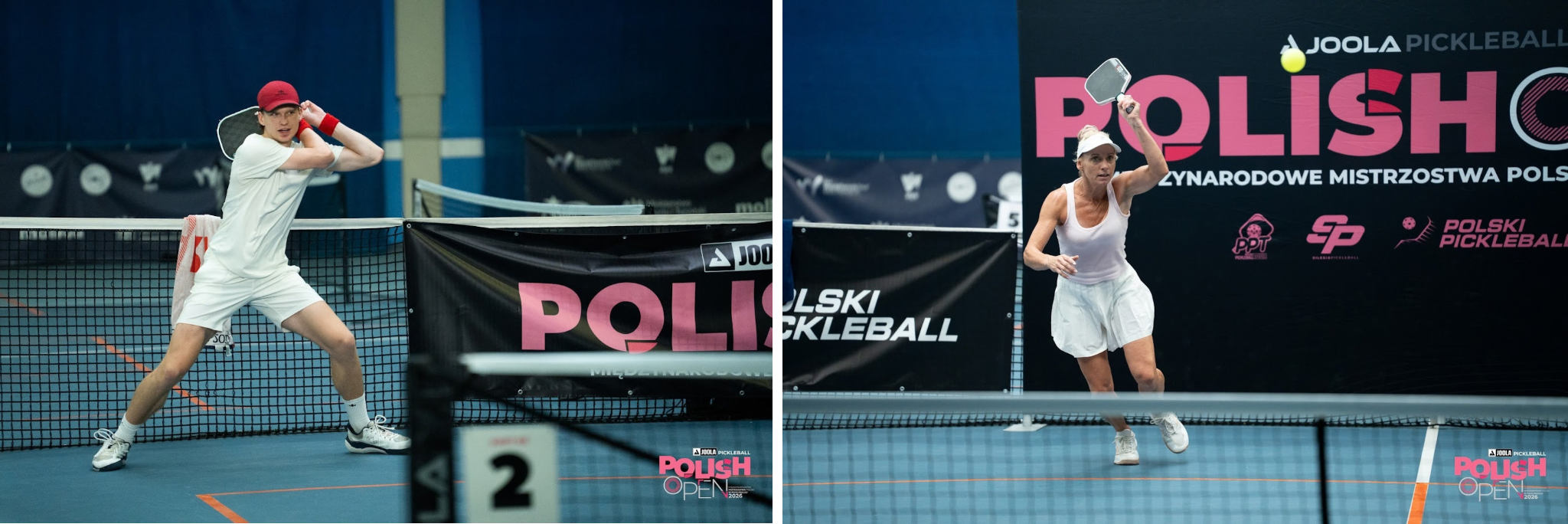
The Związek Polskiego Pickleballu, Poland's national pickleball federation, has signed a multi-year agreement making DUPR its official rating partner. Every federation-sanctioned event will now submit results directly to DUPR, giving Polish players a rating built on real, verified competition.
A federation built for growth
The Polish Pickleball Federation is a member of the Polish Olympic Committee and oversees tournaments, rankings, coaching certification, and club development across the country. This partnership makes DUPR the federation's exclusive rating system, meaning results from every sanctioned event, from local club tournaments to national championships, will feed directly into DUPR.
That gives players across Poland one consistent rating. The same number whether they're competing in Warsaw or stepping onto a DUPR-rated court anywhere else in the world.
What this partnership means for Poland pickleball players and clubs
For Polish players, this is the difference between guessing your level and knowing it. A DUPR rating brings:
- A number built on real, verified match results, not self-reported skill level
- Fairer brackets at club and national events
- Easier partner and opponent matching, in Poland and anywhere else DUPR is used
- One rating that means the same thing no matter where you play
Clubs benefit too. Federation-affiliated clubs now have a direct path to run DUPR-rated leagues and tournaments, with every result counting toward the national picture of where the sport stands in Poland.
Building the game across Poland
Poland is an emerging market for pickleball, and the federation has a clear plan for growth. Priorities include increasing the number of players and clubs nationwide, expanding the national tournament and ranking system, building junior and school programs, certifying more coaches, and supporting dedicated pickleball facilities across the country. The federation is also deepening its international partnerships and raising the sport's visibility in the Polish sports market.
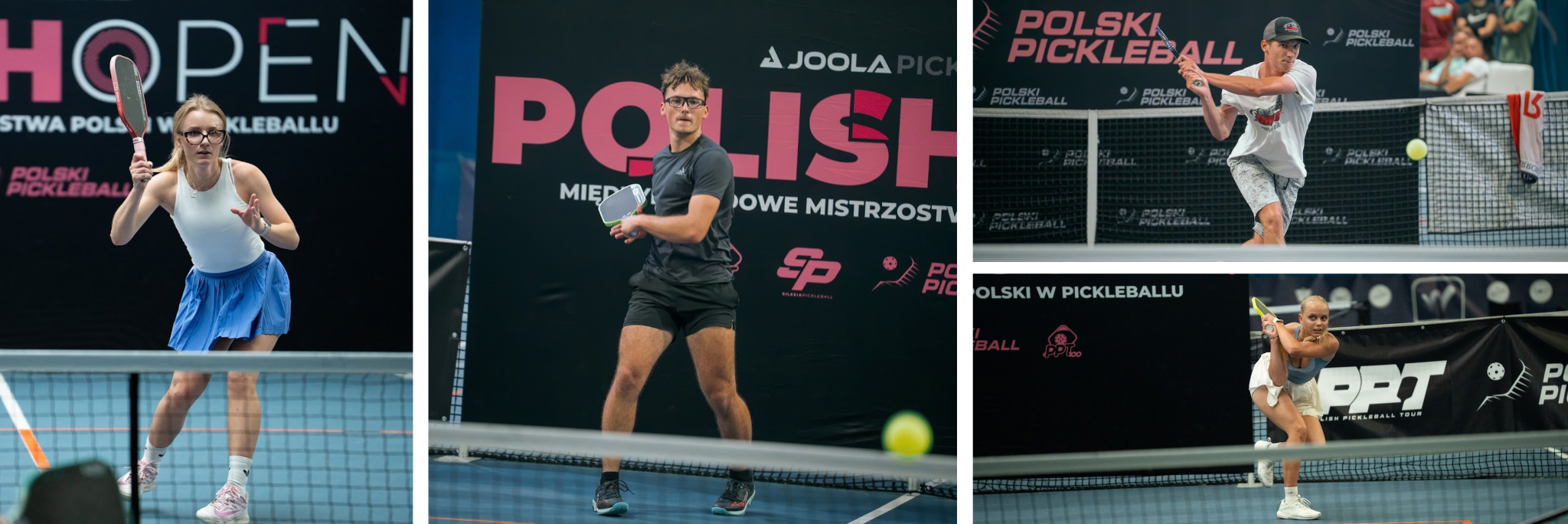
A shared rating standard gives all of that growth a stronger foundation. As more clubs and players join, DUPR data will show exactly how the sport develops in Poland, match by match.
This partnership puts Poland alongside the growing list of countries and federations that trust DUPR as the standard for competitive play. Follow the Polish Pickleball Federation on Instagram (@polskipickleball) and Facebook (Polski Pickleball) for updates, and check your own rating at dupr.com.
Community
September 21, 2026
Veolia Arizona Open 2026: results and DUPR ratings
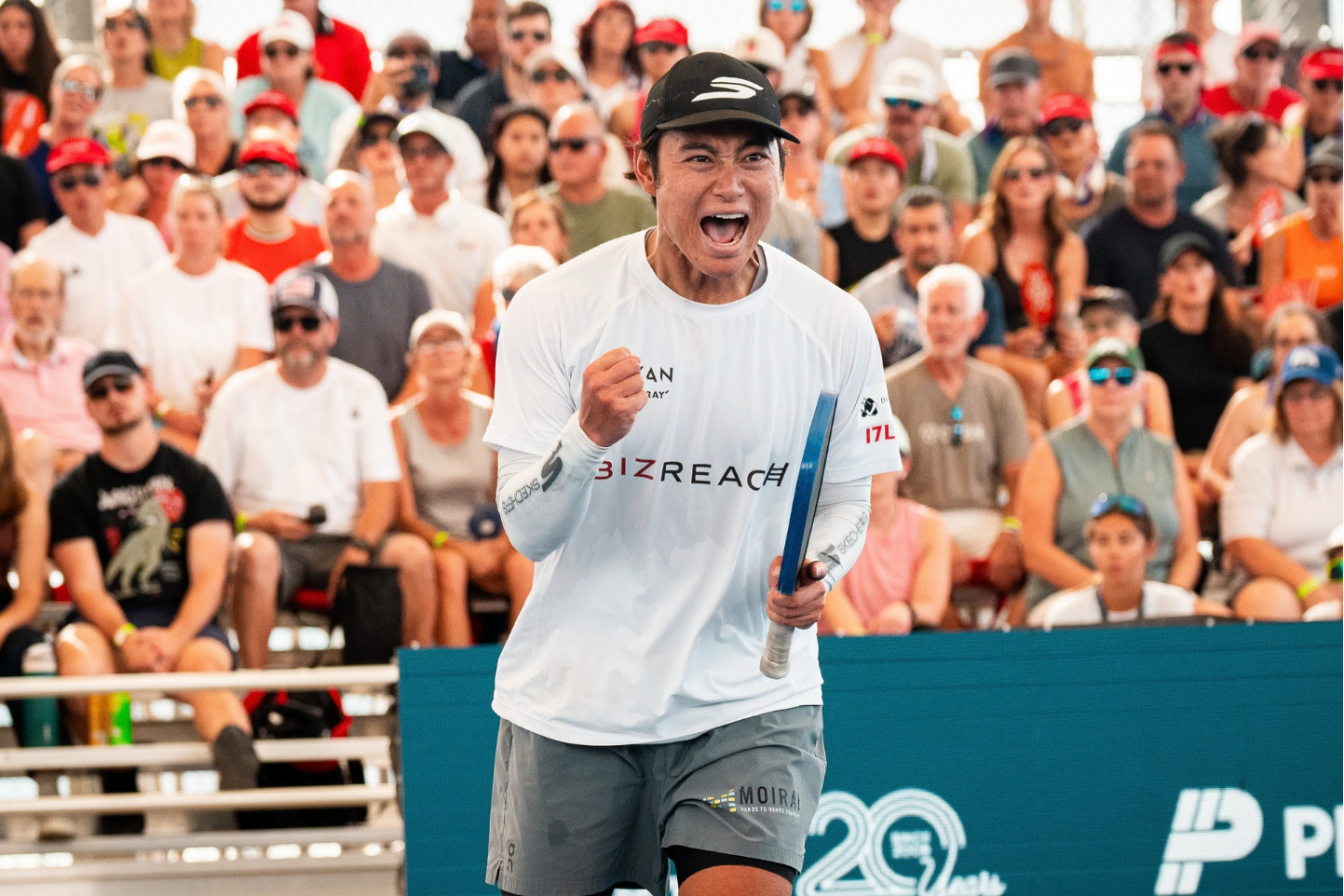
Nico Acevedo and Yuta Funemizu didn't leave Mesa with gold. They still produced the result of the week at the Veolia Arizona Open 2026, and the DUPR data shows why.
The season's first PPA Tour Open ran September 14 to 20 at Arizona Athletic Grounds, with 1,000 points on the line and triple-digit heat in the forecast. Here's who won, who pulled off upsets, and what the ratings say about it.
[IMAGE: Veolia Arizona Open 2026 champions on the podium at Arizona Athletic Grounds | Alt text: Champions celebrate on the podium at the Veolia Arizona Open 2026 in Mesa, Arizona]
Veolia Arizona Open 2026 champions
- Women's doubles: Rachel Rohrabacher and Parris Todd def. Tyra Hurricane Black and Meghan Dizon
- Men's doubles: Andrei Daescu and Christian Alshon def. Yuta Funemizu and Nicolas Acevedo
- Mixed doubles: Ben Johns and Anna Leigh Waters def. Rachel Rohrabacher and Christian Alshon
- Women's singles: Anna Leigh Waters def. Kate Fahey
- Men's singles: Christopher Haworth def. Federico Staksrud
Anna Leigh Waters left Arizona with two golds, in singles and mixed.
Acevedo and Funemizu's run by the numbers
Acevedo entered with a 6.622 DUPR. Funemizu entered at 6.186. On paper, they weren't the favorites in their biggest matches.
Their standout win came against Ben Johns (7.074) and Federico Staksrud (6.721). Both opponents carried higher ratings than either member of the team across the net. Acevedo and Funemizu won 11-4, 11-5.
They followed it with a comeback over C. Klinger (6.614) and C. Chaffin (6.142), dropping the first game 6-11 before taking the next two 13-11 and 12-10.
Rohrabacher and Alshon: Arizona's multi-medalists
Two players reached the podium twice in Mesa.
Rachel Rohrabacher (6.271 DUPR) won women's doubles gold with Parris Todd and took silver in mixed. Christian Alshon (6.882 DUPR) won men's doubles gold with Andrei Daescu and also took silver in mixed. The pair reached the mixed final together before falling to Johns and Waters.
Top upsets of the week
Four matches where the lower-rated side came out on top:
- Austin Bricker (5.835) and Michael Loyd (6.219) def. Dekel Bar (6.482) and Dylan Frazier (6.483), 4-11, 11-9, 11-7
- Elliott Schupp (6.112) and Kiora Kunimoto (5.791) def. Will Howells (6.558) and Etta Tuionetoa (6.050), 11-6, 11-2
- Jalina Ingram (5.466) def. Kaitlyn Christian (5.883), 12-14, 11-9, 11-6
- Jaxon Madsen (5.932) def. Zane Ford (6.294), 15-13, 11-0
Bricker and Loyd, Ingram, and Madsen all won after close or extended first games. Madsen's second game, an 11-0 shutout, was the most one-sided score of the group.
What's next on the PPA Tour
The Rate Las Vegas Open is up next, running September 28 to October 4, followed by the Veolia Chicago Cup October 5 to 11.
Want to see how these players' ratings move after Vegas? Follow them on the DUPR rankings, and if you're not rated yet, download the DUPR app and log your first match.
Pickleball Tournaments
September 21, 2026
What to expect: 2026-27 college pickleball season
College pickleball is back, and the storylines are already stacking up before the first serve of conference play. From a defending champion chasing history to entire regions turning into recruiting hotbeds, the 2026-27 college pickleball season has plenty on the line. Here's what to watch as the year unfolds.
FAU chases the first repeat championship
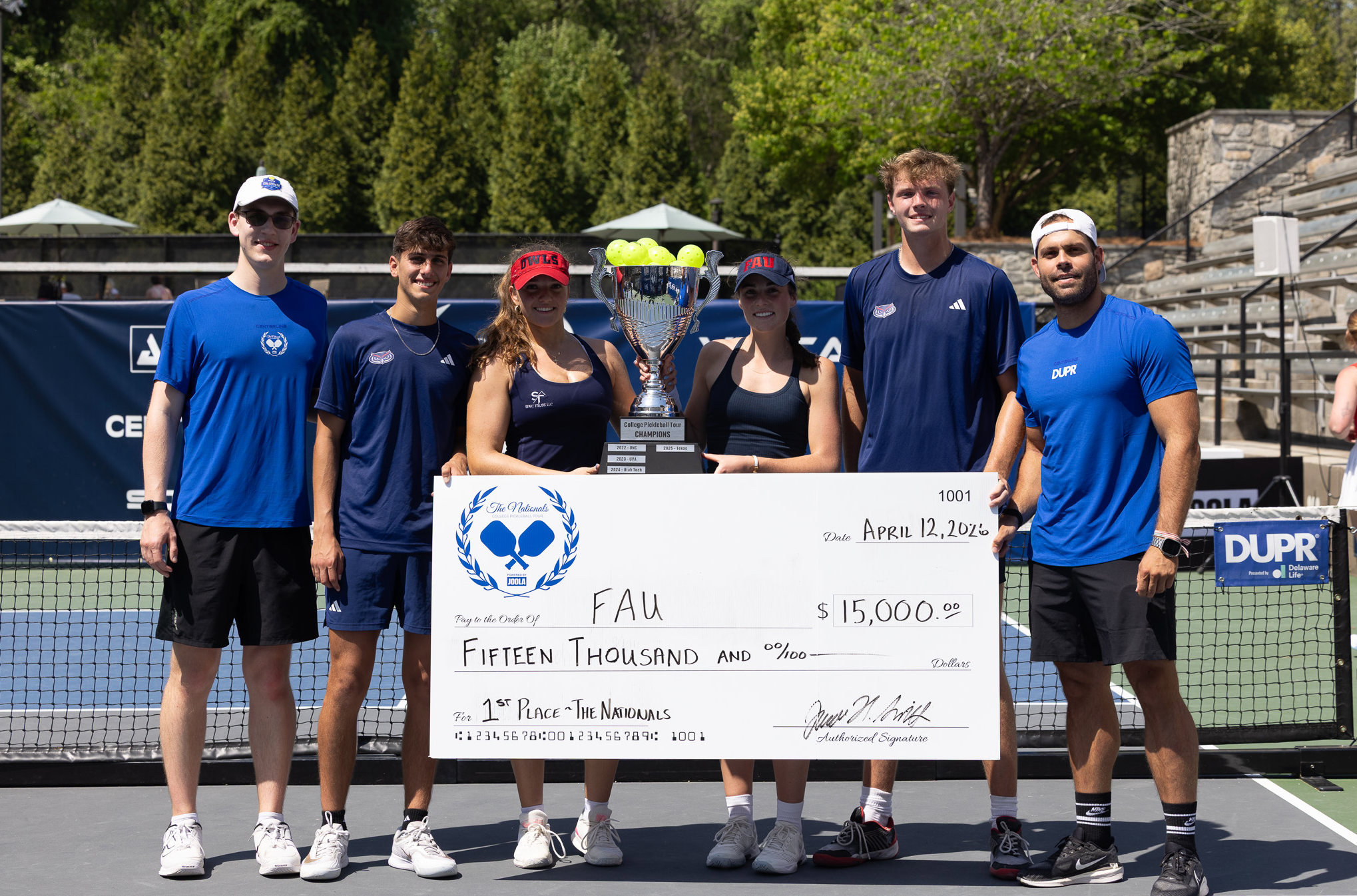
FAU dropped just one game on its way to the 2026 title, and the squad is running it back for 2026-27. Ava Cavataio, Bella Nelson, Jayden Broderick, and Alec LaMacchio all return for another run at the top.
No team in College Pickleball Tour history has won back-to-back championships, and no school has won more than one. That makes FAU's title defense one of the biggest storylines of the year.
Utah Tech reloads with more depth
Utah Tech spent the offseason recruiting across the country, adding depth to a roster that already came close to a title last year. The team picked up multiple Super Regional wins and became the first-ever College World Champion.
In all five Nationals played so far, the champion has either been Utah Tech or beaten Utah Tech on the way to the trophy. Any team with title hopes in 2027 will have to get through them first.
The Midwest is turning into a college pickleball hub
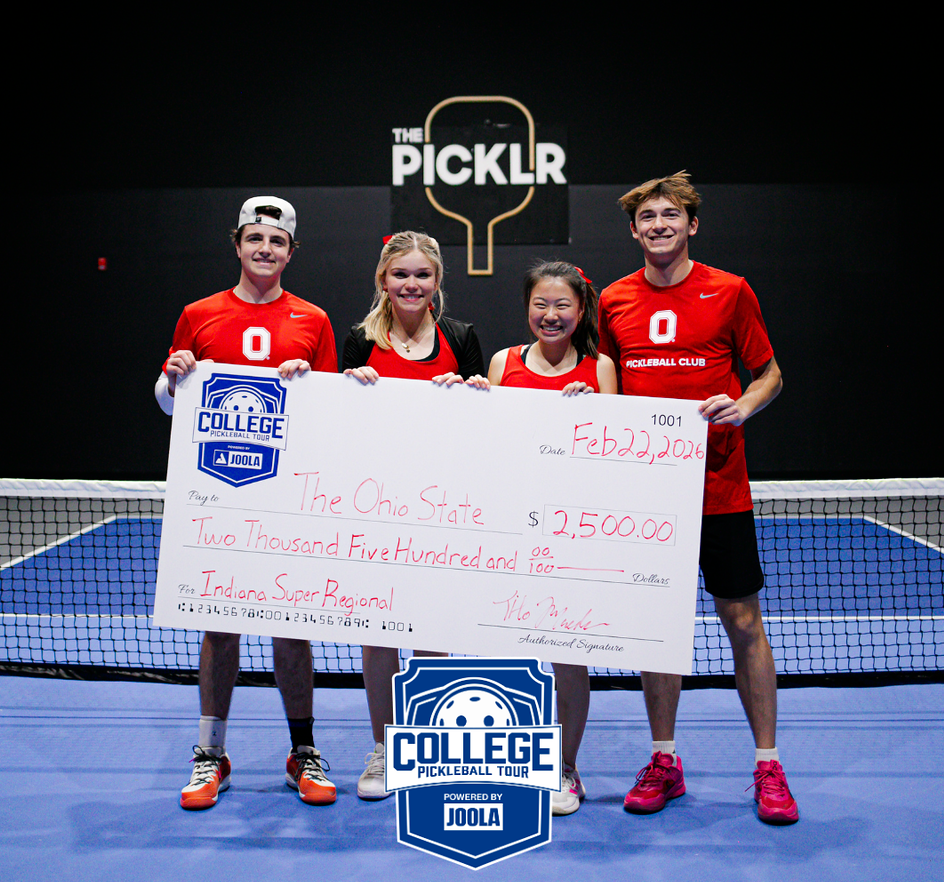
Utah and Florida have anchored college pickleball since the start, but the Midwest is closing the gap fast. Indiana, Purdue, Wisconsin, and Ohio State all field competitive squads that improve every year.
Grand Valley State University (Michigan) and Drury University (Missouri) have gone a step further, launching varsity pickleball programs. As recruiting in the region ramps up, expect the Midwest to challenge both the traditional powers and the scholarship schools.
The Northeast finally gets in the game
The 2026-27 college pickleball season includes Super Regionals and the College World Championship across the country. Upcoming events include:
- Oct. 3: Utah Super Regional 300 @ Premier Pickleball Club, Herriman, UT
- Oct. 17-18: North Carolina Super Regional 300 @ City of Wilson Pickleball Facility, Wilson, NC
- Oct. 24-25: Ohio Super Regional 300 @ Match Point Pickleball, Columbus, OH
- Oct. 30-Nov. 1: College World Championship 400 @ Brookhaven Country Club, Farmers Branch, TX
- Nov. 21-22: Arizona Super Regional 300 @ Center Court Glendale, Glendale, AZ
The Northeast packs in more colleges than any other US region, but cold weather and limited court space kept the sport from taking hold there for years. That's changing.
The Northeast has become one of the most popular regions for college tournaments this season, with events popping up nearly every weekend.
Dual Match points raise the stakes this college pickleball season
The 2026-27 season introduces points for Dual Matches, giving schools up to 100 points for wins against local rivals. Those points count toward qualifying for the 2027 Nationals, where 16 bids go to the season's top point earners.
With bids on the line, expect local rivalries to get a lot more competitive this year.
The bottom line
The 2026-27 college pickleball season has a defending champion with something to prove, a perennial contender reloading for another run, and entire regions fighting for a bigger seat at the table. Check DUPR's college rankings throughout the season to see how each storyline plays out.
College
September 21, 2026
Pickleball Tournament Formats Explained
You find a local pickleball tournament, register for your division, and show up ready to play.
Then you look at the schedule and see terms like round robin, pool play, double elimination, and single elimination.
What do they actually mean?
The format of a pickleball tournament determines how many matches you may play, what happens after a loss, and how players or teams eventually make their way to the medal rounds.
Understanding the format before tournament day can help you prepare both physically and strategically.
Below are some of the most common pickleball tournament formats and how they work.
Why Do Pickleball Tournament Formats Matter?
Not every pickleball tournament works the same way.
Some formats guarantee multiple matches.
Others can eliminate you from championship contention after a single loss.
Some tournaments begin with group play before advancing players into an elimination bracket.
The format can affect:
- How many matches you play
- How much rest you have between matches
- How standings are determined
- Whether one loss eliminates you from championship contention
- How players are seeded into later rounds
USA Pickleball currently lists six approved tournament formats for sanctioned events: single elimination with consolation, double elimination, round robin, pool play, non-pool play, and team play.
Rules and scoring can also vary between tournaments, so always check the specific event details before competing.
Round Robin Format
A round robin gives every player or team the opportunity to play against the other competitors within their assigned group.
Instead of being eliminated after one loss, you continue playing through the remaining scheduled matches.
This format can be especially useful for smaller brackets because it gives competitors multiple opportunities to play.
At the end of the round robin, standings are determined based on match results.
If multiple players or teams finish with the same record, tournament rules may use tiebreakers such as head-to-head performance or point differential.
Why Players Like Round Robin Tournaments
One of the biggest advantages of a round robin is the number of matches.
Traveling to a tournament only to have your day end after one difficult opening match can be disappointing.
A round robin gives players more opportunities to compete, adjust their strategy, and face opponents with different playing styles.
Pool Play Format
Pool play is similar to a round robin, but it is generally used when there are enough competitors to divide the field into smaller groups.
For example, a tournament with 16 teams might divide competitors into four pools.
Each team plays the other teams within its pool.
After pool play is complete, qualifying teams may advance into a single-elimination or double-elimination playoff bracket based on their results.
USA Pickleball describes pool play as a structure in which competitors are divided into two or more pools, with each pool playing a round robin before qualifiers advance into an elimination playoff.
Why Pool Play Works
Pool play gives players multiple matches while still creating the excitement of an elimination-style finish.
It also helps tournament organizers manage larger fields without requiring every team to play every other team.
Single Elimination
Single elimination is one of the simplest pickleball tournament formats.
Win, and you advance.
Lose, and you are eliminated from championship contention.
Players or teams continue through the bracket until only two remain for the championship match.
Benefits of Single-Elimination Tournaments
Single elimination is efficient.
Because competitors leave the championship bracket after one loss, tournament organizers can move a large field through the event with fewer total matches.
The Downside of Single Elimination
There is very little room for error.
One difficult match can end your chances of reaching the medal rounds, even if you may have matched up well against other players in the field.
Some tournaments address this by offering consolation play or additional placement matches.
Single Elimination With Consolation
A single-elimination tournament with consolation gives players who lose in the main bracket another opportunity to keep playing.
The championship side still follows a single-elimination structure.
However, players who are eliminated from championship contention may move into a consolation portion of the event instead of ending their day immediately.
This gives participants additional match experience while keeping the main bracket relatively simple.
Double Elimination Format
In double elimination, one loss does not necessarily end your tournament.
Competitors generally need to lose twice before being eliminated.
After the first loss, players or teams move into another part of the bracket and continue competing.
This creates a second path toward the medal rounds even after an early loss.
How Double Elimination Changes Strategy
Double elimination gives players an opportunity to recover from one difficult match.
At the same time, the format can create a longer tournament day because more matches are required.
That makes recovery, hydration, energy management, and preparation between matches especially important.
Non-Pool Play
In non-pool play, competitors may first play a round robin involving the entire field.
The results of those matches are then used to seed players or teams into a single-elimination or double-elimination medal round.
USA Pickleball describes non-pool play as a round-robin stage followed by seeding into an elimination medal round.
This format gives players multiple early matches while still creating an elimination-style finish.
Team Play
Not every pickleball tournament is built around traditional singles players or doubles pairs.
Team play uses a roster of multiple players.
Depending on the event, team competition may include combinations of:
- Singles
- Gender doubles
- Mixed doubles
The results of individual matches contribute to the overall team result.
Team pickleball can require a different strategy because success depends on the performance of the entire roster rather than one individual or doubles partnership.
What Is a Consolation Bracket?
A consolation bracket gives players who are no longer able to win the main championship another opportunity to compete.
Depending on the event, consolation play may be used to determine placement or simply give competitors additional matches.
Not every tournament offers consolation competition, so check the tournament details before registering.
What Does Seeding Mean?
Seeding refers to where players or teams are placed within a tournament bracket.
Higher-seeded competitors are generally separated within the draw so they do not immediately face one another.
Tournament organizers may consider several factors when creating seeds, including:
- Ratings
- Rankings
- Previous tournament results
- Qualifying performance
- Event-specific criteria
Your DUPR Rating can provide information about your current playing level, but your DUPR number does not automatically determine your tournament seed.
How Do Skill Divisions Work?
Many amateur pickleball tournaments organize competitors by skill level.
Common skill divisions may include:
- 3.0
- 3.5
- 4.0
- 4.5
- Advanced or Open divisions
Some events also divide competitors by age.
The purpose of skill divisions is to create more competitive matches between players with similar levels of ability.
Using a match-based rating system such as DUPR can help players better understand which division reflects their current level.
What Happens to Your DUPR During a Tournament?
If tournament results are submitted to DUPR, those matches can contribute to your rating.
DUPR looks at how you performed compared with the expected result, along with factors such as match type, recency, and the amount of match history attached to your profile.
That means winning does not automatically guarantee that your rating will increase, and losing does not always mean your rating will decrease.
Performance matters.
For example, if you perform better than expected against a stronger opponent, that performance can positively influence your rating even if you do not win the match.
You can learn more in DUPR's guide to how your DUPR Rating is calculated.
Which Pickleball Tournament Format Is Best for New Players?
For players entering their first tournaments, round robin and pool play formats can be especially appealing.
Both generally provide multiple opportunities to compete.
One early loss does not automatically end your tournament experience, and you can face several opponents with different playing styles during the same event.
Single- and double-elimination tournaments can also be good options, but it is important to understand how each loss affects your ability to advance.
How to Prepare for Different Pickleball Tournament Formats
Your preparation should reflect the type of tournament you are entering.
For a round robin or pool-play event, expect multiple matches and potentially limited downtime between them.
For double elimination, remember that an early loss does not necessarily mean your tournament is over.
For single elimination, be prepared to play with urgency from the beginning because every match can determine whether you advance.
Regardless of format, make sure you know:
- Your scheduled start time
- The scoring format
- Your position in the pool or bracket
- How players or teams advance
- Which tiebreaker rules apply
- Whether results will be submitted to DUPR
Find the Right Pickleball Tournament Format for You
Understanding pickleball tournament formats removes much of the confusion from competitive play.
A round robin gives you multiple matches within a group.
Pool play divides a larger field into smaller groups before competitors advance.
Single elimination gives you one path through the championship bracket.
Double elimination provides another opportunity after an initial loss.
Team play makes the performance of the entire roster part of the competition.
Once you understand the structure of the event, you can focus on what matters most: playing.
Use DUPR to monitor your rating, track your progress, and better understand your level as you gain more tournament experience.
You can also read DUPR's guide to pickleball tournaments and leagues for more information about getting started with competitive pickleball.
No items found.