No matching results.
Search results
September 17, 2025
Win a Fully Funded Trip to the 2025 Adidas Collegiate Championships!
Collegiate Pickleball Players — This Is Your Shot!
Reign Storm is fully funding one team’s trip to the 2025 Adidas Collegiate World Championships!
Dreamed of playing on the biggest stage in collegiate pickleball? This is your chance to have your UPA World Championships experience covered, thanks to Reign Storm.
What’s Covered
The winning team (one team of 2 men + 2 women) will receive:
- Up to 4 nights of hotel stay
- Flights
- $100 per day for food
- Entry fees
*Team must be based in the United States.
How to Enter
Submit your entry by clicking the link and providing:
- A team photo
- A short video testimonial telling us:
- Why your team is fired up to compete at the Adidas Collegiate World Championships
Why you deserve to be chosen
- Why your team is fired up to compete at the Adidas Collegiate World Championships
Bonus Challenge: Create a fun, high-energy video featuring your team with Reign Storm. Think outside the box: choreographed routines, creative skits, or anything that shows your team’s energy and personality.
The best entries will be featured on DUPR’s Instagram, where the community will vote for their favorite team in the comments.
Key Dates
- Submissions close: Wednesday, October 1st
- Community voting on DUPR’s Instagram: October 3-9
- Winner announced: Friday, October 10 — exactly three weeks before the Championship!
Your Path to Glory
The 2025 Adidas Collegiate World Championships is the ultimate stage for collegiate pickleball. Reign Storm is fueling one team’s journey to compete at the highest level.
Don’t just play. Make history.
ENTER NOW!
Official Rules:
NO PURCHASE NECESSARY TO ENTER OR WIN. This Giveaway is in no way sponsored, endorsed, or administered by, or associated with, Instagram, TikTok, Facebook, or any other social media platform. Open to Collegiate Pickleball Teams and Players solely in the DUPR platform. Each team must consist of currently enrolled collegiate pickleball players and be located in the United States.
Participants must be 18 years or older or have parental/guardian consent. Giveaway is open to legal residents of the United States. Giveaway begins [September 17th] and ends Wednesday, October 1st, 2025, at 11:59 PM EST ("Entry Period"). Entries submitted after the Entry Period will not be eligible. Prize details include: One (1) winning team (consisting of 4 player (2 men + 2 women)) will receive a funded trip to The 2025 Adidas Collegiate Pickleball Championships, which includes: Round-trip airfare from school to the event (or equivalent travel reimbursement), Hotel accommodations at the for days of the event, preferred hotel, Tournament entry fees, and $100 per day for food Friday to Sunday.
Approximate retail value (ARV) of the prize: $16,600. Prize is non-transferable and cannot be redeemed for cash. Winner is responsible for any applicable taxes or additional expenses not specified.
The winner will be notified via email and/or social media direct message within five (5) days of the voting closing. If a winner does not respond within 48 hours, a new winner may be selected.
Winner must provide valid proof of identity upon request to claim the prize. By entering, participants grant Sponsor and its partners the right to use submitted content (photos/videos) for promotional purposes without additional compensation.
Winner agrees to participate in any promotional activities related to the Giveaway. Winner and team members may be required to sign a travel liability waiver before receiving the prize.
DUPR and Reign Storm are not responsible for cancellations, travel disruptions, injuries, or other unforeseen circumstances related to the trip.
DUPR reserves the right to disqualify any entry that does not comply with the rules or appears fraudulent. DUPR reserves the right to modify, suspend, or terminate the Giveaway in the event of unforeseen circumstances. By participating, entrants agree to release DUPR, its affiliates, and partners from any liability arising from participation or prize use. By entering, you agree to these Official Rules. By entering the Giveaway, participants acknowledge and agree to the collection, use, and processing of their personal information (such as name, email address, and any other required data) by DUPR and Reign Storm for the purposes of administering the Giveaway, notifying the winner, and providing the prize.
Participants' personal data will not be shared with third parties except as necessary to fulfill the prize (e.g., for travel arrangements or other prize-related services). By entering, participants agree to the collection and use of their personal data as outlined in the privacy policy and these Official Rules.
College
Partners
September 16, 2025
The First University in the U.S. to Officially Launch Varsity Pickleball
College pickleball is evolving at lightning speed, and Drury University made history by becoming the first university in the nation to officially launch varsity pickleball. At the heart of this groundbreaking move is Jarrod Smith, a pickleball pro, multi-time national champion, and longtime head tennis coach at Drury. Just a year ago, Smith transitioned from the tennis court to take the reins as head coach of Drury’s varsity pickleball team.
What Are “Varsity” Sports?
At most colleges, you’ll hear about two types of sports: club and varsity.
- Club sports are run by students, usually with small budgets and volunteer coaches. They’re fun, competitive, and community-driven but they aren’t officially part of the school’s athletic department.
- Varsity sports, on the other hand, are official university teams. They receive full support from the athletic department, which includes:
- Scholarships to help players pay for school
- Full-time coaches dedicated to training and developing athletes
- Team budgets and facilities on par with other big-name sports
- Official competition schedules where the school is represented at intercollegiate events
While more than 125 universities currently offer pickleball club programs, Drury became the first to integrate pickleball into its athletics department as a fully recognized varsity sport. Pickleball players at Drury now receive the same backing, resources, and recognition as athletes in basketball, tennis, or soccer. That means scholarship opportunities, coaching staff, and dedicated program budgets.
Why Being First Matters
Drury’s decision is more than symbolic; it’s a spark. Smith hopes their leadership will encourage other universities to follow suit.
“We wanted to be the first, but we don’t want to be the only,” he said in an interview with Pickleballers. “I want Drury to be a resource for other schools. We’ve seen pickleball grow recreationally, professionally, and at the junior level. Now college is the final frontier and we’re ready to help others get there.”
A Unique Advantage: Beyond NCAA
Launching a varsity sport with no blueprint is no small task. Recruiting is uncharted territory, since few high school athletes currently specialize in pickleball. Smith sees opportunity in crossover tennis players, transfers, and even pros eager for the collegiate experience.
The high school pipeline is also growing, with juniors encouraged to participate in high school pickleball tournaments to be drafted into future college varsity teams.
For now, Drury enjoys a unique advantage: they aren’t bound by NCAA regulations.
“It’s wide open,” Smith said in that same interview with Pickleballers. “That freedom lets us create a schedule that prepares players for both college competition and professional aspirations. We can play in charity events, pro circuits, or matches against club programs. The flexibility is huge.”
Check out the collegiate pickleball tour schedule here.
The Start of a Movement
Drury’s leap into varsity pickleball marks the beginning of a new era.
“Pickleball is coming fast,” Smith said in the interview. “We want to make it great at the college level. And once one school does it, the dominoes will fall.”
Collegiate Season is Here
The timing couldn’t be better. The opening weekend of the collegiate pickleball season is almost here with four tournaments happening the weekend of September 27th:
- Utah Super Regional on September 27th and 28th
- Register here
- 3 Campus Regionals on September 27th
- Pickleball Kingdom Charleston Campus Regional: To register, email danw@pbkingdom.com
- College Cup Roanoke: To register, email derekkraje@gmail.com
- Purdue Campus Regional: To register, fill out this form.
Join our College Pickleball News channel on Instagram for the latest Collegiate Pickleball Tour updates, results, stories and behind-the-scenes action.
College
Community
September 12, 2025
Pickleball Isn’t Just Fun—It Could Save Your Life
By Susie Reiner, PhD & Erik Korem, PhD
In today’s busy world, finding exercise routines that are effective, engaging, and sustainable can be a challenge. That’s where pickleball shines, it offers a heart-healthy workout that feels more like play than work.
This fast-growing sport combines quick lateral movements, sudden bursts of speed, and frequent rest periods that perfectly mimic the exercise patterns research has shown to be the most effective strategies to improve heart health. Studies consistently find that a blend of moderate-to-vigorous aerobic activity, interspersed with short, intense intervals, plus muscle-strengthening exercises, offers the greatest protection against heart disease and improves overall cardiovascular fitness.
Here, we break down the science behind why pickleball is so good for your heart and how you can maximize those benefits every time you step on the court.

How Intense Is Pickleball, Really?
While pickleball courts are smaller, studies confirm that it consistently raises heart rate into beneficial zones. A recent scoping review of pickleball activity revealed that players spend over 70% of their playing time in moderate-to-vigorous intensity zones, corresponding to 3-6 metabolic equivalents (METs) or higher (1). This intensity meets the minimum thresholds defined for cardiovascular health benefits (2).
Moreover, the intermittent nature of pickleball, which alternates short rallies with rest periods, mirrors interval training, known to improve cardiovascular fitness (3). This pattern keeps the heart rate elevated intermittently, promoting beneficial adaptations in heart and vascular function. Although individual rallies may be brief, the cumulative cardiovascular workload over a session is significant and contributes to recommended weekly physical activity goals.

Why That Intensity Matters for Your Heart
Regular moderate-to-vigorous physical activity is strongly linked to reduced risk of cardiovascular disease and all-cause mortality. Large cohort studies and meta-analyses show a clear dose-response relationship: people engaging in 150-300 minutes per week of such activity have substantially lower risk of heart attacks, strokes, and premature death (2,4).
Exercise improves vascular function by enhancing endothelial health, reducing blood pressure, improving lipid profiles, and increasing cardiac efficiency (5). The intermittent, varied intensity seen in pickleball also helps improve insulin sensitivity and glucose metabolism, reducing risk factors for metabolic syndrome and type 2 diabetes (6).
The Benefits of Racquet Sports
Although direct pickleball mortality data are limited, research on racquet sports like tennis and badminton provides strong indirect evidence. One study analyzing over 80,000 adults found that playing racquet sports is associated with a 47% reduction in all-cause mortality and a 56% lower cardiovascular mortality risk compared to inactive individuals (7). These benefits are independent of other physical activity types and underscore the cardiovascular advantages of sports that involve dynamic movement and varied intensity.
Pickleball shares key features with racquet sports: multidirectional movement, rapid accelerations, and bursts of anaerobic effort within an aerobic session. Thus, it is reasonable to expect that regular pickleball participation yields similar heart-health benefits.
How Pickleball Mimics Interval Training
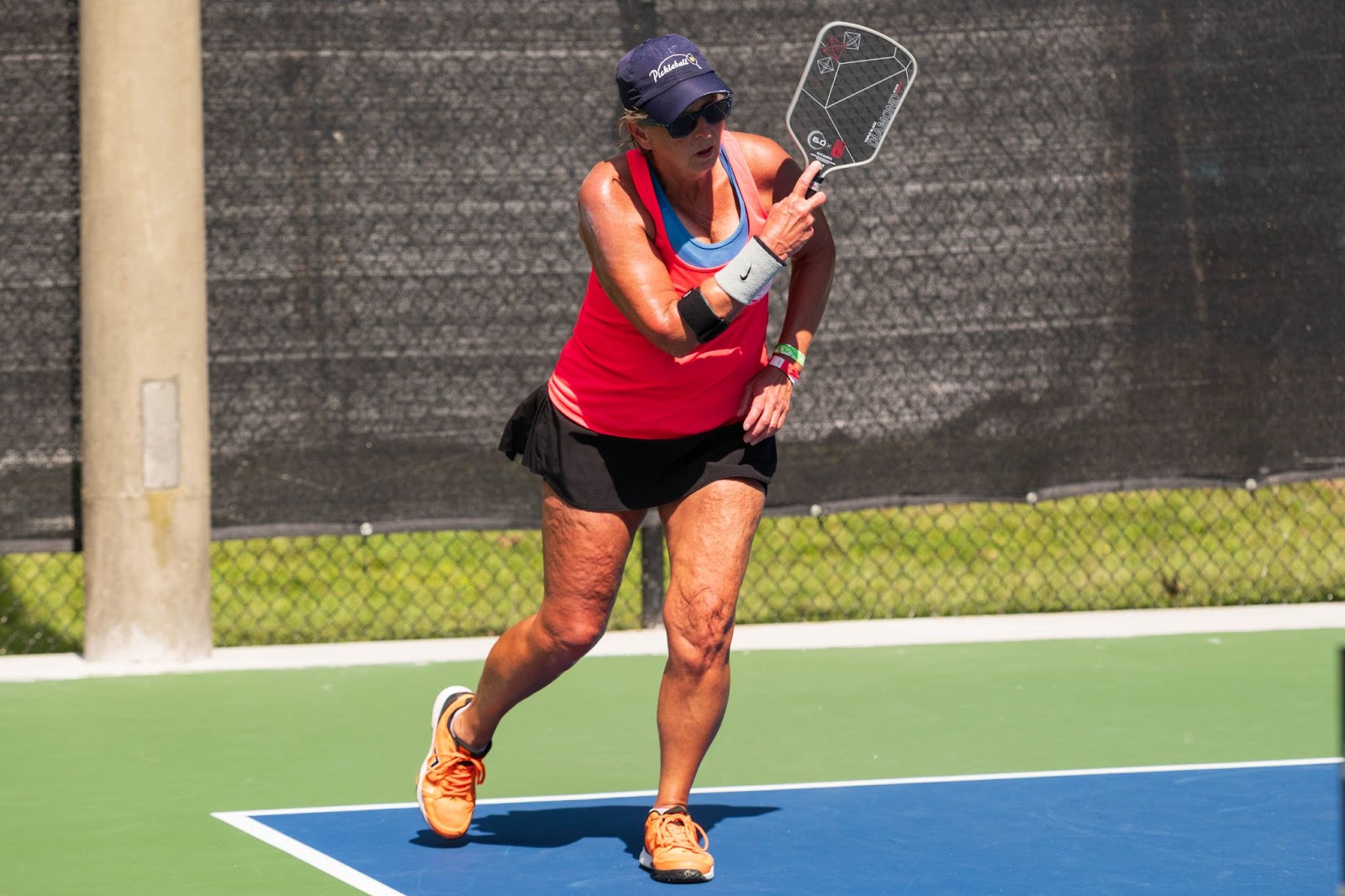
The stop-and-go nature of pickleball resembles high-intensity interval training (HIIT), which combines short bursts of high effort with recovery periods and is well-established for improving VO₂max and vascular function (3,8). Intervals stimulate heart rate variability, improving autonomic control and cardiac efficiency, while recovery phases help sustain overall exercise duration without overexertion.
This interval pattern improves mitochondrial function and muscle oxidative capacity, key drivers of cardiovascular and metabolic health (8). Even without formal exercise programming, pickleball naturally incorporates these principles, providing a heart-healthy workout through enjoyable gameplay.
Strength Training as a Vital Complement
Muscle-strengthening activities independently reduce cardiovascular risk and mortality (10). Resistance training preserves muscle mass, supports metabolic health, and stabilizes joints—critical for injury prevention, especially in older adults playing pickleball.
Meta-analyses reveal that as little as 60 minutes per week of resistance training is associated with a 15-20% reduction in cardiovascular and all-cause mortality (10,11). Given pickleball’s aerobic demands, supplementing play with targeted strength training (e.g., squats, lunges, and shoulder exercises) optimizes cardiovascular, cognitive, and functional benefits (18).
DUPR players can use the code “GRAVL” to get a FREE month of strength training routines tailored for your health and pickleball goals. Claim it here.
Playing Safe and Maximizing Benefits
While pickleball is accessible, injury risk exists, primarily strains and sprains affecting lower limbs (12). Consistent strength and balance training can help to reduce injury risk and improve longevity in the sport.
Additionally, individuals with pre-existing cardiovascular conditions should seek medical clearance before engaging in moderate-to-vigorous play to ensure safe participation (13). When played appropriately, pickleball provides a sustainable, enjoyable way to meet heart-healthy exercise guidelines.
Putting It Into Practice
Below is a practical, evidence-based plan that aligns directly with peer-reviewed research.
Goal: Hit ~150-300 min/week of moderate-to-vigorous activity and add ~30-60 min/week of muscle-strengthening.
- Frequency and duration
Start with 3 sessions/week of 30-45 minutes of play (including warm-up and cool-down). Progress to 4-5 sessions or longer sessions until you reach 150-300 min/week total. Pickleball sessions typically contain sustained moderate heart rates with short vigorous bursts, so session time counts (4,14,15). - Intensity monitoring
Use a heart rate monitor, ratings of perceived exertion (RPE), or the talk test (moderate = can speak in short sentences but not sing). You’re looking for a moderate to vigorous range, or a heart-rate target of ~50-75% of HRmax, 5-8 out 10 on RPE, or you can only get a few words out on the talk test for most of your session (15). - Add two short strength sessions weekly
Two sessions of 20-30 minutes (full-body, focus on lower limb strength, hip/ankle stability, and rotator cuff/shoulder work) to hit ~30-60 min/week. This both helps to reduce injury risk and adds independent mortality benefit (10,11,18). - Progression and recovery
Increase on-court time by ≤10-15 minutes per week or add one extra session every 2 weeks. Build lower-body strength and single-leg balance to cut fall and ankle injury risk. If you feel excessive fatigue, prolonged soreness, chest discomfort, or palpitations, stop and see a clinician. - Warm-up and cool-down
5-10 minutes dynamic warm-up: brisk walking, lateral shuffles, leg swings, light shoulder circles. 5-10 minutes of walking and mobility after play. A short neuromuscular warm-up reduces acute injury risk and prepares the cardiovascular system (2,16).
Tools to Track and Stay Honest
You don’t need advanced sports science equipment to measure your effort. A heart-rate monitor or smartwatch can provide real-time feedback (17), and the talk test is a free and reliable gauge (14). Wearables have been tested in pickleball and are accurate enough for recreational tracking (1).
Logging your weekly minutes can help keep you accountable. If pickleball is about 5 METs per hour, 3-5 hours per week puts you in the zone linked to lower cardiovascular mortality (14,16). Whether you prefer digital tracking or a pen-and-paper log, the goal is consistency. Plus, that same consistency is going to drive you to boost your pickleball ratings.
Ready to see if your pickleball sessions are hitting those heart-healthy intensity zones? AIM7 automatically tracks your moderate-to-vigorous activity during every match, so you'll know exactly how much cardiovascular benefit you're getting from your time on the court. Plus, with our new sharing feature, you can showcase both your fitness progress and DUPR rating with fellow players.
Start your free trial and optimize your heart health today! Click here to download AIM7 for free.
Bottom line
If you want to improve your heart health, pickleball is a fun and sustainable way to achieve it. The science is clear: regular, moderate-to-vigorous physical activity on the court paired with a little resistance training dramatically lowers your risk of cardiovascular disease.
So show up for your games, keep your rallies lively, lift something heavy twice a week, and listen to your body. Do that, and you’ll not only improve your game, but you’ll be investing in a heart that stays strong for decades to come.
Interested in how to complement pickleball in your weight loss journey? Check out this full guide.
References
- Webber SC, Anderson S, Biccum L, Jin S, Khawashki S, Tittlemier BJ. Physical Activity Intensity of Singles and Doubles Pickleball in Older Adults. J Aging Phys Act. 2022;31(3):365-370. Published 2022 Sep 10. doi:10.1123/japa.2022-0194
- Piercy KL, Troiano RP, Ballard RM, et al. The Physical Activity Guidelines for Americans. JAMA. 2018;320(19):2020-2028. doi:10.1001/jama.2018.14854
- Gibala MJ, Little JP, MacDonald MJ, Hawley JA. Physiological adaptations to low-volume, high-intensity interval training in health and disease. J Physiol. 2012;590(5):1077-1084. doi:10.1113/jphysiol.2011.224725
- Ekelund U, Tarp J, Steene-Johannessen J, et al. Dose-response associations between accelerometry-measured physical activity and sedentary time and all-cause mortality: a systematic review and harmonised meta-analysis. BMJ. 2019;366:l4570. doi:10.1136/bmj.l4570
- Cornelissen VA, Smart NA. Exercise training for blood pressure: a systematic review and meta-analysis. J Am Heart Assoc. 2013;2(1):e004473. doi:10.1161/JAHA.112.004473
- Ross R, Hudson R, Stotz PJ, Lam M. Effects of exercise amount and intensity on abdominal obesity and glucose tolerance in obese adults: a randomized trial. Ann Intern Med. 2015;162(5):325-334. doi:10.7326/M14-1189
- Oja P, Kelly P, Pedisic Z, et al. Associations of specific types of sports and exercise with all-cause and cardiovascular-disease mortality: a cohort study of 80 306 British adults. Br J Sports Med. 2017;51(10):812-817. doi:10.1136/bjsports-2016-096822
- Weston KS, Wisløff U, Coombes JS. High-intensity interval training in patients with lifestyle-induced cardiometabolic disease: a systematic review and meta-analysis. Br J Sports Med. 2014;48(16):1227-1234. doi:10.1136/bjsports-2013-092576
- Little JP, Safdar A, Wilkin GP, Tarnopolsky MA, Gibala MJ. A practical model of low-volume high-intensity interval training induces mitochondrial biogenesis in human skeletal muscle: potential mechanisms. J Physiol. 2010;588(Pt 6):1011-1022. doi:10.1113/jphysiol.2009.181743
- Shailendra P, Baldock KL, Li LSK, Bennie JA, Boyle T. Resistance Training and Mortality Risk: A Systematic Review and Meta-Analysis. Am J Prev Med. 2022;63(2):277-285. doi:10.1016/j.amepre.2022.03.020
- Momma H, Kawakami R, Honda T, Sawada SS. Muscle-strengthening activities are associated with lower risk and mortality in major non-communicable diseases: a systematic review and meta-analysis of cohort studies. Br J Sports Med. 2022;56(13):755-763. doi:10.1136/bjsports-2021-105061
- McMillan P, Lake LP, Burkhart A, Reddy E, Hale IC, Grawe BM. The Epidemiology of Pickleball Injuries Presenting to US Emergency Departments. Sports Health. Published online July 13, 2025. doi:10.1177/19417381251350671
- Pelliccia A, Sharma S, Gati S, et al. 2020 ESC Guidelines on sports cardiology and exercise in patients with cardiovascular disease. Eur Heart J. 2021;42(1):17-96. doi:10.1093/eurheartj/ehaa605
- American College of Sports Medicine. ACSM’s Guidelines for Exercise Testing and Prescription. 11th ed. Wolters Kluwer; 2021.
- Booth FW, Roberts CK, Laye MJ. Lack of exercise is a major cause of chronic diseases. Compr Physiol. 2012;2(2):1143-1211. doi:10.1002/cphy.c110025
- Garber CE, Blissmer B, Deschenes MR, et al. Quantity and quality of exercise for developing and maintaining cardiorespiratory, musculoskeletal, and neuromotor fitness in apparently healthy adults: guidance for prescribing exercise. Med Sci Sports Exerc. 2011;43(7):1334-1359. doi:10.1249/MSS.0b013e318213fefb
- Buchheit M, Simpson BM. Player-Tracking Technology: Half-Full or Half-Empty Glass?. Int J Sports Physiol Perform. 2017;12(Suppl 2):S235-S241. doi:10.1123/ijspp.2016-0499
Liu-Ambrose T, Nagamatsu LS, Voss MW, Khan KM, Handy TC. Resistance training and functional plasticity of the aging brain: a 12-month randomized controlled trial. Neurobiol Aging. 2012;33(8):1690-1698. doi:10.1016/j.neurobiolaging.2011.08.015
Community
Data
September 10, 2025
Pickleball Canada Announces DUPR as Its Official Rating System
Pickleball Canada, one of the largest pickleball federations in the world, has officially adopted DUPR (Dynamic Universal Pickleball Rating) as its official rating system.
This national partnership cements DUPR as the standard for all players, coaches, and organizers across Canada, bringing a unified and trusted rating framework to the fastest-growing sport in North America.
A Shared Vision for Canadian Pickleball Growth
Under this partnership, every Pickleball Canada member will be required to have a DUPR rating, ensuring consistency across grassroots, recreational, and competitive play. All Pickleball Canada sanctioned events will also use DUPR for seeding, providing fairness, transparency, and accuracy in competition.
Barry Petrachenko, CEO of Pickleball Canada, expressed his enthusiasm for the collaboration:
“We are proud to provide our members with access to the premier global rating system. DUPR supports level-based play, and this partnership will significantly enhance competitive equity and player connectivity on a national scalee are thrilled to provide our members with the best rating system in the world. DUPR is the gold standard, and this partnership will help us promote level-based play and greater connectivity for players nationwide.”
Players, organizers, and coaches will benefit from:
- One Standardized Rating: DUPR’s trusted 2.000–8.000 scale brings clarity and fairness to all levels of Canadian pickleball, from club play to elite tournaments.
- Smarter Player Development: Real-time, match-based ratings give players an accurate reflection of performance and progression.
- Simplified Event Organization: Tournament directors can now seed brackets, set divisions, and manage events seamlessly with DUPR integration.
A Step Toward Greater Connectivity
This alignment strengthens Canada’s role in the global pickleball community and unites players nationwide under one technology platform. By adopting DUPR, Pickleball Canada joins a growing network of federations, clubs, and leagues worldwide that are standardizing play and building a stronger, more connected future for the sport.
“DUPR exists to unify and grow pickleball globally, and this partnership with Pickleball Canada is an incredible step forward,” said DUPR CEO Tito Machado. “We are proud to provide Canadian players with the most accurate and dynamic rating system in the sport.”
ABOUT PICKLEBALL CANADA
Pickleball Canada is the national governing body for the sport of pickleball in Canada. The Canadian Pickleball Association was established in 2009 and then incorporated as Pickleball Canada in 2011. The organization works to promote and develop the sport at all levels, from grassroots to high-performance. Their mission is to promote the growth and development of pickleball across the country by providing leadership, resources, and opportunities for players of all ages and skill levels. Pickleball Canada is responsible for the coordination and delivery of pickleball events across the country, including the National and Regional Championships, which brings together top players from across Canada to compete for the title of national champion. With a growing number of players and clubs across the country, pickleball is Canada’s fastest growing sport and Pickleball Canada is at the forefront of this exciting movement. For more information, please contact info@pickleballcanada.org or visit pickleballcanada.org
ABOUT DUPR
DUPR (Dynamic Universal Pickleball Rating) is the premier global pickleball rating system and technology platform, trusted by the world's leading clubs, tournaments, leagues, and federations. DUPR’s dynamic system unifies pickleball across age, gender, and location by analyzing match results to provide an accurate evaluation of players worldwide, on a scale from 2.000 to 8.000. DUPR is the official rating system of Pickleball Canada, the United Pickleball Association (UPA), PPA, Major League Pickleball (MLP), Life Time, The Picklr, and many more. DUPR also owns and operates Minor League Pickleball and Collegiate Pickleball, two of the largest amateur leagues in the sport. Players and organizers can sign up for free at www.dupr.com.
Partners
September 10, 2025
Strengthening Match Integrity with DUPR Verified Events
We're committed to making tournament competition as fair and rewarding as possible. That's why we’re launching DUPR Verified events to:
- Ensure fair competition for every player.
- Protect the integrity of ratings at every level.
- Elevate the value of verified competition.
What Are DUPR Verified Events?
Clubs and organizations that meet elevated quality standards can opt to run DUPR Verified events designed to deliver the highest level of trust and competitive integrity. These events require all players to complete a validation process.
Participant Requirements:
To compete in a DUPR Verified event, players must have a DUPR+ subscription and soon, players will also requree an authenticated phone number.
Higher Standards:
All DUPR Verified events are reviewed and approved by the DUPR Fairplay Committee. Clubs and organizations who fail to uphold these standards will be removed from the program. Read the DUPR Verified event policy here.

Match Weighting:
Because players and organizers are held to a higher standard, DUPR has the highest confidence in results from DUPR Verified Events. As a result, these matches count more toward players' reliability score than standard matches.
Optional Participation:
Not every event will be DUPR Verified. Regular DUPR events remain an important part of the ecosystem and continue to count toward player ratings. Verified simply represents the next level: a premium option for organizers and players who want their competition to carry the most weight and credibility.
Benefits of DUPR Verified
- For Players: Verified events are where the best competition happens, and where your rating matters most. If you want to climb faster and prove yourself against trusted results, this is where you’ll want to play.
- For Organizers: Verified is fast becoming the gold standard. The tours, leagues, and clubs shaping the future of pickleball are already stepping up.

A New Standard for Competitive Pickleball
This is just the start; we are actively working with partners across the country, with the goal of making DUPR Verified Events the standard for competitive pickleball.
Ready to Elevate Your Events?
Fill out this form to get started with DUPR Verified and bring the gold standard of competition to your club.
DUPR Ratings
Clubs
Pickleball Tournaments
Community
September 9, 2025
THE PICKLR, WINGFIELD, DUPR COACH AND DUPR PARTNER TO DELIVER THE FIRST END TO END AI POWERED PLATFORM IN PICKLEBALL
September 9th, 2025 - Salt Lake City, Utah - Wingfield, a leader in AI-powered performance analysis for racket sports, and The Picklr, the world's fastest-growing pickleball franchise, are partnering with DUPR Coach and DUPR to launch the sport’s first end-to-end, AI-powered pathway for player development.
By combining AI-driven Player Assessments with automated DUPR Match Submissions, The Picklr becomes the first club network to leverage AI for both evaluating skill level and competitive play, turning every step of a player’s journey into a data-driven, exciting experience.
The Wingfield Player Assessment replaces subjective skill evaluations with a structured, replicable protocol guided by P4‑certified Picklr DUPR Coaches. Players complete a series of standardized drills that measure core pickleball skills—serve, return, drive, drop, volley, and dink, capturing shot accuracy, consistency, and speed. Wingfield’s AI analyzes every shot in real time and assigns drill scores that roll into a comprehensive skill profile.
Rather than replacing the coach, Wingfield’s AI provides precise, objective data that coaches can interpret and build upon. The result is a more comprehensive assessment, blending human insight with measurable performance metrics to create an elevated player experience that’s consistent across all clubs.
“The Picklr has always been about raising the bar for player experience. Partnering with Wingfield, DUPR Coach, and DUPR allows us to offer something no other club network can: a complete, AI-driven pathway that connects player development with competitive play,” said Matt PaneGasser, Vice President of Pickleball at The Picklr. “Whether you’re new to the sport or chasing the next level, this technology ensures every moment on court counts toward your progress.”
The new Wingfield Player Assessment, co-developed by Wingfield and The Picklr, is integrated with DUPR Coach — allowing P4-certified Picklr DUPR Coaches to submit assessment results and Coach-Assigned DUPRs directly to DUPR.
Through this integration, members at The Picklr will receive their first official DUPR rating instantly after completing the assessment, while coaches ensure consistency and accuracy across all Picklr locations. At the same time, clubs can onboard new players with confidence and transparency.
“The Picklr’s commitment to standardizing on DUPR by funding over 200 DUPR Coaches ensures that every member will have a rating, driving stronger open play experiences and improving member retention,” said Katie Nimitz, President of DUPR Coach. “With Wingfield’s integration into the DUPR Coach scoring and rating system, Picklr P4 Coaches now have access to the most advanced assessment tools in the industry. Every Wingfield court is now a DUPR Coach Court.”
The partnership with DUPR extends beyond assessments. Players can now compete on AI-powered Picklr courts, with Wingfield’s technology tracking every shot and automatically submitting verified results to DUPR. Every competitive match played on a Wingfield court can count toward a player’s DUPR rating, which updates automatically without the need for manual entry. This transforms each match into a more exciting experience, as players can immediately see the real-time impact on their rating.
“Our mission at DUPR is to make pickleball ratings universal, accurate, and accessible to every player. This partnership brings that vision to life in an unprecedented way,” said Tito Machado, CEO of DUPR. “Now, from the moment a player walks into a Picklr facility, they can be assessed, rated, and start improving their DUPR through verified matches — all seamlessly tracked and powered by AI and our DUPR Coaches. It’s a new benchmark for the game.”
For the first time, members at The Picklr can start their journey with a structured, AI-driven assessment combined with a DUPR Coach evaluation to provide a Coach-Assigned DUPR rating. From there, they continue building and refining their skill level by competing in verified matches on the same AI-powered courts. By connecting assessments and competition in this way, The Picklr becomes the first network to fully integrate AI into both player development and verified match play, setting a new standard for the sport.
“At Wingfield, we’re passionate about turning cutting-edge technology into real-world products that players and coaches love. With The Picklr, DUPR Coach, and DUPR we’re bringing that vision to life, creating an AI-powered pathway that starts with a player’s very first assessment and continues through competitive matches they play,” said Jaan Brunken, COO & Co-Founder of Wingfield. “When technology becomes a product that solves real needs, it creates lasting value, and that’s exactly what we’re building: a transparent, exciting, and accessible system that keeps players engaged over the long term.”
About The Picklr:
The Picklr is North America’s fastest-growing network of premium indoor pickleball courts, offering an unparalleled experience for players of all skill levels. With more than 500 state-of-the-art clubs sold nationwide, The Picklr provides programs for beginners to pros, and a vibrant atmosphere. Membership to The Picklr includes access to all club locations nationwide, free court reservations, four clinics per month, and unlimited participation in leagues, competitive play/events, and tournaments. Follow The Picklr on Instagram, X, LinkedIn, Facebook, and TikTok for news on locations and tournaments, or visit https://thepicklr.com/franchise/ to learn more about owning a franchise.
About Wingfield
Wingfield is the leading video and tracking platform for racket sports. Its AI-powered camera systems go far beyond recording and streaming, offering players and coaches engaging learning experiences, gamified training, and scalable performance insights. Designed to fit seamlessly into clubs’ coaching and content strategies, Wingfield drives player development and sparks social media buzz with automated highlight creation right from the courts — helping clubs inspire players, expand their reach, and build communities that keep coming back. Interested Clubs can visit https://www.wingfield.io/en and find out more.
About DUPR Coach
DUPR Coach is a program designed to empower pickleball coaches to launch Coach-Assigned DUPR ratings for the 34 million non-rated players worldwide. Powered by MyJourney Pickleball, DUPR Coach helps coaches provide valuable insights into players’ skill levels and supports the growth of pickleball through more competitive, enjoyable play. Coaches interested in becoming DUPR Coaches can visit duprcoach.com/coach-cert to sign up and learn more.
About DUPR
DUPR (Dynamic Universal Pickleball Rating) is the premier global pickleball rating system and technology platform, trusted by the world's leading clubs, tournaments, leagues, and players. DUPR's dynamic rating system unifies pickleball across age, gender, and location by analyzing match results to accurately evaluate all players across a 2.000 - 8.000 scale. DUPR is the official pickleball rating of leagues, tournaments and clubs around the world, including United Pickleball Association (UPA), PPA, Major League Pickleball (MLP), Pickleball.com, Life Time, The Picklr, National Team Pickleball League, National Pickleball League. It also owns and operates Minor League Pickleball and Collegiate Pickleball, two of the biggest amateur leagues in the sport. Players and operators can visit www.dupr.com to sign up and learn more.
Partners
September 8, 2025
DUPR Verified Event Policy
Registration Requirements
- Account Authentication: All participants in DUPR Verified events must have an authenticated DUPR account. Eligibility is limited to DUPR+ members with a verified phone number.
- Bracket Registration: Players must register in the bracket that corresponds to their current DUPR Rating.
Score Reporting Requirements
- Complete Reporting: All event results must be reported - no completed matches may be omitted.
- Reporting Accuracy: Organizers must report all results with the correct players, date, and score, and upload them in the correct chronological order of play. If using an API Partner, withdrawals, retirements, and forfeits must be properly marked. If uploading directly through a DUPR digital club, these matches should be omitted.
- Timely Reporting: All results must be submitted within 48 hours of the event’s conclusion. Corrections may be made afterward.
- Match Corrections: Organizers are responsible for correcting match data directly. In special circumstances, organizers may contact DUPR Support for assistance. The DUPR Team will not modify match results without explicit permission from the event organizer.
Event Organizer Responsibilities
- Oversight: Organizers are responsible for ensuring competition is conducted fairly.
- Impartiality: Organizers competing as players must appoint an independent official (director, organizer, or referee) to oversee and report scores for those divisions.
Any falsification, manipulation, or negligent reporting of scores is strictly prohibited. Violations of this policy may result in suspension or removal of DUPR Verified Event hosting privileges, at DUPR’s discretion.
DUPR Ratings
Community
Clubs
Pickleball Tournaments
September 5, 2025
Think You Know the Top Pickleball States? This Summer’s Data Might Surprise You
Summer’s wrapping up, but pickleball? Still hotter than ever. Between May and August, paddles were swinging coast to coast, new players joined in, more matches got logged, and plenty of people earned their very first DUPR rating. Let’s take a look at where the action was the strongest.
What States Have the Most Pickleball Players?
No big shock here: Florida, Texas, and California are still running the show. You can basically find a game any time of day in those states. Behind them, New York and North Carolina proved the East Coast isn’t far behind.
Looking for a pickleball club near you? Open the DUPR App and head to “Clubs.” From there, you can request to join, connect with players at your level, and find matches; all in one place!
What State Has the Highest Number of Newbies?
Want to guess where the most new players showed up? Texas took the crown. California and Florida followed, with New York and Georgia also in the mix. If you played open play in any of these states this summer, chances are you ran into someone brand new to the game.
First DUPR Ratings
Nothing feels better than seeing your first official DUPR rating pop up. Leading the charge was California, with Texas, Florida, and New York close behind. Out west, Washington, Arizona, and Colorado also showed strong growth; pickleball’s spreading everywhere.
Clubs Bringing the Heat
Club play blew up this summer too. California led the way, with Florida and Texas right there with them. And don’t sleep on the Midwest and Southwest: Arizona, Minnesota, and Ohio cracked the list.
Apply to be a DUPR Club here.
Check the club rankings here.
The Big Takeaway
Whether you were grinding at club matches, logging your first rating, or just playing for fun, you were part of pickleball’s biggest summer yet.
And here’s the best part: this momentum isn’t slowing down. Fall leagues, tournaments, and open play are already ramping up.
Haven’t locked in your DUPR yet? Download the DUPR app and get rated; you’ll thank yourself the next time you face off with someone new.
Community
Data