No matching results.
Search results
January 6, 2026
PICKLE MONEY BALL PARTNERS WITH DUPR AS OFFICIAL RATING SYSTEM, UNVEILS $1.2M IN 2026 PAYOUTS
-- Rating System Anchors Two $600,000 Events, With First Major Set for March 2026 in Mesa --
Austin, Tex. — Pickle Money Ball (PMB) and DUPR (Dynamic Universal Pickleball Rating) are excited to announce a new partnership naming DUPR as the official rating system for all Pickle Money Ball events. PMB has also unveiled a landmark $1.2 million payout structure for 2026, highlighted by two major events awarding $600,000 each. The first of these major tournaments is scheduled for March 19–20, 2026, in Mesa, Arizona, at Arizona Athletic Grounds.
“Pickle Money Ball is introducing a bold new competitive model, and DUPR is proud to support it as the official rating system,” said Tito Machado, CEO of DUPR. “Accurate, unified ratings are essential when you’re operating at this scale. This partnership ensures integrity across divisions and gives players nationwide a clear, credible way to compete for meaningful prize money.”
Recently debuting on the pickleball scene, Pickle Money Ball is redefining competitive play with a guaranteed $1.2 million in total payouts for 2026. Athletes qualify through PMB’s innovative nomination system, powered by cutting-edge Pickle Money Ball technology that tracks player performance across tournaments, leagues, and open play.
Players can nominate any event they are already competing in, earning points based on participation, performance, and results. This model allows athletes nationwide to climb leaderboards and qualify for the $600,000 showcase events with no entry fees—without changing their existing competition schedules.
“This partnership represents a landmark step for Pickle Money Ball and is critical to preserving the integrity of the leaderboard,” said PMB CTO, Jonathan Williams. “By implementing a unified rating system, we ensure fairness across all five divisions—from the qualification process through the $600,000 events.”
Using the Pickle Money Ball app, athletes can download the platform, create a free account, and begin competing right away. Players nominate events through the app, which means declaring their results to be eligible for leaderboard points. More information can be found on the PMB website HERE.
The leaderboard features five divisions based on DUPR ratings, each including Men’s Doubles, Women’s Doubles, Men’s Singles, Women’s Singles, and Mixed Doubles. The top 64 athletes in each division will qualify for the Pickle Money Ball tournament. Here’s how to get your first DUPR pickleball rating.
Pickle Money Ball has partnered with Pickleball is Great (PIG) to produce the March 2026 Mesa event. Athletes will be able to earn leaderboard points toward qualification until March 8, 2026 at 11:59 p.m. CT, after which the top 64-ranked players in each division will receive invitations to compete in the tournament for their share of the $600,000 prize purse.
For more information, visit picklemoneyball.com or contact info@picklemoneyball.com or 903-781-0297.
About Pickle Money Ball
Pickle Money Ball is a competitive pickleball platform dedicated to elevating the sport by providing athletes of all skill levels with the opportunity to compete, earn points, and qualify for major cash tournaments. Through its innovative app and leaderboard system, Pickle Money Ball connects players from across the country in a fair, transparent, and rewarding competitive environment. With major events featuring guaranteed prize payouts, Pickle Money Ball is redefining how players engage with the game—turning every match into a meaningful step toward championship play. For more information, visit picklemoneyball.com.
About DUPR
DUPR (Dynamic Universal Pickleball Rating) is the premier global pickleball rating system and technology platform, trusted by the world's leading clubs, tournaments, leagues, and players. DUPR's dynamic rating system unifies pickleball across age, gender, and location by analyzing match results to accurately evaluate all players across a 2.000 - 8.000 scale. DUPR is the official pickleball rating of leagues, tournaments and clubs around the world, including United Pickleball Association (UPA), Professional Pickleball Association (PPA), Major League Pickleball (MLP), Pickleball.com, Life Time, The Picklr, National Team Pickleball League, National Pickleball League. It also owns and operates Minor League Pickleball and Collegiate Pickleball, two of the biggest amateur leagues in the sport. Players and operators can visit www.dupr.com to sign up and learn more.
Community
Pickleball Tournaments
Partners
January 5, 2026
RSPA Strengthens Partnership with DUPR Coach, Elects DUPR as Exclusive Global Rating System for 14,000 Members
Expanded partnership equips RSPA-certified pickleball coaches and members with the power of DUPR, new income opportunities, and plans for 2026 growth
Orlando, FL – January 5, 2026 – The Racquet Sports Professionals Association (RSPA) today announced an expanded partnership with DUPR Coach, electing the Dynamic Universal Pickleball Rating (DUPR) as its exclusive global rating system for all 14,000 members. This partnership establishes a unified standard for player ratings, coaching excellence and player development worldwide.
Current RSPA-certified pickleball coaches can upgrade to DUPR Coach for just $50, gaining immediate access to the exclusive ability to generate Coach-Assigned DUPR ratings, utilize advanced assessment tools, and unlock new revenue opportunities.
Looking ahead to 2026, the RSPA and DUPR Coach will launch a series of initiatives designed to enhance teaching, standardize player ratings and advance player development. These include a combined certification and credential pathway, expanded access to DUPR Rating Sessions, and exclusive benefits for RSPA-certified pickleball professionals. Through the combined certification, coaches will gain hands-on experience with DUPR Coach tools, learn to assign official Coach-Assigned DUPRs and apply practical strategies to expand their programs and increase revenue. These initiatives are designed to empower RSPA-certified pickleball coaches to enhance their expertise, expand their impact and support the continued growth of pickleball at every level.
“This expanded partnership with DUPR Coach and the adoption of DUPR as our exclusive global rating system reinforces our commitment to elevating coaching standards and advancing the game. RSPA-certified pickleball coaches now have unmatched education, confidence and tools to deliver DUPR ratings, enhance player development, and grow their programs and income, positioning them at the forefront of pickleball,” said Brian Dillman, CEO of RSPA.
The RSPA’s expanded partnership with DUPR Coach, its exclusive adoption of DUPR as the global rating system and upcoming 2026 initiatives underscore the organizations’ commitment to coaching excellence, accurate player ratings and the growth of pickleball. As RSPA certifies and supports thousands of coaches each year, DUPR’s reach and the number of rated players worldwide will continue to expand.
"DUPR is the language of pickleball, and the RSPA has one of the greatest influences on coaches and players worldwide," said Tito Machado, CEO of DUPR. "We are empowering coaches to help more players speak the same language while delivering exceptional education and practical tools. This partnership demonstrates our shared commitment to advancing coaching excellence, player development, and the growth of pickleball globally."
RSPA-certified pickleball coaches can upgrade their certification and begin their DUPR Coach journey here for just $50. RSPA members who are not yet pickleball certified, as well as new members interested in joining, can look forward to the combined certification launching in 2026 and find more details on the RSPA website.
About the RSPA
The Racquet Sports Professionals Association (RSPA), formerly the United States Professional Tennis Association (USPTA), is the leading trade organization for racquet sports professionals. Since 1927, the RSPA has grown to support the diverse needs of the racquet sports industry, including tennis, pickleball, padel, squash and platform tennis. With more than 14,000 members worldwide and 17 divisions across the country, the RSPA offers career advancement support, certification and development opportunities, from coaching to club management, executive development to sales and marketing and beyond. Our mission is to champion the passion of racquet sports by developing professionals who lead with integrity, innovate in coaching and inspire a diverse and inclusive racquet sports community. Learn more at RSPA.net.
About DUPR Coach
DUPR Coach is a program designed to empower pickleball coaches to launch Coach-Assigned DUPR ratings for the 34 million non-rated players worldwide. Powered by MyJourney Pickleball, DUPR Coach helps coaches provide valuable insights into players’ skill levels and supports the growth of pickleball through more competitive, enjoyable play. Coaches interested in becoming DUPR Coaches can visit duprcoach.com/coach-cert to sign up and learn more.
About DUPR
DUPR (Dynamic Universal Pickleball Rating) is the premier global pickleball rating system and technology platform, trusted by the world's leading clubs, tournaments, leagues, and federations. DUPR’s dynamic system unifies pickleball across age, gender, and location by analyzing match results to provide an accurate evaluation of players worldwide, on a scale from 2.000 to 8.000. DUPR is the official rating system of Pickleball Canada, the United Pickleball Association (UPA), PPA, Major League Pickleball (MLP), Life Time, The Picklr, and many more. DUPR also owns and operates Minor League Pickleball and Collegiate Pickleball, two of the largest amateur leagues in the sport. Players and organizers can sign up for free at www.dupr.com.
Partners
Community
December 26, 2025
Top College Pickleball Teams of 2025
After an action-packed 2025 collegiate season filled with Super Regionals, campus events, and championship-level matchups, a few programs clearly rose above the rest. Here are the college teams that delivered the strongest performances throughout the year and set the tone for what’s next in collegiate pickleball.
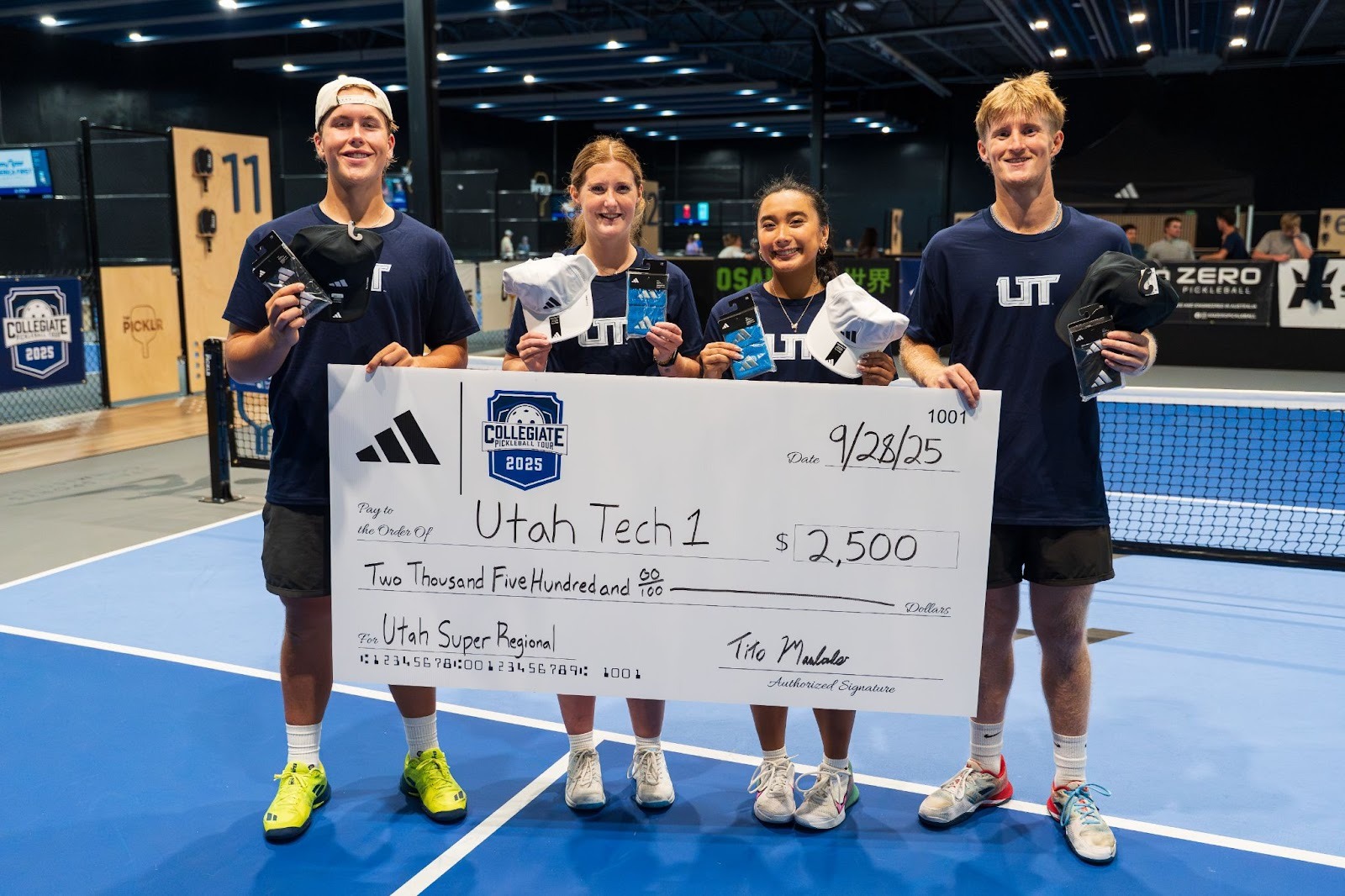
Utah Tech
Notable 2025 Tournament Results:
- Quarterfinalist – 2025 Collegiate National Championship
- Winner & Runner-Up – 2025–26 Utah Super Regional
- Winner – 2025 Collegiate World Championship
- Winner & Runner-Up – 2025–26 Arizona Super Regional
A perennial powerhouse, Utah Tech continues to be one of the deepest and most consistent programs in collegiate pickleball. Since the early days of the collegiate game, they’ve been known for elite talent, especially on the women’s side, and 2025 was no exception.
With standouts like Mary Monson, Ella Boydston, Dylan Ciampini, and Lauren Mercado, Utah Tech’s depth is almost unfair. In fact, their second-team women would likely start at most other schools. The team closed out 2025 on a tear, winning three straight tournaments. The big question heading into 2026: can they keep the momentum going and finish the season on top?
University of Texas
Notable 2025 Tournament Results:
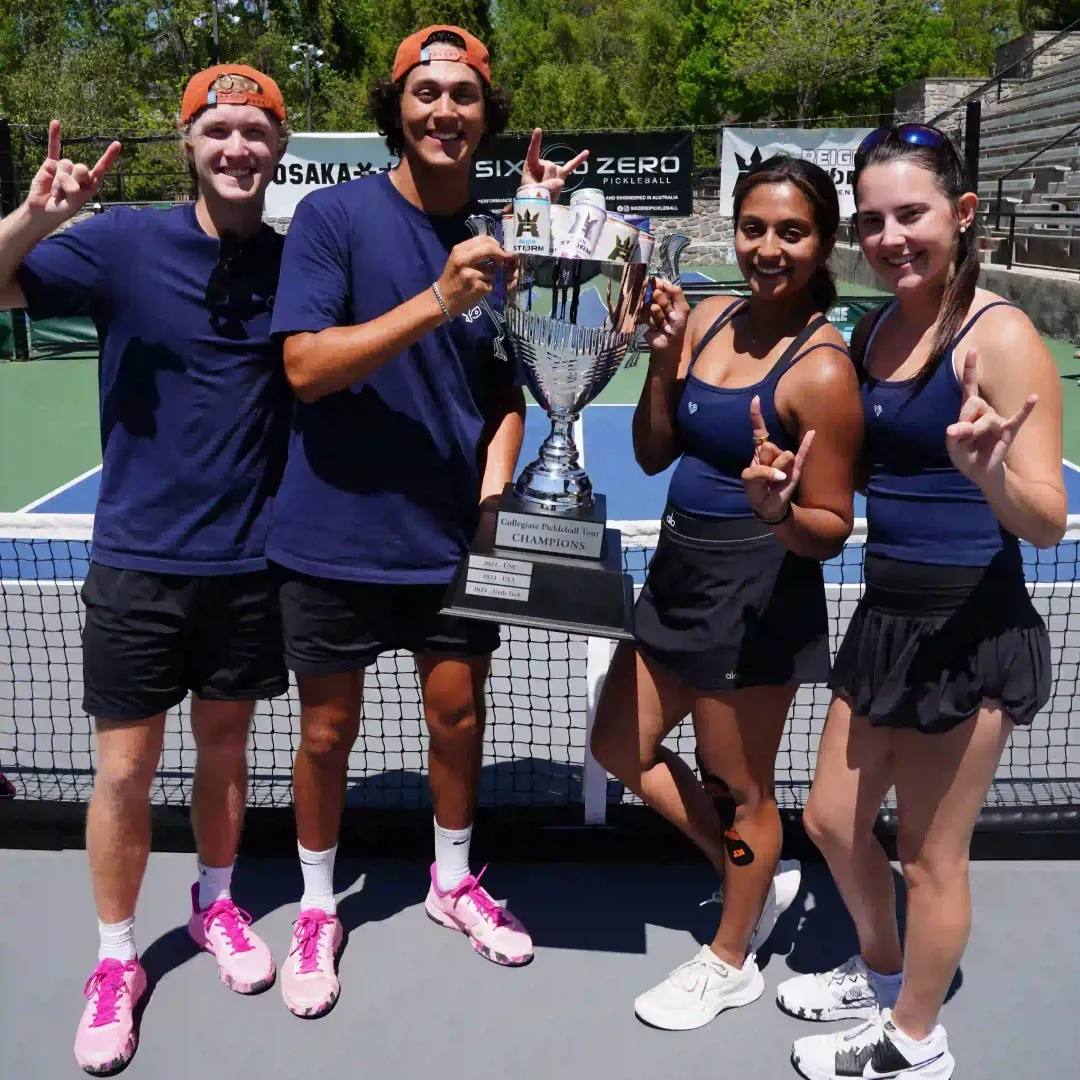
After coming up just short at the 2023 and 2024 Collegiate National Championships, Texas finally broke through in 2025 claiming the top spot in the country when it mattered most.
Despite dropping a few games in group play and entering the bracket as the 4-seed, Texas went on an impressive run, defeating Washington, Utah Tech, Grand Canyon, and TCU by 3-1 scores to capture the national title. Since then, the Longhorns have been relatively quiet on the collegiate scene. Will they resurface in 2026 to defend their championship? All eyes will be on Texas when the postseason rolls around again.
Virginia Tech
Notable 2025 Tournament Results:
- Winner – 2025 New Jersey Super Regional
- Winner – 2025 Roanoke College Cup Campus Regional
- Quarterfinalist – 2025 Collegiate World Championship
- Winner – 2025 Richmond College Cup Campus Regional
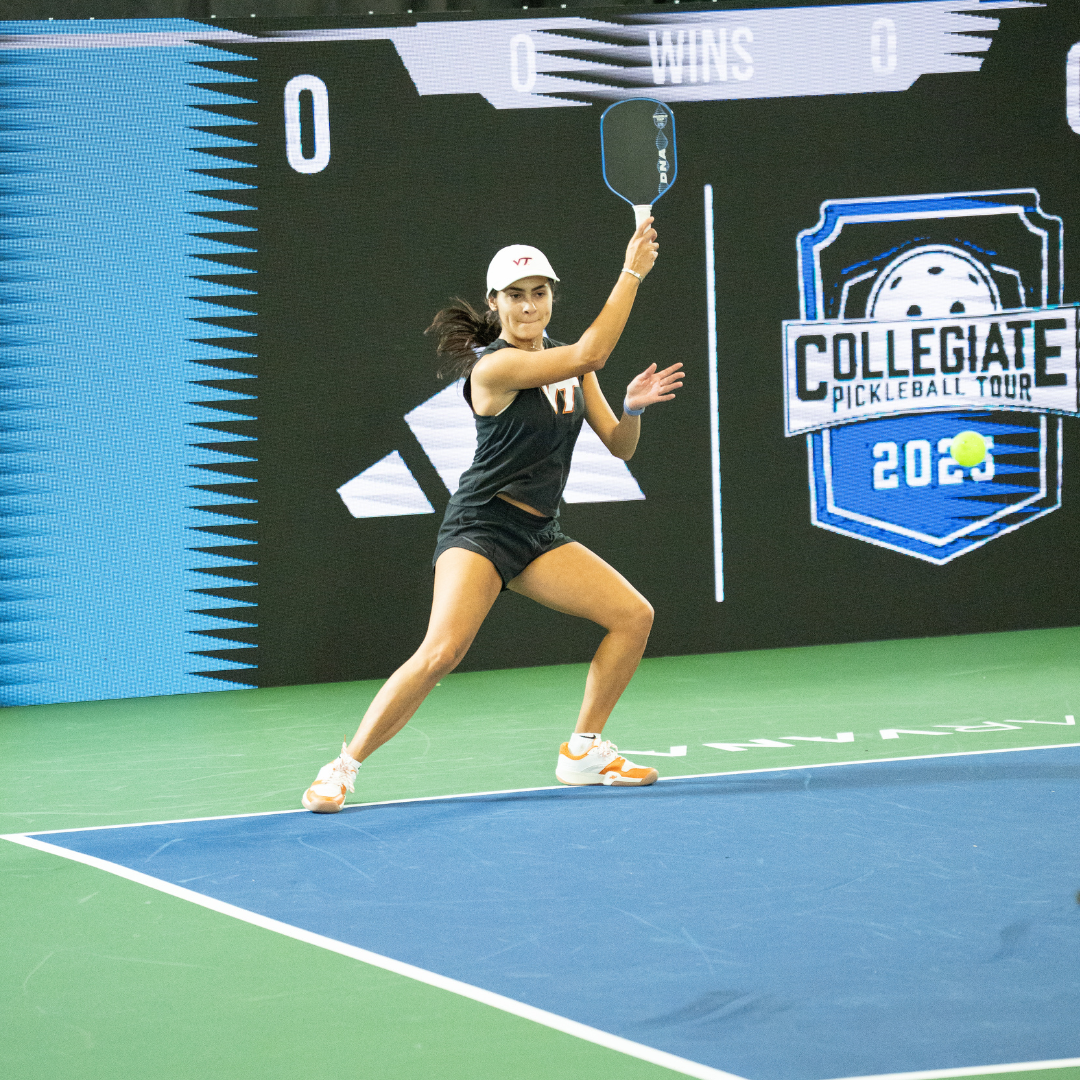
Flying a bit under the radar, Virginia Tech quietly put together one of the strongest regional seasons of any program in 2025. The Hokies consistently showed up and delivered wins across multiple events, proving they’re far more than just a regional threat.
With the Virginia Super Regional scheduled for February 7–8, Virginia Tech has a chance to continue asserting their dominance heading into 2026. As they demonstrated at the Collegiate World Championship, this is a team capable of making a deep run in any bracket when it counts.
2025 proved that collegiate pickleball is only getting deeper, faster, and more competitive. Utah Tech’s depth, Texas’ championship breakthrough, and Virginia Tech’s steady rise all point to one thing: the gap is closing, and every tournament in 2026 is going to feel like a postseason match. With Super Regionals and Nationals ahead, expect new rivalries, breakout players, and plenty of statement wins as teams fight to finish the season on top.
College
Pickleball Tournaments
Community
December 24, 2025
Ellie Douglas Makes History with Finals Appearances at Both Collegiate and MiLP National Championships
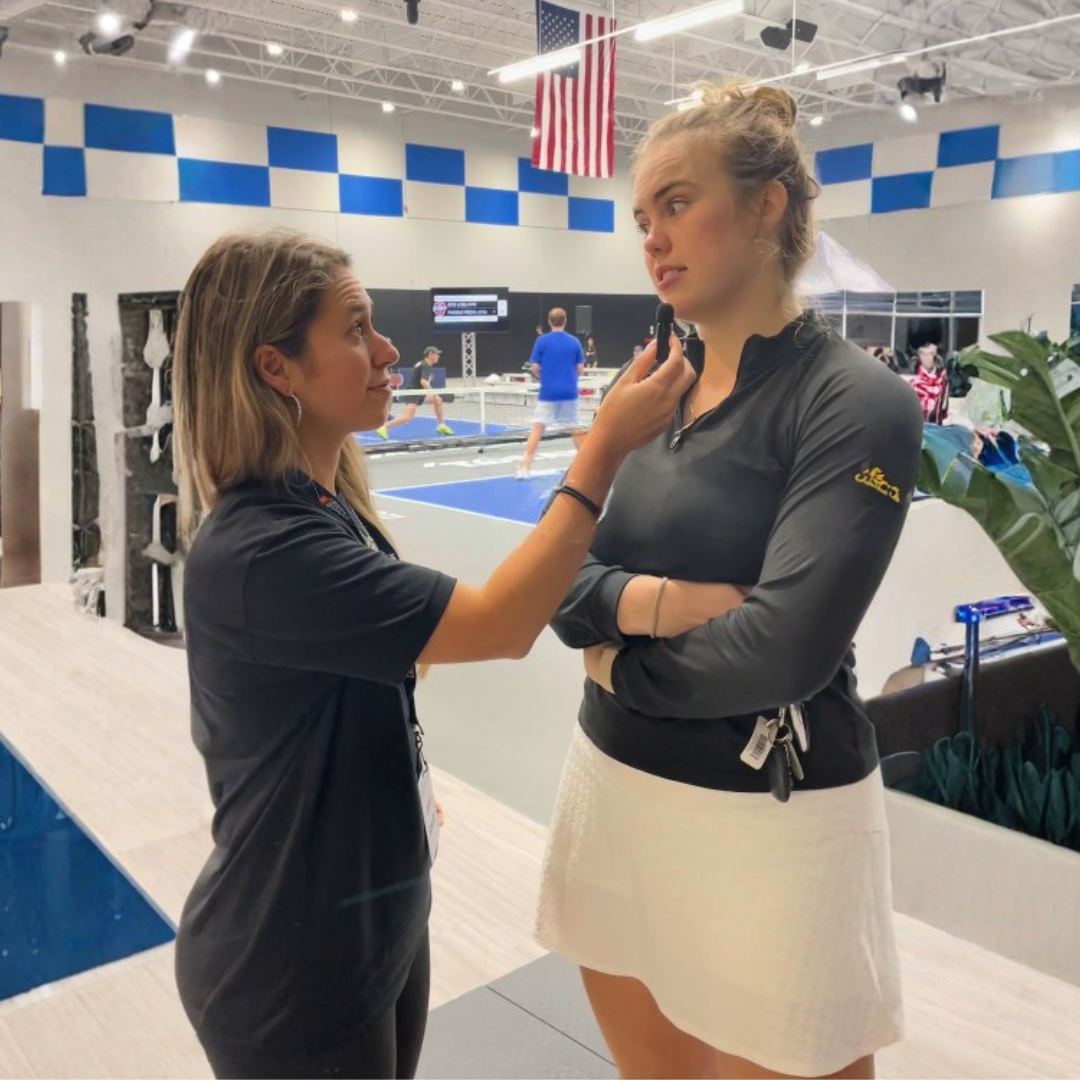
What does it take to become a finalist in both the Collegiate National Championship and The Dink Minor League Pickleball National Championship in the same year? For Ellie Douglas, the answer is simple: good friends, great vibes, and a world-class tennis foundation.
We discuss with Ellie her rapid rise in the DUPR-rated world, the transition from competitive tennis, and the electric atmosphere of team-based pickleball.
The Road to the Minor League National Championship
Most players enter a National Championship with a rigorous training block. Ellie entered for the community.
"The boys on our team asked me to play," Ellie laughs. "I play with them all the time in Dallas, and they’re so fun. I love them. I just did it really for the vibes and for fun," Ellie said.
That "fun" translated into a high-stakes run to the finals of the DUPR 22+ Division. Despite being a full-time student, literally studying for her final exam the day after the tournament, Ellie’s competitive edge was unmistakable.
Collegiate vs. Minor League: Which Tour is Tougher?
Having reached the finals in both the collegiate and minor league, Ellie has a unique perspective on the level of play across the country. While the MiLP is known for its diverse age brackets and team formats, Ellie notes that the top-tier talent is remarkably consistent.
"When we got to the finals and semi-finals of the Collegiate tour, teams like FAU and UT were very good, just as good as some of these teams. The high level on both sides is really good," Ellie shared.

The Atmosphere: Why DUPR Events Hit Different
Whether you are playing for a college or a minor league team, the energy on the court is what keeps players coming back. Ellie describes the atmosphere at both events as "killer."
"Collegiate Nationals had an awesome atmosphere, so many people. This was awesome, too. In our finals, so many people were watching and cheering. It’s really fun," Ellie said.
The Transition: From Tennis Prodigy to Pickleball Powerhouse
Ellie isn't just any newcomer; she comes from an elite tennis background. After "retiring" from competitive tennis a year and a half ago, she didn't touch a racket for months. But the itch for competition eventually brought her back; this time to the pickleball courts.
Looking Ahead: The Goal for 2026
With a current 5.013, DUPR rating, Ellie is looking to climb the DUPR rankings as she transitions out of student life. Her goal for the 2026 season? More tournaments.
"I feel like you can get your DUPR up if you play more tournaments. I haven't played many yet, but I want to get out there, have fun, and see where it goes."
Are you ready to start your own journey to the National Championship? Find a pickleball event near you and start moving your rating today.
Pickleball Tournaments
Community
College
December 22, 2025
5 Festive Pickleball Activities to Bring Christmas Cheer to the Court
As the holidays roll in, pickleball communities everywhere are looking for creative ways to celebrate the season. Whether you're hosting a club event, planning a neighborhood get-together, or simply want to add some holiday spirit to your weekly games, Christmas-themed pickleball activities are a fun way to connect, compete, and enjoy the game we all love.
Here are five festive pickleball activities perfect for Christmas, easy to organize, beginner-friendly, and guaranteed to bring out the holiday cheer.
1. Christmas Pickleball Tree Decorating Challenge
Turn your court into a winter wonderland! Set up a Christmas tree and let players decorate it using pickleball-themed ornaments, mini paddles, pickleball baubles, scorecard ornaments, and even garlands made of wiffle balls. If you want to take it up a notch, turn it into a competition: players earn ornament pieces by winning points or completing mini challenges.
2. Ugly Sweater Pickleball Tournament
Nothing says Christmas like an ugly sweater, especially one that restricts your overhead smash.
Players show up in their most festive, ridiculous sweaters and compete in a lighthearted round-robin. Give awards for “Most Festive,” “Most Likely to Cause a Fault,” and “Player Who Somehow Still Won in That Sweater.”
3. Pickleball Gift Exchange Rally (White Elephant Style)
Combine a classic White Elephant with a rally-based twist. Players bring wrapped gifts (funny, pickleball-themed, or under a set price). Each rally winner gets to open, swap, or steal a gift.
Not only is it hilarious, but players also stay engaged because every point matters.
4. Holiday Skills Challenge: “Santa’s Pickleball Workshop”
Set up a series of festive skills stations, like “Elf Accuracy Alley,” “Reindeer Drop Shot Zone,” or “Santa’s Serve Sleigh.” Players earn points by hitting specific targets, completing timed drills, or performing trick shots. It’s great for player development and fun for all ages.
5. Candy Cane Doubles Night
Pair up for a holiday-themed doubles session where every match comes with a twist. Some fun variations include:
- Candy Cane Rules: Only cross-court dinks count for double points
- Silent Night: Players can’t talk during play
- North Pole Switch: Teams switch sides every five points. Add candy canes as prizes or use red-and-white wiffle balls to make it extra festive.
The holidays are all about spending time with people you love, and for many of us, that includes our pickleball community. These Christmas-themed pickleball activities bring together fun, creativity, and friendly competition while giving players a unique way to celebrate the season on the court.
Whether you choose to decorate a pickleball tree, host an ugly sweater tournament, or organize a candy cane doubles night, you’ll bring holiday spirit and great memories to your group.
Pickleball Tips
December 22, 2025
How to Hit the Perfect ATP
Hitting the perfect ATP is a true highlight-reel moment. Check out that 11-year-old player at The Dink Minor League National Championship for example; that was definitely the shot of the year.
But despite how flashy it looks, a great ATP isn’t about swinging as hard as possible. It’s actually a high-percentage, aggressive shot built on anticipation, patience, and smart targeting.
The best ATPs happen when you read the play early, let the ball clear the post, and swing around the ball with intention and not through it. When executed correctly, the ATP isn’t just a crowd-pleaser, it’s a controlled, repeatable weapon you can trust in tight moments.
Here are three simple keys to executing an ATP the right way:
1) Anticipate It Early
The ATP opportunity usually shows itself before the ball ever gets there. As soon as your opponent pulls you wide with a sharp cross-court dink, start expecting it. Read the angle early and use a quick crossover step to get into position faster.
2) Wait and Let the Ball Clear the Post
This is where most players rush the shot. Don’t. Be patient and allow the ball to fully pass the post before you swing. Waiting that extra beat gives you the space you need to hit around the net cleanly and with control.
3) Swing Around the Ball with Purpose
This isn’t a straight-through swing. Cup your wrist slightly and brush the outside of the ball. Your goal is to wrap the ball around the net, not drive through it.
- If the ball is very close to the net → aim for a sharp, short angle
- If the ball is a little farther from the net → target deeper toward the back corner
The ATP may grab the highlight, but the best ones are built on these fundamentals: reading the play early, staying patient, and choosing the right target. When you stop forcing the shot and start trusting the process, the ATP becomes less of a gamble and more of a reliable weapon.
Keep working on these details in practice, and you’ll start seeing more ATP opportunities, and converting more of them in real matches.
For more on-court tips, strategy breakdowns, and insights from top players and coaches, check out our Pickleball Tips section on our blogs page and make sure to follow @DUPRpb on both Instagram and Facebook.
Pickleball Tips
Community
Pickleball Tournaments
December 20, 2025
DUPR Partners with the National Pediatric Cancer Foundation to Support the Fight Against Childhood Cancer
DUPR (Dynamic Universal Pickleball Rating) is proud to announce our collaboration with the National Pediatric Cancer Foundation (NPCF) and their nationwide Pickleball initiative. Together, we aim to harness the power of the pickleball community to raise awareness and critical funding for pediatric cancer research.
As the world’s most accurate and widely used pickleball rating system, DUPR has always been committed to strengthening and uplifting communities both on and off the court. This partnership represents a shared belief that collective action can create real impact for families and children facing childhood cancer.
In this time of giving, we encourage members of the community to donate or get involved.
Stay tuned for exciting things in 2026 as DUPR is committed to helping raise funds and awareness for pediatric cancer research through NPCF.
How Players Can Get Involved
Whether you’re a club, league, collegiate team, organizer, or individual player, DUPR and NPCF invite you to join the movement.
You can start a fundraiser or make a direct donation here:
https://give.nationalpcf.org/campaign/pickleball-funds-the-cure/c747124
Every contribution helps accelerate lifesaving research and provides support to families affected by pediatric cancer.
About the National Pediatric Cancer Foundation® (NPCF)
Established in 1991, the NPCF is dedicated to ending childhood cancer. Through its Sunshine Project™, NPCF unites top physicians and scientists from 38 of the nation's best hospitals to develop and fund groundbreaking research. The NPCF is recognized as the top-rated cancer charity in the U.S. by Charity Navigator, holding a perfect 100% score for financial health and transparency. Discover more at NationalPCF.org
Partners
December 19, 2025
DUPR Verified Clubs & Tours: The Best of 2025
Pickleball is growing faster than ever, and 2025 has been a landmark year for DUPR Verified Clubs and Tours around the world. From Mexico City to Montana, Florida to Singapore, these clubs and tours are raising the bar for competitive play, community building, and reliable player ratings.
Here’s a roundup of the top DUPR Verified clubs, tours and leagues from this year.
Top DUPR Verified Clubs of 2025
1. The Pickle Co – Mexico City, MX
.jpg)
The Pickle Co is the first DUPR Verified Club in Mexico, located in the bustling Polanco neighborhood. The club is designed to make pickleball more accessible, structured, and professional, offering beginner-friendly sessions, open play, and programming for players coming from other racket sports.
Future plans include competitive open play, Minor League Pickleball Leagues, and singles-focused programs.
As a DUPR Verified Club, The Pickle Co helps players establish accurate ratings, improve tournament structure locally, and create better competitive experiences overall.
2. Bozeman Classic Pickleball Club – Bozeman, MT
Built from the ground up using community surveys, Bozeman Classic Pickleball Club is a data-driven, community-focused hub for avid players. The club offers structured open play, DUPR-based clinics, and leagues, ensuring players get reliable ratings and meaningful competition.
With a focus on accurate skill matching and clear progress tracking, Bozeman is creating a supportive environment that encourages growth and long-term engagement.
3. Pickle Parlor – Pittsburgh, PA
Pickle Parlor operates fully autonomously, giving players 24/7 access to courts through Pod Play. As demand grew, the club added certified coaching, clinics, leagues, and “Coach Open Play” sessions to blend casual play with structured guidance.
Becoming a DUPR Verified Club allows players to earn reliable ratings through the Pod Play integration while enjoying an ad-free experience and exclusive local perks. The verification also gives Pickle Parlor visibility in the local and national pickleball community.
Read full story
DUPR Verified Tours & Events
1. EPIC World Championship – Singapore (Apr 30–May 3, 2026)
EPIC World Championship brings elite amateur pickleball to Singapore in a four-day festival blending competition, music, cultural experiences, and world-class hospitality. Events include Men’s, Women’s, Mixed Doubles, and Minor League Pickleball.
Top DUPR-rated players (3.0–5.0) are invited, and the total prize purse ranges from $50,000–$75,000. This DUPR Verified partnership ensures fair competition and reliable ratings.
2. Florida Pro-Am Circuit – FL, USA
The Florida Pro-Am Circuit features six stops with professional and amateur divisions, running November through April. Every match is now DUPR Verified and carries a 50% rating boost, making each game count toward your ranking.
The circuit emphasizes fair competition, guaranteed matches, live streaming, and strong community engagement, giving players a meaningful and competitive experience.
3. MoneyBall Tour (MBT) – USA
Launching in fall 2025, the MoneyBall Tour spans 150+ tournaments across 48 U.S. venues, offering 3–4 events weekly with up to $8,000 prize money per tournament. MBT chose DUPR Verified matches to ensure credibility, weighted ratings, and competitive consistency. This tour provides a high-scale, professional experience for amateur and open/pro players alike.
4. Other Leading DUPR Verified Tours & Leagues
Several top tours and leagues now host DUPR Verified Events, including National Pickleball, World of Pickleball, The Dink Minor League Pickleball, Triple Team Pickleball League, Pickleball Is Great, The Picklr, Performance Pickleball, and The Flying Pickle. These partnerships enhance rating reliability and create competitive experiences players can trust.
Powering fair play in 2026 and beyond
We can’t wait to further expand the DUPR Verified community in 2026. These clubs, tours and leagues ensure that every match counts, competitions are fair, and players can track progress with confidence. Whether you’re just starting out or competing at a high level, these locations and events provide structure, community, and reliability you can trust.
Interested in becoming a DUPR Verified club? Apply here.
Clubs
Community