No matching results.
Search results
November 4, 2025
Pickleball Serve Rules 2025: Is Spin Still Allowed?
If you’ve played or watched pickleball recently, you’ve probably seen serves that curve through the air or bounce unpredictably. That’s spin and it’s one of the most talked-about topics in the game right now. But under the official pickleball rules, can you actually use spin on your serve?
Let’s set the record straight.
The Short Answer
Yes, spin is allowed — but only if it’s created by your paddle during the serve.
According to the current pickleball serving rules, the ball must be released naturally from one hand or dropped without manipulation. You can’t use your fingers or paddle to add extra spin before hitting the ball, those “chainsaw” or “pre-spun” serves are officially illegal.
However, once the paddle contacts the ball, you’re free to generate as much spin as your technique allows. Brush it, slice it, or lift it; if the spin happens at impact, it’s 100% within the rules.

Why this Pickleball Rule Exists
The rule change was made to keep the game fair and competitive. Pre-spun serves produced unpredictable bounces that were nearly impossible to return. By limiting spin to what’s created by the paddle, the sport stays skill-based, rewarding proper mechanics, not trick shots.
Our goal is to create a level playing field where your rating reflects your true ability, not your ability to exploit a loophole. The spin-serve rule helps keep that integrity in every match.
Types of Spin You Can Use
Even within the rules, there’s still room for creativity. Here are three legal spins to master:
Topspin Serve
Brush up the back of the ball to make it dip quickly and stay low after the bounce. This serve adds pace and makes returns tough to control.
Slice Serve
Swing across the ball to make it curve sideways or kick away from your opponent after bouncing. A great way to pull players out of position.
Backspin Serve
Hit slightly under the ball to create a slower, lower bounce. It’s especially effective when used with a drop serve for extra control.
Each of these spins are legal if you use the drop serve. If you use a volley serve just remember that your swing has to have an upward motion, your contact point isn’t above your waist, and your paddle stays below your wrist.

Tips for Smarter Serving
Whether you’re serving or returning, here’s how to use spin to your advantage.
When serving:
- Mix up your spins and targets to keep opponents guessing.
- Use the drop serve if you want more control over your spin.
- Focus on brushing the ball with your paddle, not twisting it with your hand.
Ever wonder where the #1 player in the world place his serves? We’ve got the answer on this blog.
When returning:
- Watch the server’s paddle angle (that reveals the spin direction).
- Stay light on your feet to adjust to curving or skidding bounces.
Struggling with your returns? Read this article and learn how the pros handle tough serves and turn defense into offense.
Improve Your Serve to Boost Your DUPR Rating
Spin is one of the most exciting elements in pickleball. When used correctly, it can completely transform your serve game. Just remember the golden rule: no pre-serve spin, only paddle-created spin counts. So hit the courts, practice your spin, and watch your DUPR rating rise as your serve becomes one of the most effective weapons of your game.
To learn more about pickleball rules, visit this page.
Pickleball Rules
Pickleball Tips
November 3, 2025
Utah Tech Wins the 2025 Collegiate World Championship
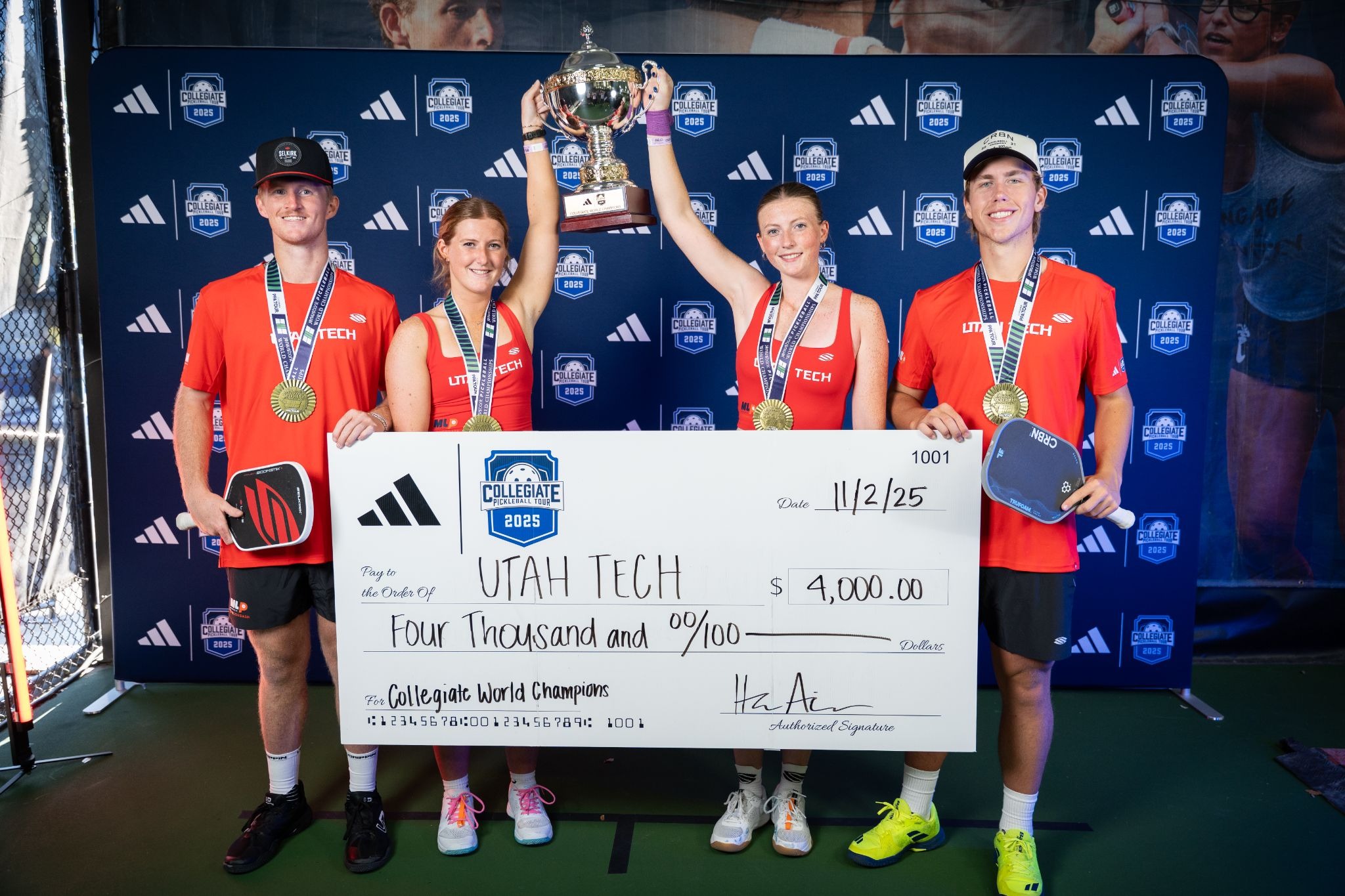
The 2025 Collegiate World Championship had it all, including packed courts, loud crowds, and some of the best college pickleball we’ve ever seen. And when it was all said and done, Utah Tech came out on top.
Utah Tech 1 didn’t lose a single match all weekend, capping things off with a dominant win over the Indian Collegiate Team in the finals. Their closest call came during group play against Utah State, when the match went to a DreamBreaker, but Utah Tech stayed composed and never looked back.
Check out @collegiatepickleball on Instagram for the best highlights, behind-the-scenes moments, and player interviews from college teams around the world.
Breakout Performances Everywhere
This event wasn’t just about the champs. We saw big jumps from programs all across the country.
Arizona State made a strong run to the Quarterfinals, their best finish yet, thanks to some new faces on the roster. Wisconsin impressed too, reaching the Semifinals for the first time, proof that their growing program is one to watch.
And Grand Canyon University (GCU) just keeps proving they belong at the top. After making the Final Four at the 2025 Collegiate Nationals, they did it again here, reaching the Semifinals for the second straight major.
A Record Weekend
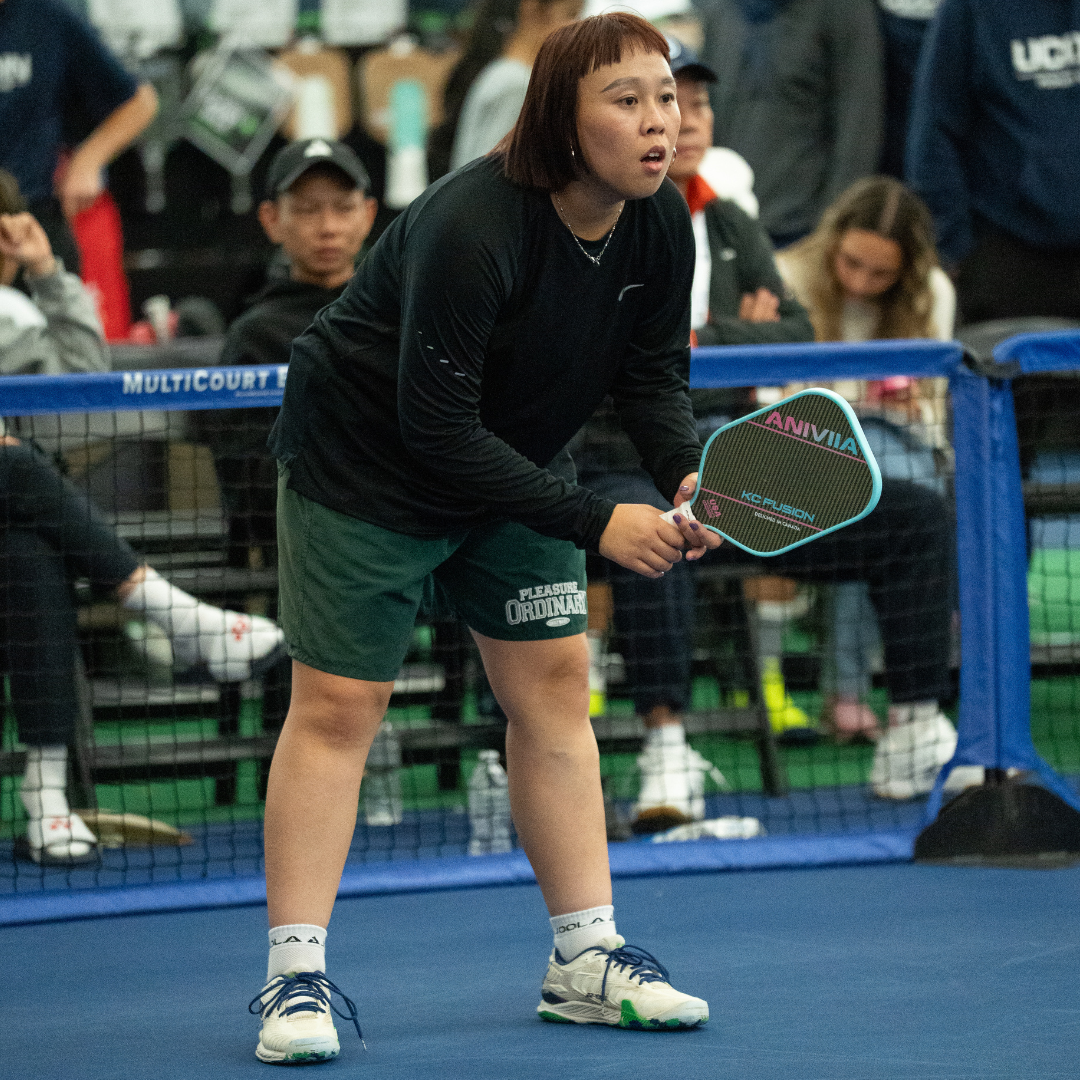
The Collegiate World Championship brought together 29 schools from across the U.S., including first-time appearances from Oklahoma Baptist University and Spring Arbor University.
In total, 220 players competed, making it the biggest college pickleball event of the semester. With so many courts in play, athletes got plenty of matches and even more memories.
Big Stage, Big Rewards
There was no shortage of incentives:
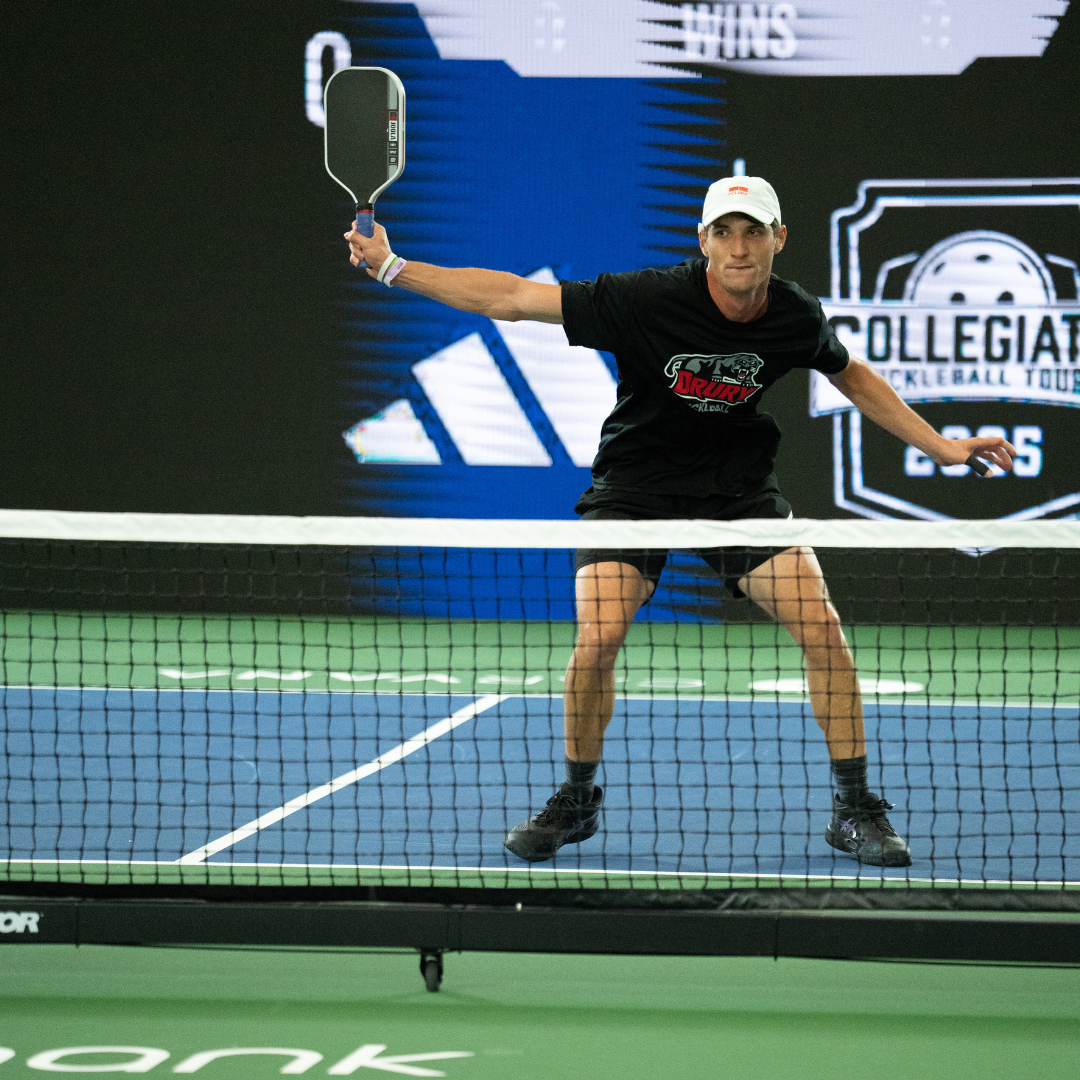
- 6 bids to Nationals
- $16,000 in prize money
- And tons of paddles and prizes handed out all weekend
Even a few Major League Pickleball pros stopped by to catch the action, and who knows, maybe they were scouting future teammates.

Find Your Photos from the Collegiate World Championship
Were you on court this weekend? Chances are we got you on camera.
We captured hundreds of moments, including big points, team huddles, celebrations, and everything in between.
You can browse, download, and share all event photos here. Use the Password DUPR25 to see the pictures.
Tag your teammates, relive your favorite rallies, and share your shots with us on Instagram @collegiatepickleball. We might feature you next!
The Future Looks Bright
From Utah Tech’s undefeated run to breakout performances by Wisconsin, ASU, and GCU, this year’s Collegiate Worlds showed just how deep and competitive the college scene has become.
To check the latest news on college pickleball, join our Collegiate News Channel on Instagram here.
College
Pickleball Tournaments
Community
October 31, 2025
Who’s Taking Over Pickleball? October’s Biggest DUPR Risers Revealed
From surging pros to standout collegiate players and rising juniors, October delivered major shake-ups across the DUPR rankings. Here’s a look at this month’s biggest risers in every division.
To qualify for these individual power rankings, players must hold a Reliability Score of 80 or higher.
College Highlights
Carter Maris makes a huge leap into the Men’s Doubles Top 10 for the first time, landing at an impressive #4. His growth and consistency this fall have solidified his reputation as one of the top collegiate doubles players to watch.
Meanwhile, the Boydston siblings have kicked off their college careers with authority, debuting at #2 in both Men’s and Women’s Doubles. Their synchronized rise has fans buzzing about what’s next for this dynamic duo.
Lauren Mercado is also making waves for Utah Tech, debuting at #5 on the Women’s Doubles list and strengthening the program’s growing national presence.
In Singles, the landscape looks almost completely different. On the Men’s Singles side, only Ryan Morneau and Liam Duffin remain from the previous list. Everyone else is new. The same story plays out for the Women’s Singles rankings, where only Mehvish Safdar, Ava Ignatowich, Sara Sowinski, Sescie Haan, and Haley Ferguson hold their spots among a wave of fresh talent.
Pro Division Risers
Pro Women
In singles, Hannah Blatt surges into the Top 50 at #32 after an impressive run to the quarterfinals at the LifeTime Singles Open, highlighted by wins over Jada Bui and Judit Castillo. Training in South Florida, she’s surrounded by elite competition, and it shows in her recent jump.
Samantha Buyckx, a new face on the pro scene and former Division I tennis standout, also breaks into the Top 50, soaring 26 spots to #40 after winning the Charleston PPA Challenger back in the beginning of October, edging out Lina Padegimaite in the finals. She has a ton of length on the court. We expect to see more of her name moving into 2026.
Pro Men
Augie Ge climbs into the Top 25 at #25 in Men’s Singles Rankings, gaining 0.31 DUPR over the past two months despite a lighter singles schedule. His consistency and shot-making continue to impress, and fans are eager to see him take on more singles events next season.
The Pro Men’s Doubles Biggest Riser is Jonathan Truong, who jumped 13 spots and gained 0.096 DUPR after winning Mixed Doubles gold at the PPA Vietnam Open alongside his sister Alix Truong, defeating Chao Yi Wang and Tyson McGuffin in a thrilling final.
Junior Standouts
The next generation of talent continues to shine.
Kayla Williams enters the Top 25 in Junior Women’s Doubles at #21 following her gold medal run at the Rock City Rally PPA Challenger in October. At just 15 years old, her poise and athleticism, showcased in her recent match against Simone Jardim, have impressed players and fans alike.
On the boys’ side, Tama Shimabukuro is turning heads with a string of high-level wins. The Hawaii native earned notable victories over Tyler Loong, Armaan Bhatia, and Chris Haworth across events in Fukuoka and Las Vegas, propelling him into the Top 25 in Junior Doubles and cementing his reputation as one of the sport’s rising stars.
The Takeaway
From college newcomers making immediate impacts to pros on the rise and junior phenoms earning their spots, October’s DUPR Biggest Risers reflect the depth and growth of competitive pickleball.
As we head into the final months of 2025, expect even more movement and more stories of breakout performances across the DUPR landscape.
To check the latest news on college pickleball, join our Collegiate News Channel on Instagram here.
No items found.
October 30, 2025
The Collegiate World Championship Kicks Off This Weekend
College pickleball is going international.
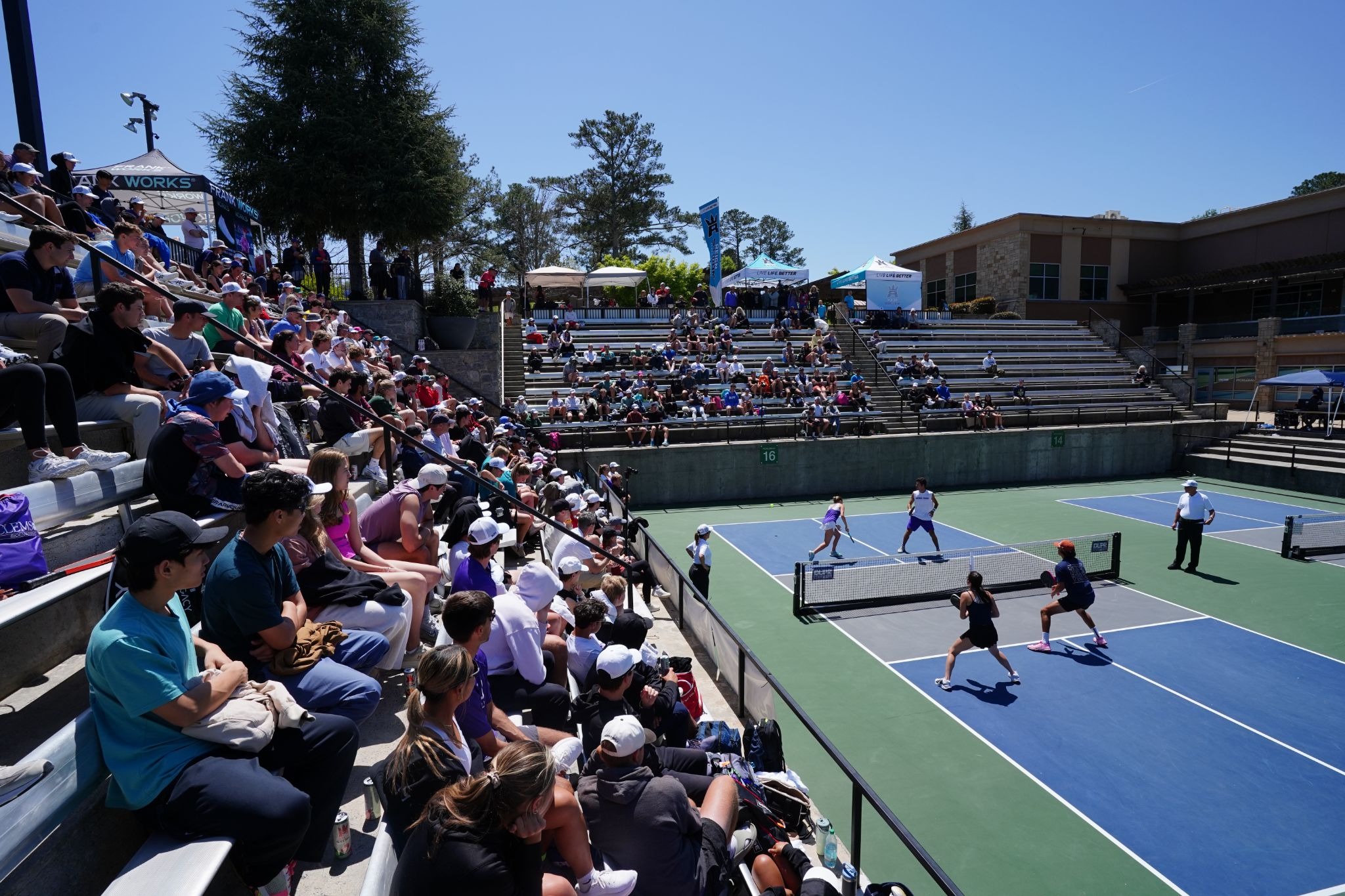
This weekend marks the first-ever Collegiate World Championship, bringing together teams from the United States, China, and India in a groundbreaking event that celebrates competition, community, and the global growth of the sport.
With 200+ players in attendance, this will be the largest collegiate pickleball tournament of the semester, uniting top programs and athletes for three days of world-class play.
What’s at Stake
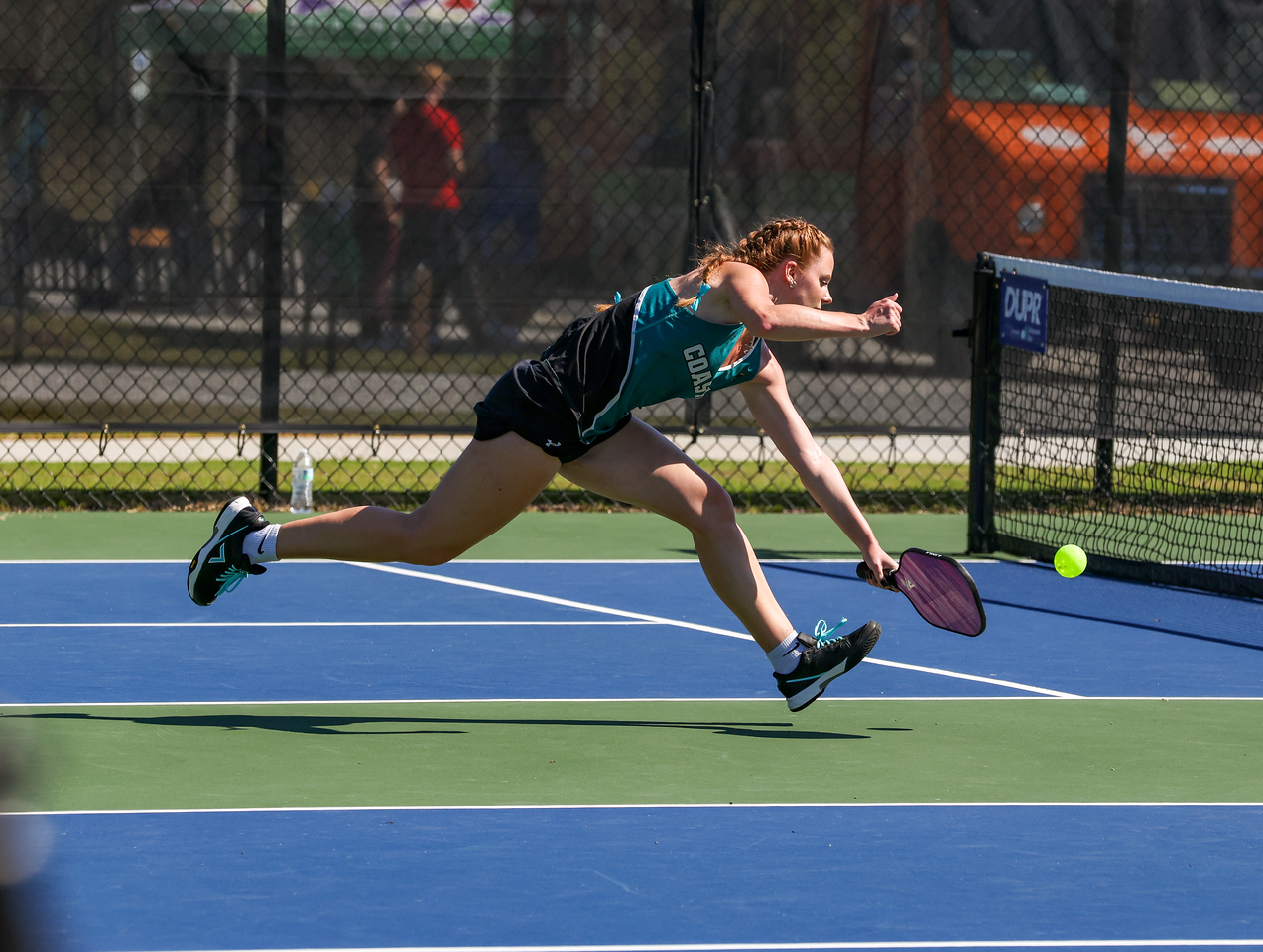
A total of $16,000 in prize money will be awarded throughout the weekend, including a $4,000 cash prize for the winning team.
And for U.S. college teams, the competition carries even more weight:
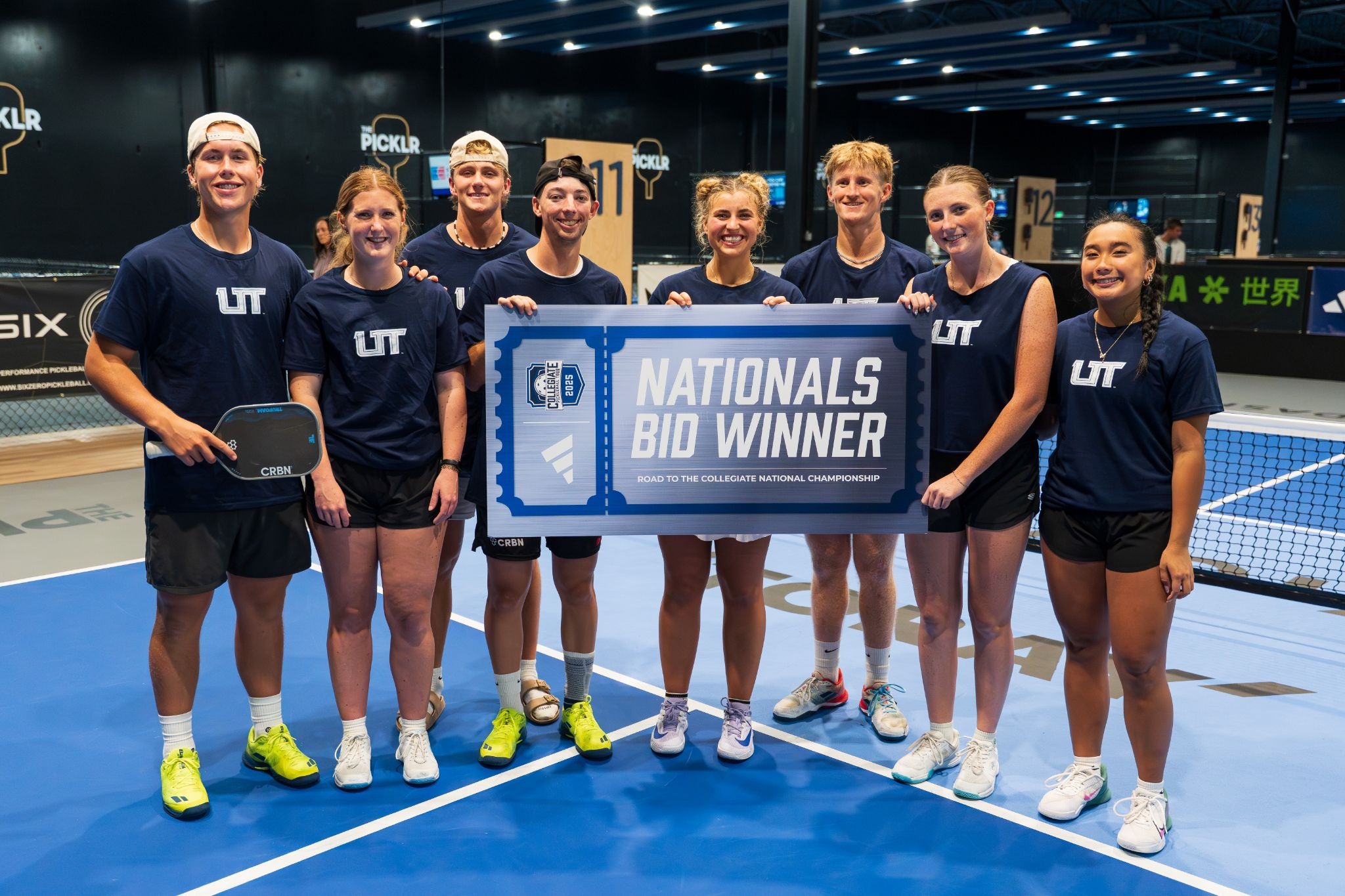
Six bids to the 2026 Collegiate National Championship (April 2026) will be awarded to the top six USA teams from the tournament.
A Return to Singles Play
For the first time since the 2024 Individual Nationals, the Collegiate World Championship will feature both Men’s and Women’s Singles brackets, giving players a chance to shine individually in addition to representing their schools in team play.
A Weekend of Pickleball Energy
The event runs across three action-packed days:
- Friday: Team Group Play
- Saturday–Sunday: Playoffs and Championship Rounds
And the excitement doesn’t stop there. All Collegiate World Championship players will receive free access to the MLP Cup, happening the same weekend at the same facility.
Even better, the Utah Tech College All-Star Team will take the court in the MLP Cup, bridging college and professional play in one unforgettable weekend.
A Milestone Moment for Collegiate Pickleball
The Collegiate World Championship isn’t just another tournament; it’s a glimpse into the future of pickleball.
A future that’s more competitive, more connected, and more global than ever before.
From the U.S. to Asia and beyond, this event proves one thing loud and clear: pickleball is no longer just an American college sport; it’s a worldwide competition.
To check the latest news on college pickleball, join our Collegiate News Channel on Instagram here.
College
Pickleball Tournaments
Community
October 30, 2025
Request a Review of Your Rating
Need feedback on your rating? Request a review here.
At DUPR, our goal is simple: to provide the most accurate reflection of your skill on the court. Recently, some players have raised concerns about the latest algorithm update, particularly:
1. Rating dropping after a win.
2. Higher-rated players hesitating to enter tournaments for fear of their DUPR dropping.
3. A perceived decline in tournament participation.
Why a Win Can Sometimes Lower Your DUPR
The biggest shift in the updated model is how it measures performance versus expectation. In the past, any win resulted in a rating increase, regardless of the opponent or score. That approach often inflated ratings for players who consistently played down, while players who challenged themselves against tougher competition saw limited progress.
So, is a win a win? Absolutely. That win might advance you in a tournament, boost your league standing, or give you bragging rights - but in terms of rating, a win doesn’t always mean you performed above expectations.
Here’s an example: if a team is expected to win 11-5 but instead wins 11-9, the match was closer than predicted. That tells us the underdog performed better than expected, and we move both teams’ ratings slightly closer together. Next time, the prediction might be 11-6 instead of 11-5, which is a more accurate reflection of what actually happened on court. If we ignored that nuance and rewarded the winners automatically, we’d be saying the stronger team should win by even more next time, which doesn’t reflect reality.
This isn’t about punishing wins; it’s about preserving accuracy. A DUPR rating is not a reward or penalty - it’s a measurement of skill, designed to predict future performance as precisely as possible. By rewarding performance that exceeds expectations rather than just outcomes, the system stays fair, balanced, and representative of actual ability.
Addressing Concerns from High-Level Players
Some high-level players have expressed concern about competing in local events, where they may face lower-rated opponents and feel pressure to win decisively to maintain their rating.
Before the algorithm update, players could compete against lower-rated opponents and, as long as they won, there were no negative adjustments to their rating. This often led to inflated ratings for players who consistently played down, while players who played up struggled to see their rating rise even as they improved. The updated model corrects that, keeping ratings fair, stable, and reflective of real on-court performance.
There will naturally be an adjustment period as inflated ratings settle and the system rebalances. During that time, some high-level players may see drops in their rating before stabilizing at a level that more accurately represents their play. If your rating truly reflects your ability, one underperformance won’t define it - strong results afterward will move it right back up. A single match never determines a player’s DUPR; the system measures performance across formats and levels. The more varied and balanced a player’s match history is - with a mix of favorites, underdogs, and opponents near their level - the more precisely DUPR captures their true skill. So we encourage high-level players to continue seeking out opportunities at the professional level to challenge themselves against equally strong peers.
Tournament directors also play an important role by enforcing appropriate minimums for upper brackets. This helps ensure competitive balance and meaningful results for all players.
Has Tournament Participation Declined?
We’ve heard concerns that tournaments aren’t filling up or that registration has dropped since the update. However, the data tells a different story.
Across DUPR, total match activity has remained strong, and has even increased. In January 2025 (three months before the algo update), uploaded DUPR matches averaged around 297,000 per month. Today, that average rose to 430,000 per month.
Many of the vocal players expressing hesitation about competing are often more focused on protecting their rating than they are concerned with its accuracy. Ratings that were inflated under the previous system are now correcting toward a truer level. At DUPR, our priority is the accuracy and integrity of the rating, not simply rewarding players or keeping everyone happy after every match. The goal is to measure performance as precisely as possible, helping every player, club, and event organizer trust that a DUPR means the same thing everywhere it’s used.
While individual events will always vary depending on factors like timing, location, and format, overall engagement in DUPR-affiliated play continues to grow. The update has helped ratings stabilize, created fairer competition, and strengthened the system’s accuracy - all of which support the long-term health and growth of the sport.

The Big Picture
Change can take time to adjust to, especially when it affects something players care deeply about. The latest algorithm update wasn’t designed to make players want to play more or less or to sign up for different divisions - it was designed to measure player performance more precisely.
The result is a more accurate and trustworthy DUPR system that measures true performance, improves competitive matchups, and reflects every player’s real level on court. And as the data shows, the pickleball community continues to play, compete, and grow stronger than ever.
Have questions about your rating? Fill out this form and we’ll take a look.
DUPR Ratings
Community
October 28, 2025
Top 3 Pickleball Tips to Fix Your Serve
Struggling with your serve? DUPR Ambassador Liam Duffin is here to help you smooth it out and start every rally with confidence. In this DUPR Tips feature, Liam shares three key fundamentals that can instantly make your serve more consistent and effective.
1. Keep a Relaxed Grip
First things first: relax your grip.
You don’t need to strangle the paddle! Aim for about a 3 to 5 out of 10 on the grip-pressure scale. This gives you the perfect balance of control and fluidity.
A relaxed grip helps your motion stay loose and natural, which improves both your timing and accuracy.
2. Control Your Toss
Your toss is the foundation of every great serve.
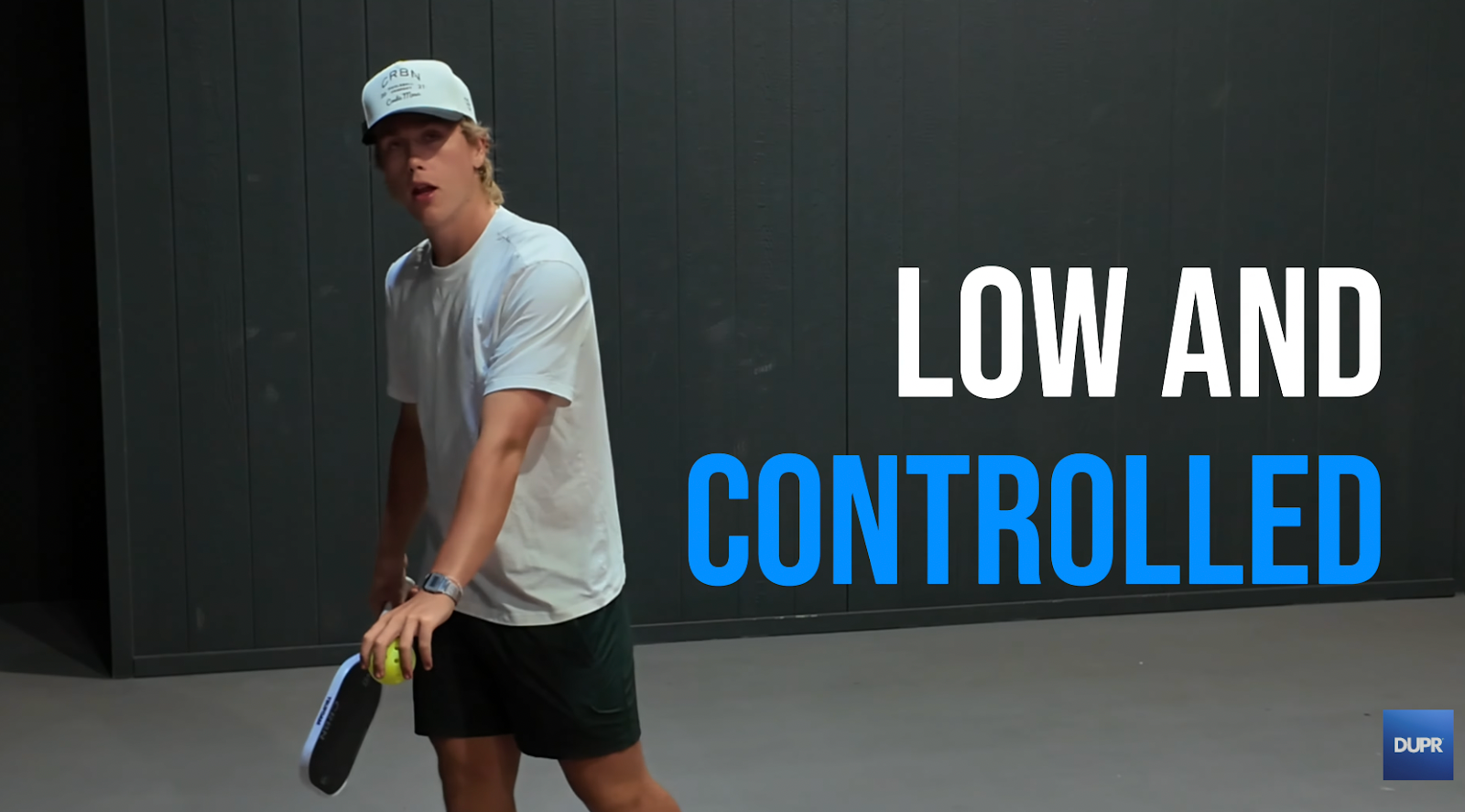
Liam emphasizes keeping it low and controlled plus consistent in height and position. If your toss varies (too high, too low, or drifts side-to-side), your entire motion becomes unpredictable.
A steady, repeatable toss lets you develop muscle memory and keeps your serves landing where you want them.
3. Serve Smooth Like the Pros
If you’ve ever watched Ben Johns, you’ll notice how effortless his serve looks — smooth, calm, and controlled. That’s exactly what you should aim for.
Rather than muscling through the motion, focus on rhythm and flow. When your serve feels smooth, it becomes more accurate and reliable.
Serve Smarter, Not Harder
Use these three tips to make your serve more consistent, confident, and controlled. Remember — your serve sets the tone for every rally, so mastering it is one of the fastest ways to improve your game.
If you found these tips helpful, follow DUPR on YouTube for more pickleball advice straight from ambassadors like Liam Duffin and our incredible DUPR community.
Beyond the Baseline - The DUPR Building Series
This tip is part of our tips series, Beyond the Baseline - DUPR Building Series, where we share insights and training advice from DUPR ambassadors, pros, and community members to keep building your DUPR rating.
Check out the full series to learn from some of the best in the game and start building your skills, one tip at a time!

Subscribe to our YouTube Channel today!
Pickleball Tips
October 26, 2025
Pickleball Doubles Drills by Skill Level: From 2.0 to 4.0+ DUPR
If you’ve recently stepped onto a pickleball court, you already know that doubles is the most popular way to play pickleball. Whether you’re a beginner just learning pickleball rules or an experienced player trying to climb the ladder in pickleball ratings, the fastest way to improve is by drilling with a purpose, utilizing skill-based drills.
This guide breaks down the best pickleball doubles drills by skill level so you can level up your game, no matter where you’re starting.
Why Drills Are Essential in Pickleball Doubles
Drills aren’t just busy work, they simulate real-game situations, improve muscle memory, and can help you communicate better with your partner. Practicing targeted pickleball drills for doubles will sharpen your consistency, strategy, and confidence in tournaments and rec play.
And here’s the bonus: consistent practice can help you improve your DUPR rating over time.
Drills for 2.0–3.0 Skill Level
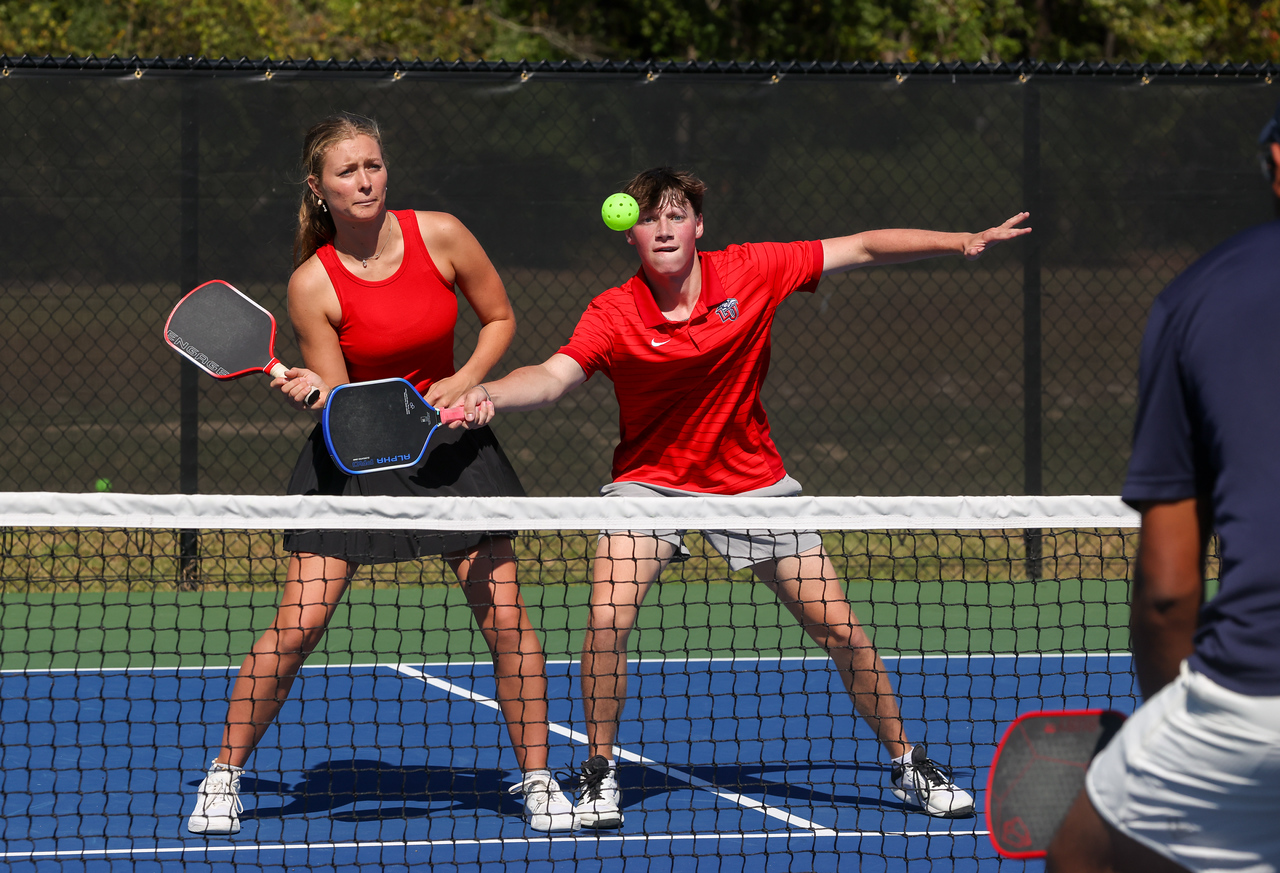
At this stage, you’re focused on learning proper strokes, movement, and teamwork. Simple, repeatable drills are the key. Our goal is to develop consistency, ball control, and court awareness.
The Dink Toss Drill
- Partner feeds soft balls into the kitchen.
- Practice controlled dinks back and forth.
- Focus on paddle angle and placement rather than speed.
Serve + Return Drill
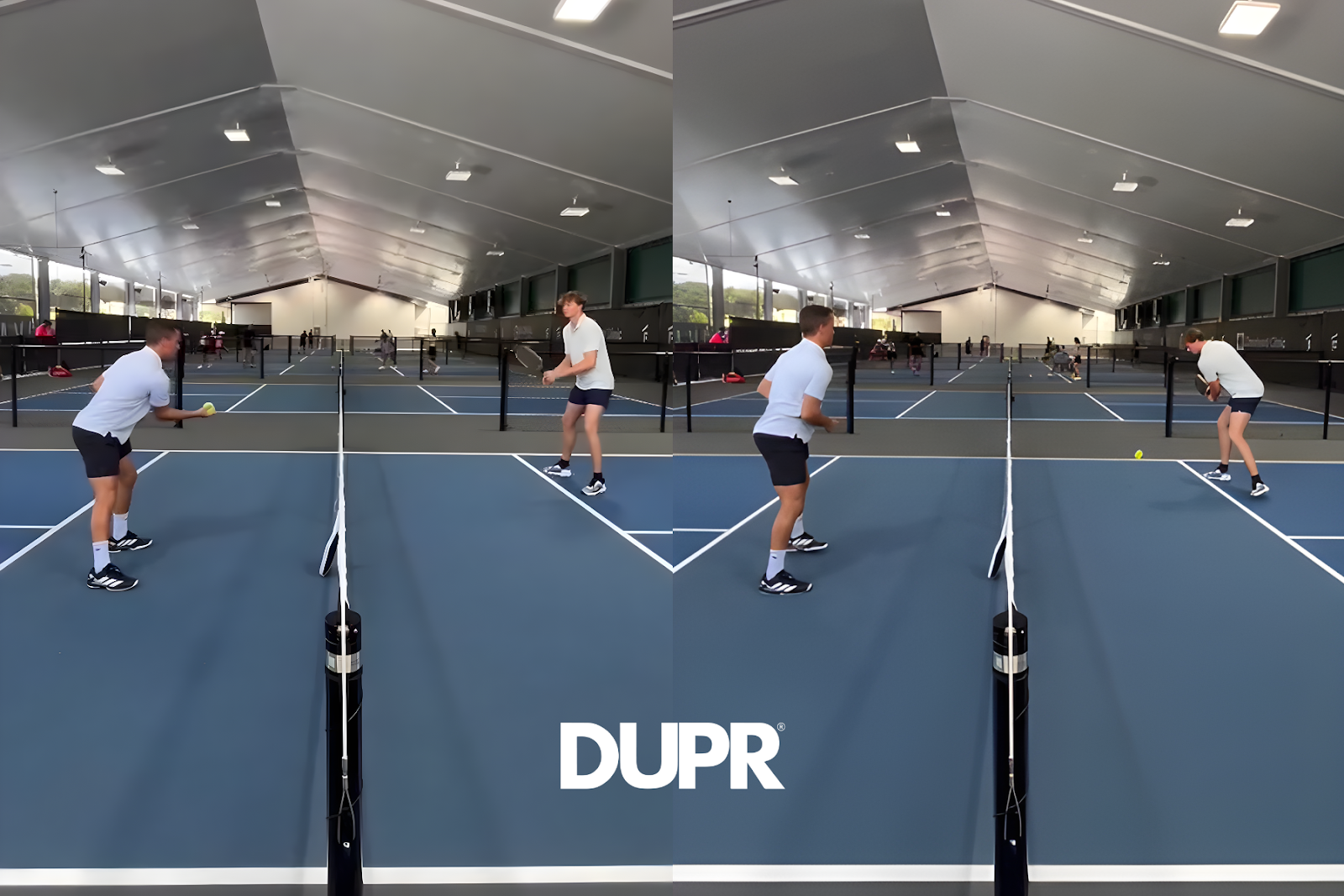
- One player practices consistent serves.
- Partner practices deep returns crosscourt.
- Helps with shot reliability while reinforcing pickleball rules around serves and returns.
Have you been serving illegally without knowing it? Most players have. Read this article to find out if you have been breaking the serving pickleball rules too.

Shadow Movement Drill
- Without a ball, move in sync with your partner across the court.
- This teaches positioning and doubles communication.
Interested in learning more about communication in doubles? Check out this article and avoid missing unnecessary points.
3.0–3.5 Skill Level
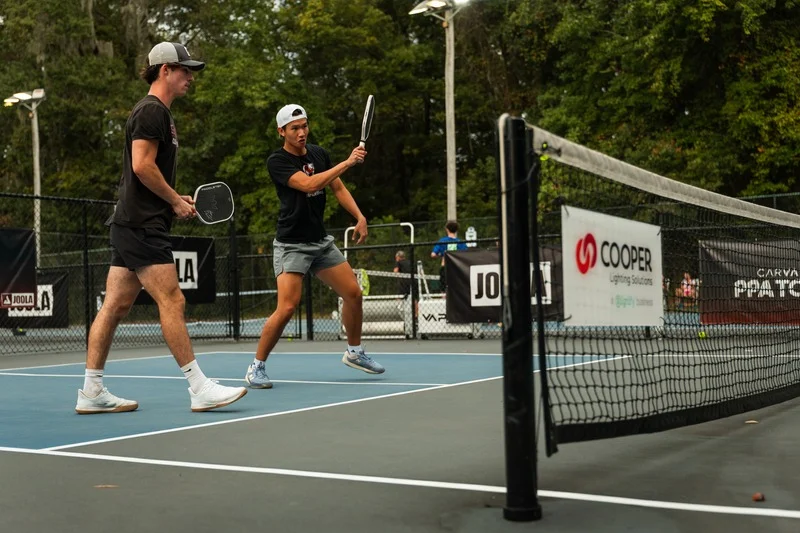
Once you’ve mastered the basics, the focus shifts to building rally endurance and tactical doubles play. At this point, your goal should be to strengthen doubles rallies, learn controlled aggression, and improve transition play.
Third Shot Drop Drill
- Practice third shot drops from baseline into the kitchen.
- Rotate partners feeding and hitting.
- Critical for advancing in doubles strategies.

Transition Zone Drill
- Start at baseline, hit a third shot, then move forward together.
- Pause in the transition zone to reset, then advance.
- Helps overcome “getting stuck” in no-man’s land.
If you usually get stuck in the transition zone, check out Bobbi Oshiro’s guide on how to avoid that. One simple tip can change your life.

Crosscourt Dink Rallies
- Rally diagonally across the kitchen line.
- Focus on depth, angles, and patience until your opponent pops one up.
4.0 and Above
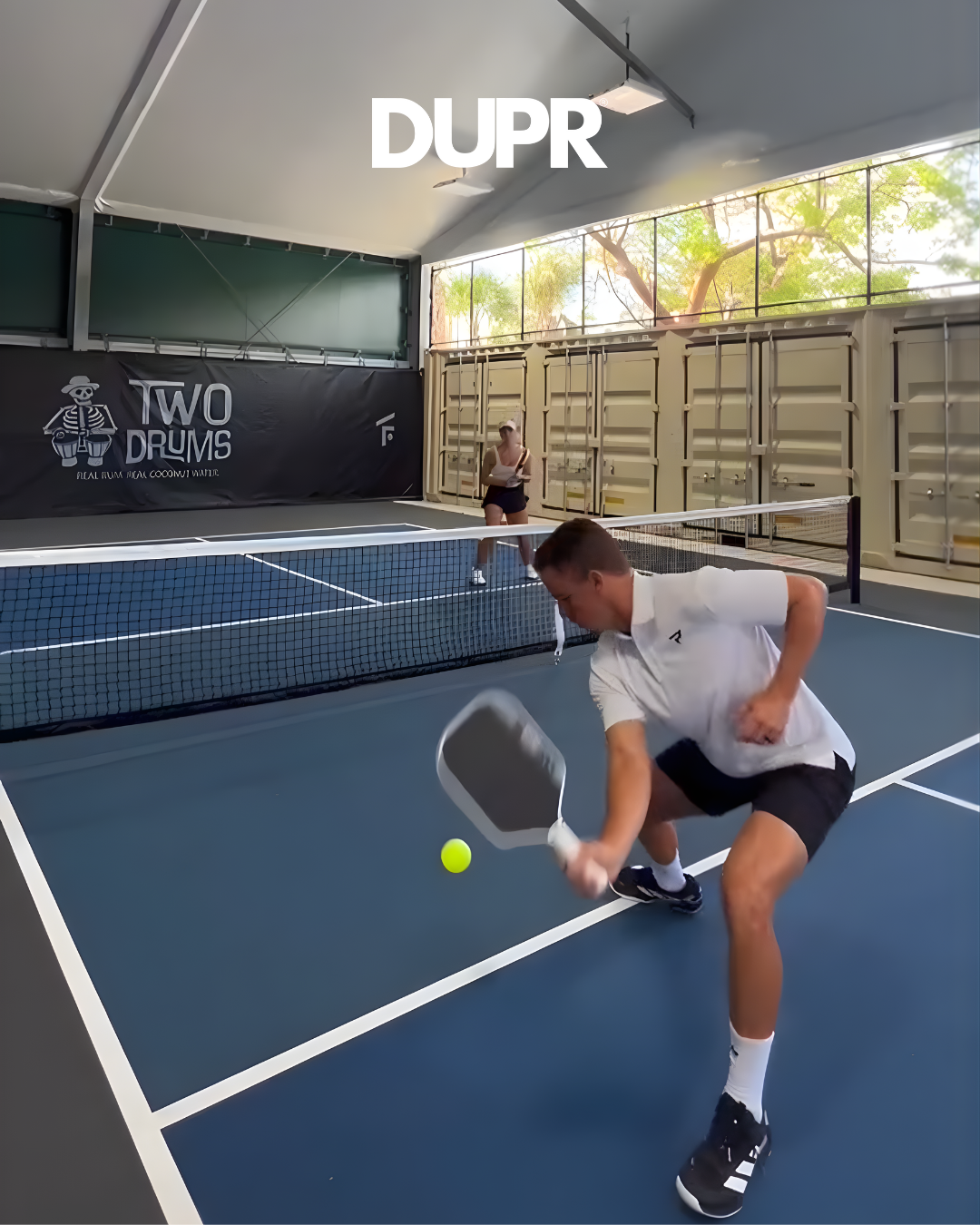
At higher levels, drills simulate real-game pressure and fine-tune doubles strategies. The Goal: Add advanced tools like resets, poaching, and lobs to dominate doubles matches.
Speed-Up and Reset Drill
- One player speeds up a ball at the net.
- The partner works on resetting into a soft dink.
- Builds reflexes and calm under pressure.
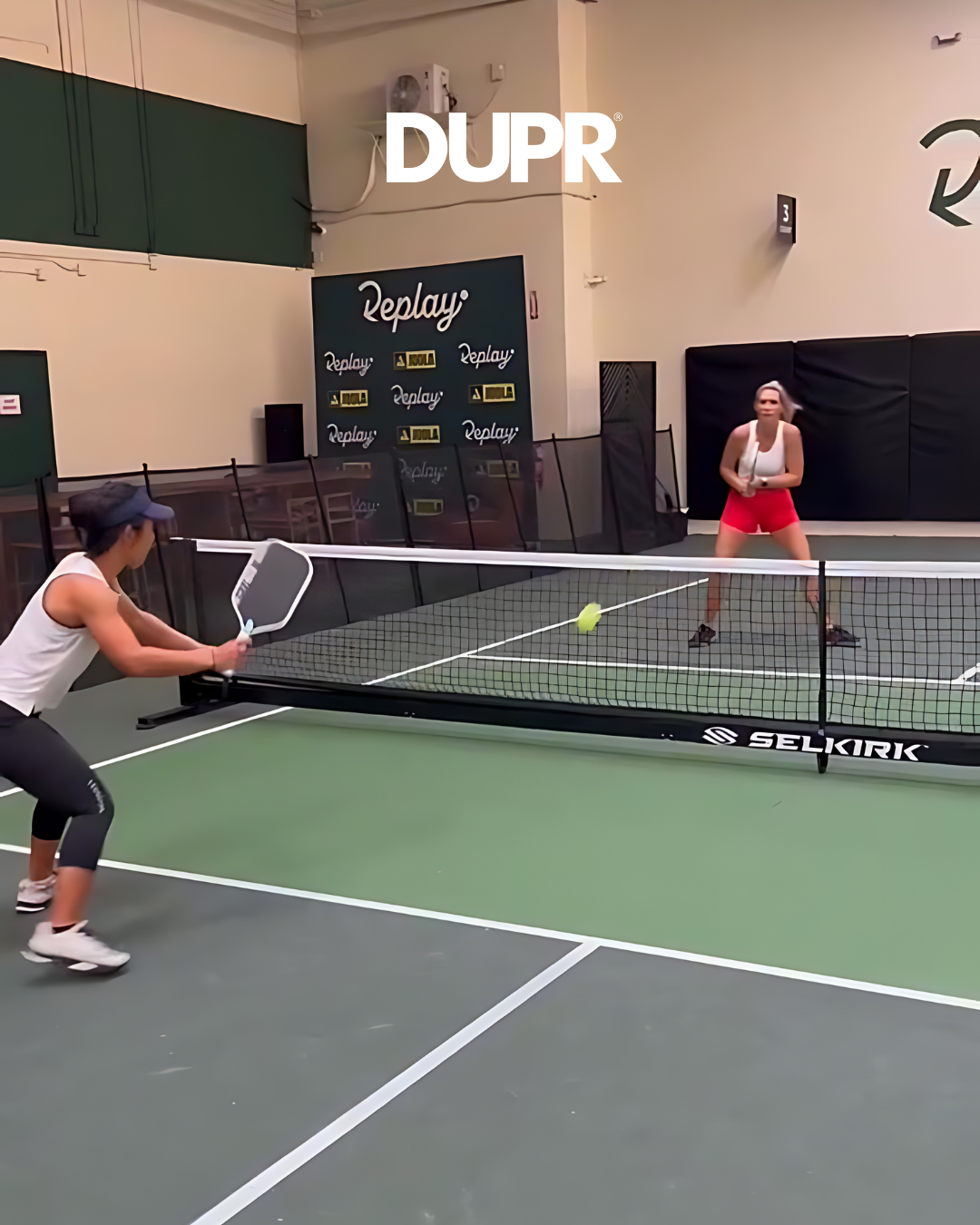
Poaching Drill
- Set up crosscourt rallies.
- Practice timing your movement across the middle to intercept a ball (poach).
- Refines anticipation and partner trust.

3. Defensive Lob Drill
- Opponents lob over one player.
- Partner covers, returning either overheads or defensive resets.
- Perfect for high-level doubles where lobs are strategic weapons.

How Drills Impact Your DUPR Rating
Practicing these pickleball doubles drills at every skill level not only sharpens your game but also impacts your official DUPR rating. The more comfortable you become with dinks, drops, and doubles strategies, the better your performance in matches and tournaments will be.
If you’re new to DUPR, here’s a guide on how to get a pickleball rating.
Final Tips To Get Better at Pickleball Doubles
- Consistency beats power. Most points are won by avoiding errors, not by hitting winners.
- Communicate constantly. Call shots, discuss strategies, and stay in sync.
- Drill before you play. Ten minutes of focused practice is more valuable than a full game without any purpose.
Whether you’re chasing a higher pickleball rating, preparing for pickleball tournaments, or just want to win your next rec game, tailored doubles drills will take you there.
No items found.
October 23, 2025
How to Pick Your Doubles Partner (and Be A Good One Too)
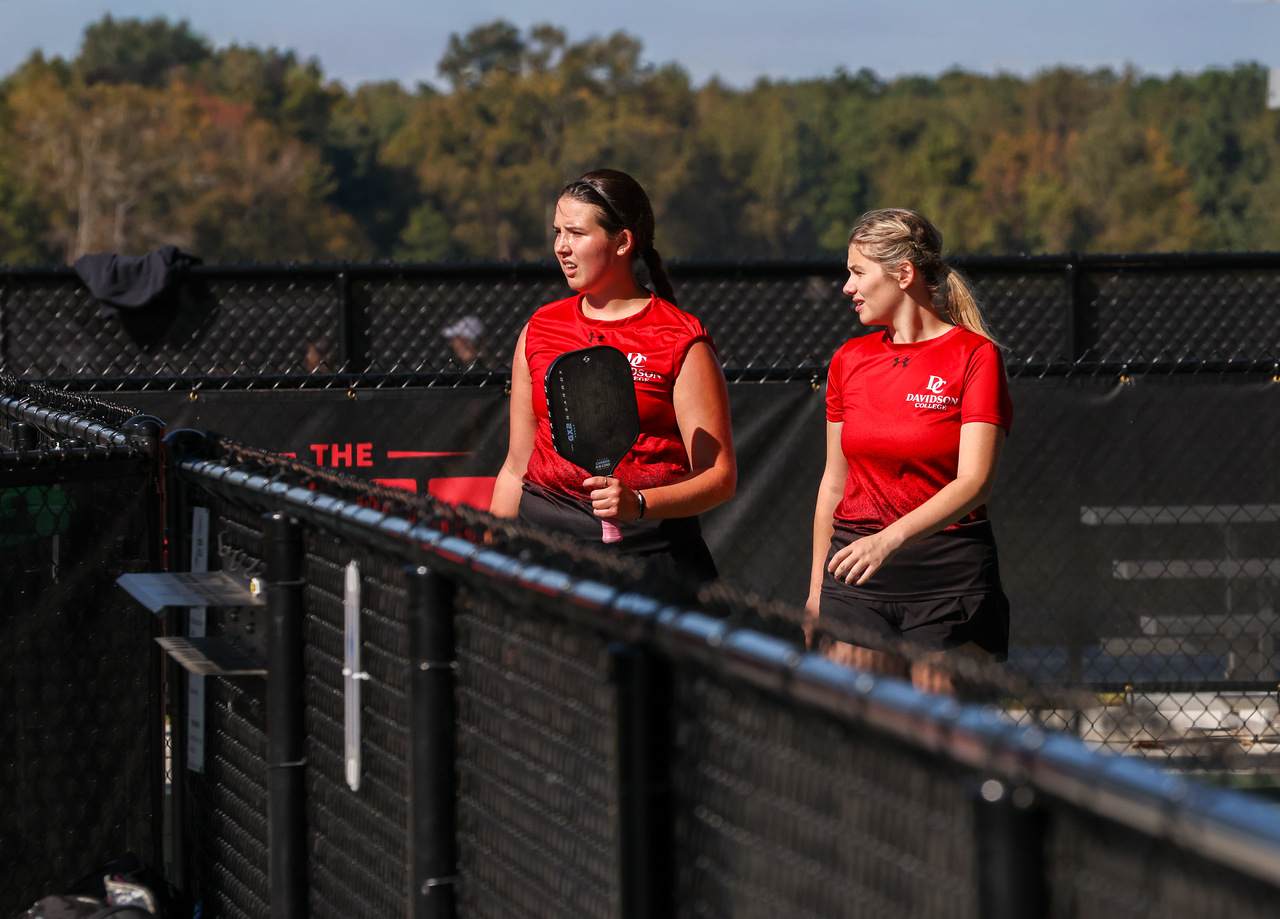
Pickleball isn’t just a test of skill; it’s a team sport built on chemistry, communication, and trust. You can have the best hands or the biggest drive, but if you and your partner aren’t in sync, it’s hard to win points consistently (or have fun doing it).
Choosing the right doubles partner isn’t just about DUPR ratings or skill levels; it’s about finding someone who complements your game, keeps the energy positive when things get tough, and wants to improve together.
What To Look For In A Doubles Partner
Here are three key things to look for when choosing your next doubles partner:
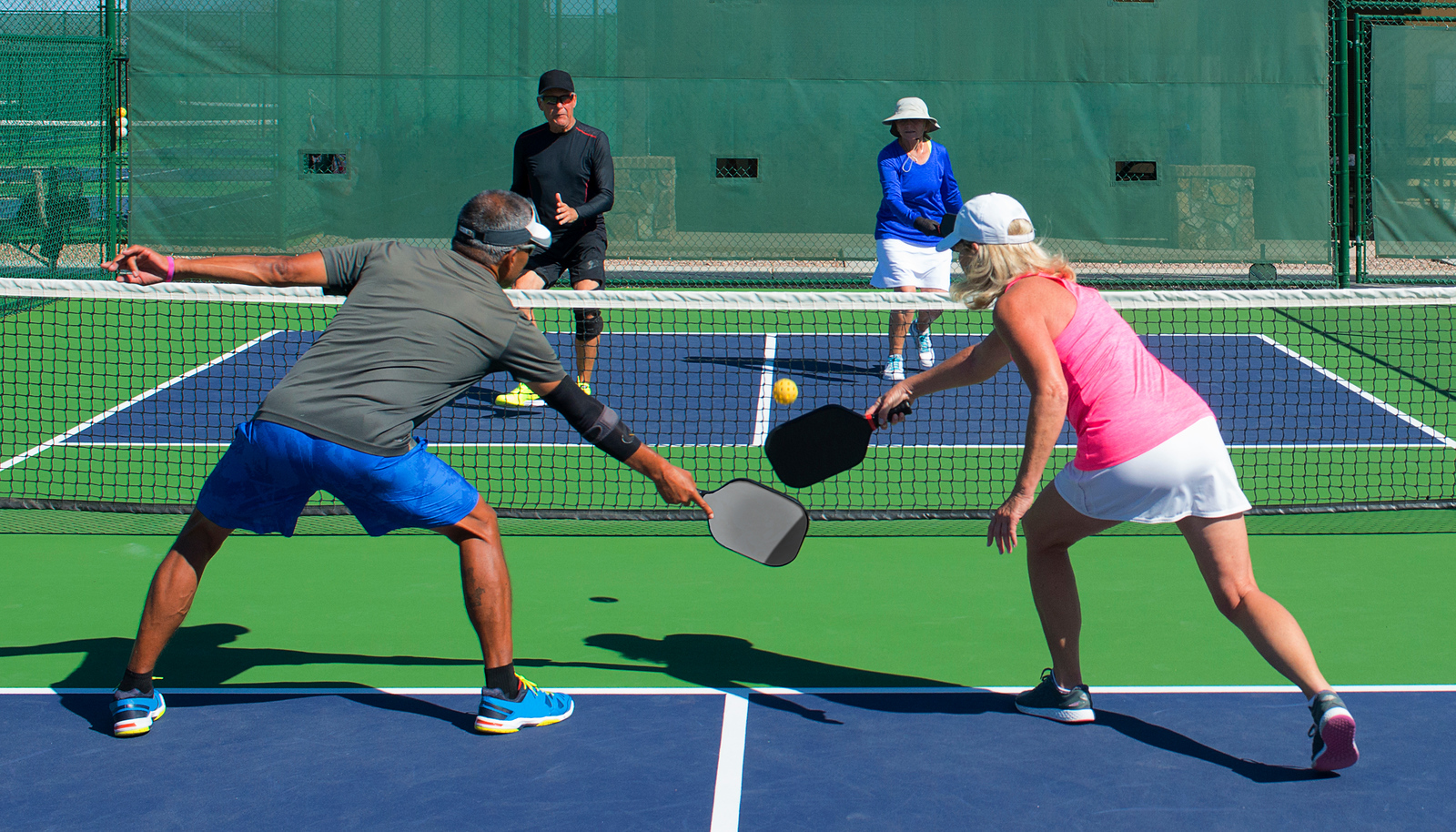
1. Complementary Game Style
It could be as simple as pairing a right-sided player with a left-sided player, or finding someone who balances your strengths and weaknesses.
If you love to drive and attack, find someone who thrives at the net and can clean up your shake & bake. If you’re steady and patient, maybe you need a banger to finish points. There’s no single winning formula; we’ve seen all kinds of pairings succeed.
The key: know your game and find someone whose style complements yours. And remember: the more versatile you are, the easier it is to mesh with different partners.
2. Positive Energy & Effort
You want a partner who competes hard, stays composed under pressure, and lifts you up when things aren’t going your way.
Pick someone who hustles, encourages, and brings energy instead of tension.
That kind of positivity is contagious; it helps you play looser, more confident, and often… better.

3. Willingness to Work Together
Even if you don’t live in the same city, find a partner who’s open to learning and improving together.
The best partnerships come from players who reflect after matches, identify what to fix, and actually give it another try instead of immediately switching partners.
Talk through the small details: who takes the middle, how you handle third shots, or what patterns work best. Consistency and collaboration almost always win over constant rotation.
How to Be a Good Doubles Partner
Sometimes we focus so much on finding the “right” partner that we forget to be one ourselves.
Here’s how to make sure your partner wants to keep teaming up with you:
1. Give 100% Effort
Always bring your best during every point and every match.
One of my favorite quotes from my college tennis days was:
“The biggest sign of respect you can give your opponents is to play your hardest every point.”
Effort is contagious. When your partner sees you grinding even when the score’s not in your favor, it inspires them to match your intensity.
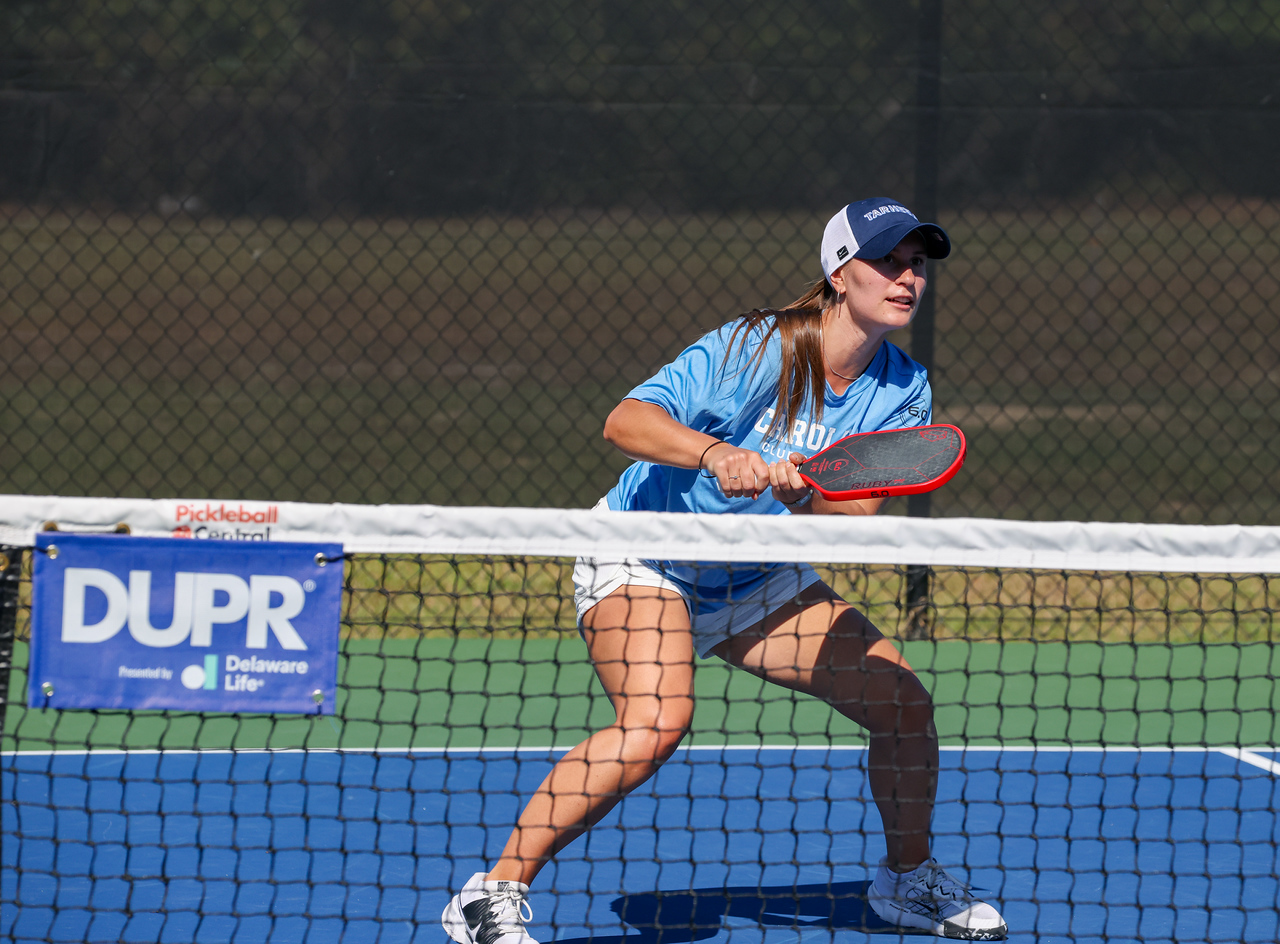
2. Keep Your Body Language Positive
Your partner can feel your energy. Eye rolls, shoulder shrugs, or checking out between points can tank morale faster than a bad serve.
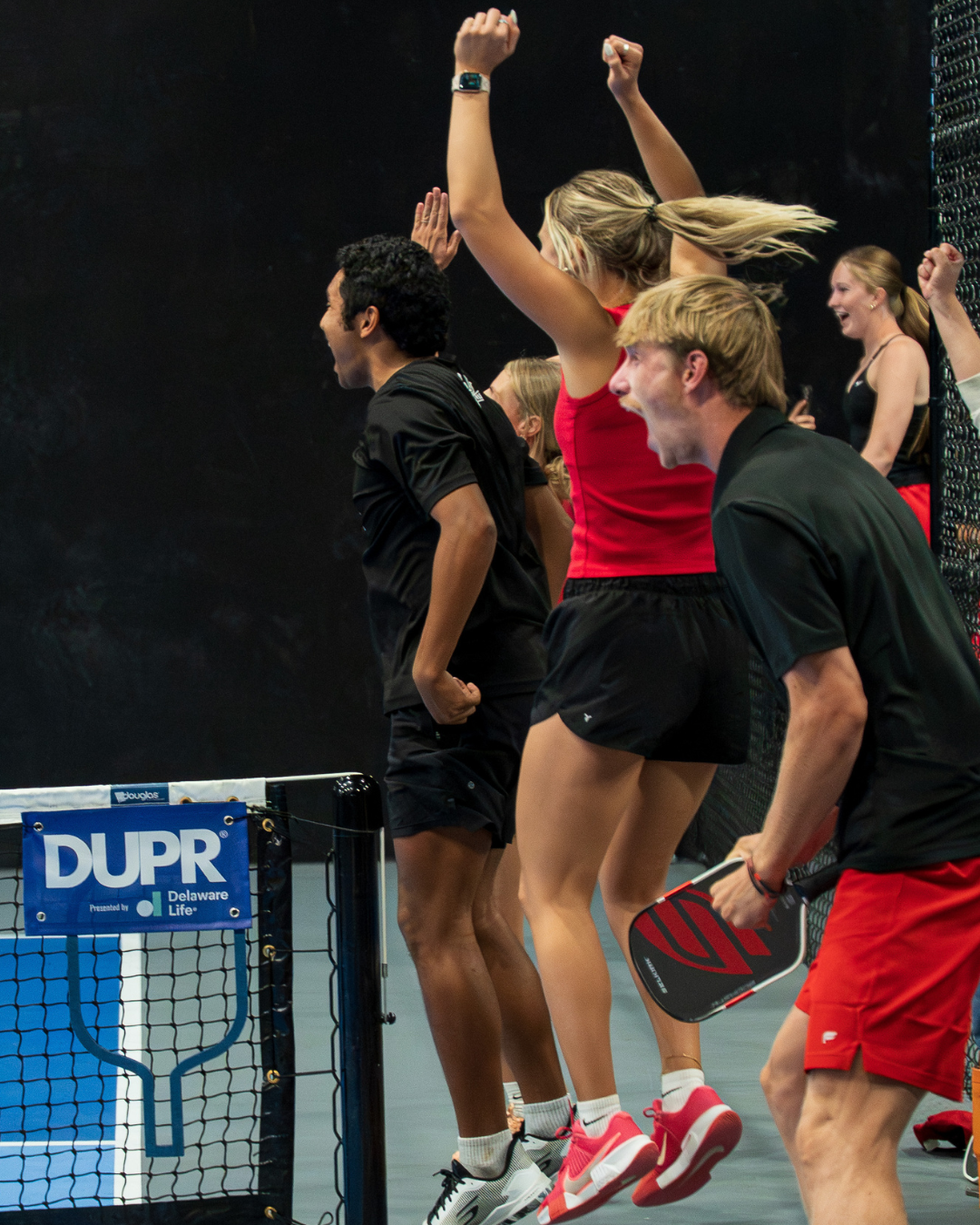
You don’t have to fake happiness; just stay engaged. Walk with your partner between points, share quick pep talks, celebrate small wins, and show you’re in it together.
A simple fist bump or “Let’s go” goes a long way.
3. Use “We” More Than “You”
Doubles is a team game; it’s we, not you.
Say things like:
“Let’s try returning crosscourt.”
“What do you think about stacking next game?”
Avoid blame or unsolicited coaching (“You need to do more with your dinks”). Collaborative language builds teamwork; criticism creates pressure.
The Bottom Line
The best partnerships aren’t built overnight ; they’re built through communication, effort, and trust.
Pickleball Tips
Community