No matching results.
Search results
February 11, 2026
Starting the Year With Intention: How Mindset and Goal Definition Shape Performance in Fitness, Pickleball, and Life
By Susie Reiner, PhD
The start of the year creates a rare pause in an otherwise continuous cycle of obligations, habits, and momentum. For many adults, this is one of the only times when reflection feels both practical and socially accepted. Used well, it allows direction to be set intentionally rather than inherited from last year’s routines.
For people invested in pickleball, fitness, and long-term health, early clarity has real long-term benefits. The expectations defined now influence how time is allocated, how fatigue is interpreted, and which trade-offs feel acceptable. These decisions compound quietly and tend to show up later as either sustainable progress or recurring frustration.
Starting with intention does not require a dramatic overhaul. It requires deciding what deserves consistency and what can be deprioritized. That distinction becomes increasingly important as athletic goals intersect with work, family, and personal energy.
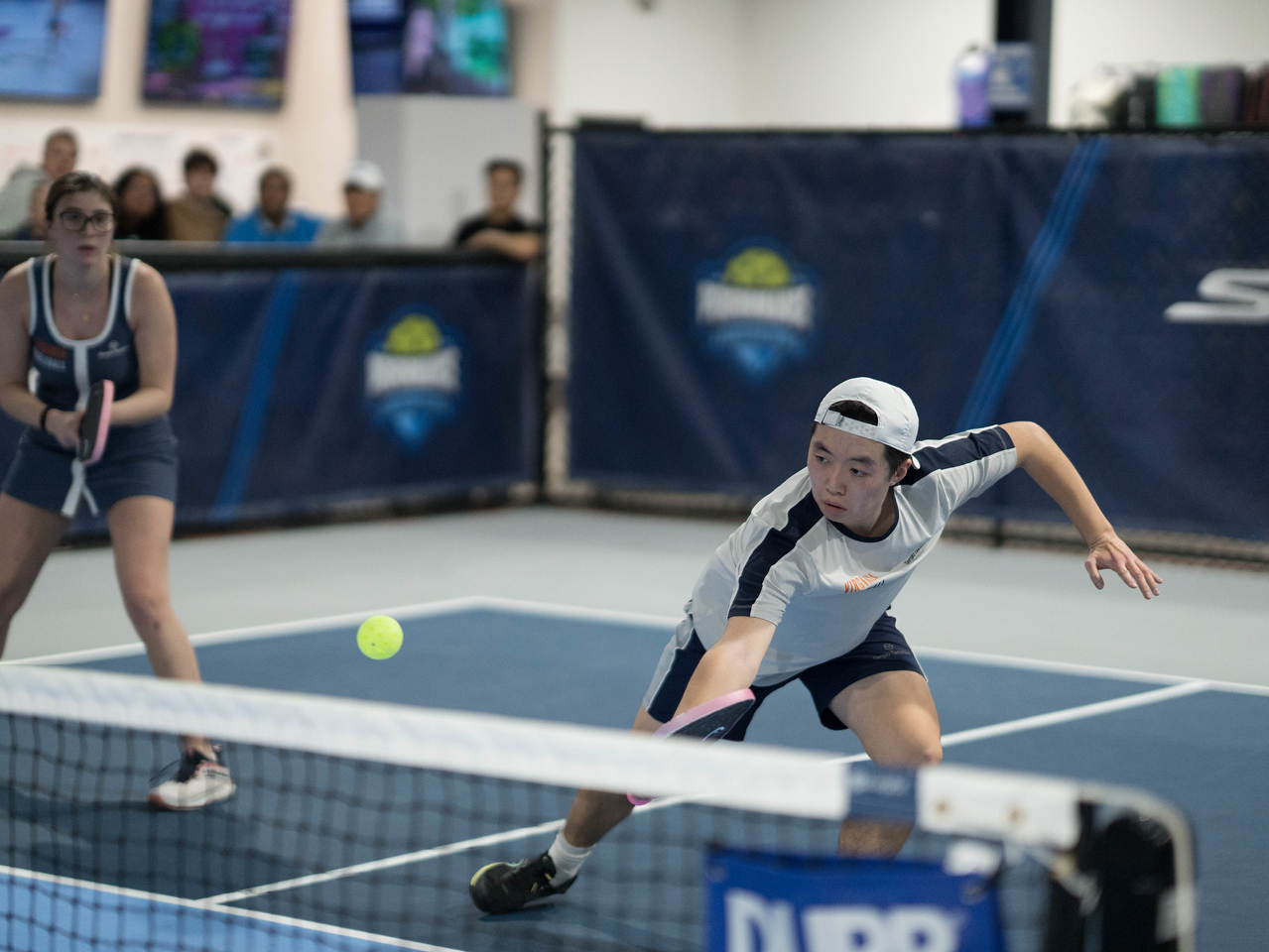
Mindset as a Foundation for Sustainable Progress
Mindset shapes how you process challenges day-to-day. It shapes whether obstacles are seen as disruptions or as expected elements of long-term progress. This perspective affects consistency more than motivation alone.
An adaptable mindset allows room for fluctuations in energy, schedule, and performance. Life stressors and physical variability are treated as part of the system rather than interruptions to it. Approaching life with a flexible yet focused mindset supports steadier engagement and long-term adherence to training, sport, and personal goals throughout the year.
This perspective carries beyond sport. Adults balancing multiple roles benefit from valuing continuity over intensity. That framing supports patience, clearer decision-making, and reduced burnout across both fitness and life demands.
Goal Setting as a Driver of Physical and Mental Adaptation
Goals guide behavior, and behavior drives physiological adaptation. When goals are clear, training sessions tend to be more purposeful, recovery habits more consistent, and stress better managed. Over time, this consistency shapes both physiological and psychological adaptation.
Goal-setting within your pickleball program might look like knowing your weekly sessions and volume of play, and choosing tournaments you might participate in ahead of time. This structure not only provides the necessary progressive aerobic stimulus to improve endurance, but also promotes mental clarity, reducing decision fatigue about when to head to the court versus the gym during your training.
In pickleball, well-defined goals shape how often you play, how you warm up, and whether strength or aerobic work is prioritized alongside court time. Beyond the court, the same structure influences sleep routines, nutrition choices, and boundaries around workload. The result is a more stable foundation for both performance and health.
You can incorporate a combination of outcome and process goals to help you progress throughout the year:
Outcome goals
- Define the results or experiences you want the year to lead to, such as competing in specific events, playing pain-free, or feeling more confident and capable on the court and in daily life.
- Use outcome goals to set direction and meaning. They are where you are headed, but what they look like over the long term and how you get there may change due to factors outside your control, such as shifts in your schedule or life circumstances.
- More often than not, working on your process goals (highlighted below) provides the consistency needed to meet your outcome goals.
Process goals
- Focus on the repeatable behaviors that move you toward those outcomes, including how often you train, how you warm up, how you recover, and how you manage stress and energy.
- Use process goals as your primary measure of progress, since they are within your control and drive long-term adaptation and consistency.
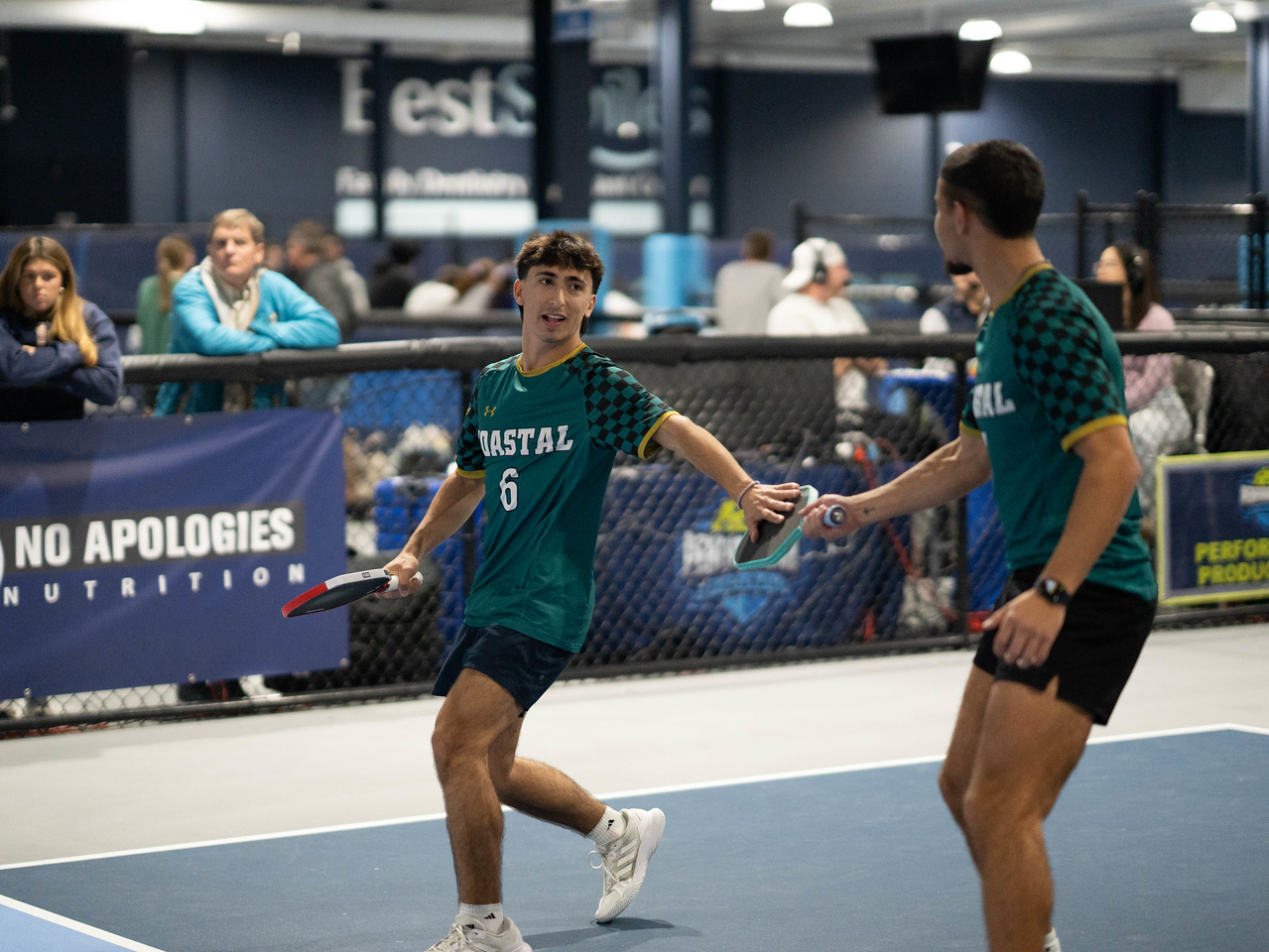
Why Planning for the Unexpected Matters More Than Perfect Goals
Health, performance, and life demands operate as a single system, and that system is rarely stable for long. Work stress, travel, illness, family responsibilities, and minor injuries all place demands on the same recovery resources that training relies on. When these factors are not accounted for, even well-designed goals can quickly become unrealistic.
When defining your goals, create room for adjustment when circumstances change. Instead of asking whether you are following the plan, the question becomes how the plan should adapt to current capacity. Training volume can be reduced during high-stress periods, intensity can shift when energy is low, and recovery can be emphasized before problems escalate.
For pickleball players, this may mean scaling back match play during demanding work weeks while maintaining movement quality and basic conditioning. During times when court time is limited, strength, mobility, or aerobic work can preserve readiness until play resumes. Planning for the unexpected allows progress to continue, even when the path looks different from what was originally imagined.
Identity as an Anchor for Long-Term Progress
Beyond specific goals and behaviors, it can be useful to consider who you are aiming to become over the course of the year. Identity shapes how consistently behaviors show up when motivation is low or circumstances change. When actions align with self-concept, they tend to require less negotiation.
For many adults, this may mean identifying as someone who values preparation, protects recovery, or prioritizes longevity over short-term intensity. In pickleball and in life, this framing supports decisions that favor consistency, resilience, and sustainable progress rather than reactive effort.
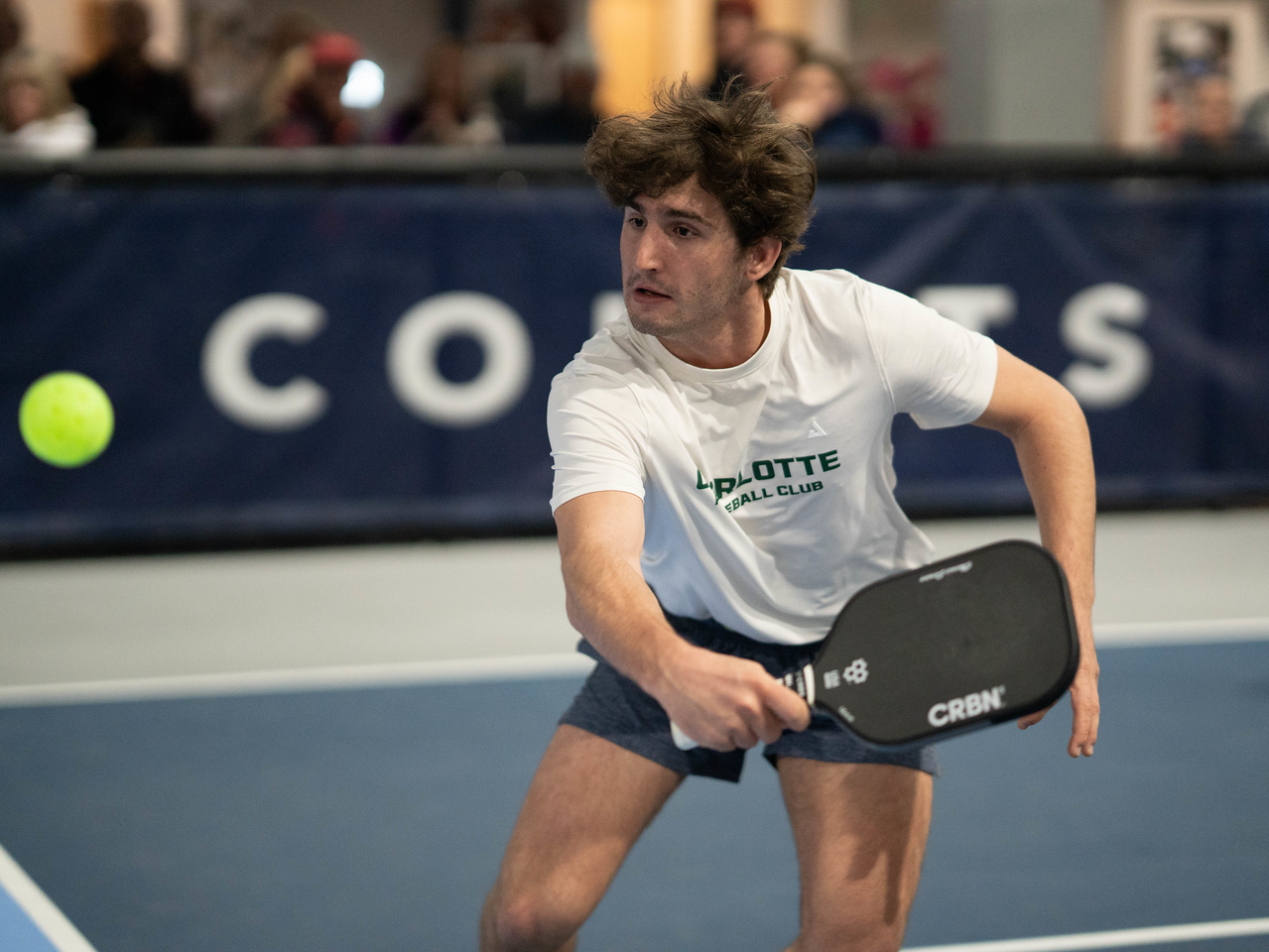
Year-Start Recap: A Guided Framework to Set Your Own Goals and Mindset
Use this as a working guide to define intentions, not a list of rules to follow perfectly. The goal is clarity, alignment, and sustainability across fitness, pickleball, and life.
Step 1: Define the Lens You Want to View the Year Through
Before setting any goals, decide how you want to interpret effort, setbacks, and progress.
- How do I want to respond when pickleball or life does not go as planned?
- What does consistency look like for me, given my current responsibilities?
- What am I willing to adjust during busy or high-stress periods rather than abandon entirely?
Write one or two sentences that describe how you want to approach the year mentally. This becomes your reference point when motivation dips or schedules change.
Step 2: Clarify What “Being Fit and Capable” Means Right Now
Fitness goals should reflect your current reality, not a past version of yourself or someone else’s routine.
- What physical qualities matter most for how I want to live and play this year?
- What would feeling physically capable allow me to do more often?
This step helps prioritize capacity over aesthetics or arbitrary benchmarks.
Step 3: Translate Intentions Into Training and Pickleball Behaviors
Goals become actionable when they shape how you actually train and play.
- How many days per week can I realistically train or play without accumulating fatigue?
- How will I balance pickleball with strength, mobility, and conditioning?
- What preparation or recovery practices will I commit to consistently?
Focus on behaviors you can repeat, not perfect plans.
Step 4: Define Outcomes That Give Direction, Not Pressure
Outcomes matter, but they work best when they guide effort rather than dictate self-worth.
- What experiences or milestones would make this year feel successful?
- How will I measure progress beyond wins, rankings, or comparisons?
- What signals will tell me I am moving in the right direction?
Choose outcomes that motivate without narrowing your focus too much.
Step 5: Plan for Change Before It Happens
Life will disrupt even the best intentions. Planning for that reality protects momentum.
- Which months or seasons tend to be most demanding for me?
- What does a “lighter” version of my routine look like?
This step reduces the all-or-nothing cycle that derails many well-intended plans.
Step 6: Schedule Checkpoints, Not Constant Evaluation
Progress is easier to sustain when reflection is intentional and spaced out.
- How often will I pause to reassess my goals and energy levels?
- What signals suggest it is time to adjust rather than push?
Quarterly or seasonal reviews tend to work better than daily self-judgment.
Write your answers down. Keep them somewhere visible or easy to revisit. Return to this framework when motivation fades, schedules change, or priorities shift. The purpose is not to control the year, but to give it direction. A clear mindset and well-defined intentions make it easier to train consistently, play well, and protect health across both pickleball and life.
The Bottom Line
At its core, starting the year with intention is about creating clarity, not pressure. Mindset and goal definition shape how you respond to challenges, allocate energy, and make decisions long before results are visible. When goals are grounded in identity, aligned with real-life demands, and flexible enough to adapt, they support consistency rather than burnout.
The aim is not to engineer a perfect year, but to establish a direction that allows progress to continue even when circumstances change. Over time, that clarity becomes the difference between chasing short-term outcomes and building lasting capacity in fitness, pickleball, and life.
Pickleball Tips
Community
February 11, 2026
Proton National Tour by Match Point Open Names DUPR as Exclusive Rating System for 2026 Season
February 11, 2026 — The Proton National Tour announces that DUPR (Dynamic Universal Pickleball Rating) will serve as the exclusive rating system for all Proton National Tour events beginning with the 2026 season.
Under the agreement, all match results from Proton National Tour competitions are reported to DUPR, providing a standardized, data-driven framework for player ratings across all divisions. The partnership supports competitive integrity and ensures that results are recorded consistently and transparently.
The Proton National Tour is a national tournament series that brings together amateur and professional players within a unified competitive structure, offering skill-based divisions and cash-prize opportunities while emphasizing results that carry long-term competitive value.
“As the tour continues to expand, adopting a single, trusted rating system is essential,” says Charles Darling, CEO of Proton Pickleball. “DUPR provides a consistent benchmark that supports fair competition and accurately reflects player performance.”
“We’re thrilled about this partnership. Beyond reporting every match to DUPR, we’ll use custom software at registration close to verify DUPR compliance, confirm team eligibility, and ensure every player is placed in the correct skill level. That accuracy is essential when athletes are competing for a $30,000 prize pool”, said Dominic Perna, founder and co-owner of Match Point Open.
“The Proton National Tour operates at a high competitive standard,” says Tito Machado, CEO of DUPR. “Using DUPR as the exclusive rating system ensures match results are measured consistently and remain meaningful beyond individual events.”
About The Proton National Tour
The Proton National Tournament is pickleball's premier cash prize tournament , welcoming both amateurs and pros to compete for the LARGEST cash payouts in the game. Each event will have a total prize pool of $30,000. The tournament includes men's and women's doubles, singles, and mixed for all skill levels! All matches are DUPR reported! For more information visit : https://matchpointopen.com/
About DUPR
DUPR (Dynamic Universal Pickleball Rating) is the premier global pickleball rating system and technology platform, trusted by the world's leading clubs, tournaments, leagues, and players. DUPR's dynamic rating system unifies pickleball across age, gender, and location by analyzing match results to accurately evaluate all players across a 2.000 - 8.000 scale. DUPR is the official pickleball rating of leagues, tournaments and clubs around the world, including United Pickleball Association (UPA), Professional Pickleball Association (PPA), Major League Pickleball (MLP), Pickleball.com, Life Time, The Picklr, National Team Pickleball League, National Pickleball League. It also owns and operates Minor League Pickleball and Collegiate Pickleball, two of the biggest amateur leagues in the sport. Players and operators can visit www.dupr.com to sign up and learn more.
Partners
Community
February 10, 2026
U.S. Legends Senior Pro Pickleball League Adopts DUPR as Official Rating System of the USLPL
Oakton, Virginia, U.S. – (Feb. 10, 2026) – U.S. Legends Pickleball League (USLPL) today named DUPR (Dynamic Universal Pickleball Rating) the Official Rating System of the USLPL. All matches results from USLPL 50+, 60+, and 35+ leagues will count toward players’ DUPR ratings, as was the case in the inaugural season of its 50+ league in 2025.
With this agreement, USLPL becomes a DUPR Preferred Partner, ensuring a unified framework for ratings, as well as opportunities for event integration.
“Players in our pro leagues expect and appreciate their matches counting toward their ratings in the sport,” said USLPL Co-founder Mike Cao. “Official alignment with DUPR was an easy decision that will benefit all of our leagues.”
“USLPL has built a structured, competitive environment for experienced players,” said DUPR’s CEO Tito Machado. “Using a consistent rating system allows match results to carry meaning beyond individual events and provides players with a clear record of their competitive history.”
About USLPL
U.S. Legends Pickleball League was created for elite players 35+, 50+, and 60+ looking for their next great competitive challenge. The USLPL 50+/60+ launched its inaugural season in Fall of 2025, with 12 teams, including the Boston Dragons, New York Ballers, DMV Picklers, Richmond Rocketeers, Roanoke Shine, Jersey Shore Shots, Buffalo Blizzards, Northern Virginia SuperNovas, Florida Storm, Villages Heat, the Delrays, and Florida Royals. USLPL 35+ kicks off its first season in March 2026, and a separate league for 60+ players will launch in Fall 2026.
About DUPR
DUPR (Dynamic Universal Pickleball Rating) is the premier global pickleball rating system and technology platform, trusted by the world's leading clubs, tournaments, leagues, and players. DUPR's dynamic rating system unifies pickleball across age, gender, and location by analyzing match results to accurately evaluate all players across a 2.000 - 8.000 scale. DUPR is the official pickleball rating of leagues, tournaments and clubs around the world, including United Pickleball Association (UPA), Professional Pickleball Association (PPA), Major League Pickleball (MLP), Pickleball.com, Life Time, The Picklr, National Team Pickleball League, National Pickleball League. It also owns and operates Minor League Pickleball and Collegiate Pickleball, two of the biggest amateur leagues in the sport. Players and operators can visit www.dupr.com to sign up and learn more.
Media Contact:
USLPL
DUPR
kyrill@mydupr.com
Partners
Community
February 9, 2026
Virginia Tech Wins Virginia’s First College Super Regional of Spring 2026
Virginia continues to be one of the busiest stops on the College Pickleball Tour, and last weekend’s Super Regional showed just how much the region is evolving. For years, UVA set the standard, winning event after event and holding a firm grip on the top spot. But with four of five players from their championship lineup gone, the door has opened for new programs to step forward.
Virginia Tech has been building momentum quietly all season. Tournament by tournament, they’ve climbed the rankings, and in Virginia they finally broke through in a big way. After a chaotic bracket filled with upsets, Virginia Tech closed out the weekend with a convincing 3–0 win over UVA in the finals to claim the title.
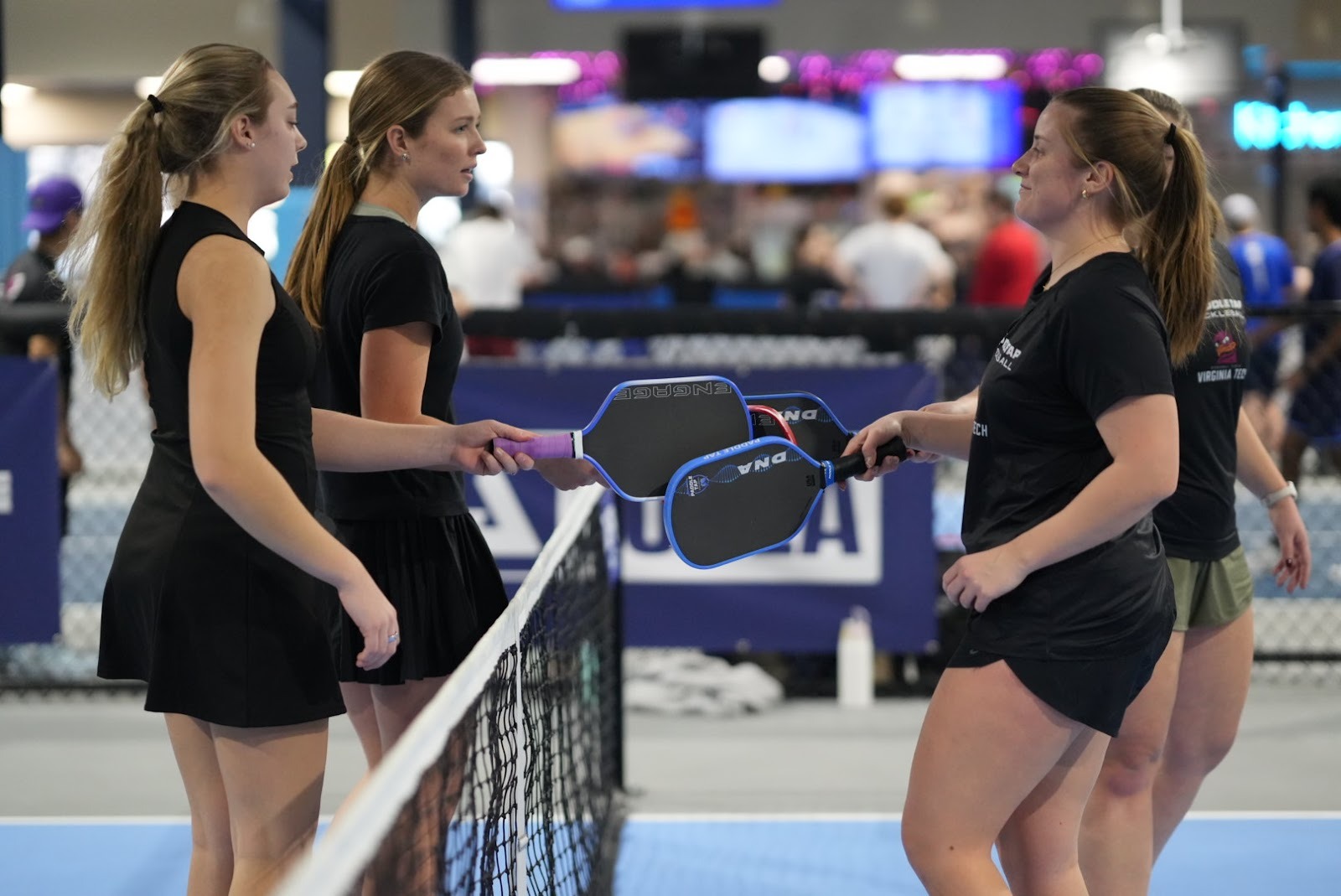
A Bracket Full of Surprises
Only one Round of 16 match ended in a sweep with UVA 1 defeating Davidson in the #2 vs #15 matchup, while the rest of the round delivered tight, unpredictable battles.
Some of the biggest results included:
- #10 JMU 1 defeating #7 UMD (3–2)
- #11 Coastal Carolina defeating #6 Liberty 1 (3–1)
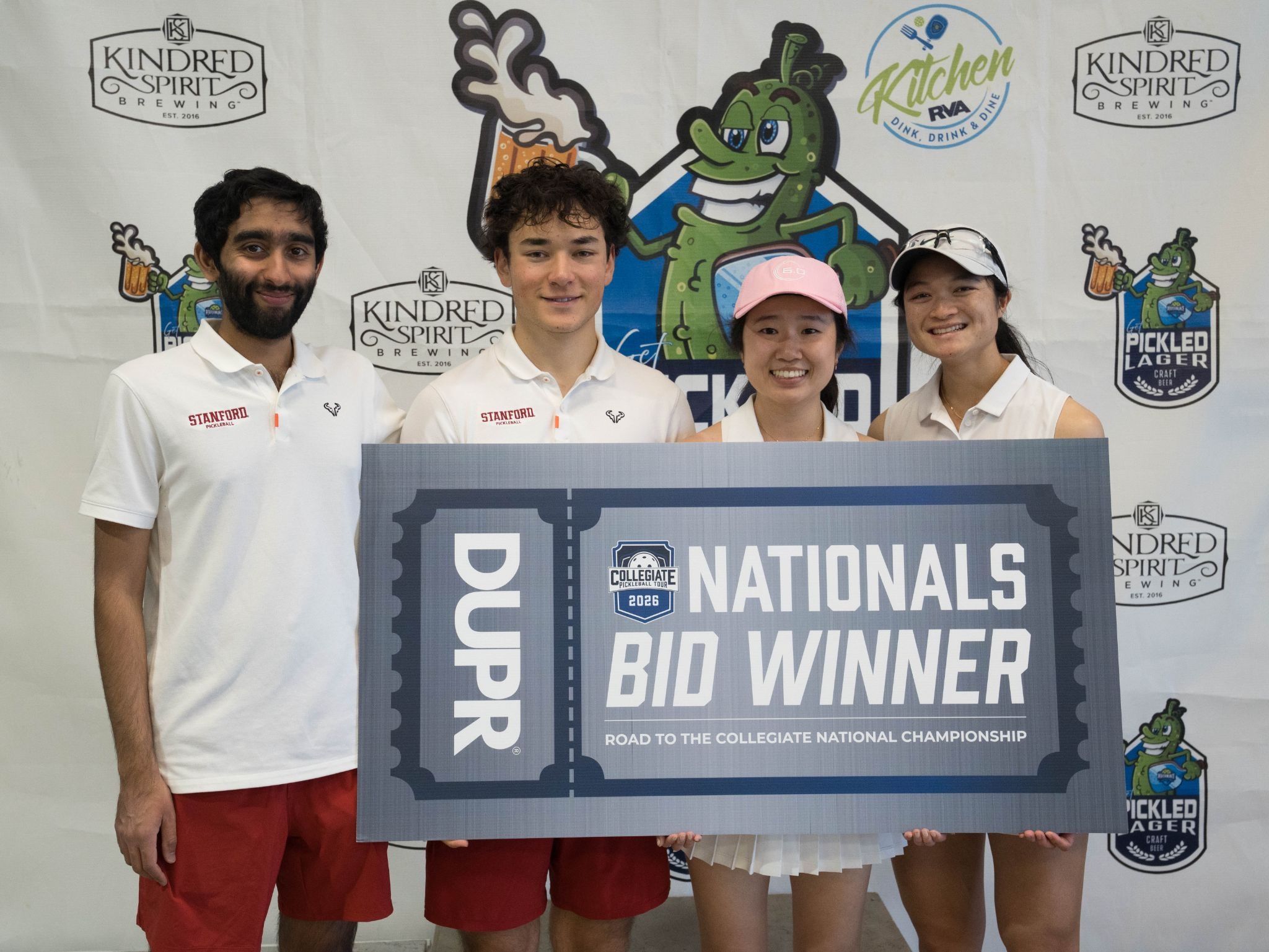
- #13 Stanford defeating #4 UVA 2 (3–2)
- #14 ECU defeating #3 Delaware 1 (3–2)
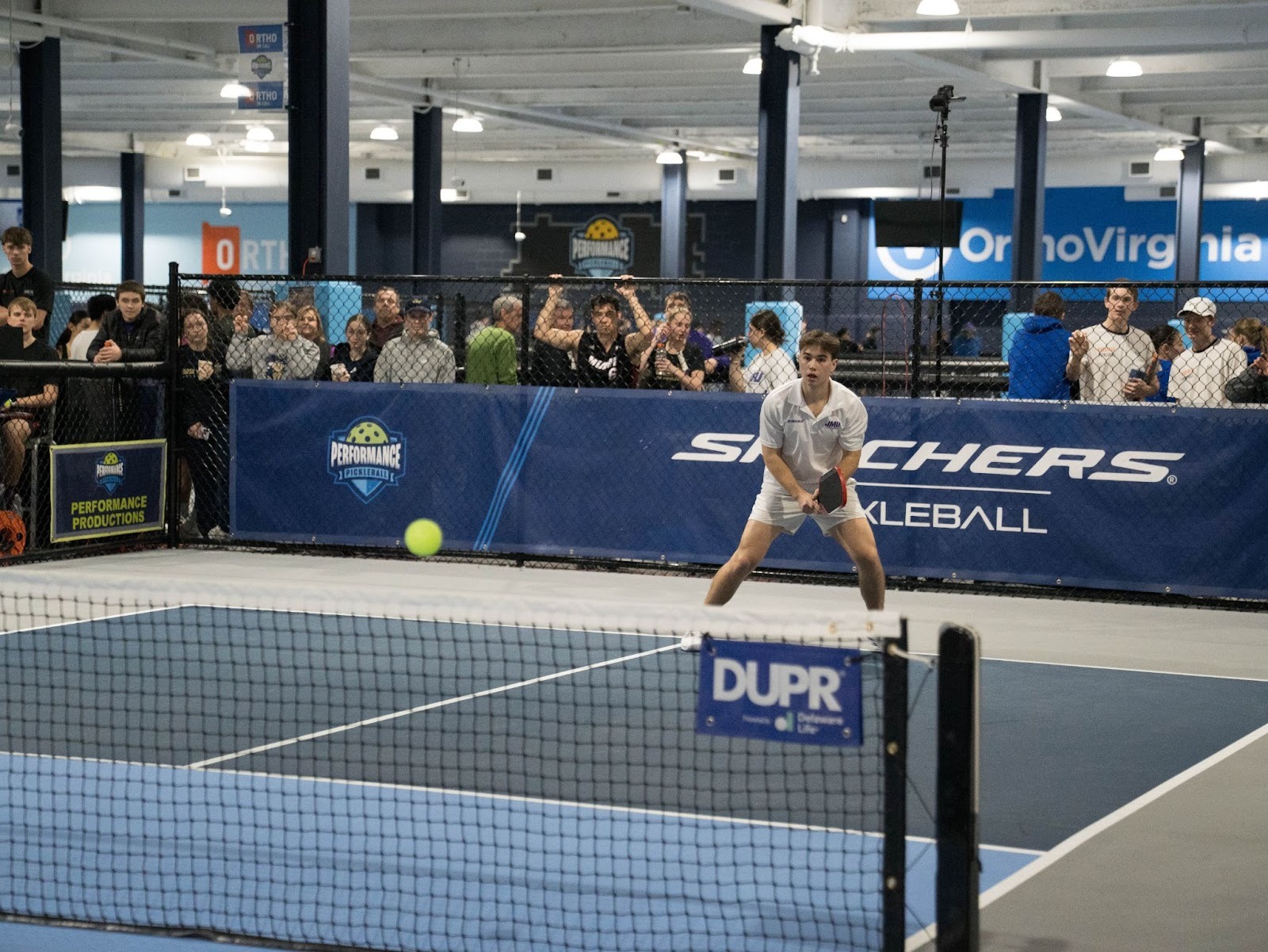
Coastal Carolina, Stanford, and ECU all earned their tickets by reaching the quarterfinals, proving that seeding matters less and less in a region this competitive.
With fewer than two months until Nationals and only 25 bids remaining, every Super Regional is starting to feel like a pressure test.
Another Strong Showing for Virginia
The numbers tell the story. A total of 209 players from 19 different schools competed over the weekend, creating one of the deepest fields the region has seen this season. From established programs to newer teams finding their footing, the level of play keeps rising.
Check out the origin story of college pickleball here, and witness the rapid growth of college pickleball yourself.
Virginia has hosted more college events than any other state so far, and weekends like this explain why. The mix of rivalries, new contenders, and close matches continues to push the region forward.
Spotlight College Players of the Weekend
Every Super Regional has its defining performances, and this one was no different. A few players stepped up in pressure moments and helped shape how the bracket unfolded.
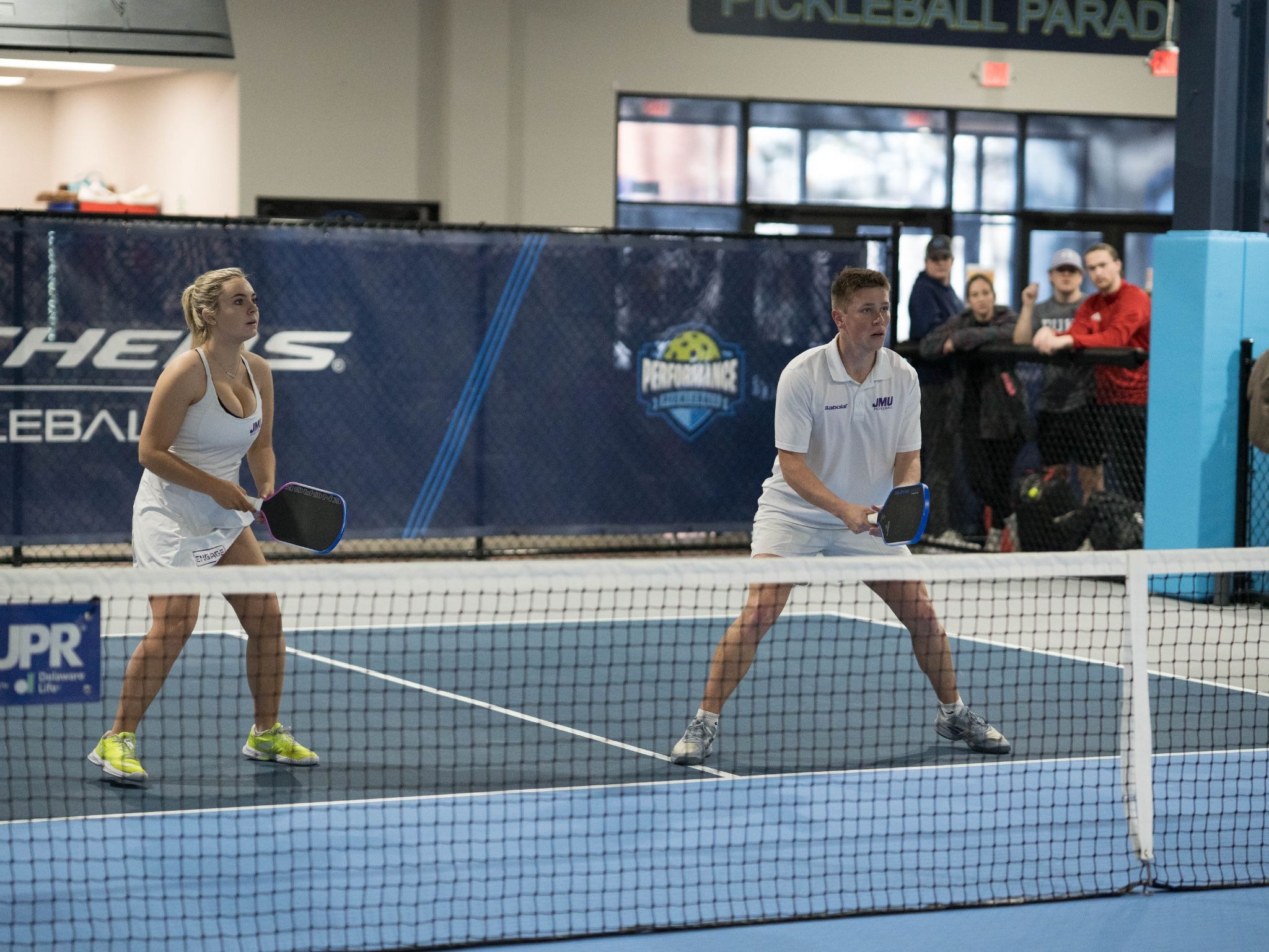
Ryan Morneau (JMU), who has a 5.77 DUPR rating, was at the center of one of the strongest runs of the weekend. He helped carry JMU through two intense dreambreakers; first in the Round of 16 against UMD and then again in the quarterfinals against UVA 1. In matches where every point mattered, his consistency and composure kept JMU alive and pushed them deeper into the bracket.
Isabella Hoang (Stanford), who has a 5.01 DUPR, also delivered one of the standout performances of the event. Her play was a major factor in Stanford’s run to the quarterfinals, helping the team secure a valuable Nationals bid. In a region packed with experienced programs, Stanford’s push showed how much impact one strong weekend can have, and Hoang was right at the center of it.
📸 Photo Album from the Weekend
Want to relive the best moments from the Super Regional? We’ve put together a shareable photo album so players, teams, and supporters can find and download their favorite shots from the weekend. From intense dreambreakers to post-match celebrations, the album captures the energy that makes college pickleball special. Browse the full gallery here and feel free to share your photos with teammates and on social — and don’t forget to tag us at @duprpb when you do.
A big thank you to JOOLA, Centerline, SQAIRZ, C&D Nets, and No Apologies Nutrition for supporting the College Pickleball Tour and helping make events like this
possible.
To stay up to date on college pickleball news, join our Instagram Channel here.
College
Pickleball Tournaments
Community
February 6, 2026
How College Pickleball Started: The Story Behind the Tour, the Teams, and the Chaos That Made It Special
College pickleball started as a small college experiment, a handful of teams, and a willingness to see what might happen.
What happened was bigger than anyone expected. In just a few years, college pickleball grew from a DUPR-led idea into a national tour with Super Regionals, packed Nationals, and now full college scholarships. Along the way, it became something entirely unique in college athletics: one of the only sports where men and women compete together, on the same teams, at the highest level.
That combination of co-ed competition, school pride, and real opportunity helped college pickleball evolve from a test run into one of the most electric environments in the sport today.
The Original Idea: A “Mini Nationals” Experiment
The earliest concept behind college pickleball came from Anna Bright, who proposed hosting a small, college-focused national championship as a PR initiative. The idea was straightforward: reach out to a limited number of college clubs and bring them together for a single event.
At the time, it wasn’t meant to become a full-fledged tour. It was an experiment.
But interest quickly outpaced expectations.
As Anna shifted focus toward other projects and her professional pickleball career, responsibility for growing the college side fell to others, who began expanding the initiative and onboarding more schools. What started as a small test quickly turned into something much bigger.
“I’ve been around a lot of tennis and pickleball events at every level, and I can honestly say that first college championship was the most special sporting event I’ve ever been part of. The atmosphere was unreal: the cheering, the joy, the competitiveness, the way everyone was packed around the courts. You could feel how much it meant to the players and the schools. Even now, years later, nothing has quite matched it. That energy is what made sponsors like Gamma reach out to us right away; they saw it wasn’t just another event, it was something different.” said Ben Van Hout, DUPR’s Head of Partnerships & Sponsorships.
The First Collegiate National Championship: From 8 Teams to 17
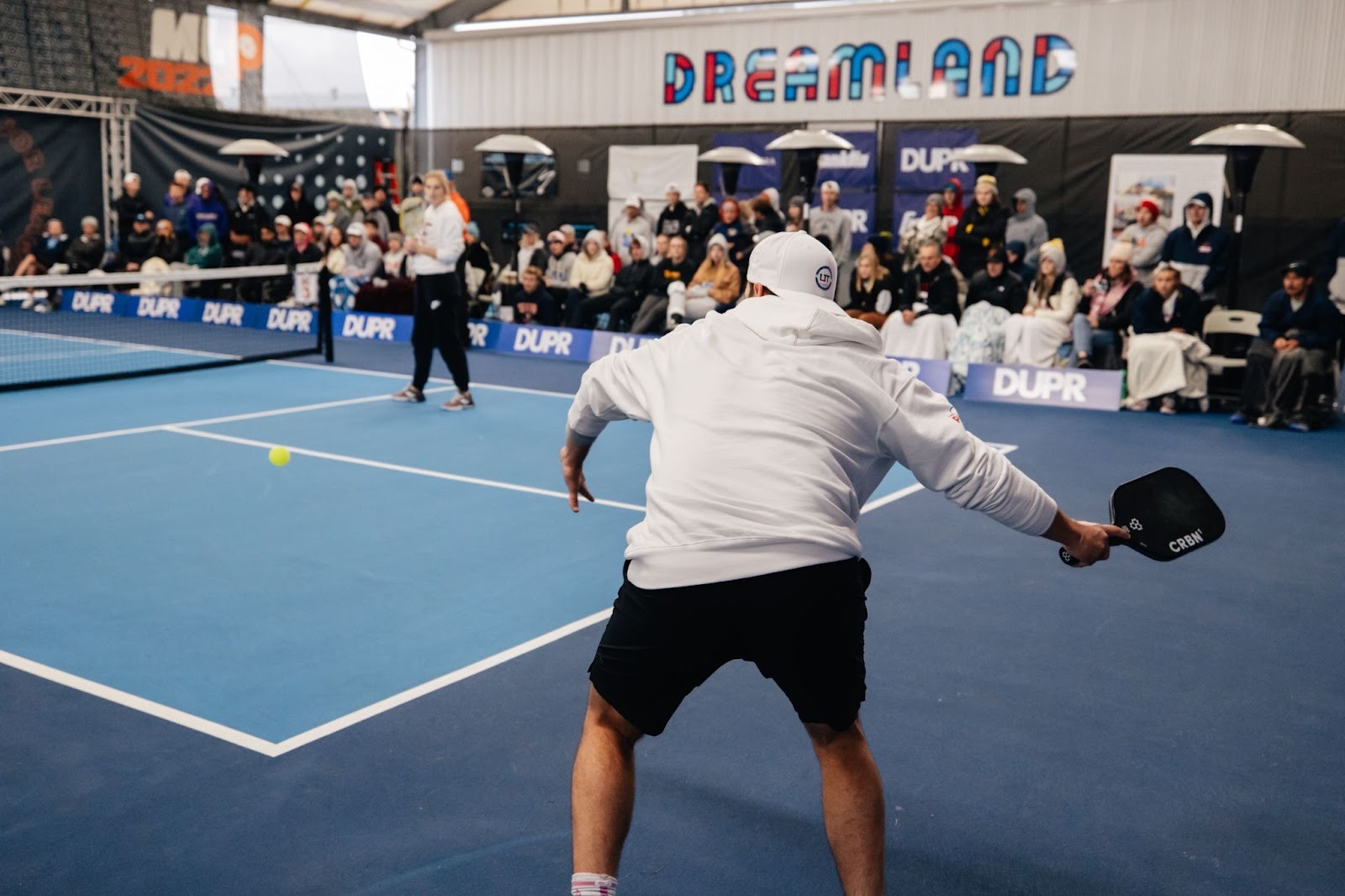
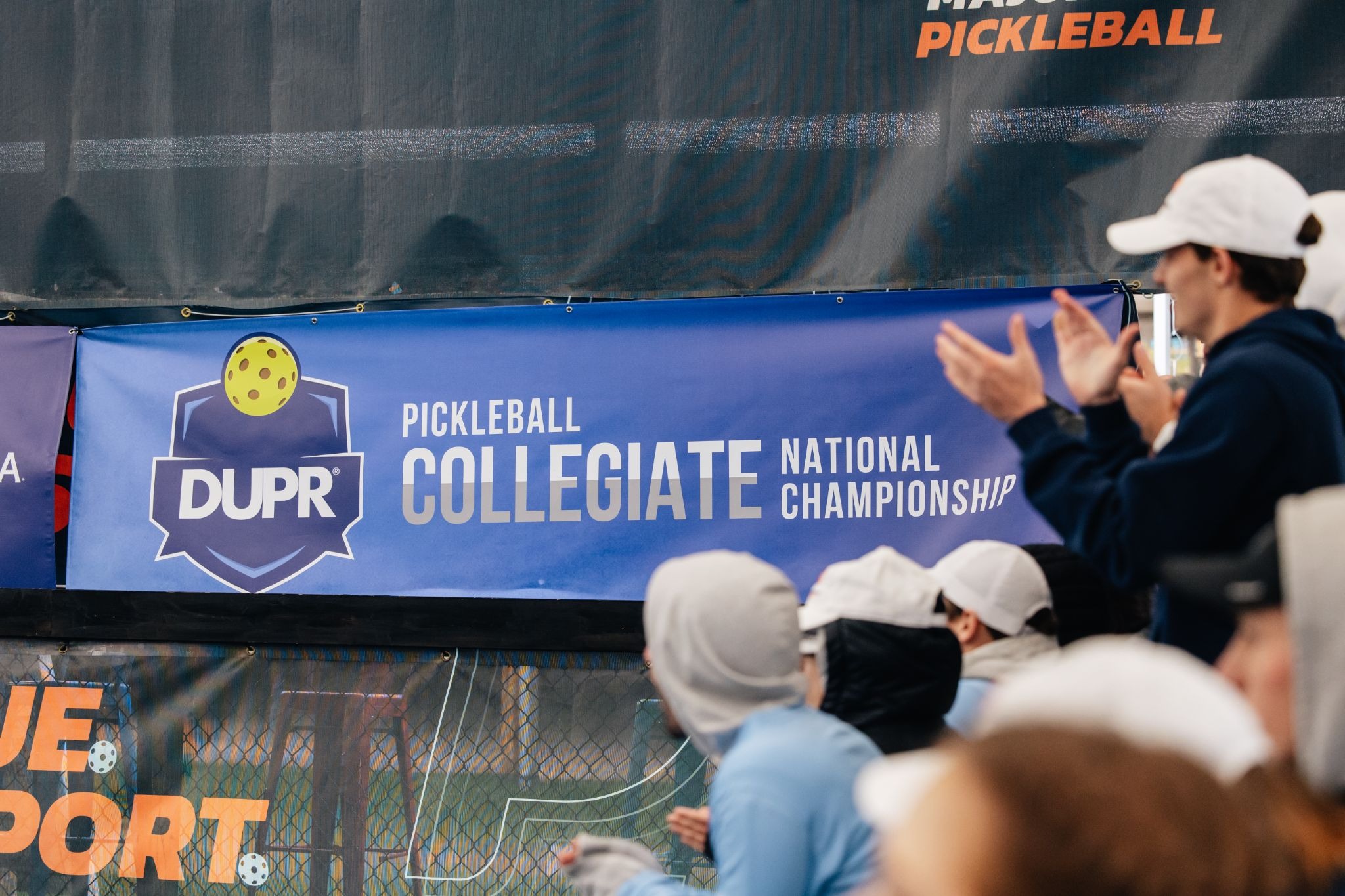
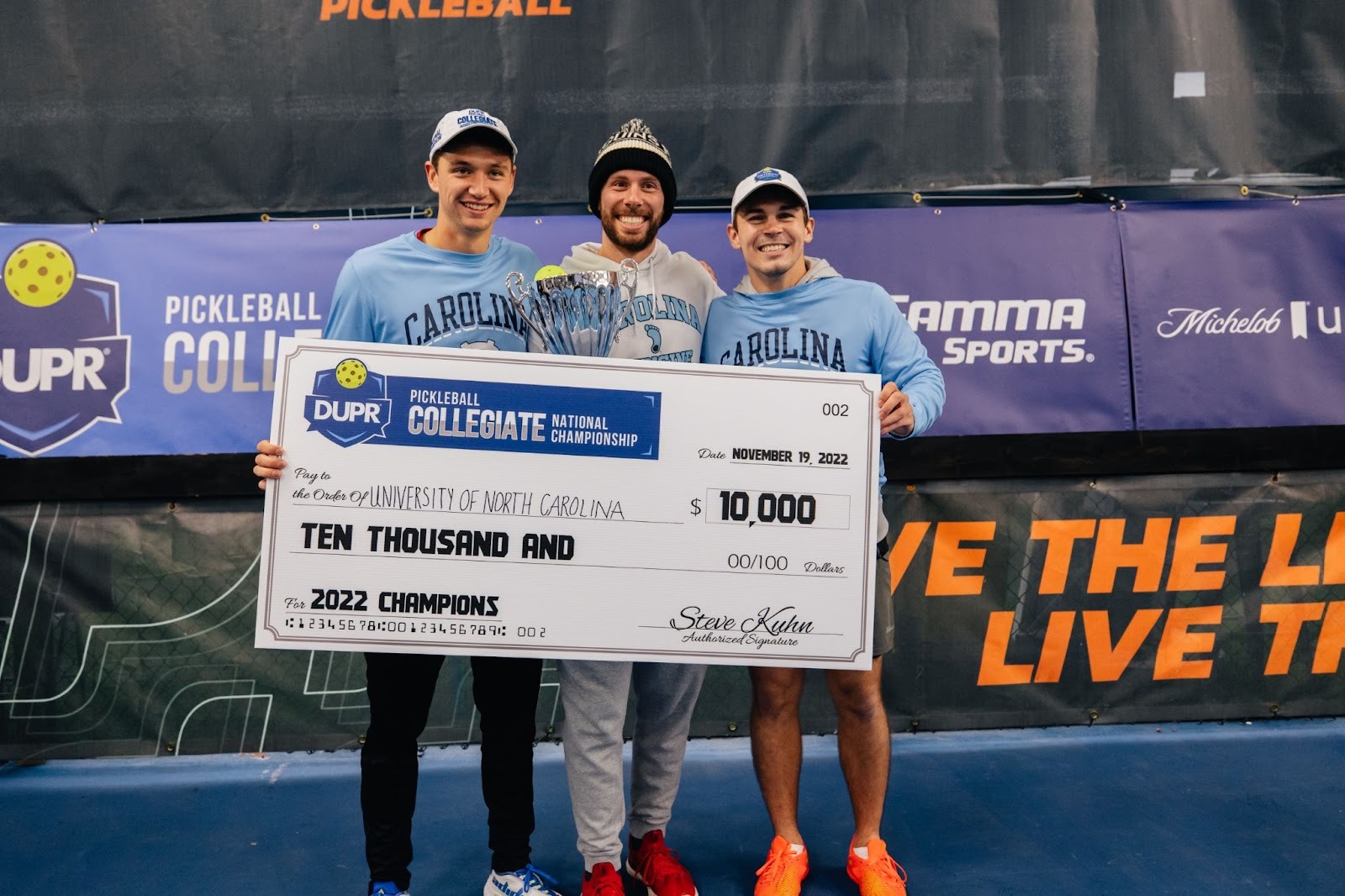
The first true collegiate national championship took place at Dreamland in Texas. Eight teams were expected. Seventeen teams showed up.
That alone signaled that college pickleball already had momentum.
The conditions, however, were brutal. Instead of warm Texas weather, players were met with cold temperatures, drizzle, and unusable outdoor courts. At one point, it was hovering around 37 degrees, wet and miserable.
None of that mattered.
Players crowded around the courts, teams packed in together, and the energy was electric. Despite the chaos, the event created an immediate buzz among players, organizers, and spectators.
Before the Tour, There Were Student Leaders
Long before college pickleball had a formal structure, it was being built by students.
One of the earliest success stories came from NC State. The club was formed before COVID, back when there were no clear playbooks or step-by-step guides for starting a pickleball club at a university. Students figured it out on their own. That head start allowed NC State to host intercollegiate competition earlier than most programs, culminating in an April 2022 event that brought together seven schools, the largest college pickleball tournament at the time.
“There wasn’t really a model to follow back then,” Jacob Smith, DUPR’s Director of College & High School Pickleball, said. “We just knew there were other schools starting to play, and if we could get them all in one place, something bigger could come out of it.”
As the college scene began to take shape, Jacob Smith became the first college intern, helping design tournament formats, registration systems, and the behind-the-scenes structure that would eventually define the tour. Long before college pickleball had a formal name or roadmap, the foundation was already being built.
Today, most players know Jacob as a constant DUPR presence at events across the country, still attending, organizing, and shaping the college scene he helped start.
The Skill Level Exploded.. Fast
One of the most surprising facts from the first national championship: not a single player was rated above 5.0 at the time.
That changed almost immediately.
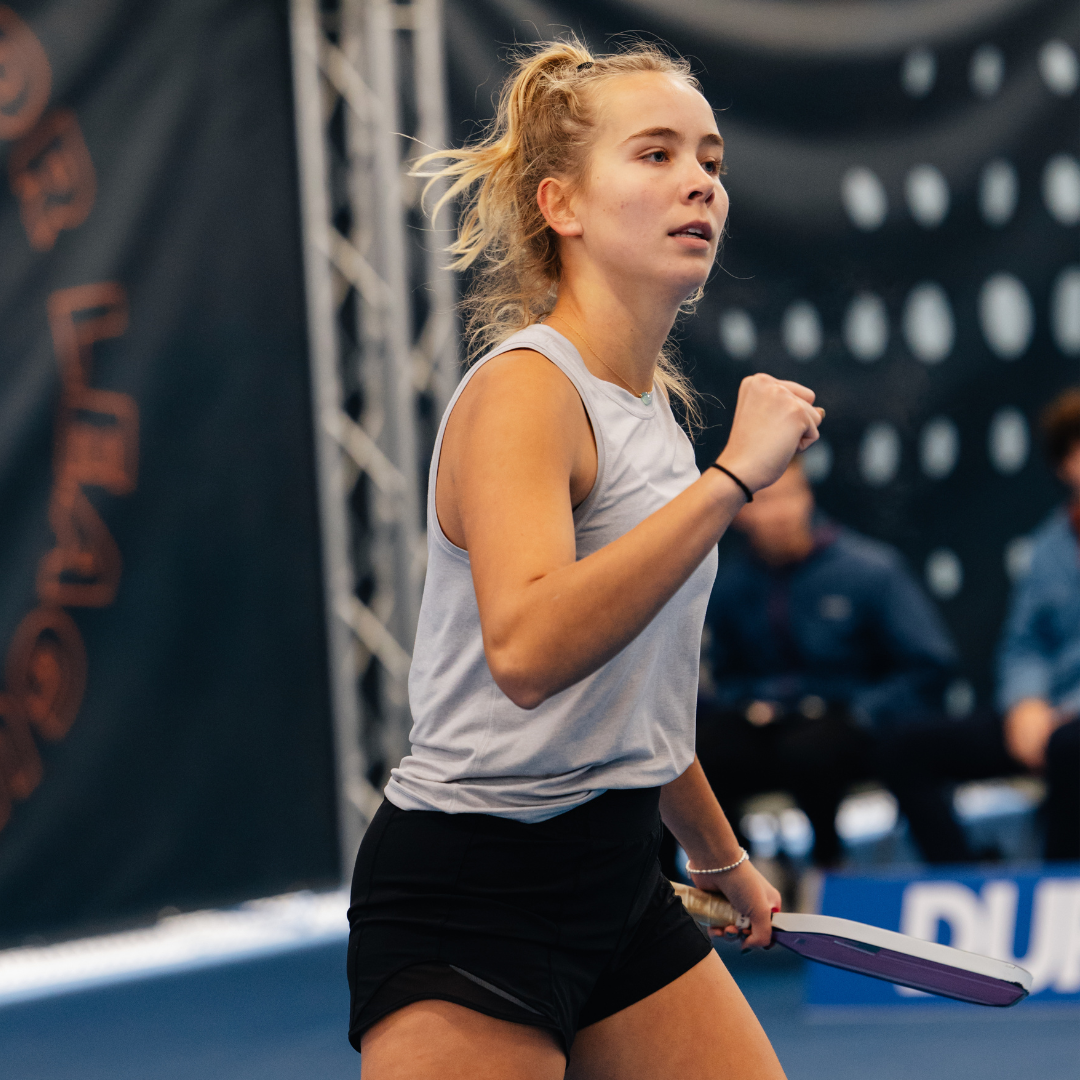
By the second year, the level had jumped significantly, with players approaching 6.0 and entire teams filled with high-level competitors. What initially felt like a strong 4.5-level tournament quickly became elite.
Growth wasn’t just happening in the number of schools; it was happening within programs. Clubs expanded from small rosters to 50+ players, with some becoming among the largest club sports on campus.
College as a Pathway to the Pro Scene
College pickleball also began to show its value as a development pathway.
One of the earliest breakout moments came when Collin Shick, a player from the original championship-winning team, 4 months later took a game off Ben Johns in a PPA singles final. That result turned heads and gave college pickleball instant credibility.
Another former college player from the inaugural College Pickleball National Championship, David Bieger, represented the University of Virginia and has since transitioned into the professional pickleball rankings. His rise at the pro level includes a notable win over Tyson McGuffin, signaling his ability to compete with established names in the sport.
David’s story extends beyond the court. He is also engaged to his former college teammate, Lauralei Singsank, who has also gone on to compete professionally.
In 2023, David and Lauralei reunited on court to win the second Collegiate National Championship, defeating the defending champions in a dramatic DreamBreaker.
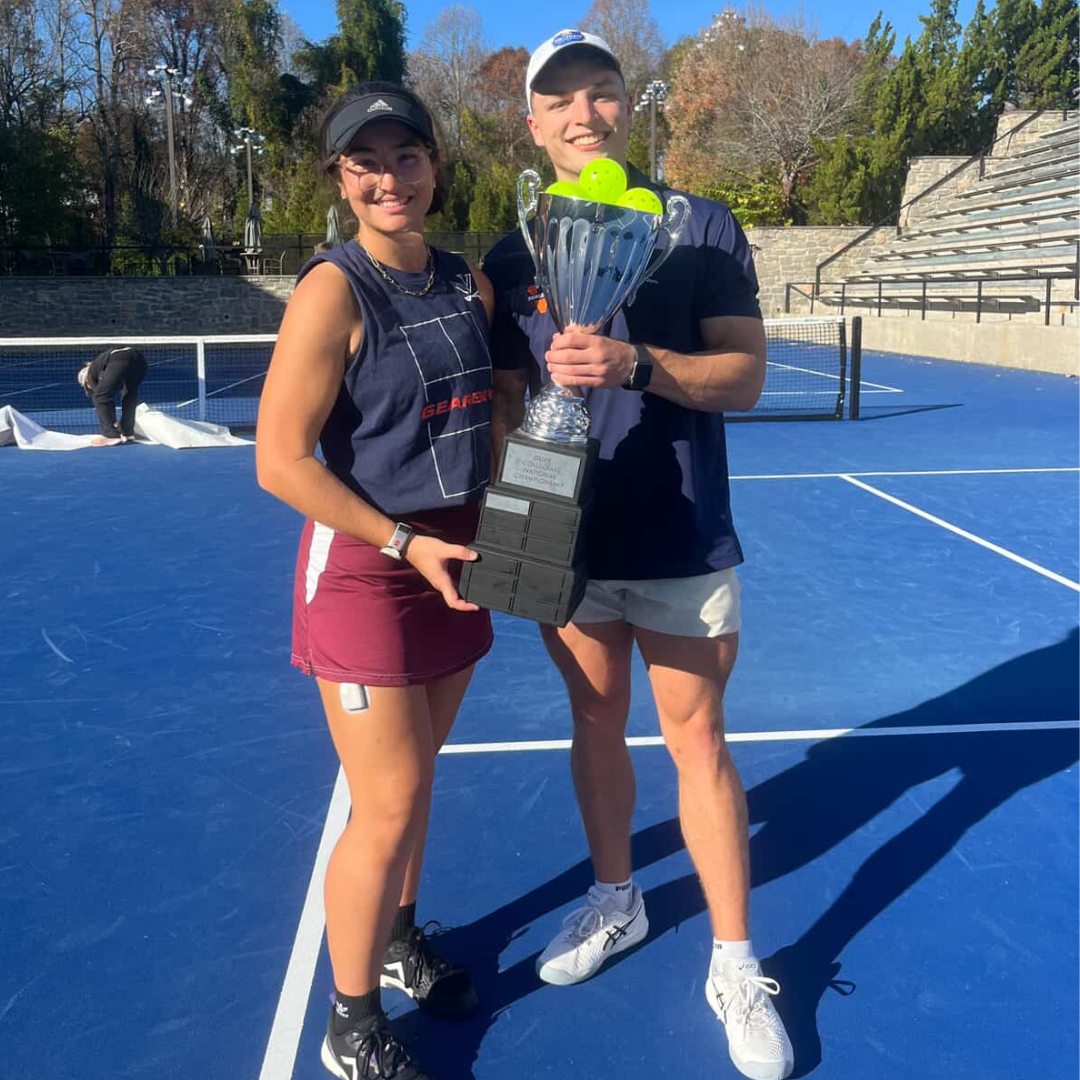
Is pickleball the new Tinder? You can read their full love story here.
“Traveling and competing with each other and our team is one of our favorite memories from our time at UVA. We are truly grateful to DUPR for hosting the collegiate tour and making this possible. We wouldn’t be together without you!"” David shared.
For a long time, college pickleball featured pros who had played college sports elsewhere. Now, it’s increasingly becoming a place where future pros are actually developed.
From Winning the First-Ever College Pickleball National Championship to Becoming DUPR’s Data Scientist—on the Same Day
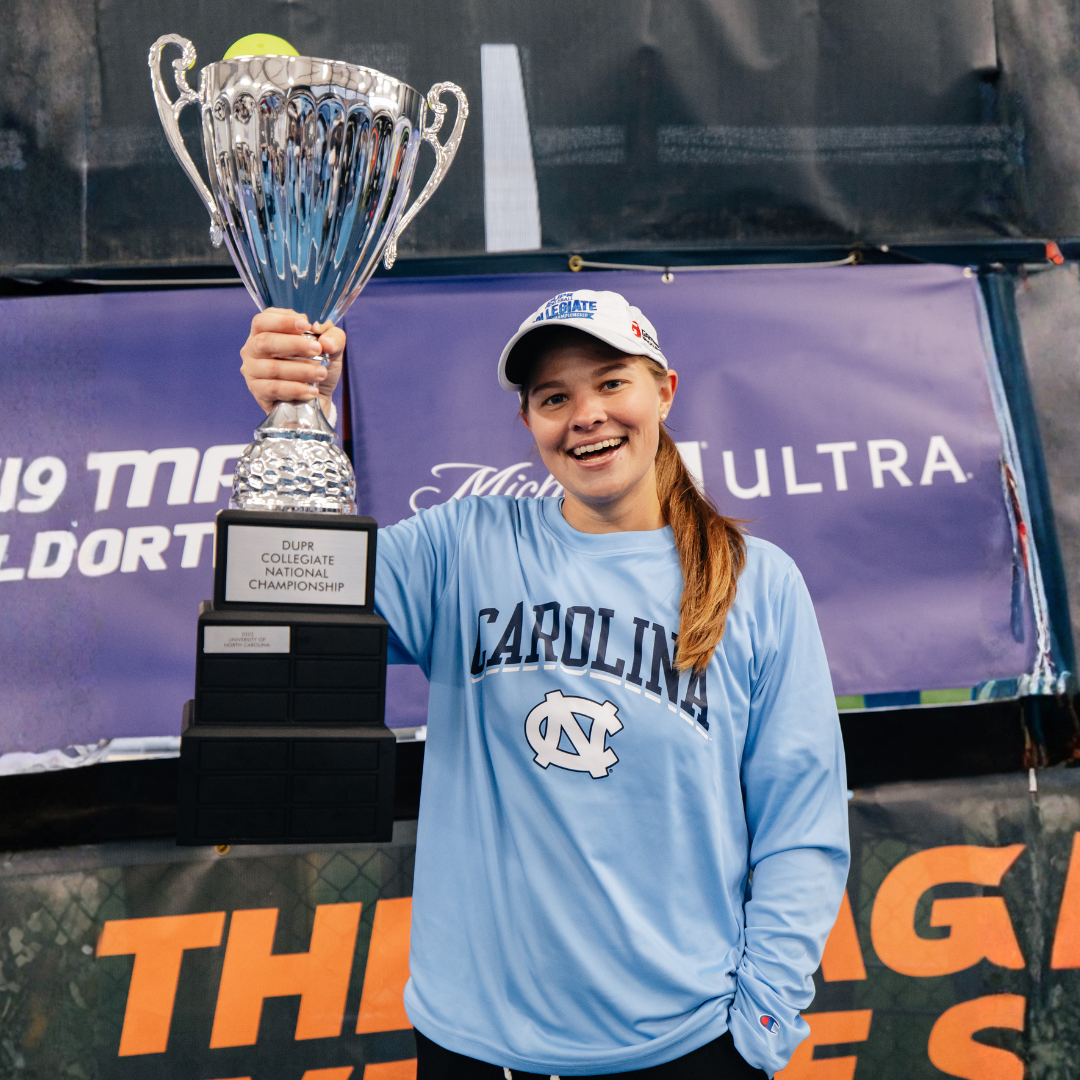
After helping her team at UNC claim the first-ever College Pickleball National Championship, Sarah Carpenter stepped off the court and into a conversation that would change her career path entirely.
“I walked off the court from winning and went over and met DUPR’s president who ended up hiring me,” Sarah recalled. “That day has always stuck with me.”
What makes Sarah’s story unique isn’t just the timing; it’s the perspective she brought with her. She didn’t transition into DUPR as someone observing the sport from the outside. She arrived having lived every part of it: the chaos of early college events, the pressure of competition, and the unmatched sense of community that defined college pickleball from day one.
That experience now directly shapes how DUPR works. In college pickleball, ratings play a huge role in:
- Seeding and fair group placement
- Power rankings
- Tracking individual and team progression
Those experiences have helped push DUPR’s algorithm forward, helping it become more accurate and better at reflecting real-world competition. And Sarah emphasizes that this approach isn’t accidental.
Everyone working at DUPR plays pickleball.
They compete. They track their ratings. They feel the wins, the losses, and the frustration when numbers don’t align with perceived performance. That shared experience is foundational to how the product is built.
“It’s not just data on a screen,” Sarah explained. “We’re all part of the same community using it. That perspective matters when you’re building something meant to reflect real play.”
Her journey from champion to data scientist in a single day captures something essential about college pickleball itself. It’s not just a competition pathway. It’s an opportunity engine. One that connects players, careers, and community in ways few college sports ever have.
Sponsors That Changed Everything
Early partnerships with brands like GAMMA, Anheuser-Busch, and JOOLA helped legitimize college pickleball and accelerate its growth. Among them, the GAMMA sponsorship was especially impactful, providing foundational funding that allowed the collegiate department to scale.
These weren’t just logo placements; they were signals that college pickleball was worth investing in.
Building a Real Tour: Super Regionals and Nationals Prestige
Super Regionals were introduced to create a true qualification pathway into Nationals, mirroring professional tour systems. This added meaning to every stop and increased the prestige of Nationals itself.
Nationals is now capped at 64 teams, a limit that keeps the event elite and makes qualification harder each year. Rather than expanding endlessly, the focus shifted to raising the level.
By 2026, Nationals will look dramatically different from that first event:
- Singles brackets
- Multiple team brackets
- An All-American game
- A packed schedule, without losing the team-based energy that defined the original championship
Why College Pickleball Feels Different
What truly sets college pickleball apart isn’t just competition; it’s identity.
University pride, team colors, mascots, and rivalries create a sense of tribalism that’s rare outside major college sports. Entire clubs show up to support not just the top teams, but challenger teams as well.
Practices matter just as much as tournaments. Unlike pro teams that rarely train together consistently, college programs build community week after week on campus. That’s where friendships form and why players stay connected long after graduation.
To stay up to date on college pickleball news, join our Instagram Newsletter here.
Community
College
Pickleball Tournaments
February 6, 2026
A College Pickleball Love Story: From National Champs to Saying “I Do”
According to research published by PNAS, nearly 60% of modern couples meet online. Dating apps have become the default.
That wasn’t the case for David Bieger and Lauralei Singsank.
Their story didn’t start with a swipe or a DM. It started on a pickleball court during practices, team travel, and long tournament weekends with the University of Virginia Club Pickleball team.
Pickleball was there from the beginning.
Romance took a little longer.
They were teammates first, competitors second, and something else entirely before either of them realized it. What followed wasn’t instant chemistry; it was growth, patience, early mornings, and eventually, a national championship.
And now, a wedding.
This is a college pickleball love story that didn’t follow the usual script and that’s exactly what makes it worth telling.
The first ask… and the long game
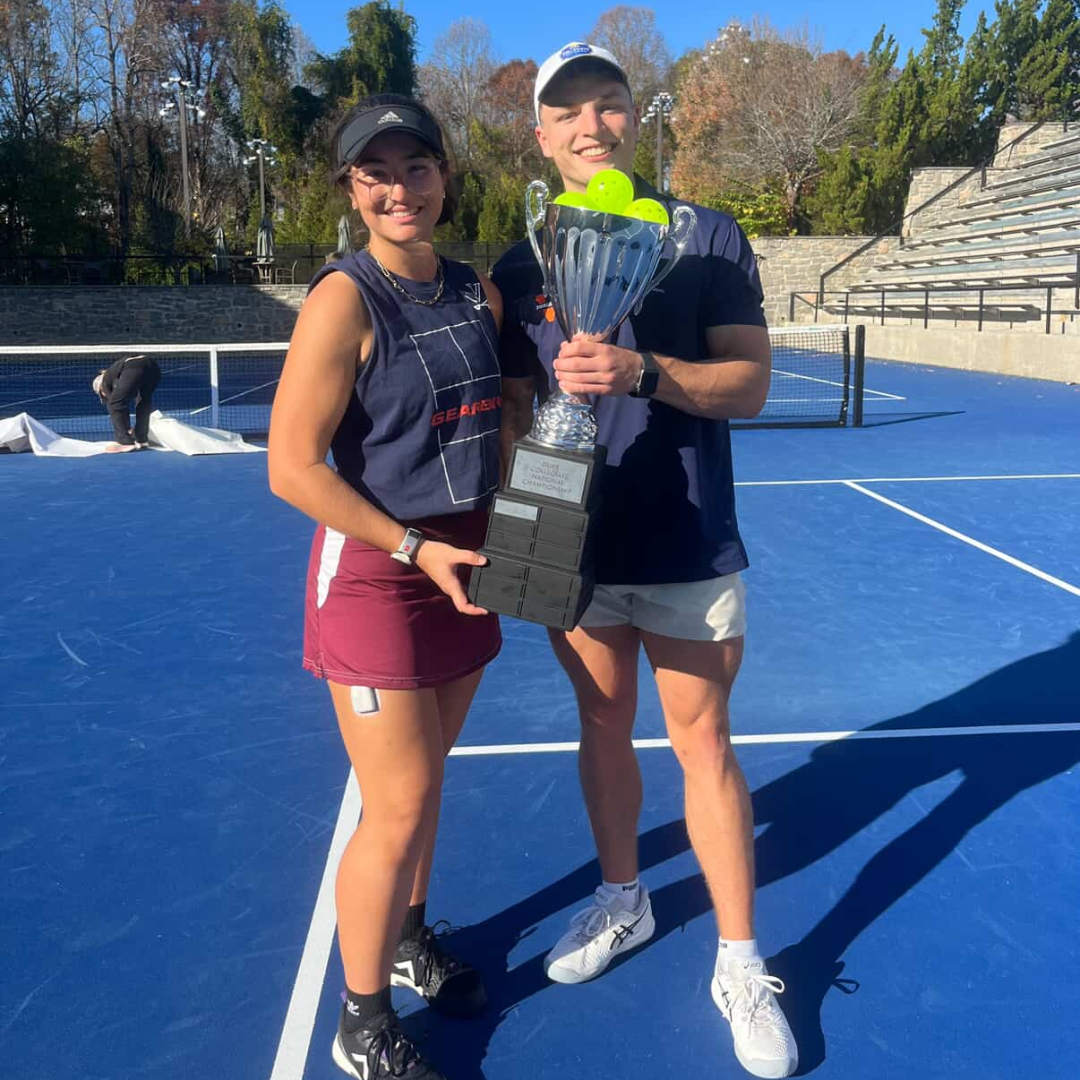
At the 2022 College National Championship, David took his shot off the court and asked Lauralei out. She said no.
Instead of pushing, David focused on the one thing he could control: getting better at pickleball. He trained, competed, improved his DUPR rating and closed the gap. When he asked again later, the answer changed.
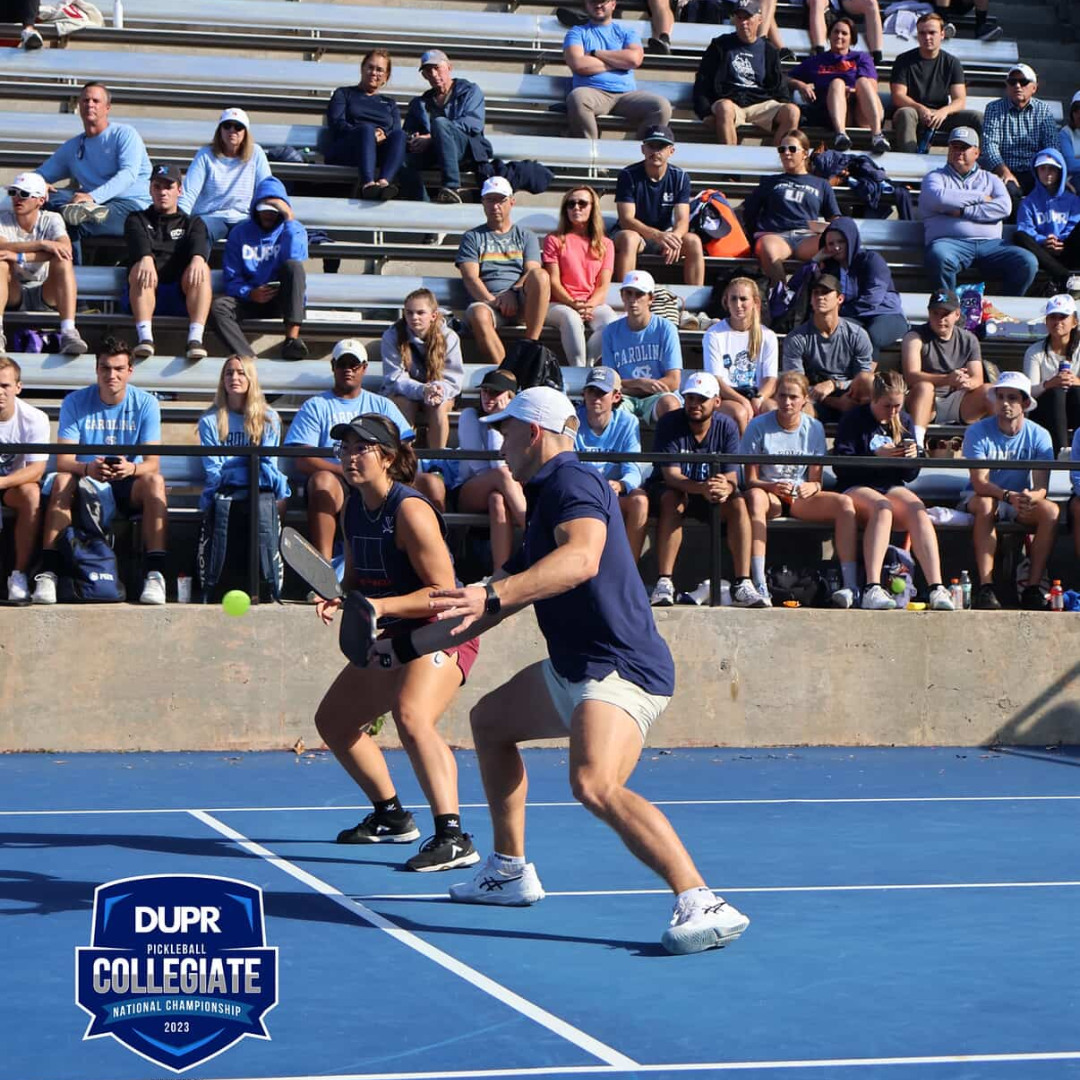
Not long after, they were playing mixed doubles together, and winning. In 2023, David and Lauralei captured the College National Championship, a moment that still stands as their favorite memory on the court.
When pickleball became something they shared
David met Lauralei less than a month after he started playing pickleball. At the time, she was clearly the stronger player, but she saw potential in him. She encouraged him to play local tournaments, travel, and experience the broader pickleball community.
Those road trips mattered.
“Traveling and playing together opened my eyes to what pickleball really is,” David says. “She coached me then, and she still coaches me now, even as a 6.0.”
Pickleball stopped being something they both did separately and became something they built together.
The 5 a.m. test
There was a moment when things shifted from casual to committed.
After the DUPR College Nationals in 2022, Lauralei wanted David to play more non-college tournaments. He wasn’t convinced. So she signed them up anyway, two hours away, with an 8 a.m. start time.
Pickup was at 5 a.m.
Coffee helped.
They went 4–1 that day. More importantly, they learned how to be partners outside the lines, talking through nerves, fatigue, and expectations in the car. From there, the relationship moved quickly and naturally.
Communication, wins, and smoothies
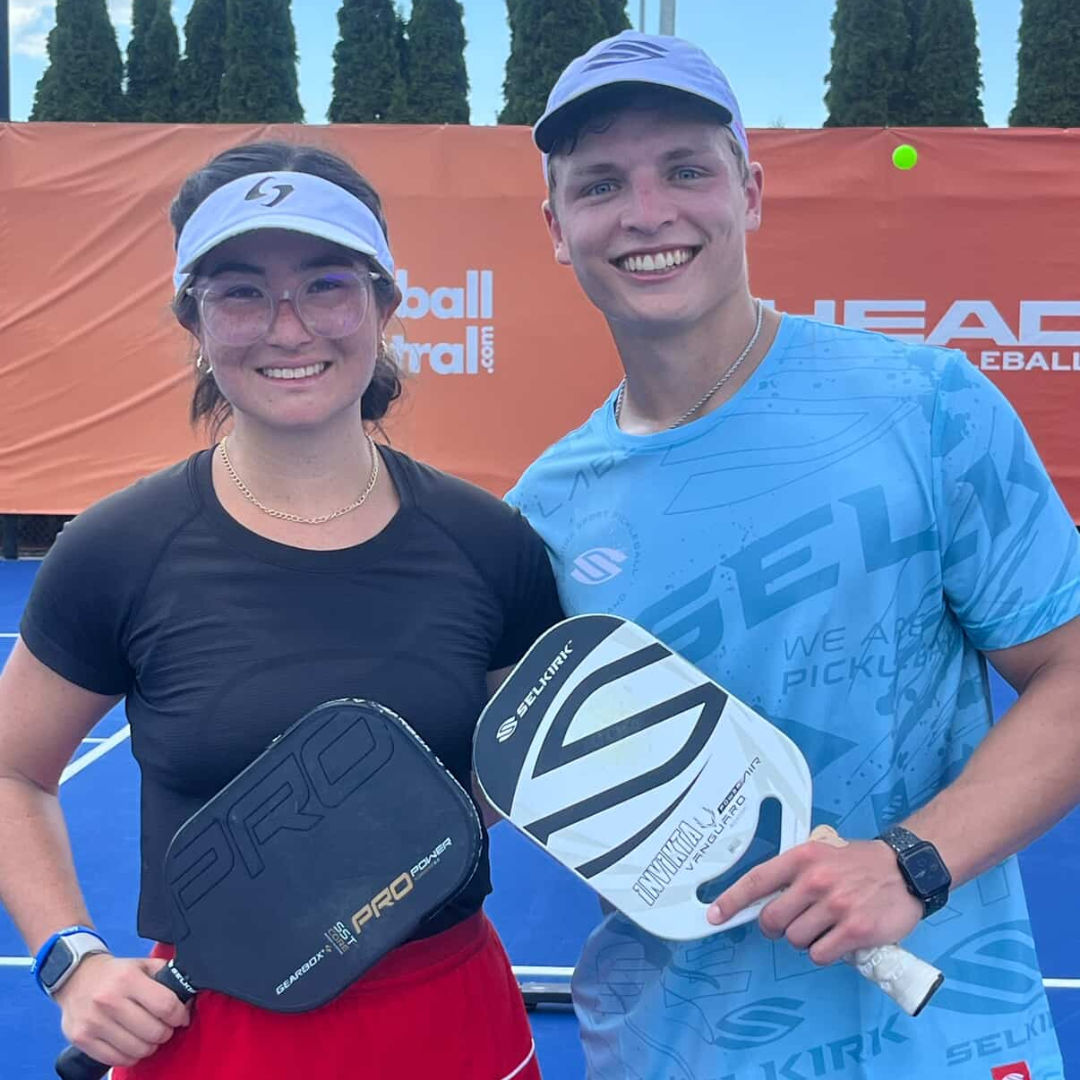
On the court, communication is strong, especially when they’re winning. When they’re not, they’re honest about the work still needed.
Off the court, they’ve found their rhythm. After tough losses or disagreements, they keep it simple: Drink a Smoothie.
“It’s hard to stay upset while you’re both drinking a smoothie,” David admits.
Check out this guide and learn how to communicate with your doubles partner.
Life as a college pickleball couple
Traveling, competing, and representing UVA together are some of their favorite memories. They’re quick to credit DUPR for building the college tour that made those experiences possible.
“We truly wouldn’t be together without DUPR” Laurelai said.
Their training today is a mix. Lauralei is David’s primary drill partner in Richmond, while David also works singles and men’s sessions. Lauralei focuses mainly on women’s practice with Natalie Kim, another UVA pickleball alum.
Pickleball, long-term
In August 2025, David left his day job to pursue professional pickleball full-time. He now coaches academies at Performance Pickleball RVA, travels for tournaments, and commentates select college events, often alongside Lauralei.
Together, they also coach through Breakout Pickleball, teaching the sport they grew up in and staying connected to the community that shaped them.
Advice for couples who play together
David keeps it grounded:
“Remember why you play. You started because it was fun and because you wanted to share the court with someone special. Be grateful you get to play this sport with the most important person in your life.”
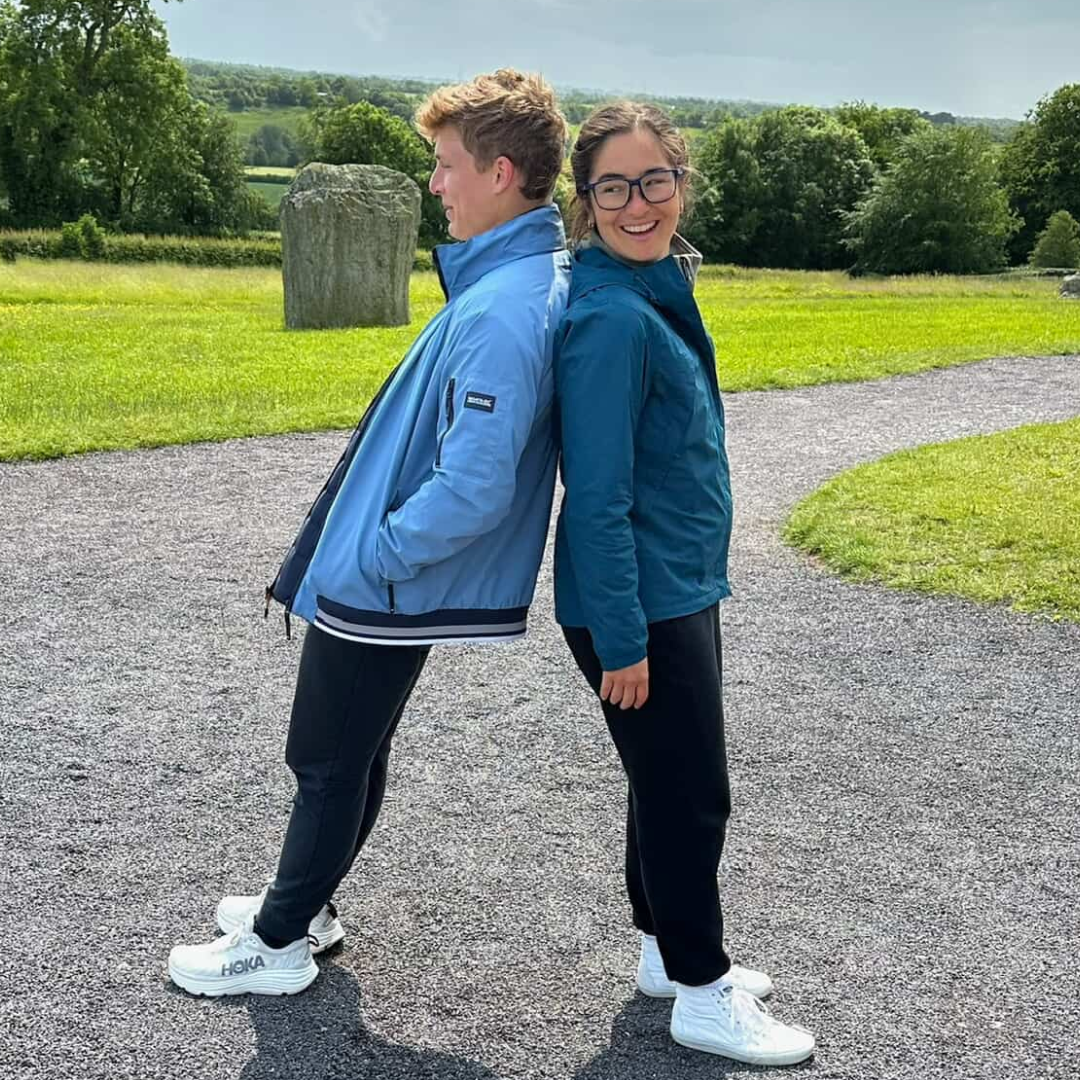
Why pickleball brings people together
For Lauralei, pickleball’s power is in its overlap.
“One of the best things about pickleball is its ability to give you a cross-section of the communities around you. It brings people from every background together on an equal playing field. David’s a 6.0 in singles and has never beat our friend Youssef Bouzidi, a 50 year old senior pro, in any singles tournament. They’ve also played many men's doubles tournaments together - not split age! - and won. Stories like these are one of the best parts of the sport. “
One rally at a time
David and Lauralei’s story isn’t about pickleball being romantic. It’s about pickleball being present through improvement, setbacks, long drives, and shared goals.
They didn’t plan to build a life through the sport.
They just kept showing up to the same court.
Everything else followed.
Community
College
February 6, 2026
The Picklr and P4 Certified Coaches Elect DUPR and DUPR Coach as Exclusive Global Rating System
Salt Lake City, UT – February 6, 2026 – The Picklr, North America’s fastest-growing indoor pickleball franchise, today announced it has formally standardized on the Dynamic Universal Pickleball Rating (DUPR) and DUPR Coach as its exclusive global rating system. This landmark decision empowers The Picklr’s nationwide P4 Certified Coaches and franchise partners to deliver accurate, universal player ratings while providing transformative education, new revenue opportunities, and a unified player development pathway.
Between 2025 and 2026, up to 400 Picklr P4 Certified Coaches will be onboarded into the DUPR Coach program, ensuring every facility is equipped with expert, credentialed professionals capable of running DUPR rating sessions, implementing the DUPR system, and integrating players of all skill levels into the global rating ecosystem. Currently, there are more than 2,000 DUPR Coaches worldwide, with approximately 200 serving as Picklr P4 Coaches, starting with at least two at each location. This makes The Picklr the largest franchise network fully aligned on DUPR and DUPR Coach to date.
“The decision to fully embrace DUPR and DUPR Coach reflects our commitment to player development, coaching excellence, and the growth of the sport,” said Jorge Barragan, CEO and Co-Founder of The Picklr. “By standardizing ratings across every Picklr facility, we are creating a truly universal language of pickleball, giving players, coaches, and clubs the tools to grow, compete, and measure progress consistently, no matter where they are.”
The DUPR Coach integration is fully aligned with The Picklr’s P-Series development framework, which guides players from first engagement to elite competition across P1–P4 levels. P4 Certified Coaches leverage DUPR Coach alongside Wingfield Assessments, a 24-shot AI-powered evaluation that provides precise performance insights, video analysis, and DUPR rating integration. Together, DUPR Coach and Wingfield Assessments allow coaches to run structured rating sessions, track measurable outcomes, and accelerate skill development, ensuring players at every level are accurately rated and connected to resources that support improvement and competitive readiness.
“The collaboration between The Picklr P4 Coach program and DUPR Coach is a game-changer for our coaches and players,” said Matt PaneGasser, Vice President of Pickleball at The Picklr. “It allows us to educate our coaches on delivering meaningful rating sessions, implement a consistent global system, and bring players into a verified, universally recognized rating pathway. DUPR Coach is not just a tool—it’s an engine for growth for the sport and for our franchise communities. Coaches engage with players, provide lessons, and guide them through a clear, measurable development pathway, and players get a true starting point for their journey.”
The Picklr Franchise owner and DUPR Coach JP Parker added, “Being able to offer Coach-Assigned DUPR Ratings has elevated our programs and leagues. I run and operate DUPR education classes, Coach-Assigned DUPR Rating Sessions, DUPR-gated leagues, and open play at my Picklr clubs because of the value they bring to our communities. It drives engagement, improves competition, and opens new revenue opportunities. DUPR and DUPR Coach empower our team to deliver a professional, standardized experience that benefits players, coaches, and club operations alike. It is my main revenue generator and keeps people engaged consistently.”
The Picklr currently operates over 50 locations nationwide and recently announced plans to expand to 80 additional facilities across nearly a dozen states, with international efforts in Asia, Australia, and Europe. With the combined power of the P4 Coach and DUPR Coach programs, The Picklr is uniquely positioned to standardize player ratings at scale, support the growth of the sport, and create a clear, measurable pathway for players of all levels, from recreational to competitive.
With the alignment of P4 Certified Coaches and DUPR Coach, The Picklr sets a new industry standard for excellence in coaching, player development, and competitive integrity, solidifying its position as the largest franchise network dedicated to advancing pickleball through universal ratings and elite coaching.
About The Picklr
The Picklr is North America's fastest-growing network of premium indoor pickleball courts, offering an unparalleled experience for players of all skill levels. With more than 500 state-of-the-art clubs sold nationwide, The Picklr provides programs for beginners to pros, and a vibrant atmosphere. Membership to The Picklr includes access to all club locations nationwide, free court reservations, four clinics per month, and unlimited participation in leagues, competitive play/events and tournaments. Follow The Picklr on Instagram, X, LinkedIn, Facebook, and TikTok for news on locations and tournaments, or visit https://thepicklr.com/franchise/ to learn more about owning a franchise.
About DUPR Coach
DUPR Coach is a program designed to empower pickleball coaches to launch Coach-Assigned DUPR ratings for the 34 million non-rated players worldwide. Powered by MyJourney Pickleball, DUPR Coach helps coaches provide valuable insights into players’ skill levels and supports the growth of pickleball through more competitive, enjoyable play. Coaches interested in becoming DUPR Coaches can visit duprcoach.com/coach-cert to sign up and learn more.
About DUPR
DUPR (Dynamic Universal Pickleball Rating) is the premier global pickleball rating system and technology platform, trusted by the world's leading clubs, tournaments, leagues, and players. DUPR's dynamic rating system unifies pickleball across age, gender, and location by analyzing match results to accurately evaluate all players across a 2.000 - 8.000 scale. DUPR is the official pickleball rating of leagues, tournaments and clubs around the world, including United Pickleball Association (UPA), PPA, Major League Pickleball (MLP), Pickleball.com, Life Time, The Picklr, National Team Pickleball League, National Pickleball League. It also owns and operates Minor League Pickleball and Collegiate Pickleball, two of the biggest amateur leagues in the sport. Players and operators can visit www.dupr.com to sign up and learn more.
Partners
Community
February 5, 2026
How to Hold a Proper Pickleball Grip for Better Control
If you’re serious about improving your pickleball rating, competing in pickleball tournaments, or climbing the pickleball rankings, your grip is one of the first fundamentals you need to dial in.
A proper continental grip gives you better control, cleaner contact, and more consistency, without having to swing harder. And the best part? You don’t need fancy techniques or complicated adjustments.
Let’s break down the two easiest, most effective ways to hold your paddle the right way.
Why Your Pickleball Grip Matters
Before we get into how to grip the paddle, let’s talk about why it matters.
A correct pickleball grip helps you:
- Control the paddle face on dinks, volleys, and drives
- React faster at the kitchen line
- Reduce mishits and unforced errors
- Transition smoothly between shots without changing grips
Tip #1: The Hammer Grip
The easiest way to find a proper pickleball grip? Pretend you’re holding a hammer.
How it works:
- Pick up your paddle like you’re about to pound a nail
- Keep your grip relaxed, not tight
- Your hand should feel natural and neutral
This grip prevents you from over-rotating the paddle face and helps you stay consistent across shots.
Why it works: The hammer grip keeps your wrist mobile and your paddle square, key elements for clean contact and control.
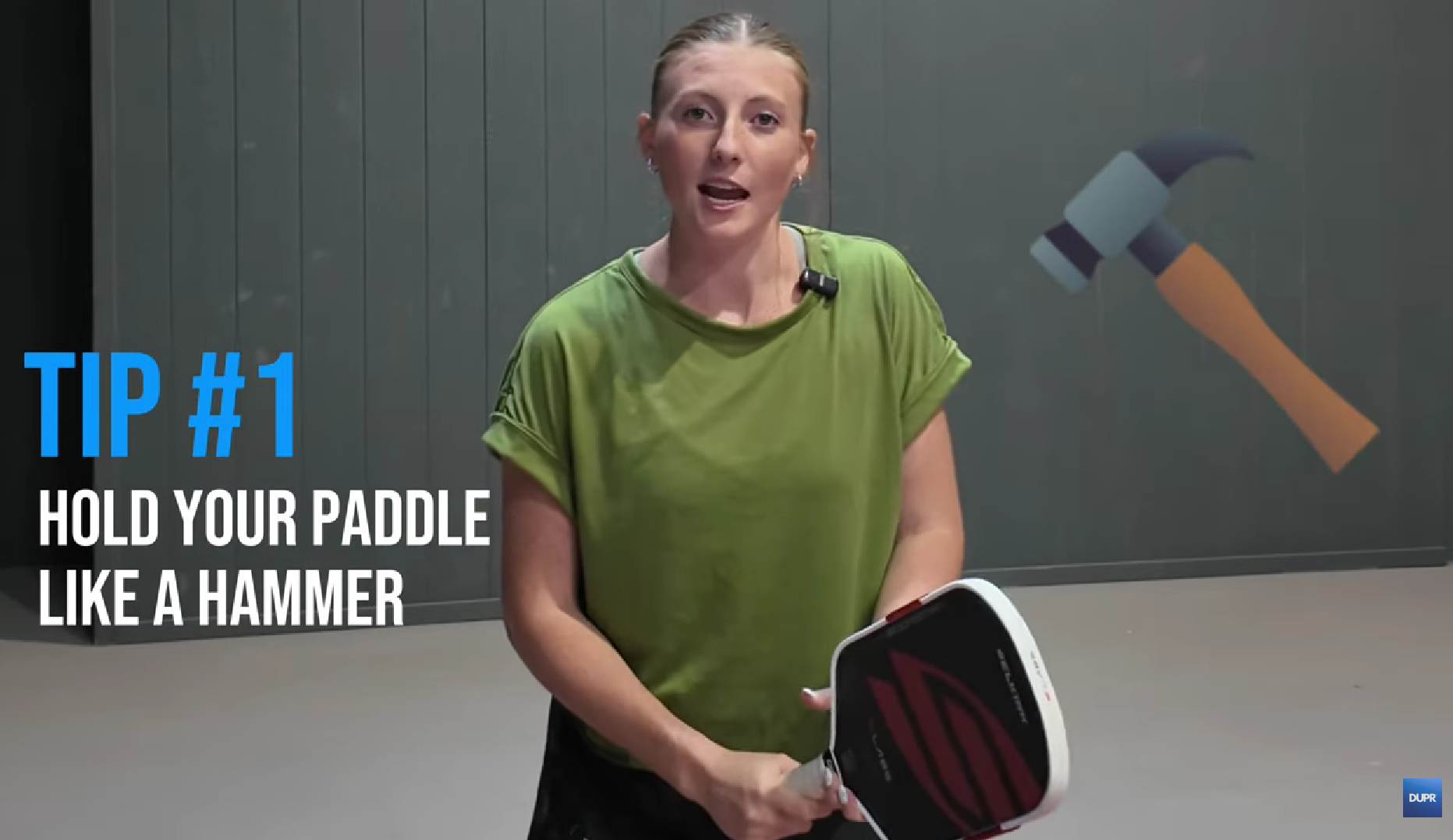
Watch How To Make A Hammer Grip here
Tip #2: The Handshake Grip
Another simple trick: give your paddle a handshake.
How it works:
- Hold your paddle like you’re shaking someone’s hand
- The paddle face should be perpendicular to the ground
- Your thumb and index finger form a relaxed “V” along the handle
If this grip feels familiar, that’s a good sign, it’s the same grip most high-level players use for serves, returns, dinks, and volleys.
Pro insight: The handshake grip and hammer grip are essentially the same thing, two different ways to find a neutral, all-purpose pickleball grip.
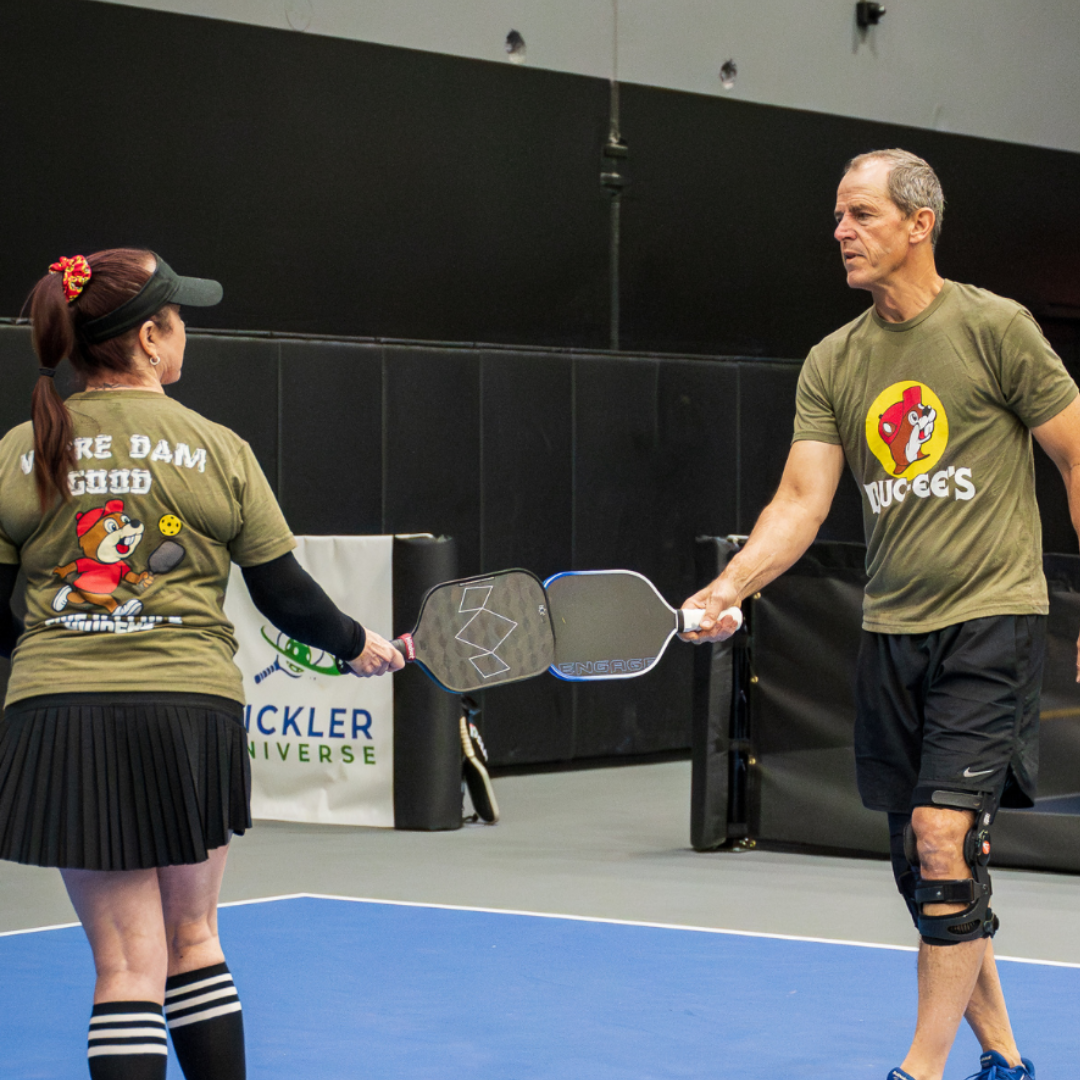
Watch How To Make The Handshake Grip here
Key Takeaway
You don’t need a different grip for every shot in pickleball.
A continental grip works across:
Constantly changing grips slows you down, and in competitive pickleball, reaction time matters
Common Grip Mistakes to Avoid
Even experienced players fall into these habits:
- Gripping too tight: leads to pop-ups and poor touch
- Pan-handle grip: limits topspin and control
- Over-adjusting mid-rally: causes late contact
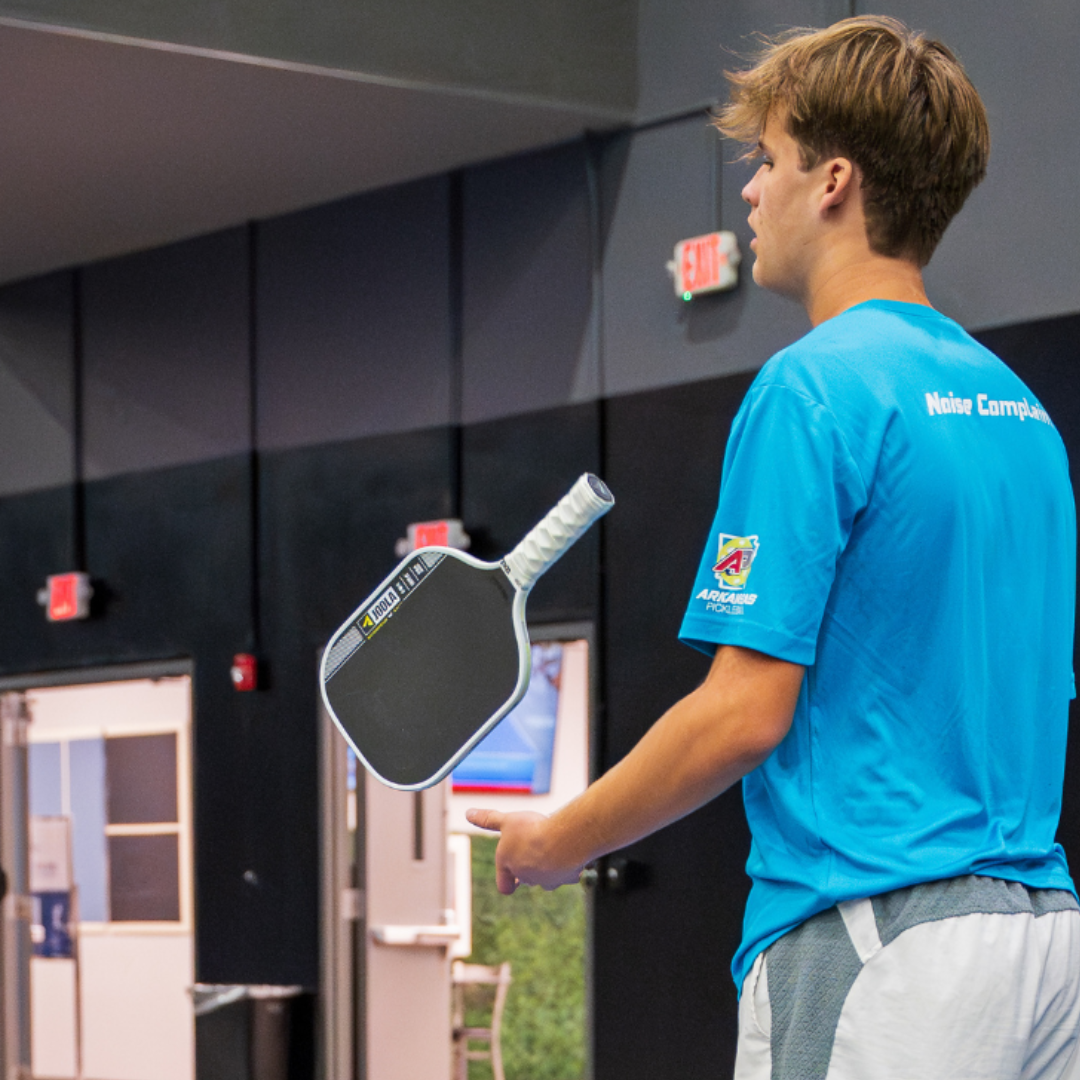
Fixing your grip is one of the fastest ways to clean up your game, without changing your swing.
Success on the court is built on control and solid fundamentals. As you refine your skills and let your game evolve, remember to track your journey and log your latest scores on the DUPR app to see where you stand.
Want more insights? Check out our blog page and follow @duprpb on Instagram.
Pickleball Tips