
How College Pickleball Started: The Story Behind the Tour, the Teams, and the Chaos That Made It Special
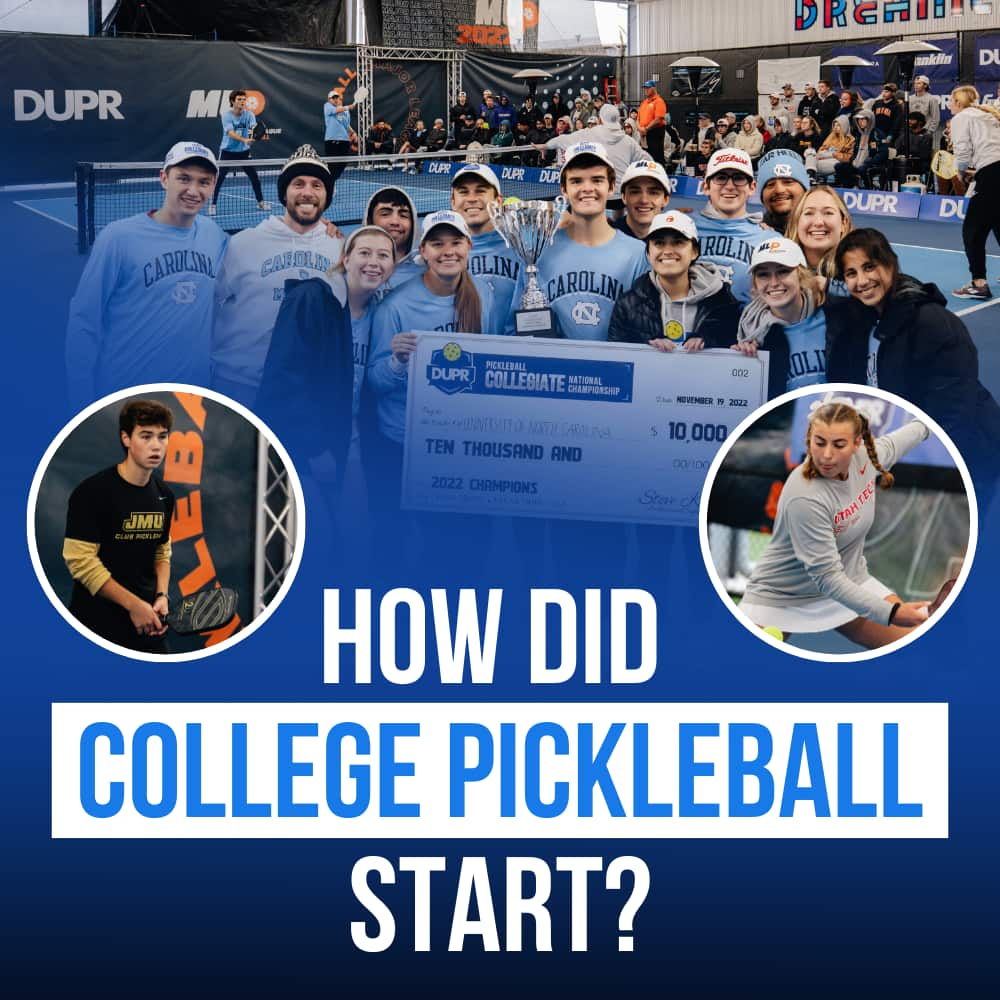
College pickleball started as a small college experiment, a handful of teams, and a willingness to see what might happen.
What happened was bigger than anyone expected. In just a few years, college pickleball grew from a DUPR-led idea into a national tour with Super Regionals, packed Nationals, and now full college scholarships. Along the way, it became something entirely unique in college athletics: one of the only sports where men and women compete together, on the same teams, at the highest level.
That combination of co-ed competition, school pride, and real opportunity helped college pickleball evolve from a test run into one of the most electric environments in the sport today.
The Original Idea: A “Mini Nationals” Experiment
The earliest concept behind college pickleball came from Anna Bright, who proposed hosting a small, college-focused national championship as a PR initiative. The idea was straightforward: reach out to a limited number of college clubs and bring them together for a single event.
At the time, it wasn’t meant to become a full-fledged tour. It was an experiment.
But interest quickly outpaced expectations.
As Anna shifted focus toward other projects and her professional pickleball career, responsibility for growing the college side fell to others, who began expanding the initiative and onboarding more schools. What started as a small test quickly turned into something much bigger.
“I’ve been around a lot of tennis and pickleball events at every level, and I can honestly say that first college championship was the most special sporting event I’ve ever been part of. The atmosphere was unreal: the cheering, the joy, the competitiveness, the way everyone was packed around the courts. You could feel how much it meant to the players and the schools. Even now, years later, nothing has quite matched it. That energy is what made sponsors like Gamma reach out to us right away; they saw it wasn’t just another event, it was something different.” said Ben Van Hout, DUPR’s Head of Partnerships & Sponsorships.
The First Collegiate National Championship: From 8 Teams to 17
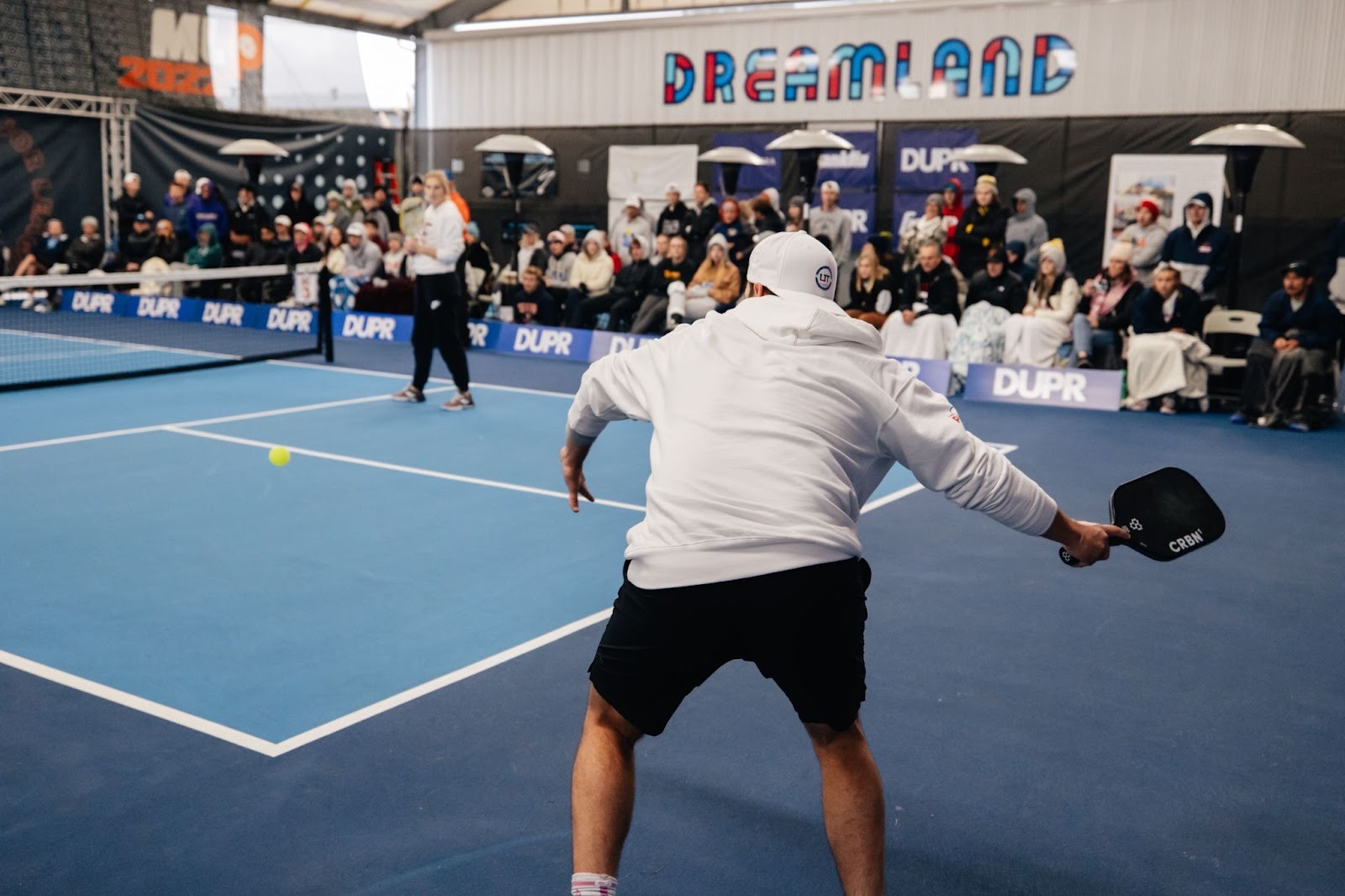
The first true collegiate national championship took place at Dreamland in Texas. Eight teams were expected. Seventeen teams showed up.
That alone signaled that college pickleball already had momentum.
The conditions, however, were brutal. Instead of warm Texas weather, players were met with cold temperatures, drizzle, and unusable outdoor courts. At one point, it was hovering around 37 degrees, wet and miserable.
None of that mattered.
Players crowded around the courts, teams packed in together, and the energy was electric. Despite the chaos, the event created an immediate buzz among players, organizers, and spectators.
Before the Tour, There Were Student Leaders
Long before college pickleball had a formal structure, it was being built by students.
One of the earliest success stories came from NC State. The club was formed before COVID, back when there were no clear playbooks or step-by-step guides for starting a pickleball club at a university. Students figured it out on their own. That head start allowed NC State to host intercollegiate competition earlier than most programs, culminating in an April 2022 event that brought together seven schools, the largest college pickleball tournament at the time.
“There wasn’t really a model to follow back then,” Jacob Smith, DUPR’s Director of College & High School Pickleball, said. “We just knew there were other schools starting to play, and if we could get them all in one place, something bigger could come out of it.”
As the college scene began to take shape, Jacob Smith became the first college intern, helping design tournament formats, registration systems, and the behind-the-scenes structure that would eventually define the tour. Long before college pickleball had a formal name or roadmap, the foundation was already being built.
Today, most players know Jacob as a constant DUPR presence at events across the country, still attending, organizing, and shaping the college scene he helped start.
The Skill Level Exploded.. Fast
One of the most surprising facts from the first national championship: not a single player was rated above 5.0 at the time.
That changed almost immediately.
By the second year, the level had jumped significantly, with players approaching 6.0 and entire teams filled with high-level competitors. What initially felt like a strong 4.5-level tournament quickly became elite.
Growth wasn’t just happening in the number of schools; it was happening within programs. Clubs expanded from small rosters to 50+ players, with some becoming among the largest club sports on campus.
College as a Pathway to the Pro Scene
College pickleball also began to show its value as a development pathway.
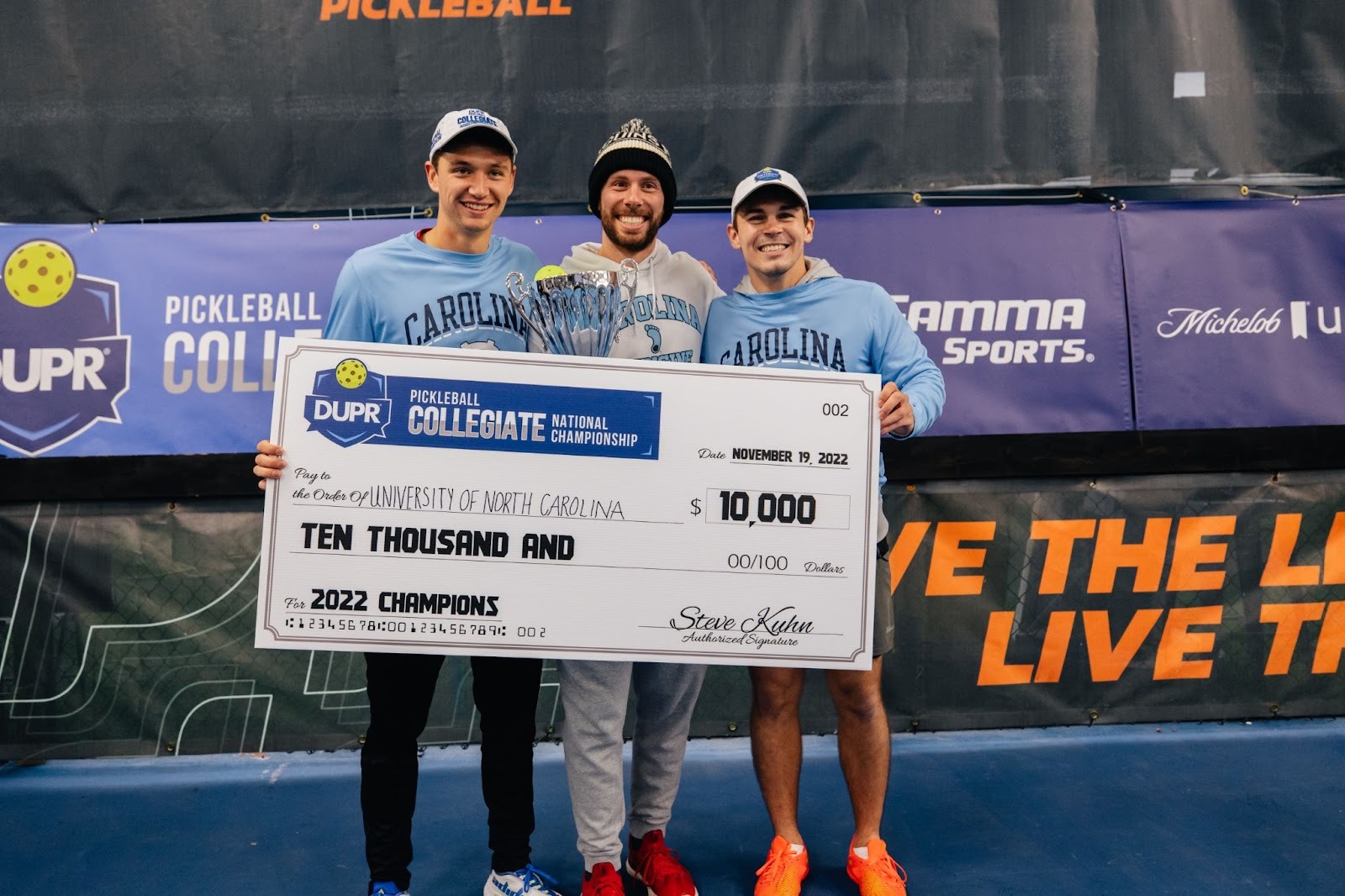
One of the earliest breakout moments came when Collin Shick, a player from the original championship-winning team, 4 months later took a game off Ben Johns in a PPA singles final. That result turned heads and gave college pickleball instant credibility.
Another former college player from the inaugural College Pickleball National Championship, David Bieger, represented the University of Virginia and has since transitioned into the professional pickleball rankings. His rise at the pro level includes a notable win over Tyson McGuffin, signaling his ability to compete with established names in the sport.
David’s story extends beyond the court. He is also engaged to his former college teammate, Lauralei Singsank, who has also gone on to compete professionally.
In 2023, David and Lauralei reunited on court to win the second Collegiate National Championship, defeating the defending champions in a dramatic DreamBreaker.
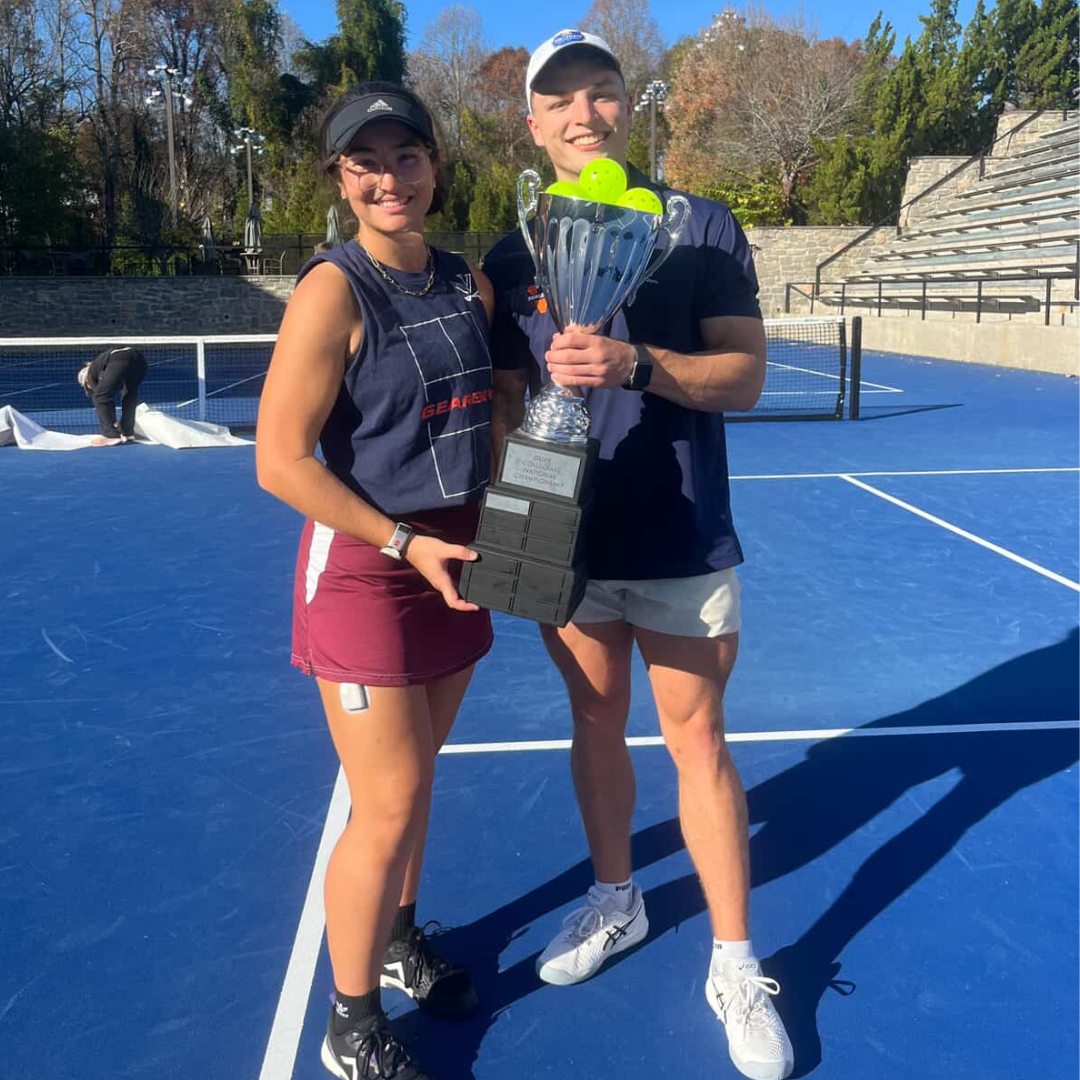
Is pickleball the new Tinder? You can read their full love story here.
“Traveling and competing with each other and our team is one of our favorite memories from our time at UVA. We are truly grateful to DUPR for hosting the collegiate tour and making this possible. We wouldn’t be together without you!"” David shared.
For a long time, college pickleball featured pros who had played college sports elsewhere. Now, it’s increasingly becoming a place where future pros are actually developed.
From Winning the First-Ever College Pickleball National Championship to Becoming DUPR’s Data Scientist—on the Same Day
After helping her team at UNC claim the first-ever College Pickleball National Championship, Sarah Carpenter stepped off the court and into a conversation that would change her career path entirely.
“I walked off the court from winning and went over and met DUPR’s president who ended up hiring me,” Sarah recalled. “That day has always stuck with me.”
What makes Sarah’s story unique isn’t just the timing; it’s the perspective she brought with her. She didn’t transition into DUPR as someone observing the sport from the outside. She arrived having lived every part of it: the chaos of early college events, the pressure of competition, and the unmatched sense of community that defined college pickleball from day one.
That experience now directly shapes how DUPR works. In college pickleball, ratings play a huge role in:
- Seeding and fair group placement
- Power rankings
- Tracking individual and team progression
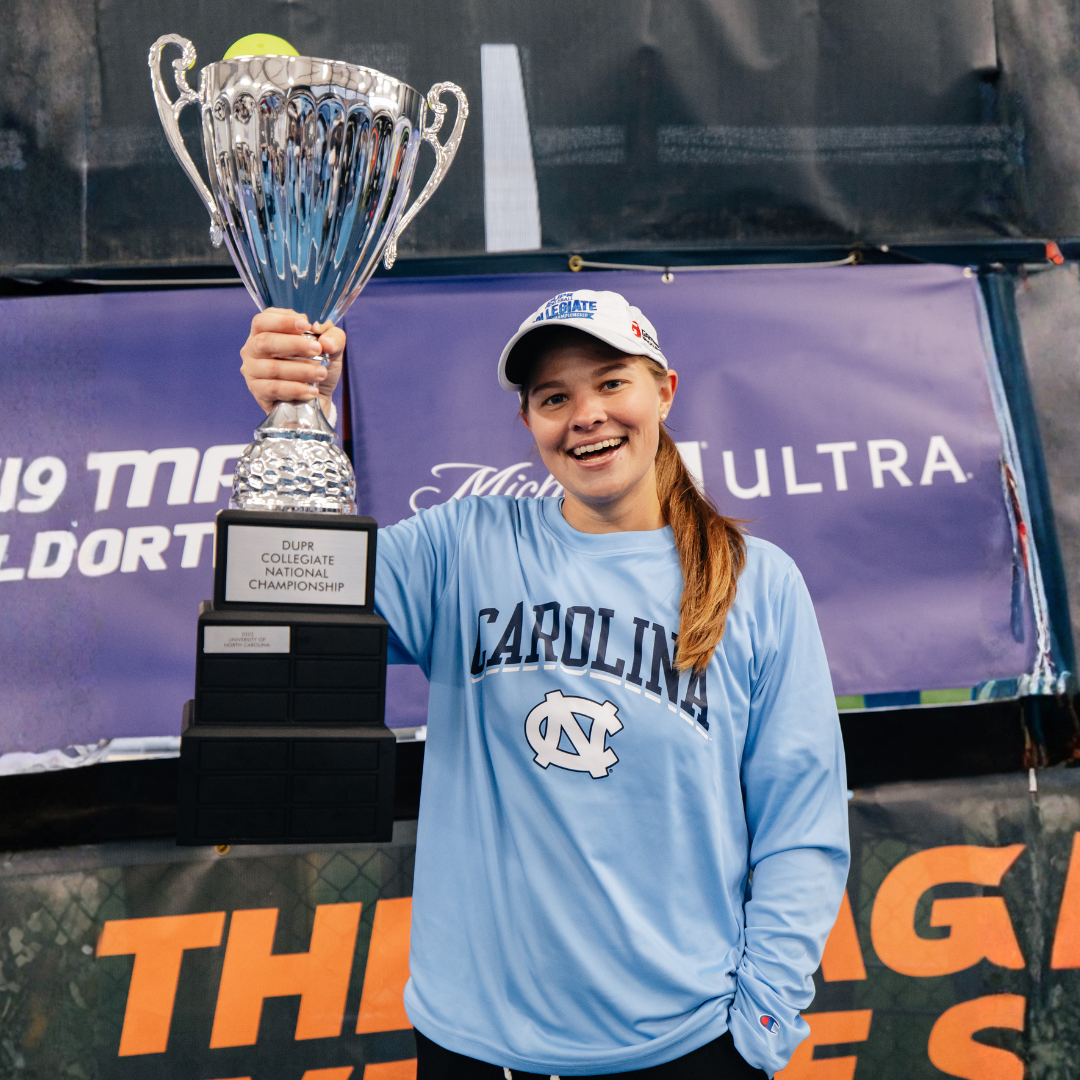
Those experiences have helped push DUPR’s algorithm forward, helping it become more accurate and better at reflecting real-world competition. And Sarah emphasizes that this approach isn’t accidental.
Everyone working at DUPR plays pickleball.
They compete. They track their ratings. They feel the wins, the losses, and the frustration when numbers don’t align with perceived performance. That shared experience is foundational to how the product is built.
“It’s not just data on a screen,” Sarah explained. “We’re all part of the same community using it. That perspective matters when you’re building something meant to reflect real play.”
Her journey from champion to data scientist in a single day captures something essential about college pickleball itself. It’s not just a competition pathway. It’s an opportunity engine. One that connects players, careers, and community in ways few college sports ever have.
Sponsors That Changed Everything
Early partnerships with brands like GAMMA, Anheuser-Busch, and JOOLA helped legitimize college pickleball and accelerate its growth. Among them, the GAMMA sponsorship was especially impactful, providing foundational funding that allowed the collegiate department to scale.
These weren’t just logo placements; they were signals that college pickleball was worth investing in.
Building a Real Tour: Super Regionals and Nationals Prestige
Super Regionals were introduced to create a true qualification pathway into Nationals, mirroring professional tour systems. This added meaning to every stop and increased the prestige of Nationals itself.
Nationals is now capped at 64 teams, a limit that keeps the event elite and makes qualification harder each year. Rather than expanding endlessly, the focus shifted to raising the level.
By 2026, Nationals will look dramatically different from that first event:
- Singles brackets
- Multiple team brackets
- An All-American game
- A packed schedule, without losing the team-based energy that defined the original championship
Why College Pickleball Feels Different
What truly sets college pickleball apart isn’t just competition; it’s identity.
University pride, team colors, mascots, and rivalries create a sense of tribalism that’s rare outside major college sports. Entire clubs show up to support not just the top teams, but challenger teams as well.
Practices matter just as much as tournaments. Unlike pro teams that rarely train together consistently, college programs build community week after week on campus. That’s where friendships form and why players stay connected long after graduation.
To stay up to date on college pickleball news, join our Instagram Newsletter here.

OTHER TOP STORIES
Check out our other stories that may interest you
%20(1).jpg)
%20(1).jpg)
.webp)


