_1.png)
How Many Calories Does Pickleball Burn? A Research-Backed Look at the Sport’s Real Energy Demands
By Susie Reiner, PhD & Erik Korem, PhD
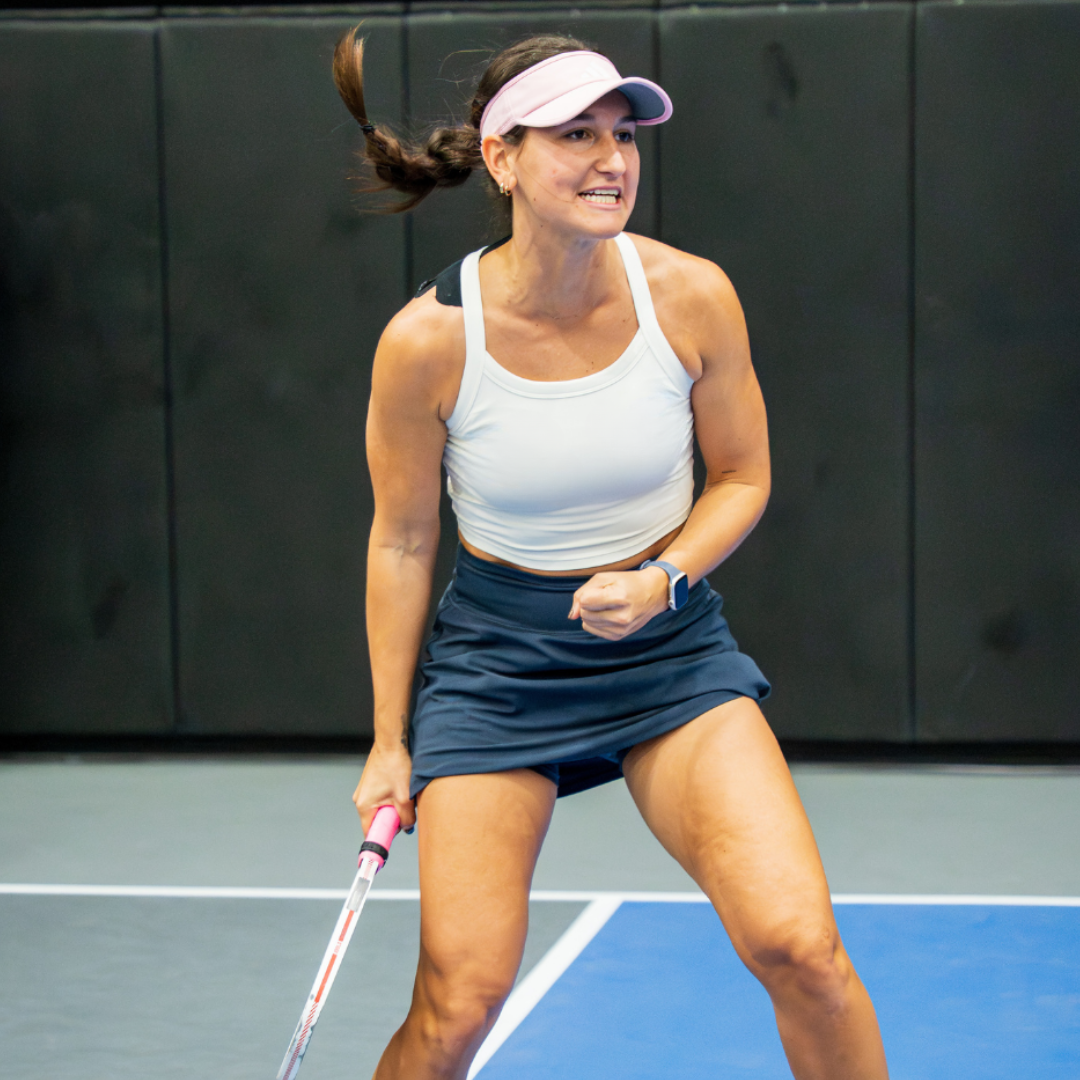
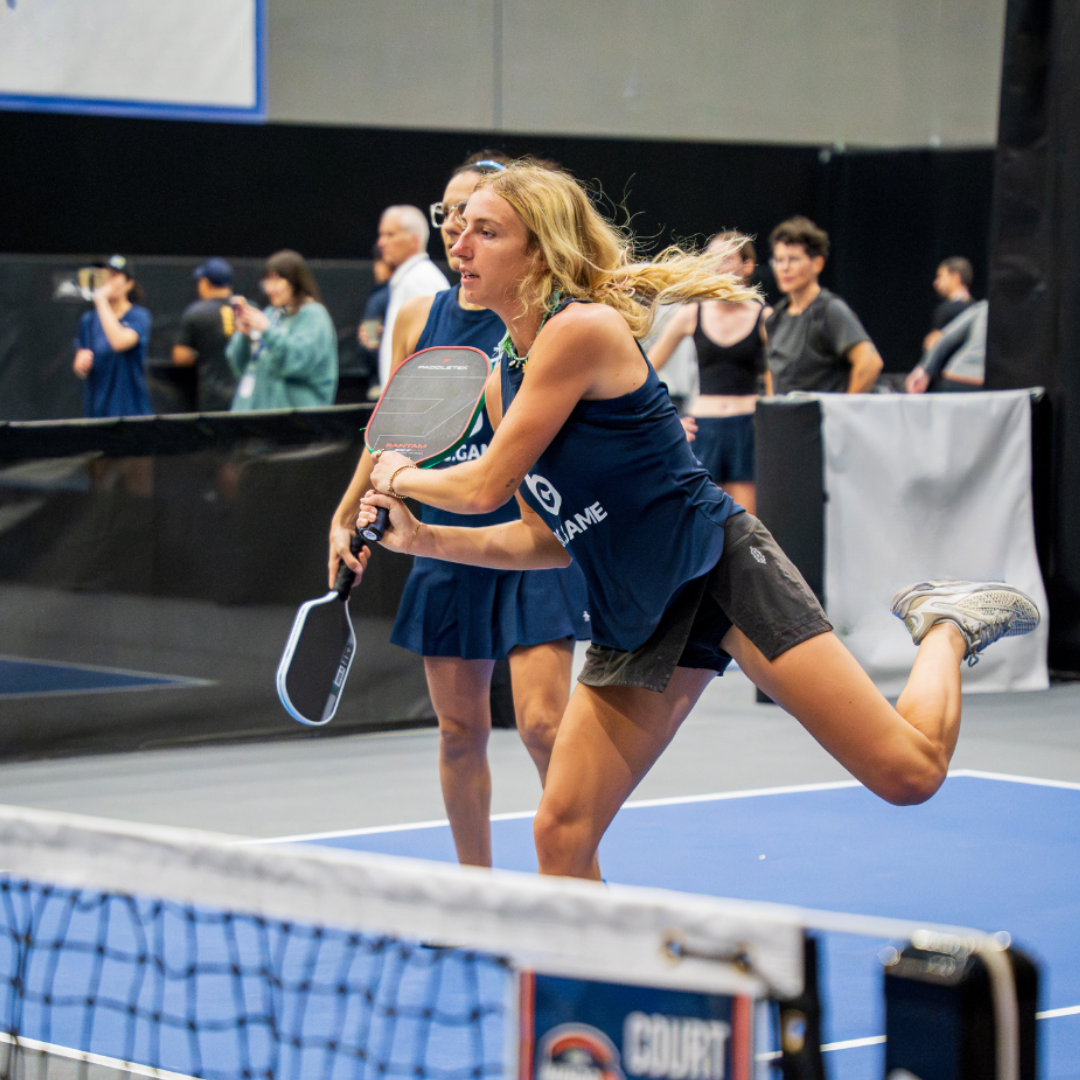
Pickleball feels like exercise the moment you start moving. Your heart rate climbs, you cover more ground than you expect, and most players leave the court sweating. But how many calories does it actually burn? And does it stack up as a real workout?
The sport’s popularity has exploded faster than the research, but we now have enough evidence to answer the big question: pickleball burns a meaningful number of calories and delivers a reliable moderate-to-vigorous cardiovascular stimulus. Here’s what the science shows and how to apply it to your own training.
Calorie Expenditure: What Players Can Realistically Expect
Right now, the most direct measurement of pickleball calorie burn comes from a study of middle-aged and older adults wearing portable metabolic sensors during real gameplay. These players burned roughly 355 calories per session (5).
That number should be interpreted as a reasonable benchmark, not a hard rule. The study was small, and pickleball is an intermittent sport, and energy expenditure is highly individualized, which makes calorie prediction tricky. Still, this is the strongest evidence we have, and it aligns with what most recreational players feel: a single pickleball session burns a few hundred calories, enough to contribute meaningfully to weekly energy expenditure.
Other research that used prediction equations (3) tends to misrepresent the true metabolic cost of stop-and-go sports. So until more VO₂ and MET data are available, this ~355-calorie estimate remains the best grounded reference point.
If you play pickleball for 60–90 minutes, expect to burn a similar amount of energy as brisk walking, light jogging, or cycling at an easy pace.
Heart-Rate Responses: Pickleball Consistently Reaches Exercise-Training Zones
While calorie data is limited, heart-rate data is extremely consistent. Across studies of older recreational players, average heart rate sits around 111 bpm, or about 70 percent of age-predicted max—a clear indicator of moderate-to-vigorous intensity (4).
Players spent more than 70 percent of court time in these elevated zones, with singles reaching moderate intensity up to 80 percent of the time and doubles hovering around 50 percent. Accelerometer data confirms similar patterns.
Real-world session data shows older adults accumulating (1):
- >68 minutes of moderate-to-vigorous physical activity in a single pickleball session
- Up to 86 minutes of elevated heart-rate time on pickleball days
If you treat pickleball as your main workout a few days per week, you’re meeting or exceeding recommended exercise intensity without needing additional cardio sessions.
How Pickleball Compares to Other Racquet Sports
Pickleball sits in the moderate-intensity range of racquet sports, and the best way to understand its calorie burn is to see how it compares with other, more extensively studied games.
Tennis
Tennis spans a broad physiological range because intensity varies with playing style, experience, and match duration. In veteran players, VO₂ values during match play are 24.5 ± 4.1 ml·kg⁻¹·min⁻¹ for advanced athletes and 23.3 ± 3 ml·kg⁻¹·min⁻¹ for recreational athletes, with heart rates averaging 148–150 bpm (6). Elite players have extremely high daily energy expenditures, burning 2,583–4,586 kcal per day depending on competition and training schedules (7).
Tennis generally requires more sustained effort than pickleball, especially at advanced levels, but recreational tennis and recreational pickleball fall within a similar moderate-to-vigorous intensity range.
Badminton
Competitive badminton is one of the most metabolically demanding racquet sports studied. During official matches, junior elite athletes burned 10.7 ± 0.5 kcal/min (female) and 14.9 ± 4.6 kcal/min (male) (9). These values reflect rapid movement, long rallies, and high aerobic and anaerobic loads.
Badminton has far higher energy demands than pickleball, which makes sense given the pace, court coverage, and competitive structure.
Squash
Squash is another high-demand sport. Players often maintain heart rates near 160 bpm and spend half to two-thirds of match time in active play. Medium-skilled athletes expend roughly 2,850 kJ/hour, while A-grade players exceed 3,000 kJ/hour, equivalent to 680–715 kcal/hour (8).
Squash ranks at the top of the racquet-sport intensity spectrum. Pickleball does not approach these metabolic demands but is far more sustainable and accessible for most adults.
Table Tennis
Table tennis tends to involve brief rallies and longer rest periods, which reduces overall energy cost, though available research does not provide standardized MET or kcal/hour values (10). Table tennis appears less demanding than pickleball, but precise comparisons are not available.
How Pickleball Compares
Based on the best available evidence, pickleball falls below the metabolic intensity of squash and competitive badminton, lands slightly below or comparable to recreational tennis, and exceeds the intensity of table tennis. This spectrum supports the conclusion that pickleball is a legitimate moderate-intensity workout that burns a meaningful number of calories.
Why Wearables Miss the Mark on Pickleball Calories
Many players trust their fitness watch to track calories, but wearables often miss the mark during intermittent sports. A validation study comparing common devices to a metabolic gold standard found significant error—often above 10 percent—during simulated pickleball (2).
Heart-rate readings were generally accurate, but calorie estimates were not. Because pickleball includes bursts of explosive movement and intermittent rest periods, algorithms built around steady-state movement struggle to capture its true energy demands. For now, heart rate is the more trustworthy measure of effort, while calories on your watch should be treated as rough estimates.
What This Means for Your Training
Here’s the bottom line from the current evidence:
- Pickleball burns a meaningful number of calories—about 355 calories per recreational session, with similar expectations for most casual players.
- It consistently reaches moderate-to-vigorous intensity, often long enough to satisfy weekly exercise guidelines in a single session.
- It’s more metabolically active than table tennis and comparable to recreational tennis, while remaining more accessible than the high-demand racquet sports.
- Wearables undercount calories, so heart rate or perceived exertion is a better guide.
- If you want a form of exercise that feels enjoyable, social, and still burns a meaningful amount of energy, pickleball delivers.
Want to Get More From Your Pickleball Training?
If you’d like personalized insights to manage training load, improve conditioning, or structure your pickleball week for better performance and recovery, download the AIM7 app today.
Make sure to keep following DUPR's blog page for more tips, data and news on pickleball.
References
- Zarei, S., et al. (2025). Comparison of metabolic and pulmonary variables between real-life and mixed reality pickleball. Journal of Functional Morphology and Kinesiology, 10(3), 346. https://doi.org/10.3390/jfmk10030346
- Navalta, J. W., Carrier, B., Blank, M., Zarei, S., Davis, D. W., Craig, M., Perez, O. R., Baca, J., Sweder, T. S., Carballo, T., & Bovell, J. (2024). Validity and Reliability of Wearable Technology Devices during Simulated Pickleball Game Play. Sports, 12(9), 234. https://doi.org/10.3390/sports12090234
- Casper, J. M., Bocarro, J. N., & Drake, N. R. (2023). Physical activity associated with older adult pickleball participation: A pilot study. Recreational Sports Journal, 47, 49–56. https://doi.org/10.1177/15588661231156139
- Webber, S. C., Anderson, S., Biccum, L., Jin, S., Khawashki, S., & Tittlemier, B. J. (2022). Physical activity intensity of singles and doubles pickleball in older adults. Journal of Aging and Physical Activity. Advance online publication. https://doi.org/10.1123/japa.2022-0194
- Dalleck, L., et al. (2018). The acute and chronic physiological responses to pickleball in middle-aged and older adults. Retrieved from https://www.researchgate.net/profile/Lance-Dalleck/publication/325544110_The_Acute_and_Chronic_Physiological_Responses_to_Pickleball_in_Middle-Aged_and_Older_Adults/links/5b14c495a6fdcc4611e1fe93/The-Acute-and-Chronic-Physiological-Responses-to-Pickleball-in-Middle-Aged-and-Older-Adults.pdf
- Fernandez-Fernandez, J., Sanz-Rivas, D., Sánchez-Muñoz, C., Pluim, B. M., Tiemessen, I. J. H., & Mendez-Villanueva, A. (2009). A comparison of the activity profile and physiological demands between advanced and recreational veteran tennis players. Journal of Strength and Conditioning Research, 23(2), 604–610. https://doi.org/10.1519/JSC.0b013e318194208a
- Ellis, D. G., Speakman, J. R., Hambly, C., Morton, J. P., Close, G. L., & Donovan, T. F. (2023). An observational case series measuring the energy expenditure of elite tennis players during competition and training by using doubly labeled water. International Journal of Sports Physiology and Performance, 18(5), 1–6. https://doi.org/10.1123/ijspp.2022-0297
- Montpetit, R. R. (1990). Applied physiology of squash. Sports Medicine, 10(1), 31–41. https://doi.org/10.2165/00007256-199010010-00004
- Sales, K. C. G., et al. (2021). Official matches and training sessions: Physiological demands of elite junior badminton players. Motriz: Revista de Educação Física, 27. https://doi.org/10.1590/S1980-65742021021520
- HuanYu, Z., Ushiyama, Y., Fei, Y., Iizuka, S., & Kamijima, K. (2010). Estimation of energy consumption from heart rates of Chinese professional table tennis players in training conditions. Journal of Human Kinetics, 6, 139–144.

.jpg)
.jpg)
.jpg)


