7 beginner pickleball drills that build real match skills
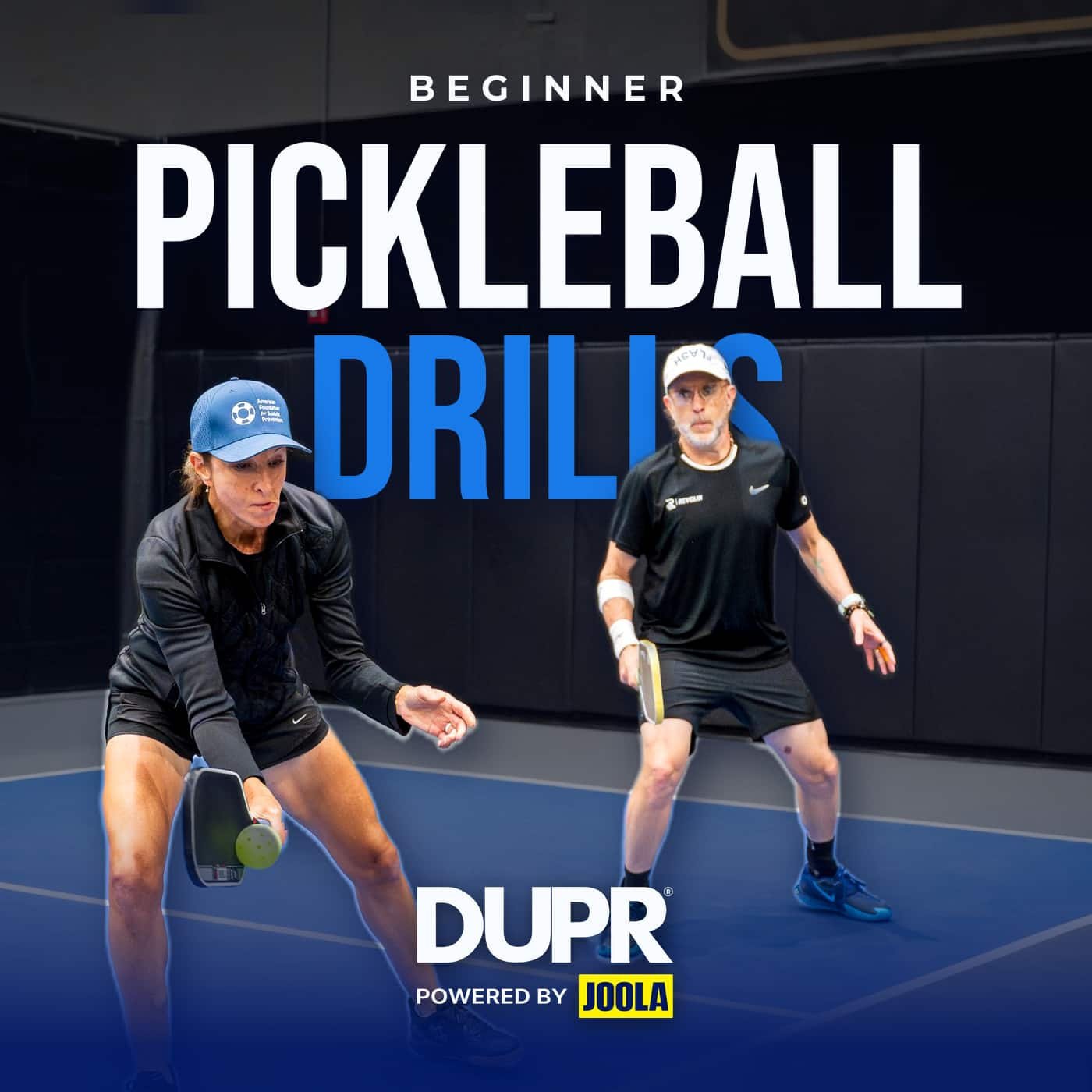
Your first few weeks of pickleball tend to look the same. You show up to open play, hit a few clean shots, and spend most of every game guessing where to stand and what to hit.
These beginner pickleball drills give those games some structure. They cover the shots that start and shape most rallies, from serves and returns to dinks, drops and resets. You can run them with a partner, with a group of four, or at home with a wall.
Still learning the basics? Our guide to pickleball doubles rules covers serving, scoring, positioning and common faults.
How to get the most out of beginner pickleball drills
A drill only helps if it looks like a real point. Hitting 50 balls from one spot feels productive, but games rarely give you the same ball twice.
Keep these three habits in every drill below:
Pick a target for every shot. Aim for a spot on the court, like deep in the middle or at your partner's feet, so each rep has a clear goal.
Move like you would in a match. After a return, move forward toward the kitchen line. After a reset, take a step in when it's safe. Your feet learn the pattern along with your paddle.
Keep score when you can. Playing a drill to 7 or 11 adds a little pressure, and pressure is what you face in rated matches.
DUPR measures how you perform against expectation, so a close loss to a stronger team can still help your rating. Drills that teach you to win one more point per game can make a difference in your results. Learn more about how your DUPR rating is calculated.
Pickleball drills for beginners with a partner
All you need for these five drills is one partner, a few balls and half a court. Run them before club play or a league night, then use the skills in matches.
1. Serve and return to a deep target
One player serves every ball while the other returns every ball. Switch after 10 to 15 reps each.
The server aims deep, close to the baseline. A deep serve keeps the returner back and makes it harder to hit an aggressive return. The returner aims deep too, then moves toward the kitchen line.
Every point starts with a serve and a return, so these reps pay off in every game you play.
2. Cross-court dinking
Stand at the kitchen line, diagonal from your partner, and dink back and forth so every ball lands in the kitchen. Run one round forehand to forehand, then switch sides for backhand to backhand.
Once you can keep a rally going, start moving the ball. Aim one dink at your partner's inside foot, the next at the outside foot.
A good dink pulls your opponent off balance until they pop one up.
3. Third shot drops from the baseline
Your partner stands at the kitchen line and feeds. You stand at the baseline and hit soft drops that land in the kitchen or force your partner to hit up on the ball.
Rotate through four spots: straight ahead from the left, cross-court from the right, straight ahead from the right, then cross-court from the left.
If your drops keep floating high, loosen your grip to about a 4 out of 10 and keep your paddle face pointed at your target through contact.
Still struggling with this shot? Check out our guide on how to hit a third shot drop in pickleball for more tips on improving consistency.
4. Midcourt resets
Start in the midcourt, the area between the baseline and the kitchen line. Your partner stands at the kitchen line and hits balls at you. Your job is to reset each one softly into the kitchen.
To make it harder, you have to land two good resets in a row before you can move up to the kitchen line. Play to 7, then switch roles.
Resets are especially important as you improve. In fact, DUPR explored why players overlook some of the game's most valuable shots in Over 50% of Players Don't Know the Most Important Shot in Pickleball.
5. Soft volley exchanges
Stand kitchen line to kitchen line and volley back and forth without letting the ball bounce. Start cooperatively, hitting toward each other's chest at about 70% pace.
As you get comfortable, try to send each volley slightly downward.
A ball you hit down forces your opponent to hit up, and a high ball is the one you get to attack.
A pickleball practice drill for four players
Got four players and one court before your club's open play or league night? Run this one.
6. Dinkles
Split into two cross-court pairs at the kitchen line. Both pairs start a dink rally at the same time, and every dink has to land in the kitchen.
When one ball goes into the net or out, the player who missed yells "dinkles." The other rally becomes a live doubles point, and all four players play it out. The first shot after the call must still be a dink.
This drill trains two things beginners often skip:
Talking to your partner. Someone has to call the switch, and both teams have to react to it.
Moving as a team. When the ball goes cross-court, slide toward the middle with your partner so nobody leaves a gap down the center.
Play to 7 and rotate partners so everyone gets time on both sides of the net.
How to get better at pickleball at home
No partner and no court? You can still build hand control in a driveway or backyard.
7. Paddle bounces and wall volleys
Start with paddle bounces. Bounce the ball straight up off your paddle, alternating forehand face and backhand face each time.
Once that feels easy, switch to face, edge, face, edge. Controlling the ball as you change paddle angles builds coordination for quick exchanges at the kitchen line.
Then find a wall. Hit a firm volley at it, pop the rebound softly up to yourself, and hit it again.
The soft pop-up builds the touch and paddle control you need for resets.
Once you've mastered these beginner exercises, take your practice further with our 10 pickleball drills to get better at the 4.0+ level.
Put your drills to the test in rated matches
Matches show whether your new skills hold up, and your DUPR rating tracks that progress over time.
New players start as NR, or Not Rated. Once DUPR has enough eligible match data to initialize your rating, you'll receive a number on a scale from 2.000 to 8.000, with separate ratings for singles and doubles.
New to the system? Here's what a DUPR rating is and how it works.
A few things help your rating reflect the work you put into practice:
Play regularly. DUPR recommends logging at least 10 to 15 matches to build a more reliable rating.
Mix in club and tournament play. Club and tournament results carry more weight than self-posted rec games because they're verified.
Play up when you can compete. Performing better than expected against higher-rated players can help your rating, even in a loss.
Not sure where to compete? Our guide to pickleball tournaments and leagues explains the different formats and how to find competition suited to your level.
Want a starting point before your first match? A credentialed DUPR Coach can assess eligible unrated players and assign a Coach-Assigned DUPR Rating.
Start with two drills this week
Pick two of these drills and run them for 15 minutes before your next open play.
Consistency comes from focused practice, and the best way to see your improvement is to put those skills into real matches.
Looking for more ways to improve? Check out our top 5 ways to improve your DUPR rating, covering coaching, open play and competitive matches.
When you're ready to see where your game stands, download the DUPR app, log your matches and start building your rating. It's free to get rated.
Frequently asked questions
What are the best pickleball drills for beginners?
Start with serve and return to a deep target, cross-court dinking, third shot drops, midcourt resets and soft volley exchanges. Together they cover the shots that open and shape most rallies.
Can I practice pickleball by myself?
Yes. Paddle bounces, edge bounces and wall volleys all build hand control and touch, and you can do them at home without a court.
Do drills count toward my DUPR rating?
No. Drills don't directly change your rating. They can improve your match performance, which can affect your DUPR when eligible results are recorded.
How do I get my first DUPR rating?
Create a free account and record eligible match results to establish your rating. You can also receive a Coach-Assigned DUPR Rating from a credentialed DUPR Coach.
Is DUPR free?
Yes. Your DUPR rating, match history and access to DUPR clubs, leagues and tournaments are free. DUPR+ is an optional $19.99 annual membership with additional features.