Top 5 ways to improve your DUPR rating, ranked by impact
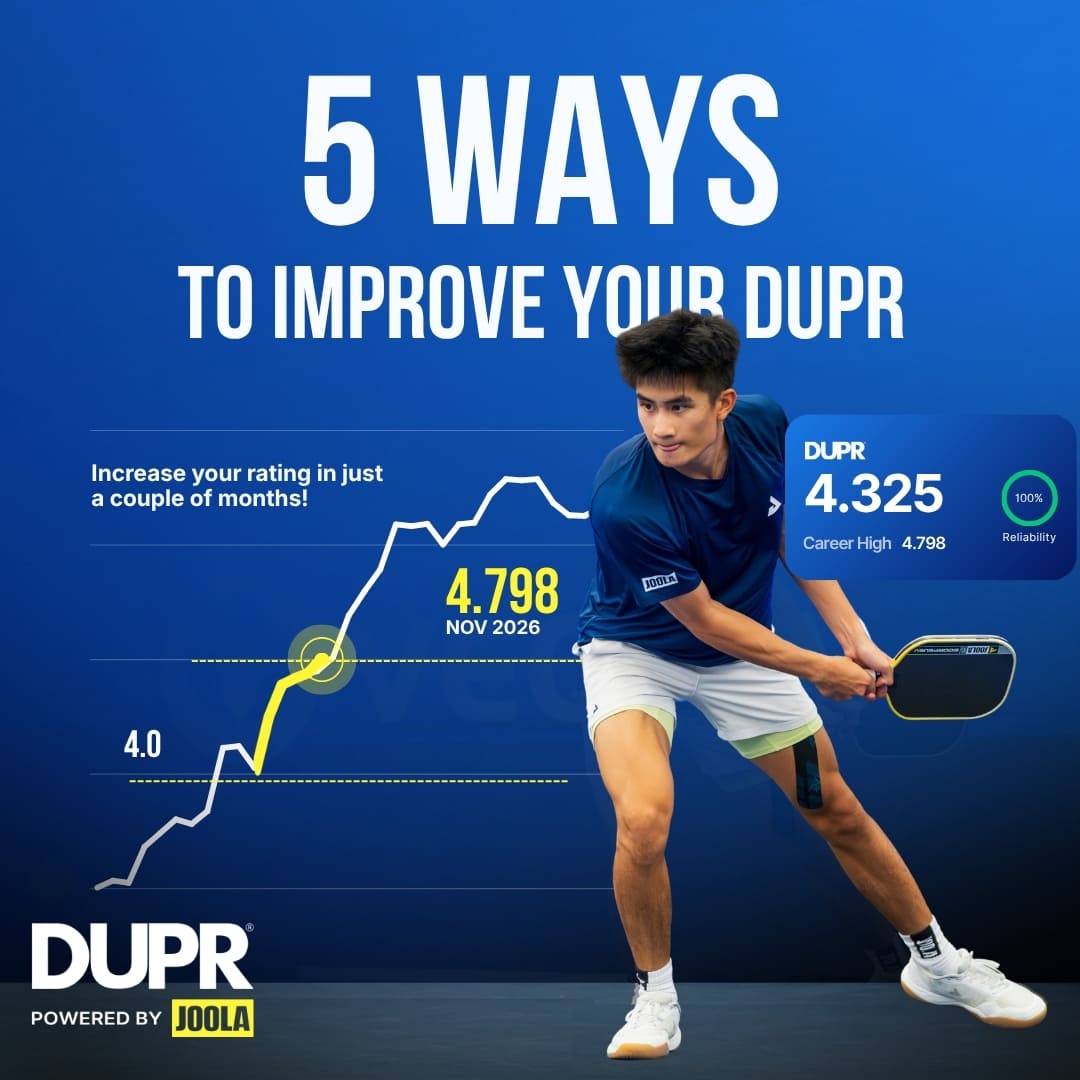
Your DUPR has been sitting at 3.5 for two months. You play three times a week, you bought a new paddle, and the number won't budge.
We ranked five ways to improve your DUPR rating, starting with the one that matters least and ending with the one we think matters most. Here's how each one helps your game and ultimately your rating.
What actually moves your DUPR rating
DUPR measures how you perform against expectation, based on everyone's ratings on the court. Score more points than expected and your rating can rise, even in a loss. Underperform and it can drop, even in a win.
Club and tournament results also carry more weight than self-posted rec games, while recent matches count more than older ones.
5. New gear
The right paddle can improve comfort, control, and confidence. But it won't fix a bad third shot drop or dinks that keep finding the net.
Upgrade when your paddle is worn out or doesn't suit your game, not because you're chasing a higher rating.
Not sure what to buy? Check out our top 10 pickleball paddle recommendations, backed by independent reviewer John Kew's testing data. Eligible DUPR+ members can also use their $30 JOOLA gift card toward an upgrade.
4. Watch the pros live
Watching professional pickleball in person shows you what highlight reels miss: positioning, resets, and how partners move together.
Focus on one player for a few games. Watch their third shot choices, positioning when receiving, and how they recover after getting pushed back into transition.
PPA Tour and Major League Pickleball matches are great places to observe. Then bring one technique into your next practice session.
For ideas worth trying, check out Ashley Griffith's four pickleball tips.
3. Play regular open play
Open play gives you more reps, different opponents, and opportunities to improve without tournament pressure.
Playing the same foursome every week teaches you their tendencies. Rotating opponents exposes you to different speeds, spins, and strategies, preparing you for competitive matches.
Log eligible games in DUPR when possible. Self-posted rec games count, although they carry less weight than verified club or tournament results.
DUPR also recommends recording at least 10–15 matches before fully trusting your rating. Want to see where you stand? Explore our DUPR rating percentiles breakdown.
2. Play official matches and tournaments
Tournament pressure reveals weaknesses that recreational games might hide. That backhand you get away with in open play becomes a problem at 9-9 with a medal on the line.
Verified club and tournament results also carry more weight in DUPR, making strong performances particularly valuable.
Before competing, use Forecast in the DUPR app to see whether you're favored or the underdog. DUPR Impact also shows how different scorelines could affect your rating.
The takeaway? Every point matters, not just winning.
1. Get a coach
A coach identifies problems you might not notice, whether it's kitchen-line footwork, an inconsistent third shot drop, or poor decisions in transition.
That's why coaching takes our top spot. Gear, watching pros, open play, and tournaments offer equipment, knowledge, repetitions, and experience. A coach helps you turn all of those into a focused improvement plan.
Use the DUPR Coach directory to find qualified coaches near you.
Don't have a rating yet? A credentialed DUPR Coach can provide a Coach-Assigned DUPR Rating through an assessment, giving eligible unrated players a starting point.
Eligible DUPR+ members in the US and Canada may also choose a coaching lesson at a participating location instead of their $20 Club Cash benefit.
Where to start if you want to improve your DUPR rating
All five approaches have value, but coaching, rated competition, and consistent practice give you the strongest opportunities to turn improvement into results.
This week, choose one: find a coach, register for a rated event, or log your next open play session through DUPR.
Track your progress over several matches, not just one. Want to understand why your number changes? Read how your DUPR rating is calculated.
Have another tip? Share it with the DUPR community on Instagram.
Frequently asked questions
What is the fastest way to improve your DUPR rating?
Improve your weaknesses through practice or coaching, then apply those skills in rated matches. Performing above expectations, especially in verified competition, can raise your rating.
Why did my DUPR go down after a win?
DUPR measures performance against expectations. If you were expected to win 11-3 but won 11-8, your rating can decrease because you scored fewer points than expected.
Do rec games count toward my DUPR rating?
Yes. Eligible self-posted recreational games count, although verified club and tournament results generally carry more weight.
How many matches do I need for an accurate DUPR rating?
DUPR recommends at least 10–15 recorded matches before fully trusting your rating. More results generally improve its reliability.
Can a DUPR Coach change my rating?
Credentialed coaches can provide Coach-Assigned DUPR Ratings to eligible unrated players. For established players, coaching helps improve skills, but lessons don't automatically raise your rating.
Will a new paddle improve my DUPR?
Not directly. A paddle may improve your comfort or consistency, but your rating changes based on eligible match performance.

OTHER TOP STORIES
Check out our other stories that may interest you