No matching results.
Search results
September 11, 2026
What is college pickleball? Rules, format & scoring
What is college pickleball?
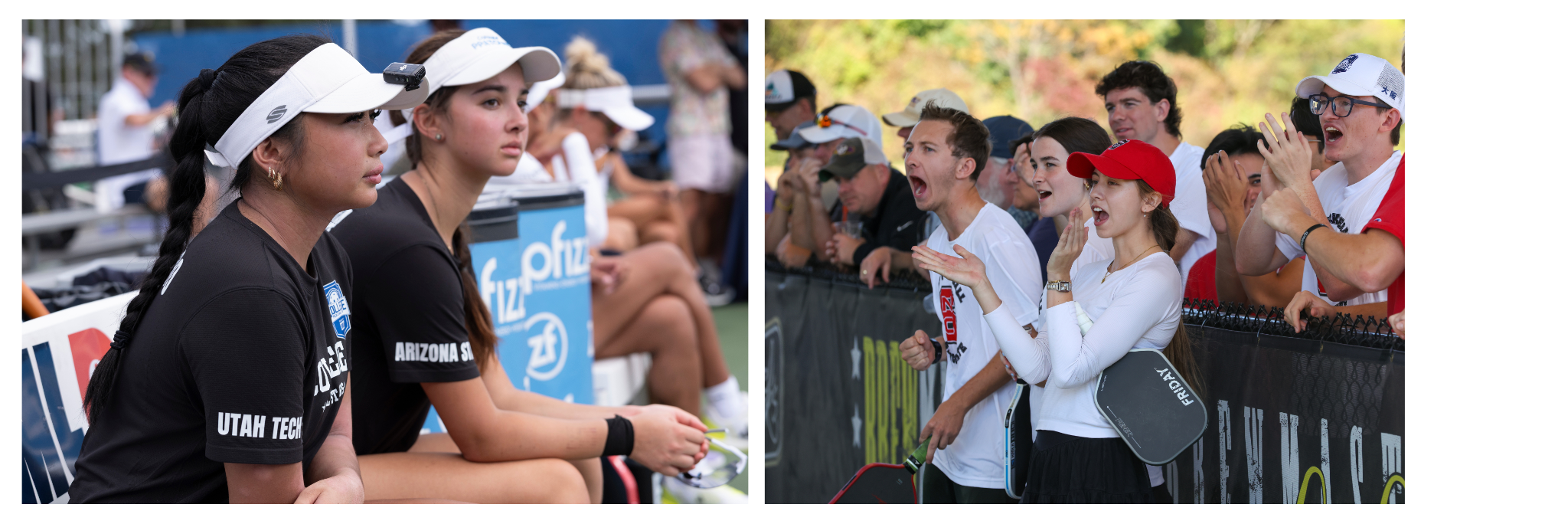
College pickleball is exactly what it sounds like: pickleball played between college clubs, with its own governing body, its own season, and its own path to the pros. If you've never watched a match or you're wondering how it's different from picking up a paddle with friends on a Saturday, here's what you need to know about how it's played, who runs it, and how fast it's grown.
How does a college pickleball match work?
Every college pickleball match is played first to three game wins, with up to five games total, in this set order:
- Women's Doubles
- Men's Doubles
- Mixed Doubles 1
- Mixed Doubles 2
- Dreambreaker
Each school brings a roster of two female and two male players, which makes college pickleball the only coed college sport in competition today! Every individual game is played to 21 points using rally scoring, meaning a point is scored on every rally no matter who served it.
What is the Dreambreaker?
The Dreambreaker is a singles game, and it's often the one that decides the match. Every player on the roster gets a turn on the court, rotating in every four points, and the score doesn't reset when the next player steps in. Whoever's on the court picks up where their teammate left off.
That rotation keeps the pressure on the whole Dreambreaker, and gives every single player on the roster a moment that can swing the outcome.
Who runs college pickleball?
Starting in 2025, the College Pickleball Tour became a partnership run by both DUPR and the UPA. Through this collaboration, the CPT has been able to establish itself as a path to pro with the top college teams playing in the MLP Mid-Season Tournament each year. The combined pickleball experience from both companies further elevates the competition at each event.
DUPR serves as the tour's official rating and data platform. Every match result feeds into a player's DUPR rating, and DUPR's algorithm is built specifically to account for rally scoring, so ratings stay accurate at every level of college play.

How big has college pickleball gotten?
College pickleball started as a single bracket. In 2022, DUPR invited the country's most active college clubs to the first College National Championship, and 16 programs showed up in Dripping Springs, Texas.
Since then, the CPT has run more than 90 events and seen over 10,000 college players compete, with a Power Rankings and Points Leaderboard tracking every team across the season.
How to get involved in college pickleball
If your school already has a club, you can represent your school under CPT eligibility rules, which cover things like credit hours and a five-season eligibility clock. Review the eligibility rules before your first event.
If your school doesn't have a club yet, here's how to start a pickleball club at your college. Once you're playing, follow team standings and results on the College Pickleball Tour hub!
The bottom line
College pickleball has grown from one weekend in Texas into a nationwide tour with thousands of competitors, and DUPR ratings are what keep every match, from a Tuesday dual match to The Nationals, tied to the same standard. Ready to see where you fit in? Sign up for DUPR and start tracking your rating today.
College
September 10, 2026
Doubles vs. Singles Pickleball Rankings: How Do They Compare?
While the court size, paddles, and general rules remain consistent, the specific demands of doubles versus singles pickleball are dramatically different. This is why your singles pickleball ranking and doubles pickleball ranking may differ significantly.
Understanding the differences between singles and doubles rankings can help players evaluate their performance, find competitive matches, and determine which aspects of their game they want to develop further.
What Are Pickleball Rankings?
Pickleball rankings are used to compare players based on their skill levels and competitive performance.
Using DUPR (Dynamic Universal Pickleball Rating), player ratings are generated based on actual match results. Players who do not yet have a rating are listed as NR, or Not Rated, before establishing a rating through recorded match play.
DUPR ratings range from 2.000 to 8.000 and update as players compete and submit additional results.
Because singles and doubles require different playing styles and skills, DUPR maintains separate ratings for each format rather than using one rating across both.
Singles Pickleball Rankings
Singles pickleball consists of one player on each side of the court.
Without a partner to provide additional court coverage, singles players must manage the entire court themselves. Because of this, singles play often places greater emphasis on:
- Court coverage and speed
- Serve and return consistency
- Passing shots
- Precise shot placement
- Endurance
- Transitioning to the net
- One-on-one strategy
A skilled doubles player's abilities may not translate directly into an equally high singles rating. For example, a player who excels at quick exchanges and coordinated doubles play may need to adapt their game to handle the increased court coverage required in singles.
Doubles Pickleball Rankings
Doubles pickleball consists of two players on each side of the court.
Because players share court coverage with a partner, doubles introduces additional strategic elements beyond individual movement. These can include:
- Communication with a partner
- Positioning along the kitchen line
- Dinking
- Resets
- Third-shot strategy
- Coordinated defensive play
- Managing the middle of the court
Unlike singles, where individual court coverage plays a larger role, doubles players must consider how their decisions affect both their partner and the opposing team.
Why Would Singles and Doubles Ratings Be Different?
A player may have a higher rating in one format because singles and doubles challenge different components of a player's game.
A player with strong speed, groundstrokes, endurance, and court coverage may excel in singles. On the other hand, a player with quick hands, precise dinking, strong resets, positioning, and effective partner communication may be particularly successful in doubles.
This difference does not suggest that one format is superior to the other. Instead, it demonstrates how each player's skills translate differently across the two formats.
To account for these differences, DUPR maintains separate ratings for singles and doubles.
How Are DUPR Ratings Generated?
Rather than relying on self-assessment, DUPR ratings are based on recorded match performance.
Several factors can influence how a rating changes:
- Match performance: How a player or team performs compared with the expected outcome of the match
- Match type: Verified club, league, and tournament matches can carry greater weight than self-posted recreational matches
- Match volume: More recorded matches can help create a more established and reliable rating
- Match recency: Recent results help ensure a player's rating reflects their current level of play
You can learn more about these factors in DUPR's guide to how the DUPR rating system works.
Players can also view their DUPR Reliability Score, which provides insight into how much relevant match data supports their current rating.
Improving Performance to Increase Your Singles or Doubles Rating
Improving your DUPR rating requires improving your competitive performance and consistently recording match results over time.
For singles, players may want to focus on movement, endurance, serves, returns, and controlling open court space.
For doubles, players can focus on communication, positioning, resets, dinking, and developing coordinated strategies with different partners.
Regularly competing and recording your results also gives DUPR more information about your current skill level, helping create a more reliable picture of your performance.
Which Ranking Should You Use for Singles vs. Doubles?
Both ratings can provide valuable information if you regularly participate in singles and doubles.
Your singles rating represents how you perform while covering the court independently. Your doubles rating reflects how effectively you compete as part of a team.
When considered together, both ratings can provide a more complete understanding of your pickleball game.
Whether you enjoy the fast pace of singles rallies or the strategic nature of doubles competition, tracking your results can help you measure your progress, find appropriately matched opponents, and continue developing as a player.
Ready to see where you stand? Review your DUPR profile, learn more about pickleball ratings, and start recording your matches today.
Pickleball Rules
September 10, 2026
Team USA Earns Two Silver Medals in Thailand
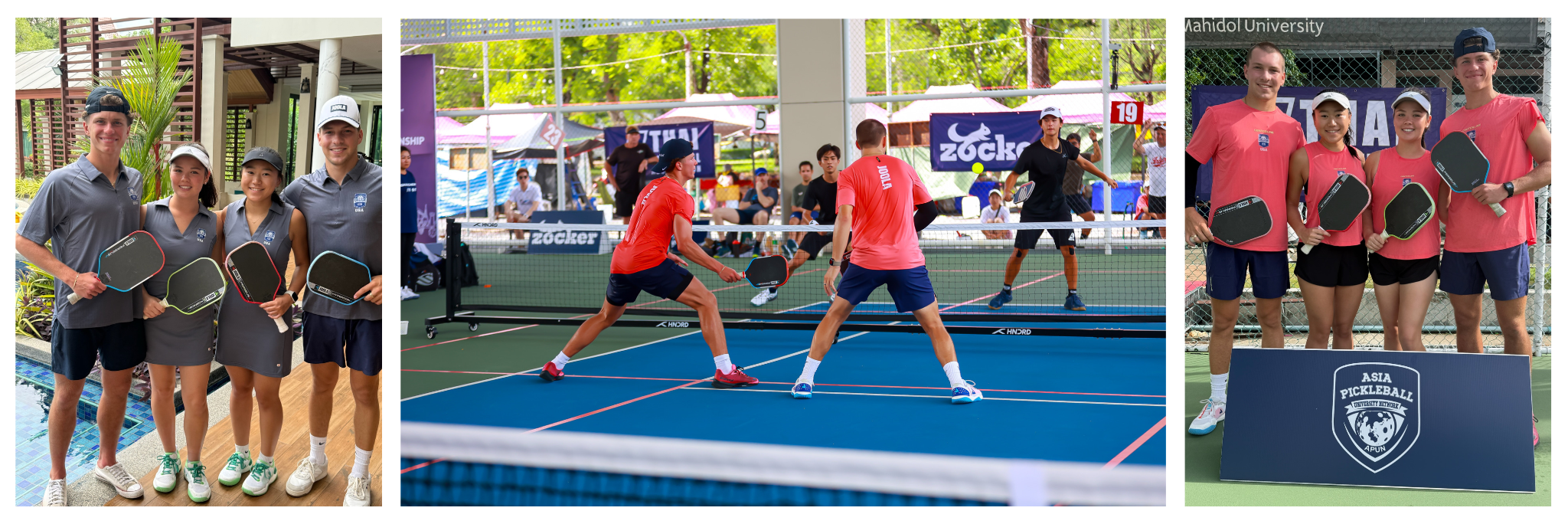
Four college standouts represented Team USA college pickleball this fall, traveling to Thailand for the Asia Pickleball University Championship, a qualifier for the 2026 College World Championship. JOOLA sponsored the full roster: Katie Murphy (Harvard), Keena Cheng (Wisconsin), Carter Maris (Indiana), and Charles Anderson (Miami University).
Team bracket: India claims gold
Seven countries sent teams to compete for the team title: Thailand, India, Japan, Chinese Taipei, the Philippines, Vietnam, and the United States. Team India took gold, beating Team Japan in the final.
The result wasn't a huge surprise. India finished as runner-up at the 2025 College World Championship, falling in that final.
Team USA went 2-0 in group play before losing to Team Japan in the semifinals. India, Japan, and Chinese Taipei all locked in bids to the 2026 College World Championship with their finishes here. After a gold medal run like that, expect India right back in title contention next year.
Individual brackets: two silver medals for Team USA
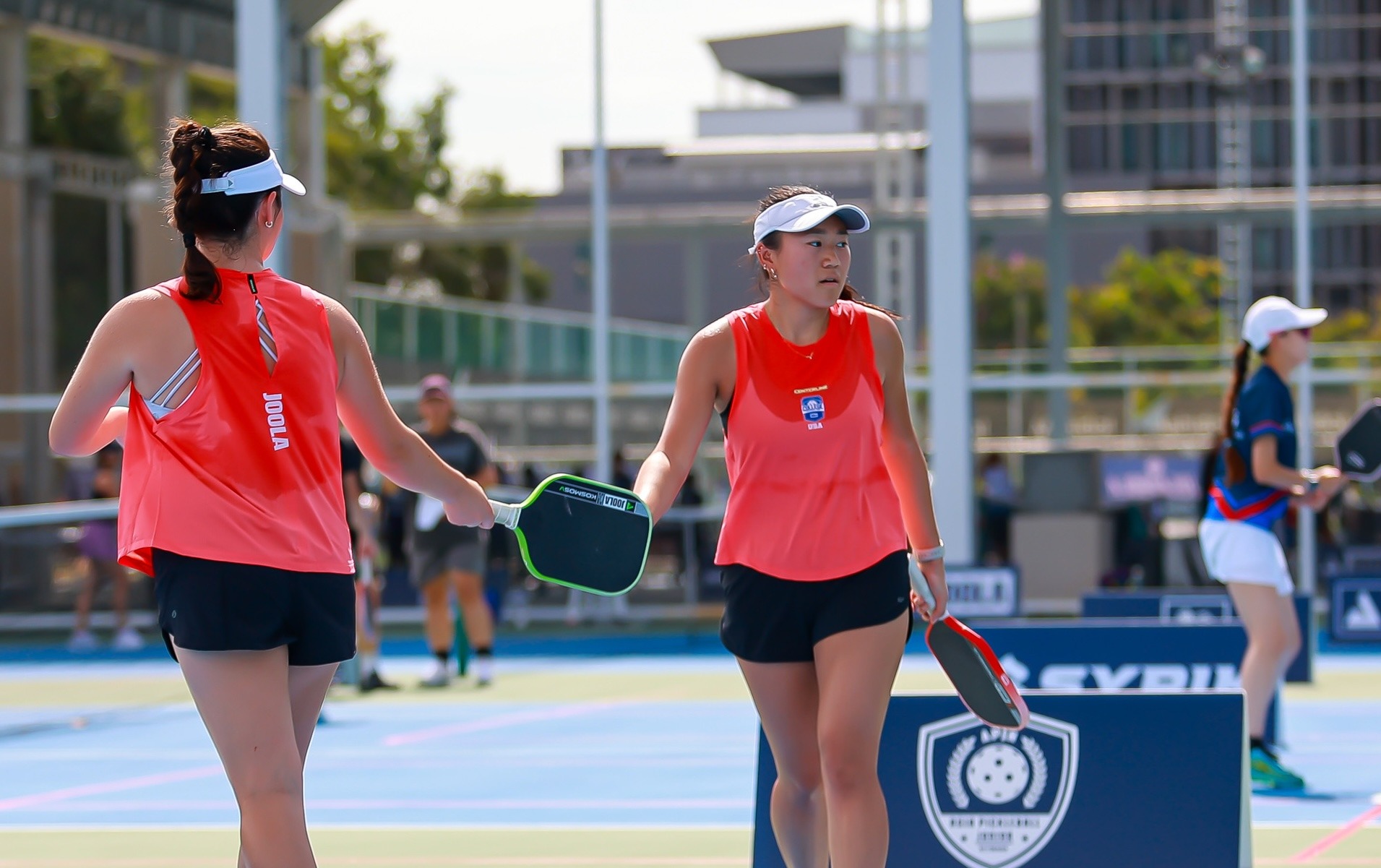
Team USA also competed in singles and doubles, and came home with hardware. In women's singles, Keena Cheng took silver, falling to Huai Shu Chen of Chinese Taipei 3-11 in the championship match.
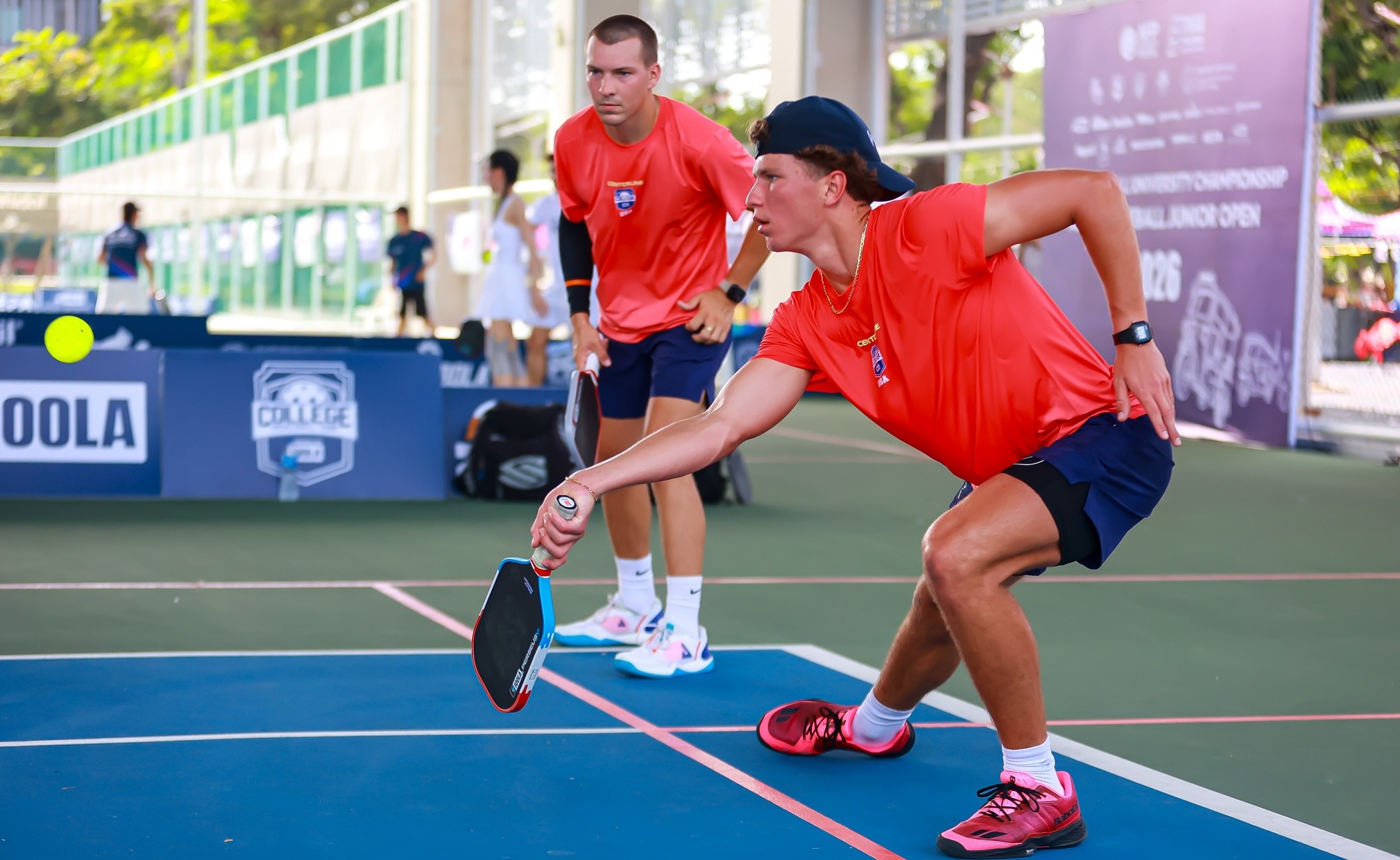
In men's doubles, Carter Maris and Charles Anderson also finished with silver, losing a tight 13-15 battle to Farreez Isqandar (Malaysia) and Mayur Narayan Patil (India). Two silver medals on the road says plenty about the level of talent coming out of the college game right now.
What it means for Team USA college pickleball
This trip is proof that college pickleball is moving fast onto the world stage. Partners like JOOLA make trips like this possible, giving players a shot to test themselves internationally before the College World Championship even starts.
Thanks to JOOLA for backing this trip. With India, Japan, and Chinese Taipei already qualified, the road to the 2026 College World Championship is heating up. Follow DUPR's college rankings to track how these teams build toward next year.
College
Pickleball Tournaments
September 8, 2026
2026 Pickleball World Cup Results: Team USA Wins Four Golds in Da Nang, Vietnam
The 2026 Pickleball World Cup wrapped in Da Nang, Vietnam with a record 64 delegations, roughly 5,000 participants, and two new Guinness World Records - capped by a sold-out crowd of more than 9,000 fans at the National Team Event final. Here's a full breakdown of the results, the numbers behind the week, and what's coming next.
2026 Pickleball World Cup by the numbers
- 64 national delegations competed - a Guinness World Record for most countries and territories represented by athletes at one host location
- ~5,000 total participants across the International Tournament and National Team Event
- 11,400+ matches played
- 69 categories, spanning amateur, junior, and pro divisions
- 97 courts across 7 venues in Da Nang
- 9,000+ fans packed the stadium for the National Team Event final
- 2 Guinness World Records set: most countries/territories represented at one location, and most valuable trophy of its kind
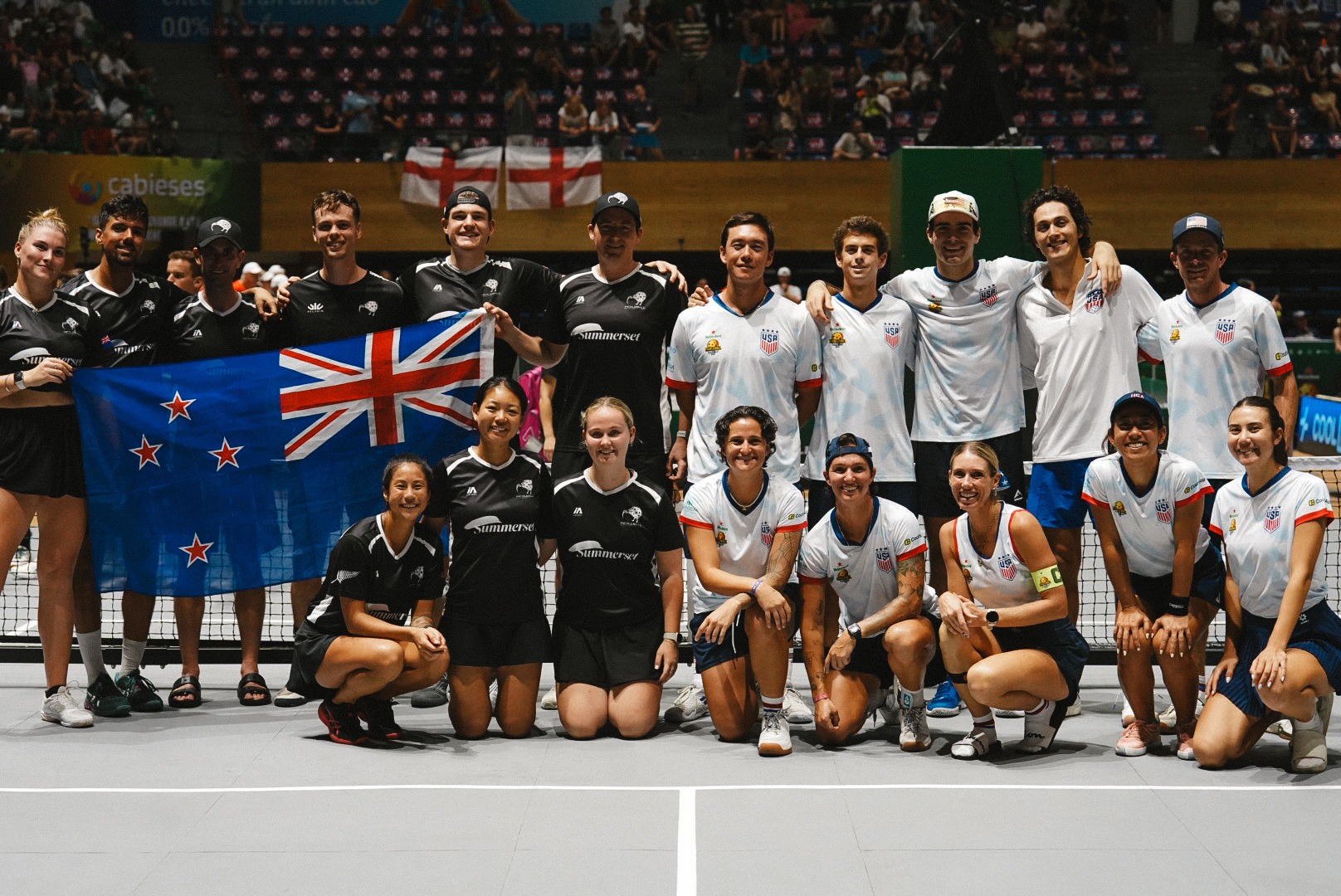
How the Pickleball World Cup has grown since 2023
The event was founded by siblings Miranda and Hercilio Cabieses of the Cabieses Foundation, who launched it in 2023 to bring national teams together in international pickleball competition.
- 2023: Lima, Peru - 14 countries
- 2024: Lima, Peru - 33 countries
- 2025: Fort Lauderdale, Florida - 60+ countries, 3,000+ participants
- 2026: Da Nang, Vietnam - 64 delegations, roughly 5,000 participants
That trajectory, from 14 countries in its first year to 64 in 2026, makes it one of the fastest-growing international events in the sport.
2026 Pickleball World Cup medal results
International Tournament (individual/amateur, junior, and pro categories) - most medals overall:
National Team Event (five divisions: Pro, Seniors 50+, Masters 60+, Juniors 18U, Juniors 14U):
- United States - gold in Pro, Juniors 18U, Juniors 14U, and Masters (four golds total, the most of any nation)
- Brazil - gold in Seniors, bronze in Juniors 18U
- Vietnam (host nation) - silver in Pro and Juniors 18U, bronze in Juniors 14U

Record-breaking crowds in Da Nang
The National Team Event final between Team USA and host nation Vietnam played out in front of a sold-out stadium of more than 9,000 fans - one of the largest crowds ever to watch a pickleball match live. The home crowd's energy for Vietnam carried through the entire week and peaked during Sunday's final.
What's next: the 2027 Pickleball World Cup
Organizers are already building toward 2027, with a new partnership with UPA-A alongside the continuing DUPR partnership. Given the jump from 14 countries in 2023 to 64 in 2026, next year's field is expected to grow further.
Track your own game before the next cycle here.
FAQ
How many countries competed in the 2026 Pickleball World Cup? 64 delegations competed, a Guinness World Record for most countries and territories represented by athletes at one host location.
Who won gold for Team USA at the 2026 Pickleball World Cup? Team USA won gold in the Pro, Juniors 18U, Juniors 14U, and Masters divisions of the National Team Event.
Where was the 2026 Pickleball World Cup held? Da Nang, Vietnam.
What records were set at the 2026 Pickleball World Cup? Two Guinness World Records: most countries and territories represented by athletes at one host location, and most valuable trophy of its kind
Data
Pickleball Tournaments
September 7, 2026
Rally for Her pickleball tournament tips off September 26
Registration is open for the Rally for Her pickleball tournament, DUPR's inaugural women's doubles event benefiting Leveling the Fields. The event takes place at The Fort in Fort Lauderdale on Saturday, September 26, pairing competitive play with a cause that puts more girls on the court.
Here's what you need to know: the schedule, the divisions, the pros in the house, and how to get involved even if you can't make it to Florida.
What is Rally for Her?
Rally for Her, hosted by Leveling the Fields, is a DUPR charity tournament built around one goal: expanding access to sports for girls in underserved communities. Leveling the Fields runs after-school programs, coaching, and resources that help girls build confidence, leadership, and teamwork through sport, and every dollar raised through registration, sponsorships, and donations goes directly to that work.
Want to know more about the org behind the mission? Visit Leveling the Fields.

Pro clinic and tournament schedule
The day kicks off with a tournament prep clinic led by pros Bobbi Oshiro, Michelle Esquivel, and Emilia Schmidt from noon to 1:30 p.m. Bracket play follows at 2:00 p.m.
Every team is guaranteed a minimum of three matches, and every team moves on to bracket playoffs no matter how the round robin shakes out. Nobody drives home after a single match.
Divisions for every level
Rally for Her is women's doubles only, with divisions built around DUPR ratings and age so there's a bracket for every player:
- Junior Girls Division (under 18): max 3.999 DUPR
- Beginners' Fun Event: max 3.499 DUPR, age 50 and above
- Beginners' Fun Event: max 3.499 DUPR, ages 10 to 99
- Skill 3.5: max 3.999 DUPR, age 50 and above
- Skill 3.5: max 3.999 DUPR, any age
- Skill 4.0: max 4.499 DUPR, age 50 and above
- Skill 4.0: max 4.499 DUPR, any age
- Skill 4.5: max 4.999 DUPR, age 50 and above
- Skill 4.5: max 4.999 DUPR, any age
- Skill 5.0: 5.0 DUPR and above, any age
Meet the pros and take on the Challenge Court
Bobbi Oshiro, Michelle Esquivel, and Emilia Schmidt headline the tournament. Beyond running the prep clinic, they'll be courtside for the Challenge Court, where any player can step up and test their game against a pro.

Swag, raffles, and sponsors
Every player leaves with a goodie bag, and raffle prizes include gift cards, pickleball gear, and lessons with the pros. The sponsor lineup includes JOOLA, Kitchen Blockers, Sqairz, Slamit, Centerline, Six Zero, PickleBar, Head, and Apple Vacations.

How to get involved
Registration is $75 per player and closes September 22, 2026, at 11:55 p.m. ET.
Can't make it to Fort Lauderdale? You can still donate to Rally for Her and help Leveling the Fields put more girls on the court, or share the tournament with someone who believes every girl deserves a shot at the game.
The bottom line
Every rally, every dollar, and every share helps more girls see themselves in this sport. Rally for Her proves that a day of pickleball can do a lot more than crown a champion. Register today or make a donation to be part of it.
Pickleball Tournaments
Community
September 6, 2026
Pickleball Ratings Guide to Tournament Seeding
When you sign up for a pickleball tournament, the process involves more than simply selecting an event and showing up to play.
Tournament organizers also need to create a fair and competitive structure for all participants. This typically means dividing players into groups or divisions with comparable skill levels and determining where each player or team should be placed within the tournament draw.
Pickleball ratings and rankings can play an important role in helping tournament organizers accomplish this.
In addition to understanding what your rating means, it is helpful to understand how that rating may influence the opponents you face throughout a tournament.
A rating such as your DUPR Rating represents your pickleball skill level based on match performance. Rankings may also play an important role in creating tournament brackets, but ratings provide tournament organizers with additional information that can help reduce major skill mismatches and place players into more appropriate divisions.
What Does a Pickleball Rating Represent?
A pickleball rating represents a player's overall skill level.
A rating can be thought of as an estimate of a player's ability based on competitive performance.
One widely used pickleball rating system is DUPR, or Dynamic Universal Pickleball Rating.
New players initially appear as NR, or Not Rated. Once players begin competing and submitting results to DUPR, their ratings can change over time based on their match performance.
Instead of relying only on self-reported skill levels, DUPR uses actual match results to continuously update a player's rating.
Several factors can influence whether a player's DUPR Rating increases or decreases, including:
- How the player performed compared with the expected outcome
- The type of match played
- The player's match history
- The amount of match data supporting the rating
As more relevant match data becomes available, the system can develop a clearer picture of a player's current skill level.
You can learn more about the process in DUPR's guide to how your DUPR Rating is calculated.
Understanding Pickleball Tournament Seeding
Tournament seeding refers to where a player or team is placed within a tournament draw.
While your rating estimates your overall skill level, your seed determines where you are positioned within the tournament structure.
For example, a player with a 4.25 DUPR Rating could receive a different seed depending on:
- The other players entered in the tournament
- The format of the event
- Available rankings
- Previous tournament results
- The seeding process used by the tournament director
Ratings are one tool tournament directors may use when organizing a draw, but they are only one part of the larger picture.
Tournament directors may consider several sources of information when building brackets, so players should always review the specific rules and seeding procedures for the event they plan to enter.
Pickleball Ratings vs. Rankings vs. Seeding
Ratings, rankings, and seeding are closely related concepts, but they do not mean the same thing.
Rating
A rating represents your overall skill level based on your match performance.
A DUPR Rating is one example of a pickleball rating.
Ranking
A ranking shows where you stand compared with other players on a leaderboard or within a specific competitive system.
Rankings can be based on factors such as:
- Tournament results
- Ranking points
- Event finishes
- Competitive performance
The exact method depends on the organization maintaining the ranking system.
Seeding
A seed identifies where you are positioned within a particular tournament draw.
Tournament organizers may use ratings, rankings, previous results, or other factors when assigning seeds.
The exact seeding process can vary significantly from one event to another.
In simple terms:
Rating = How skilled are you?
Ranking = Where do you stand compared with other players?
Seed = Where are you placed in this tournament?
How Do Ratings Help Tournament Organizers?
One of the main goals of tournament organization is to create fair and competitive matches.
Ratings can give tournament organizers additional information about the relative skill levels of the players entering an event.
Using ratings can help organizers:
- Place players into divisions that more accurately reflect their skill levels
- Reduce major differences in ability between opponents
- Create more competitive brackets
- Identify players who may be entering divisions below their demonstrated level
- Provide a more balanced experience for tournament participants
Ratings can be particularly useful in amateur tournaments, where players may not have extensive tournament histories or established rankings.
Rather than relying solely on a player's self-reported ability, tournament organizers can use match-based rating information to better understand a player's current level.
How DUPR Works With Tournament Play
DUPR is designed to evolve as players compete and submit additional match results.
Before a match, DUPR determines an expected performance based on the ratings of the players or teams involved. The actual match result is then compared with that expectation.
Players who perform better than expected may see their rating increase, while players who perform below expectations may see their rating decrease.
Tournament competition can also provide valuable match data for establishing and maintaining an accurate representation of a player's current skill level.
The more relevant competitive results included in a player's profile, the more information DUPR has available to evaluate that player's performance.
For more information, visit DUPR's How It Works guide.
How Do Doubles Ratings Work?
When competing in doubles, the ratings of both partners can help provide information about the overall strength of the team.
DUPR can use the individual ratings of both players to evaluate how one doubles team compares with another.
For example, if two partners have ratings of 3.8 and 4.0, the team has an average rating of 3.9.
That information can help illustrate how the pair compares with another doubles team.
However, the final placement of a team within a tournament bracket still depends on the tournament director's seeding process and the rules of the individual event.
Why Accurate Pickleball Ratings Matter
Two players may have similar DUPR Ratings while having very different amounts of match history supporting those ratings.
That is where the DUPR Reliability Score becomes useful.
A player's Reliability Score helps indicate how much relevant match information supports their current rating.
The DUPR Rating itself represents the player's estimated skill level, while the Reliability Score provides additional context around how much data supports that number.
The more regularly players compete and submit results, the more match history they can build.
For players planning to enter tournaments or other competitive events, developing a consistent match history before tournament day can help create a more complete picture of their current level.
You can learn more about your rating and match history through DUPR.
Can Your DUPR Rating Change During a Tournament?
Yes. Tournament results submitted to DUPR can affect a player's rating.
However, simply winning a match does not always mean that a rating will increase by the same amount each time.
DUPR considers how a player performed compared with the expected outcome.
For example, a higher-rated player who narrowly defeats a much lower-rated opponent may have performed differently from what the system expected.
Likewise, a lower-rated player who performs better than expected against a stronger opponent may demonstrate that their current rating does not fully reflect their level.
This is one reason competitive tournament results can provide useful information for a dynamic rating system.
Do Higher-Rated Players Always Receive Higher Seeds?
Not necessarily.
A higher rating does not automatically guarantee a higher seed in every tournament.
Tournament organizers may use different methods to establish seeds, including:
- Player ratings
- Rankings
- Previous tournament results
- Qualifying results
- Pool-play performance
- Event-specific seeding rules
In some tournament formats, players may even earn their seed through earlier rounds of competition.
Because each event can use a different process, players should review the tournament's rules rather than assuming their DUPR Rating will automatically determine their position in the bracket.
How to Prepare Your Rating Before a Tournament
If you plan to compete, it can be helpful to make sure your rating reflects your recent playing history.
Players can do this by competing regularly, submitting eligible match results, and playing against opponents around their skill level.
You should also make sure your DUPR profile is up to date before registering for a tournament.
If you have competed previously, some of your results may already appear within the DUPR system.
Visit DUPR to check your current rating, review your match history, and continue tracking your progress.
Pickleball Ratings Help Create Better Tournament Competition
Tournament seeding is ultimately about building an organized and competitive draw.
Ratings can help by giving tournament organizers a clearer picture of player ability.
They do not replace rankings, tournament rules, or event-specific seeding procedures. Instead, they provide another useful source of information that can help players compete at an appropriate level.
For players, understanding your rating can also make it easier to determine which divisions and competitive opportunities are right for you.
Check your DUPR Rating, continue building your match history, and review each tournament's specific seeding rules before stepping onto the court.
Pickleball Rules
Pickleball Tournaments
September 4, 2026
Serving Up Hope: How One Pickleball Club Raised $10,100 for Pediatric Cancer Research
September is National Childhood Cancer Awareness Month, and DUPR is proud to partner with the National Pediatric Cancer Foundation (NPCF) to support the fight against childhood cancer.
Pickleball brings people together, builds community, and creates opportunities to make a difference. One great example is the Redwood Pickleball Club in Sonoma County, California, where players recently came together to turn their love of the game into meaningful support for pediatric cancer research.
A Tournament With a Purpose
Last spring, Redwood Pickleball Club hosted a Pickleball Funds the Cure tournament with an ambitious goal: to bring together 120 players and raise $3,000 for the National Pediatric Cancer Foundation.
By the time the tournament wrapped up, players, volunteers, and local supporters had raised an incredible $10,100, more than tripling the club's original fundraising goal.
.png)
The Power of Community
Club volunteers and local businesses played an important role in bringing the event to life and helping the fundraiser exceed its goal.
For clubs considering hosting their own fundraiser, the Redwood Pickleball Club has three simple pieces of advice:
- Start early - Give yourself plenty of time to organize the event and build momentum.
- Engage your community - Get players, volunteers, and supporters involved from the beginning.
- Ask for support - Local businesses can be valuable partners, so don't be afraid to reach out and ask.
Read the full story and learn what made their tournament a success: https://nationalpcf.org/programs/pickleball-funds-the-cure/
Meet the Warriors Behind the Mission
Behind every tournament, fundraiser, and donation are children and families whose lives have been changed by pediatric cancer. This September, we're shining a light on some of the young warriors who inspire the National Pediatric Cancer Foundation's work every day.
Their stories are a reminder of why raising awareness, supporting research, and coming together as a community matters.
Meet Isabella
Isabella is four years old and battled hepatoblastoma.
.png)
At just 16 months old, Isabella was diagnosed with cancer after three tumors were found on her liver, the largest being 11cm.
She soon began her six cycles of treatment, which included four different types of chemotherapy. Halfway through her treatment, it was determined Isabella would need a life-saving liver transplant which she received a few months later.
One of the most meaningful moments during her cancer journey was when Isabella took her first steps after surgery. Even though she was in pain, she had a smile on her face the entire time.
Isabella is a sassy little girl who adores Peppa Pig and Spiderman.
Meet Kinsley
Kinsley is nine years old and battled retinoblastoma.
.png)
At just four years old, Kinsley was diagnosed with a rare eye cancer, retinoblastoma. Kinsley had surgery to remove her right eye and underwent six rounds of chemotherapy to combat this cancer.
Kinsley is caring and has the biggest heart. She likes to share tips she has learned throughout her journey with other children battling cancer to make their journey less scary.
Kinsley also bakes cookies to raise money for National Pediatric Cancer Foundation. To date, Kinsley’s Cookie Cart has raised over $300,000 for pediatric cancer research! When she isn’t baking, you can find her playing outside with her cows, donkey, and horses. She loves to explore the great outdoors.
Meet Mateo
Mateo is six years old and battled rhabdomyosarcoma.

His diagnosis in 2024 changed him and his family’s life completely. A planned trip to Disney switched to hospital stays, hard treatments, and many appointments. His journey to remission consisted of 40 weeks of aggressive chemotherapy and 6 weeks of radiation. Throughout everything, he showed remarkable strength, determination, and optimism. Mateo completed his treatments in early 2026, and he loves being able to live a more normal 6-year-old life.
Mateo is an energetic, caring, and creative boy. His hobbies include riding bikes, collecting action figures, and playing with his brother and dog. He has an unmistakable joy and infectious smile that fills any room he enters. His dream is to become a cowboy when he grows up. Mateo’s bravery and hopeful spirit throughout his journey reminds us why our mission is so vital.
Meet Vivian
Vivian is nine years old and battled brain cancer.

In August 2023, Vivian was diagnosed with a high-grade brain tumor. She had just graduated from kindergarten and faced a journey full of fear and uncertainty. Vivian underwent two brain surgeries to remove the tumor in her head, and an additional one to have her port put in. She was then treated with 30 rounds of radiation to her brain and spine as well as four cycles of chemotherapy. Vivian met all her challenges with strength, bravery, and a fighting spirit immediately evident to everyone she meets.
Vivian is a sweet girl who always wants to help others, especially animals. Now in remission, she is active and has fun spending time with her sisters. She is dearly loved by everyone around her.
How You Can Help
The fight against childhood cancer needs all of us. Whether you're a pickleball club, business, player, or fan, there are many ways to support the National Pediatric Cancer Foundation and help fund critical pediatric cancer research.
Here are a few ways everyone can get involved this September:
- Donate $1 for every match played in September through the DUPR September Challenge.
- Donate $43 in recognition of the 43 children who face a cancer diagnosis each day.
- Spread the word by sharing the cause with your community and on social media.
Here are a few ways pickleball facilities or business owners can get involved:
- Host or co-host a Pickleball Funds the Cure tournament at your facility.
- Sponsor a tournament in your community.
- Support Pickleball Funds the Cure at the point of sale at your business.
- Round up purchases at your business's front register.
Every match played, dollar donated, and conversation started can help make a difference.
This September, let's come together as a pickleball community to serve up hope and support a future where every child has the chance to grow up, play, and chase their dreams.
About the National Pediatric Cancer Foundation:
Since 1991, National Pediatric Cancer Foundation® (NPCF™) has been dedicated to funding clinical trials by collaborating with a network of more than 40 cutting-edge hospitals across the nation to fast-track less toxic and more targeted treatments to end childhood cancer. Since its inception, the NPCF has donated over $50 million to research and has funded over 28 project initiatives. The NPCF is a top-rated charity with a 100% score for financial transparency and responsibility and has received 4 stars for the past 14 years from Charity Navigator. To learn more about the foundation, visit NationalPCF.org.
Community
September 3, 2026
Current DUPR pickleball rankings: who's on top
Last updated: September 2026
Current DUPR pickleball rankings: who's on top
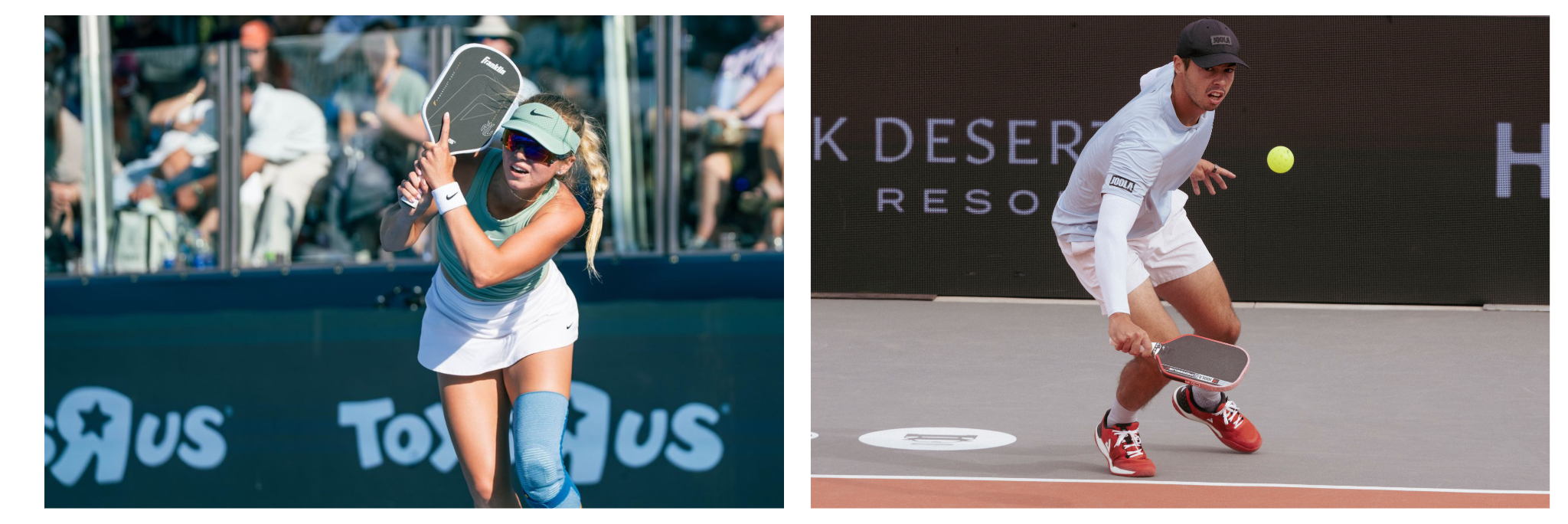
Ben Johns still holds the top spot in men's doubles, and Anna Leigh Waters leads both women's singles and women's doubles. Here's the full top 10 across all four divisions right now, plus exactly how to check these DUPR pickleball rankings yourself whenever you want the latest numbers.
Men's doubles rankings
- Ben Johns, rated 7.121
- JW Johnson, rated 7.006
- Hayden Patriquin, rated 6.943
- Gabriel Tardio, rated 6.923
- Andrei Daescu, rated 6.889
- Christian Alshon, rated 6.881
- Federico Staksrud, rated 6.708
- Riley Newman, rated 6.688
- Eric Oncins, rated 6.688
- Jay Devilliers, rated 6.616
Women's doubles rankings
- Anna Leigh Waters, rated 6.987
- Anna Bright, rated 6.598
- Hurricane Tyra Black, rated 6.306
- Jorja Johnson, rated 6.298
- Parris Todd, rated 6.273
- Sofia Sewing, rated 6.262
- Rachel Rohrabacher, rated 6.238
- Jackie Kawamoto, rated 6.231
- Tina Pisnik, rated 6.228
- Jade Kawamoto, rated 6.188
Men's singles rankings
- Christopher Haworth, rated 6.803
- Federico Staksrud, rated 6.772
- Hunter Johnson, rated 6.699
- Christian Alshon, rated 6.581
- Jack Sock, rated 6.533
- John Goins, rated 6.518
- Ammar Wazir, rated 6.517
- Roscoe Bellamy, rated 6.486
- Connor Garnett, rated 6.448
- Zane Ford, rated 6.431
Women's singles rankings
- Anna Leigh Waters, rated 6.453
- Kate Fahey, rated 6.175
- Parris Todd, rated 6.105
- Katerina Stewart, rated 6.043
- Sofia Sewing, rated 6.004
- Lea Jansen, rated 5.882
- Seone Mendez, rated 5.875
- Brooke Buckner, rated 5.874
- Kaitlyn Christian, rated 5.864
- Kiora Kunimoto, rated 5.801
How to check current DUPR pickleball rankings yourself
These rankings move every time a top player completes a verified match, so the list above is a snapshot, not a fixed leaderboard. To see the current standings at any time:
- Go to the DUPR rankings page.
- Filter by singles or doubles, and by men's or women's.
- Scroll the leaderboard to see full rankings beyond the top 10, or search for a specific player.
You can also check your own DUPR rating and see how you compare to the pros above.
Why these rankings shift so often
DUPR rankings are built directly from ratings, and ratings update after every verified match. A win against a strong opponent moves a player up. A loss, especially to someone rated lower, moves them down. That's why the pros at the top of these lists are still playing tournaments almost every week: staying on top takes continuous, high-level results, not a single big win.
The bottom line
The names at the top of DUPR pickleball rankings change with nearly every tournament, and now you know exactly where to check them yourself. Want to see how your own game stacks up? Check your DUPR rating and find your place on the board.
DUPR Athletes
Data