No matching results.
Search results
September 18, 2026
D-JOY Pickleball Tour Leg 3 recap: new champions in Saigon
Trang Huynh lost the first game 11-2. Then she won the next two against Katerina Stewart, ranked No. 3 in women's singles on DUPR, and left Saigon with her first D-JOY Pickleball Tour gold medal.
She wasn't alone. Leg 3 of the D-JOY Pickleball Tour, the Petrolimex Saigon Cup, produced three first-time champions across singles and mixed doubles. Here's how it played out, with DUPR data on the matches that decided it.
The Petrolimex Saigon Cup by the numbers
Leg 3 got underway September 10, 2026, and brought pickleball in Vietnam to a new scale. The Saigon Cup drew 457 international players from more than 20 countries, who played 1,473 matches.
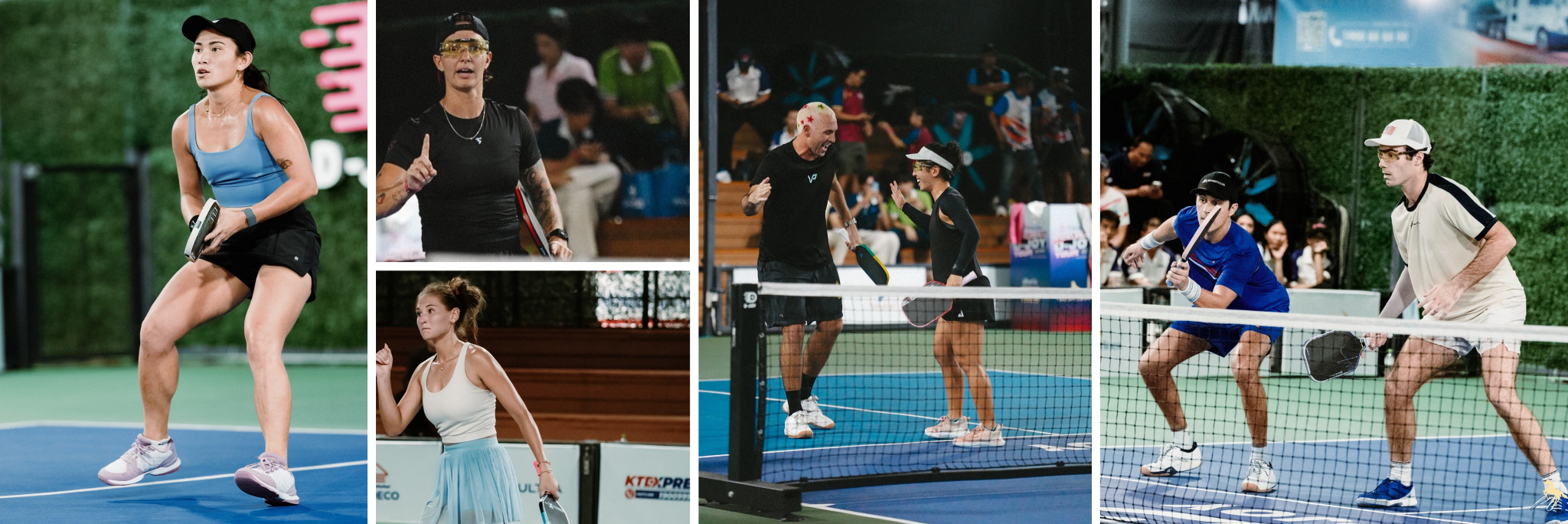
Trang Huynh wins women's singles
Huynh came in rated 5.769 and ranked No. 15 in women's singles on DUPR. In the final she faced Stewart, rated 6.064, nearly three-tenths of a point higher.
Stewart controlled the opener 11-2. Huynh answered 11-6, then closed out a tight third game 12-10. Stewart took silver, Bobbi Oshiro took bronze, and Pei Chuan Kao of Taiwan finished fourth.
Ronan Camron takes men's singles
Ronan Camron (DUPR 6.081, No. 37 in men's singles) earned his first D-JOY Tour gold by beating Drake Palm (DUPR 5.959, No. 50 in men's singles) in the final.
Camron won the first game 11-5. Palm pushed back in a long second game, taking it 17-15. Camron reset and ran away with the third, 11-3. Mikar Fisher of the UK took bronze, and Richard Livornese Jr. finished fourth.
Lane and Oshiro win mixed doubles as underdogs
Brandon Lane (DUPR 5.978, No. 100 in men's doubles) and Bobbi Oshiro (DUPR 5.965, No. 25 in women's doubles) took mixed doubles gold, and their path ran through a higher-rated team. In the semifinals they faced Jack Munro (DUPR 6.346, No. 21 in men's doubles) and Roos Van Reek (DUPR 6.105, No. 13 in women's doubles). Lane and Oshiro won in straight games, 11-5 and 12-10.
They then beat Trinh Linh Giang and Domenika Turkovic for gold. Munro and Van Reek took bronze over Max Manthou and Shelby Bates.
Men's and women's doubles results
Jack Munro and Richard Livornese Jr. won men's doubles. Max Manthou and Trinh Linh Giang took silver. Two teams shared bronze: Harsh Mehta and Quang Dương, and Nguyễn Ảnh Gia Huy and Tống Nhật Minh.
Megan Fudge and Vivian Glozman won women's doubles. Glauka Carvajal Lane and Katerina Stewart took silver, and Roos Van Reek and Shelby Bates earned bronze.
Multi-medalists in Saigon
Five players reached the podium twice at Leg 3:
- Jack Munro: Gold in men's doubles with Richard Livornese Jr., bronze in mixed doubles with Roos Van Reek
- Bobbi Oshiro: Gold in mixed doubles with Brandon Lane, bronze in women's singles
- Katerina Stewart: Silver in women's singles, silver in women's doubles with Glauka Carvajal Lane
- Trinh Linh Giang: Silver in men's doubles with Max Manthou, silver in mixed doubles with Domenika Turkovic
- Roos Van Reek: Bronze in mixed doubles with Jack Munro, bronze in women's doubles with Shelby Bates
What's next for the D-JOY Pickleball Tour
Leg 3 showed how fast the international game is growing, and how much depth sits outside the top seeds. Want to see how your own results stack up? Check your rating or find your next event on the Explore Events page.
Pickleball Tournaments
September 18, 2026
DUPR Partners with InstaCourts to Bring Ratings to Open Play
DUPR and InstaCourts Partner to Bring DUPR Ratings to Open Play in the Philippines
Integration gives recreational players a simple way to build and maintain a DUPR Rating while helping clubs create more competitive, level-based play
MANILA, Philippines - September 18, 2026 - DUPR, the world's leading pickleball rating system, today announced a partnership with InstaCourts, a digital platform that helps pickleball venues organize and manage Open Play sessions, bringing DUPR-rated play directly into InstaCourts' growing network of recreational pickleball communities in the Philippines.
The integration allows players participating in InstaCourts Open Play sessions to link their DUPR account and have eligible match results submitted directly to DUPR. This creates a simple pathway for recreational players to establish and build a reliable DUPR Rating through the games they are already playing.
Unlike traditional tournament formats, InstaCourts organizes Open Play through rotating, queue-based sessions designed to give players more opportunities to play with different partners and opponents. By connecting these sessions to DUPR, players can turn more of their everyday play into meaningful rating data.
"One of the most important things we can do for the growth of pickleball is make reliable ratings part of everyday recreational play," said Tito Machado, CEO of DUPR. "Our partnership with InstaCourts does exactly that. It gives players an easy way to build their DUPR through the games they're already playing, while giving clubs another tool to create better, more competitive experiences for their communities."
Since launching the integration, InstaCourts players have already connected their DUPR accounts and generated hundreds of DUPR-rated matches through Open Play sessions across participating venues.
"We built InstaCourts to make it easier for people to play more pickleball and for venues to create great experiences for their communities," said Ted Ian Osias, Founder of InstaCourts. "Adding DUPR gives those games another layer of value. Players can now see their progress and build a rating through regular Open Play, while venues can use ratings to create more balanced and engaging sessions."
The partnership also creates a pathway for expanding DUPR-rated recreational play beyond physical court operators. InstaCourts plans to extend the platform to club organizers who run pickleball communities, leagues and recurring sessions without owning their own facilities. This will enable a much broader group of organizers to run DUPR-rated sessions and submit match results.
As pickleball continues to expand in the Philippines and across Asia, partners such as InstaCourts are helping bring structured, level-based competition to more recreational players. DUPR's rating ecosystem is designed to give players a common language for skill level, helping them find appropriate competition and understand their progress as they play more.
The InstaCourts integration is part of DUPR's broader effort to make ratings more accessible across the global pickleball ecosystem, connecting players, clubs, coaches, leagues and technology platforms through a common rating system.
About DUPR
DUPR (Dynamic Universal Pickleball Rating) is the premier global pickleball rating system and technology platform, trusted by the world's leading clubs, tournaments, leagues, and players. DUPR's dynamic rating system unifies pickleball across age, gender, and location by analyzing match results to accurately evaluate all players across a 2.000 - 8.000 scale. DUPR is the official pickleball rating of leagues, tournaments and clubs around the world, including USA Pickleball (USAP), Global Pickleball Federation (GPF), United Pickleball Association (UPA), Professional Pickleball Association (PPA), Major League Pickleball (MLP), Pickleball.com, Life Time, The Picklr, National Team Pickleball League, National Pickleball League. It also owns and operates Minor League Pickleball and Collegiate Pickleball, two of the biggest amateur leagues in the sport. Players and operators can visit www.dupr.com to sign up and learn more.
About InstaCourts
InstaCourts is a pickleball platform based in the Philippines that helps court owners and organizers run Open Play sessions. Its queue-based matchmaking rotates players through balanced games across a session, with booking, payments and player check-in handled in one place. Players can find and join a session at play.insta-courts.com.
Partners
September 17, 2026
The Top 1% of Clips From the Other 99% of Us
For a long time, having courts was enough. There are more places to play every month, and once availability is a given, it stops being the reason anyone picks you.
What's left to compete on is the experience. And the experience no longer ends on the court - it continues on the phone, on the drive home, in the group chat that night.
The best moment of someone's week happened at your club. The only question is whether it stays trapped on the court where it happened.
What Players Actually Remember
Walk a prospective member through a club and you'll hear about the court surface, the pro shop, the locker rooms, maybe the café. That's not what sticks.
What sticks is the dink that somehow came back. The put-away they didn't think they had in them. The third-shot drop that finally landed. And underneath those moments, the people - the crew that stuck around to watch, the partner they finally clicked with, the rival they beat for the first time. Nobody falls in love with a court.
They fall in love with who they're playing with and what happened while they were there.
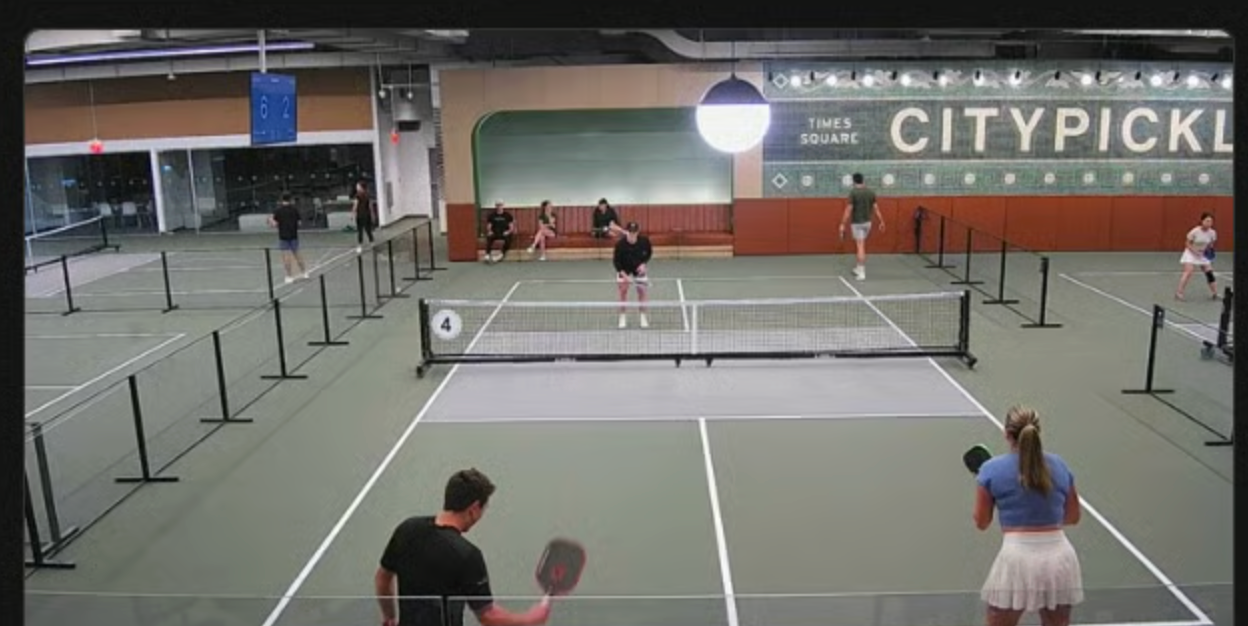
At most clubs, none of that survives the drive home. Nobody had a camera, or somebody did and the clip is sitting in a phone that will never get edited.
Content Is a Distribution Problem, Not a Camera Problem
Plenty of systems can record a rally. That part is solved, and it isn't where the value is.
The value is in everything after the game ends. Does the clip find the player automatically, or does someone have to go dig for it? Does the score post to DUPR on its own, or does it take a separate workflow? When a player taps share, does the clip actually go anywhere?
That last link is where almost everything breaks. The hard part was never the capture. It was the friction between the moment and the feed - and the fact that even a great clip from a rec court usually has nowhere to go.
We built PodPlay the other way around. The replay, the identity, the rating, the reservation, and the distribution all run through one stack. Courts running PodPlay have generated more than 2 million replays across 290+ clubs and 1.9 million players.
One Tap
Solving capture only gets you a library nobody sees. So in May we shipped Go Viral: a button on the replay.
Hit it, and the clip goes straight to PodPlay's distribution partners and to the club's own submissions dashboard. The replay link fills itself in. You add your handle and a line about what happened, and grant permission to share. No downloading, no editing, no chasing a GM for the file.

Capture the replay, tap Go Viral, you're in. That's the whole workflow, and it's the difference between recording pickleball and distributing it.
Two Series, One Idea
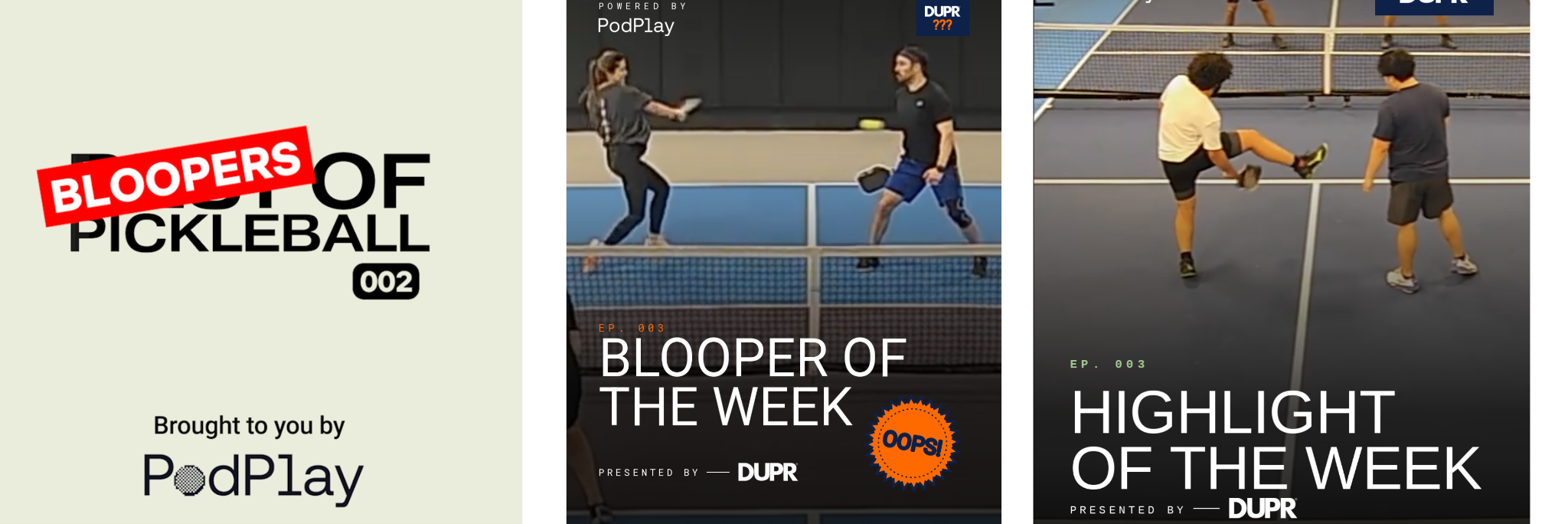
Highlight of the Week, presented by DUPR. One idea: the top 1% of plays from the other 99% of us. Highlights and ratings for everyone. Start with the Pickle Kris Kross - a rec player digs a ball out from between his own legs to set up an Erne, on purpose, and it worked. 177,000 views, none of them paid. He is not a pro. He is somebody's Tuesday-night partner.
Blooper of the Week, presented by DUPR. Same everyday players, opposite moment. In Episode 003, a player at Ascent loads up for the winner and body-bags her own partner instead. It got shared nearly 400 times.
Increasing the amount of fun(ny) being had in the world turns out to be a real strategy.
Neither series required a shoot. A rec player hit a shot, the court's replay system caught it, somebody tapped a button, and the clip had somewhere to go.
Why This Compounds
A great moment at a club gets shared. Friends who weren't there see it. Some of them come play, and make moments of their own. Those get shared too.
That's a marketing engine that runs on the fun members are already having, and it gets stronger the more the club plays. It's the same loop DUPR runs on: the more people whose play actually gets counted, the more the rating means. Highlights and ratings are two versions of the same thing - the everyday player finally getting a record of the game they played.
Courts are table stakes now. The experience is the game.
The clubs that win the next decade won't be the ones with the most courts. They'll be the ones whose players can't stop sharing what happens on them.
Hit something worth watching? Hit Go Viral.
Community
September 17, 2026
What to know before the 2026-27 college pickleball season
The 2026-27 college pickleball season starts soon, and there's a lot to catch up on first. FAU chased down a title, college players lined up against pro teams, a global bracket launched, and the rulebook got its biggest update yet. Here's everything worth knowing before the season tips off.
FAU wins The Nationals in dominant fashion
The largest college pickleball tournament in history did not faze the Owls. After semifinal losses in 2023 and 2025, FAU finally broke through at The Nationals 2026, posting a 30-1 game record across the tournament. Their only dropped game came in the finals, in Mixed Doubles 1 against Utah Tech. With most of their starters back on campus, FAU has a real shot at becoming the first college pickleball team to repeat as national champions.
College All-Stars go toe-to-toe with MLP teams
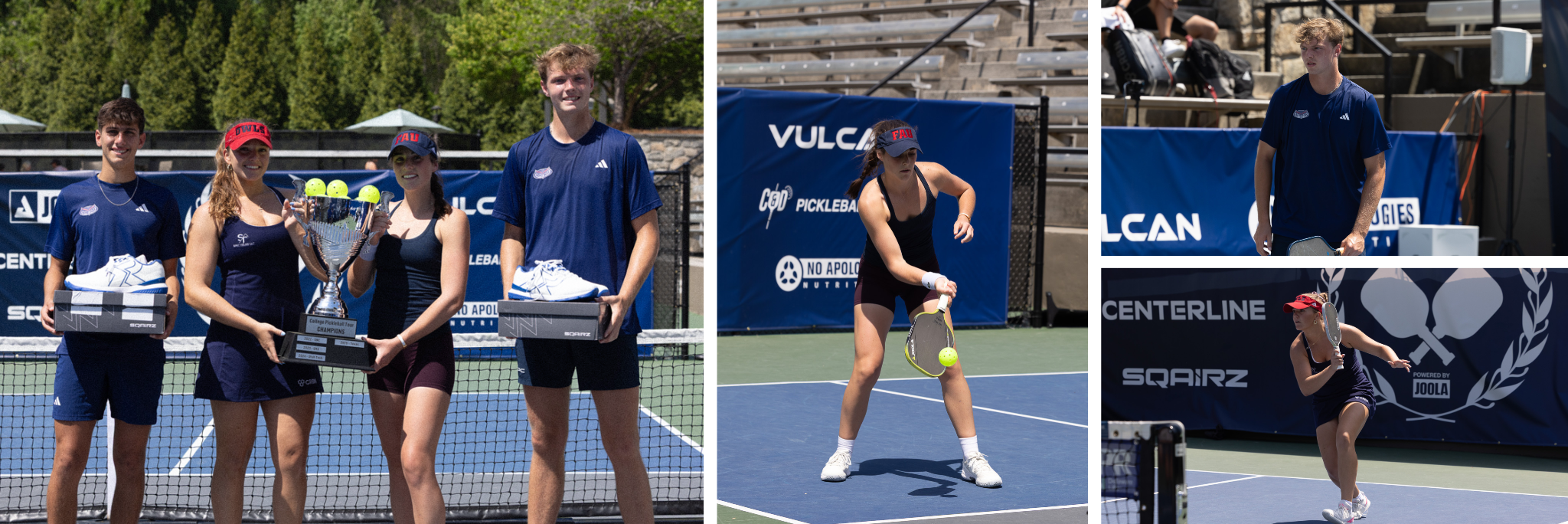
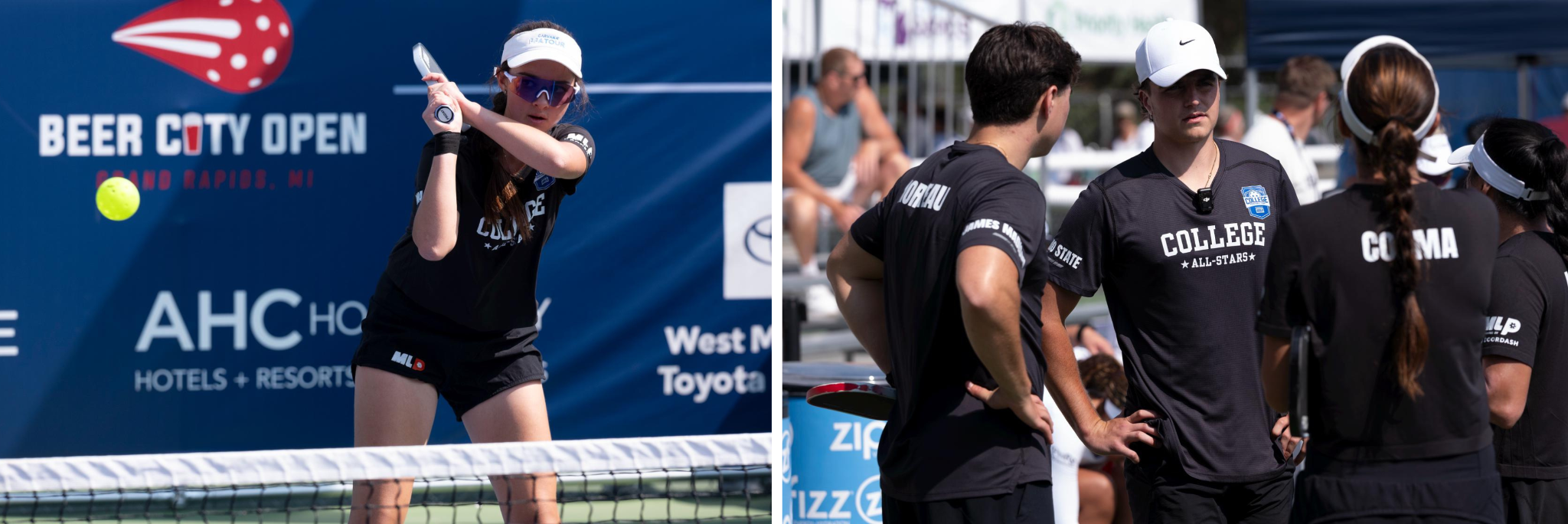
Ella Cosma, Kallan Alredge, Lauren Mercado, and Ryan Morneau carried the college banner into the double elimination bracket at July's MLP Mid-Season Tournament. The group pulled off a first-round upset, taking Men's Doubles against the Utah Black Diamonds. Cosma's ATP defense against the Black Diamonds was one of the tournament's best points. Watch it here.
Utah Tech wins the first College World Championship
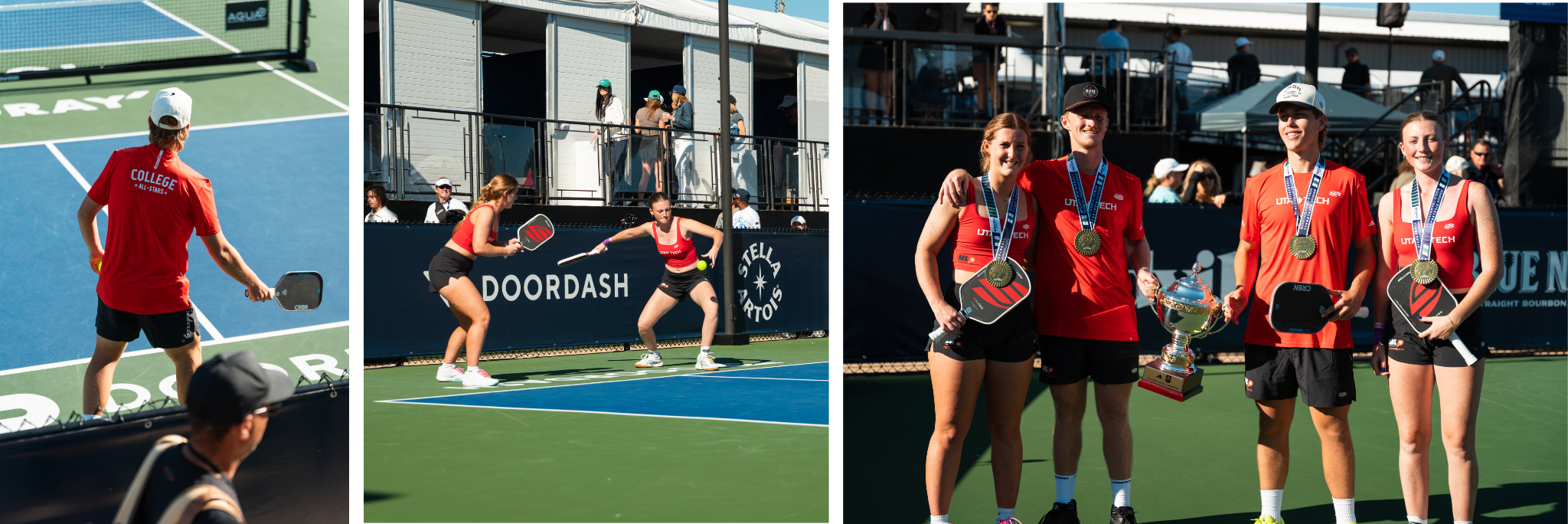
More than 200 players from around the world turned out for the first-ever College World Championship. Team India pushed through a stacked field to finish second, with Utah Tech taking the title. The three-day event ran alongside the Edward Jones MLP Cup, giving players a courtside look at professional team pickleball. College pickleball is officially a global sport now, and even more countries are expected at the 2026 College World Championship this October.
Full-time student status required for the 2026-27 college pickleball season
Five seasons in, college pickleball's eligibility rules got their biggest update yet. The headline changes:
- 12 credit hours required for undergrads, 6 for grad students
- Maximum of 5 consecutive seasons per player
- High school graduation required
See the full list of changes. The update pushes the college game closer to a true varsity model, another step toward pickleball becoming an official college sport.
That's a full year of college pickleball packed into one offseason. Between FAU's run at a repeat, a new global championship, and a rulebook built for the sport's next phase, the 2026-27 college pickleball season has plenty to live up to. Check your DUPR rating before the season starts, or find a College Pickleball Tour event near you.
College
September 16, 2026
Michelle Esquivel’s pickleball journey: from pro to mentor
Michelle Esquivel’s pickleball journey: from pro to mentor
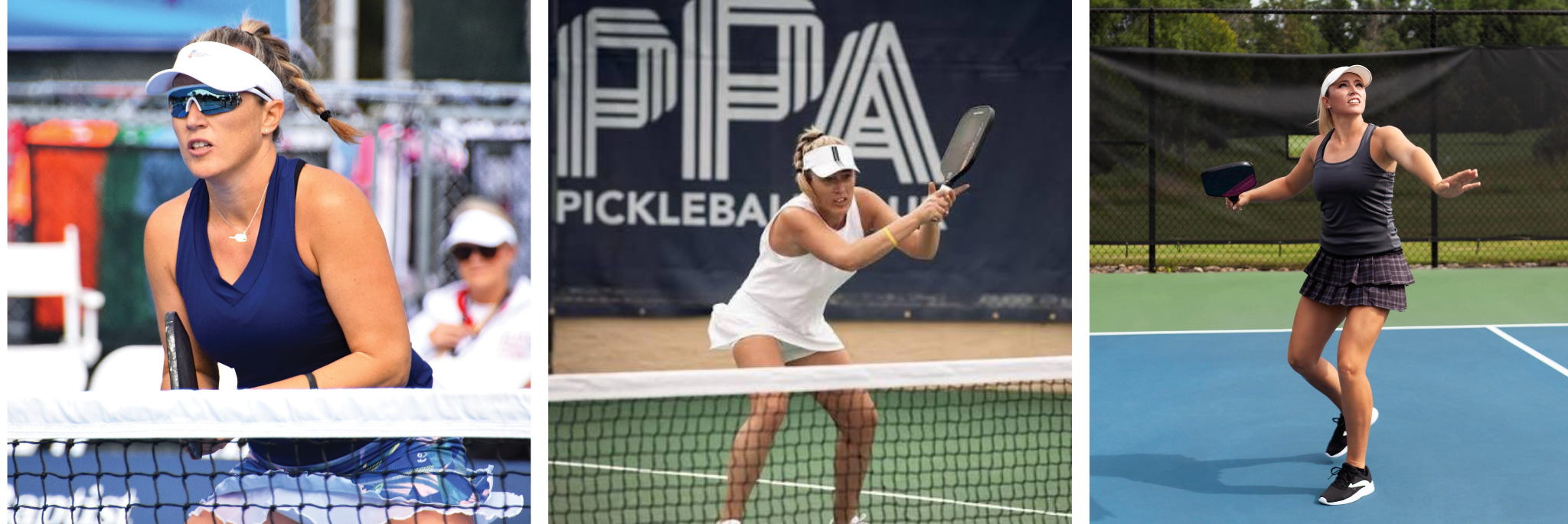
Michelle Esquivel has four PPA medals and twenty-four APP medals to her name, but ask her what she's proudest of and she won't start with the trophies. She'll start with the players she's coached who walked onto a court unsure of themselves and walked off believing they belonged there.
That's the side of Michelle Esquivel you'll meet at Rally for Her; not just a former pro, but a coach, mentor, and community builder who has spent years making sure other women get the same shot she did.
A pro career that spanned five MLP teams
Esquivel's competitive resume reads like a highlight reel of women's pickleball over the past several years:
- 4-time PPA medalist in singles and women's doubles
- 24-time APP medalist in women's singles, women's doubles, and mixed doubles
- Major League Pickleball appearances for the Florida Smash, Utah Black Diamonds, Chicago Slice, Nashville Chefs, and California Black Bears
One story stands out. Esquivel first played alongside Dani-Elle Townsend in MLP Australia on the New Zealand Hustle, before Townsend became a breakout star for the Dallas Flash. Years later, the two reunited for Esquivel's most recent pro medal, taking women's doubles at the PPA New Zealand Open in 2025.
Why women in pickleball matters to her
Ask Esquivel why she's built her second career around women's pickleball, and the answer isn't about competition.
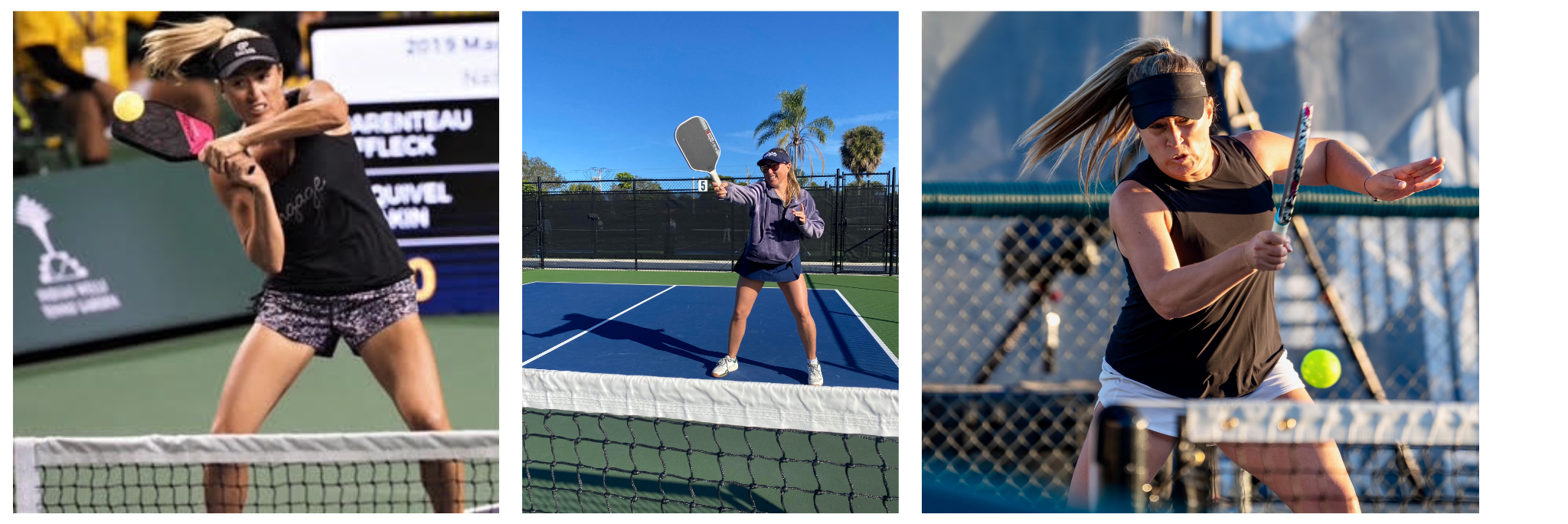
"Women's participation in pickleball is about so much more than playing a game. It's about building a community where every woman feels welcomed, valued, and empowered," she said.
She sees it play out on the court constantly: women challenging each other, encouraging each other, celebrating each other's wins. A safe space to try something new, step outside a comfort zone, and, above all, have fun. "We are stronger together," Esquivel said. "When women support women, the possibilities are endless."
Building Ultimate Pickleball Academy
In 2020, Esquivel became the first female pro to land sponsorships outside of paddle companies, signing with apparel brands Faye and Florie and Lucky In Love, both women-founded labels that matched the vision she was building for herself.
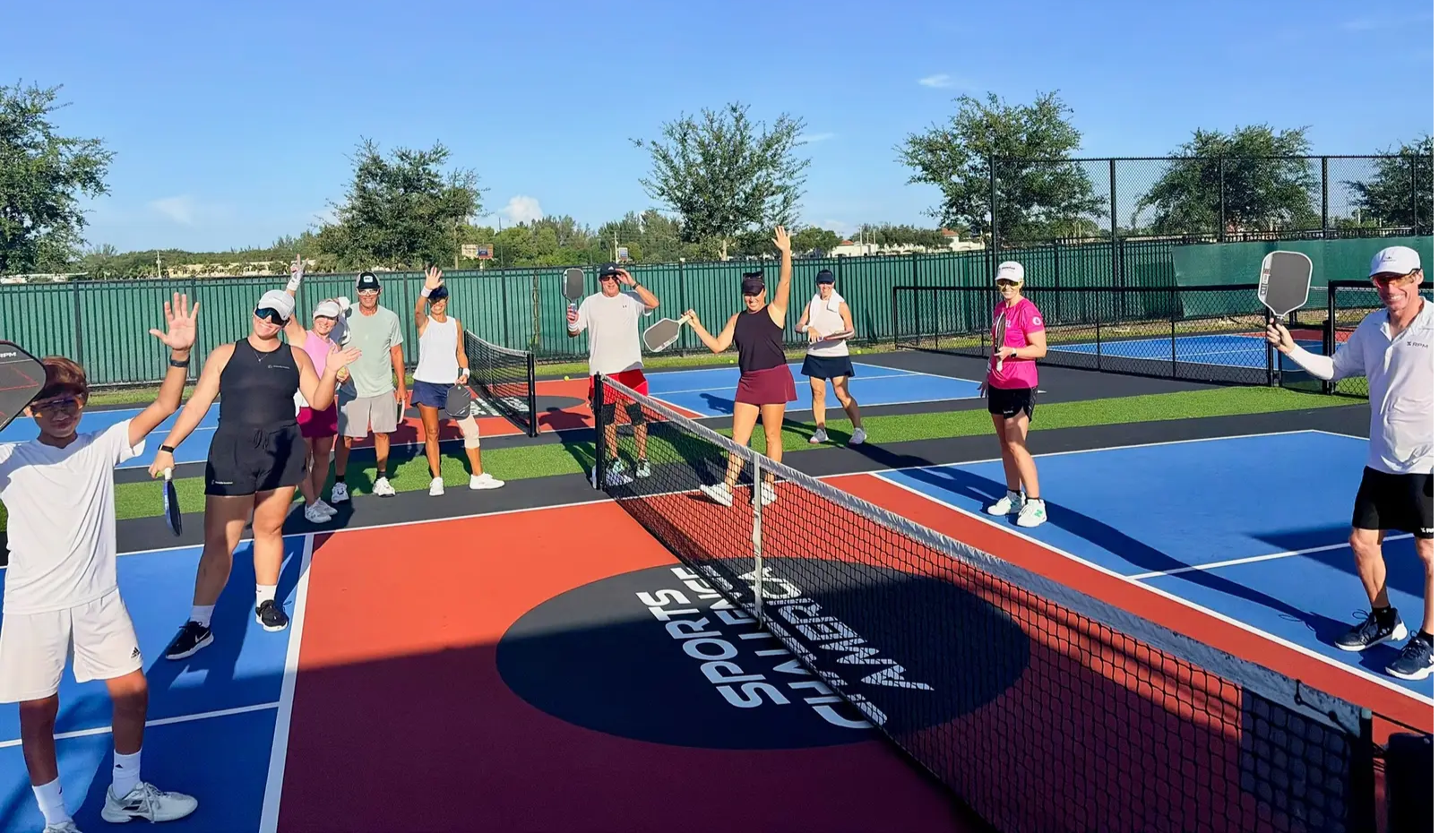
That same year, she launched Ultimate Pickleball Academy alongside a partner. Since then, the academy has run clinics in more than 20 states and taught thousands of players around the world. Ultimate Pickleball is now based in Southwest Florida, and Esquivel keeps building her community online at @pickleballwithmichelle and @ultimatepickleballacademy.
How DUPR fits into her coaching
For Esquivel, ratings aren't just numbers, they're a coaching tool.
"DUPR has been instrumental in helping players understand where they are in their development and focus on building the right skills for their level," she said. Knowing a student's DUPR rating lets her build structured, appropriately challenging lessons, and gives players a clear starting point and measurable goals.
She shares her own DUPR rating with students too. "I believe transparency and credibility matter," she said. "It gives players confidence that they're learning from someone who is committed to continually improving alongside them."
Her advice for the next generation
Esquivel's advice to a younger girl starting out in pickleball is simple: don't lose the joy chasing the results.
"Play with confidence, play with joy, and never forget to have fun," she said. Work hard, challenge yourself, and don't be afraid to make mistakes, but remember why you started. Celebrate the small wins. Every match is a chance to grow, and to inspire someone else watching from the sideline.
What she's looking forward to at Rally For Her
For Esquivel, the appeal of Rally For Her isn't the pickleball, it's the people.
"I love hearing people's stories, sharing experiences, and discovering the unique journeys that brought each of us to this amazing sport," she said. "It's not just about the game, it's about the people we meet, the stories we share, and the lives we inspire along the way."
The bottom line
Michelle Esquivel's medals tell one story. The players she's coached, mentored, and welcomed into the sport tell a bigger one. If her journey inspires you to find your own place in the pickleball community, take the next step on your own court.
Community
DUPR Athletes
September 15, 2026
2026 Pickleball World Cup Recap: USA takes gold
I've said it before and I'll say it again: the Pickleball World Cup is the Olympics of our sport. It's the World Cup of soccer for pickleball. And this year's event in Da Nang, Vietnam delivered everything you could want from a major international competition. Countries going head to head, athletes repping their home nations, fans wrapped in their flags, an atmosphere that felt bigger than the sport itself. That's what this event is becoming, and I don't think it's slowing down anytime soon.
The whole week built to an unforgettable closing celebration in front of a sold-out crowd of more than 9,000 fans. If you weren't there, I'm going to do my best to bring you into it.
How we got here
This whole thing started with a vision from siblings Miranda and Hercilio Cabieses of the Cabieses Foundation back in 2021. Their idea: bring countries together to compete against each other in pickleball. That vision became real in 2023 with the inaugural World Cup in Lima, Peru, where 14 countries showed up.
One year later, we were at 33 countries. Then in 2025, the event landed in Fort Lauderdale, Florida with more than 60 countries and 3,000-plus participants.
And now, 2026. The Heineken Pickleball World Cup just wrapped an incredible week in Da Nang, Vietnam with 64 delegations and roughly 5,000 participants competing across the National Team Event and International Tournament. As if that growth wasn't enough on its own, this year's event also set two Guinness World Records: most countries and territories represented by athletes at one host location, and most valuable trophy of its kind.
Pickleball is here to stay. I don't think anyone watching this week would argue otherwise.
Want to relive it? The Opening Ceremony is worth every minute, it's a full production capped with a live performance. See if you can spot your favorite team, country, or player.
What went down in the International Tournament
It was a long week and a lot of pickleball. The International Tournament alone featured more than 11,400 matches across 69 categories, spanning amateur, junior, and pro divisions, all played out across 97 courts and seven venues around Da Nang.
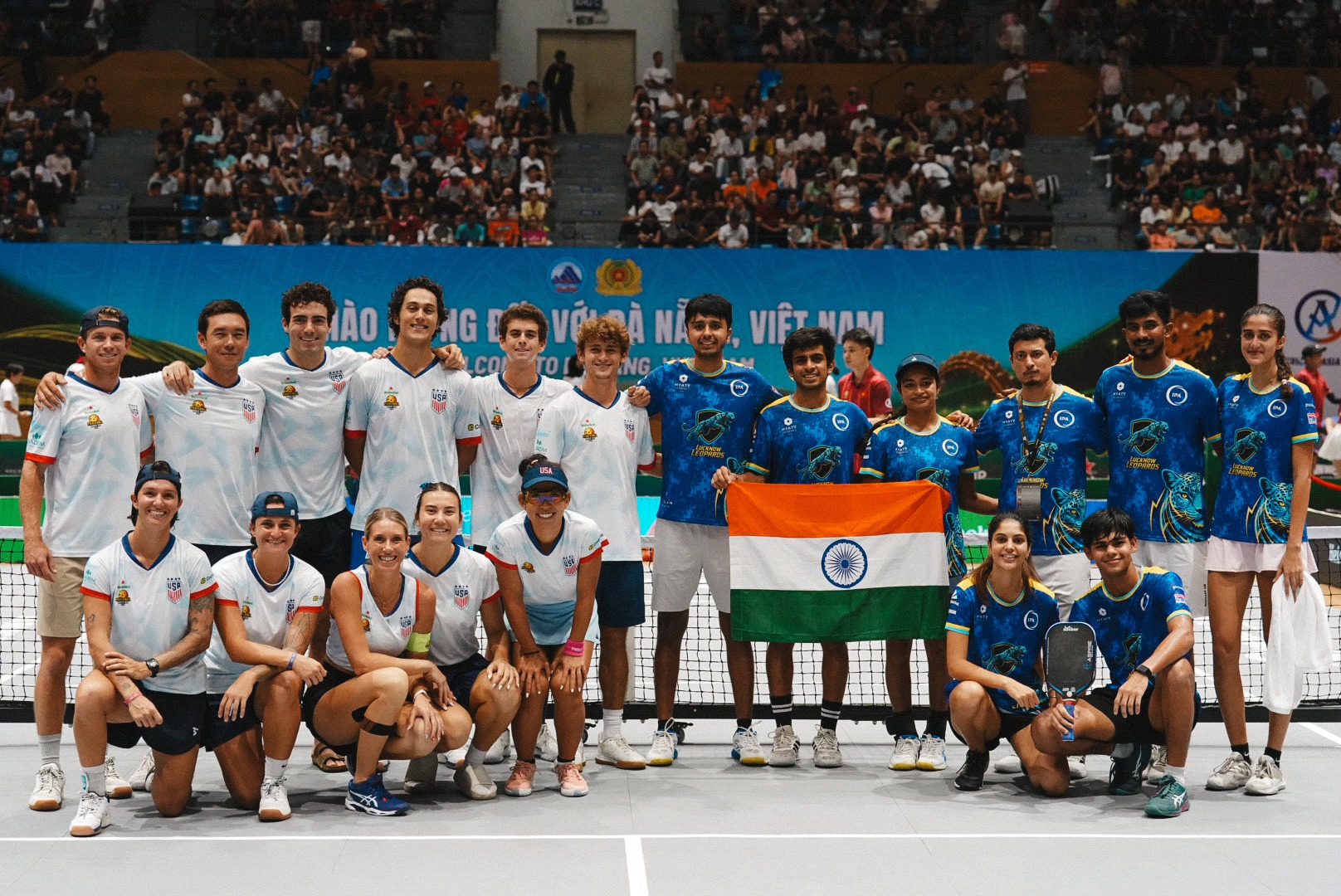
Vietnam walked away with the most medals in this bracket, with the United States close behind and India rounding out the top three.
Team USA's gold medal run
Once the individual categories wrapped, the National Team Event kicked off Thursday with pool play. All 64 delegations fought for seeding into a Round of 32 knockout bracket across five divisions: Pros, Seniors (50+), Masters (60+), Juniors 18U, and Juniors 14U.
I have to say, the international representation this year genuinely got me. Countries and territories from every corner of the globe made the trip, including the Cook Islands, Northern Mariana Islands, Belize, and plenty more. We're at a point in this sport where players can travel halfway around the world, put on their country's jersey, and compete against athletes from places they may never have heard of before. That's pretty special, and it's exactly why I love covering this event.
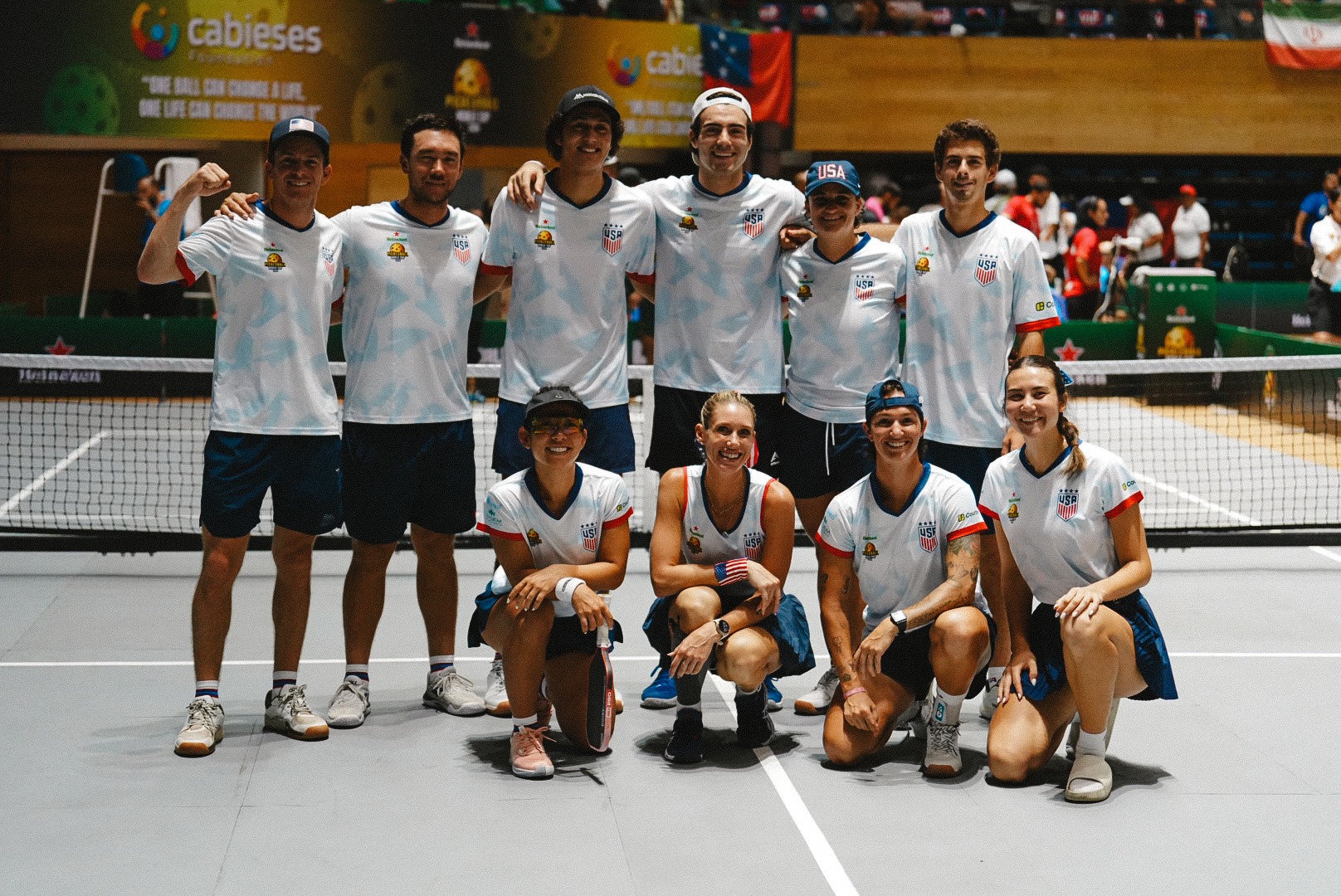
When the medals were handed out, the United States led everyone with four golds, taking Pro, Juniors 18U, Juniors 14U, and Masters. Brazil finished second with gold in Seniors and bronze in Juniors 18U. And host nation Vietnam rounded out the podium with silver in Pro and Juniors 18U, plus bronze in Juniors 14U.
The crowd stole the show
Here's the thing nobody's going to stop talking about: the fans. Spectators showed up in a massive way all week, and nobody brought more energy than the home crowd cheering on Vietnam. It was loud all tournament, but the Team Final on Sunday took it to a different level entirely.
Team USA and Vietnam played that championship match in front of a sold-out stadium of more than 9,000 people, one of the largest and loudest crowds many of these athletes have ever stepped onto a court in front of.
Don't believe me? Check out the full match HERE and see the energy from the stands for yourself.
Thank you, Vietnam, for showing up and showing out. You made this World Cup one I won't forget.
What I'm watching for in 2027
If there's one event you need on your radar next, it's the 2027 Pickleball World Cup. After the growth we just watched in 2026, the organization is already looking ahead. They've partnered with UPA-A and will keep their existing partnership with DUPR going, which means even more opportunities for players and countries to compete on this stage.
If 2026 was any indication, 2027 is going to be bigger. Follow @pickleballworldcupofficial and @duprpb so you don't miss a thing on the road there.
Pickleball Tournaments
September 14, 2026
How to Prepare for Your First Pickleball Tournament
Preparing for your first pickleball tournament will likely feel very different from preparing for a casual or social game.
Competitive play is more structured and is typically more mentally demanding than recreational play. Preparing ahead of time can help you feel more confident, stay focused, and reduce unnecessary stress on tournament day.
Some of the most important ways to prepare for your first pickleball tournament include choosing the correct division, practicing under pressure, understanding the tournament format, and preparing your equipment in advance.
1. Determine Which Division Fits Your Current Level of Play
Before registering for a tournament, make sure you understand which division is the best fit for your current skill level.
Pickleball tournaments may group players by:
- Skill level
- Pickleball rating
- Age group
- Singles or doubles
- Gender or mixed doubles
Your DUPR rating can help you understand your current competitive level and select a division that matches your abilities.
If you are unfamiliar with rating categories, review DUPR’s guide to understanding pickleball ratings.
2. Become Familiar With the Tournament Structure
Tournament formats can vary, so review the event details before you arrive.
Look for information about:
- Round robin or elimination play
- Match scoring format
- Check-in times
- Court assignments
- Pre-match warm-up procedures
- Schedule expectations
Understanding the overall tournament structure can help reduce unnecessary stress and allow you to focus more on your individual matches.
If you are still looking for an event, you can also explore DUPR’s Events platform.
3. Practice Under Pressure Before the Tournament
Tournament pressure can make shots that normally feel easy more difficult to execute.
To prepare, try to simulate match conditions during practice and focus on making your most reliable shots more consistent.
Create more competitive practice sessions by:
- Keeping score during drills
- Treating important points seriously
- Practicing common match situations
- Serving under pressure
- Returning serve consistently
- Playing through close scores
- Recovering after mistakes
- Communicating effectively with a doubles partner
The goal is not to completely change your playing style before the tournament. Instead, focus on improving the reliability of the shots and strategies you already use.
4. Know Your Pickleball Rating Before Registering
If your tournament uses rating-based divisions, verify your current DUPR rating before registering.
Knowing your rating can help you choose the appropriate level of competition and set more realistic expectations for the event.
DUPR ratings can change as players continue to compete and submit additional match results. You can learn more about how your DUPR rating is calculated.
You can also review how DUPR works to better understand how match performance may affect your rating over time.
5. Develop a Communication Strategy With Your Doubles Partner
If you are competing in doubles, communication with your partner is essential.
Before the tournament, discuss:
- Who takes balls through the middle
- Preferred sides of the court
- Serve and return strategy
- Communication during rallies
- How you will reset after mistakes
There is no need to create a complicated strategy. A few clear expectations can help your team feel more organized during high-pressure moments.
6. Pack Your Tournament Bag in Advance
Prepare your tournament bag the night before so you do not have to rush to gather everything on match day.
Consider bringing:
- Paddle
- Backup paddle
- Court shoes
- Water
- Electrolyte drinks
- Snacks
- Towel
- Extra shirts
- Sunscreen
- Hat or sunglasses
Being prepared off the court can make it easier to stay focused once competition begins.
If you are new to competitive pickleball, DUPR’s guide to getting started on your pickleball journey can also help you understand how to begin building your rating and match history.
Pickleball Tournaments
Community
September 11, 2026
Pickleball Ratings & Rankings: A Complete Guide to the Most Important Terms
If you play competitive pickleball, you have probably heard many of these terms before:
Rating. Ranking. Seed. Reliability Score. Bracket.
They all describe different parts of competitive pickleball, and understanding the difference between them can make it much easier to choose the right events, understand tournament brackets, and track your own progress.
Below is a glossary of some of the most important pickleball rating and ranking terms every player should know.
What Is DUPR?
DUPR stands for Dynamic Universal Pickleball Rating.
DUPR is a pickleball rating system that evaluates a player’s skill level based on match performance.
New players who do not yet have a rating are listed as NR, or Not Rated.
DUPR ratings range from 2.000 to 8.000 and can change as more match results are added to a player’s profile.
Pickleball Rating
A pickleball rating is a numerical estimate of your skill level.
In simple terms, it answers the question:
What level are you currently playing at?
Ratings can help players:
- Find opponents with similar skill levels
- Register for skill-based events
- Track improvement over time
- Understand where they fit within competitive play
You can learn more about what a DUPR Rating is.
Pickleball Ranking
A pickleball ranking shows where you stand compared with other players on a leaderboard or within a specific competitive system.
Unlike a rating, which estimates your skill level, a ranking shows your position relative to other players.
For example, if you are ranked No. 15, that means you currently hold the 15th position within that particular ranking system or category.
Your ranking can move up or down depending on your results, the ranking rules being used, and how other players perform.
Rating vs. Ranking
Ratings and rankings are often confused, but they describe two different things.
A rating estimates your playing ability.
A ranking shows where you stand compared with other competitors.
Think of it this way:
A 4.2 rating gives you an idea of how strong a player is.
A No. 15 ranking tells you where that player sits on a specific leaderboard.
Seed
A seed determines where a player or team is placed within a tournament bracket.
Tournament organizers may use several factors when assigning seeds, including:
- Previous tournament results
- Rankings
- Player ratings
- Qualifying results
- Event-specific seeding rules
Because of this, having a high rating does not automatically mean you will receive the No. 1 seed in every tournament you enter.
Bracket
A bracket shows how players or teams are matched and how they move through a tournament.
Depending on the tournament format, a bracket may include:
- Single elimination
- Double elimination
- Round robin
- Pool play
- Playoff rounds
Understanding your bracket helps you know who you are playing, when you are playing, and what happens after you win or lose.
Draw
The draw refers to how players or teams are arranged within a tournament.
The words “draw” and “bracket” are sometimes used interchangeably, but the draw generally refers to how participants are placed into the overall tournament structure.
Seeding can influence where players or teams appear in the draw.
Skill Division
A skill division groups players based on ability.
Common tournament divisions may include levels such as:
- 3.0
- 3.5
- 4.0
- 4.5
Tournament organizers can use ratings to help determine whether players belong in the appropriate division.
The goal is to create competitive matchups between players with reasonably similar skill levels.
NR: Not Rated
NR stands for Not Rated.
New pickleball players who do not yet have enough match data in the DUPR system may appear as NR.
As match results are added, players can begin establishing a rating.
You can learn more about getting started through DUPR’s How It Works guide.
Reliability Score
Every DUPR user has a Reliability Score alongside their rating.
The Reliability Score ranges from 1% to 100% and gives players additional context about how much match data supports their current DUPR Rating.
A higher Reliability Score generally means the rating is supported by more relevant match information.
Playing regularly and recording more matches can help build a stronger match history and increase confidence in the rating.
Expected Outcome
Before a DUPR-rated match, the system determines an expected performance based on the players’ current ratings.
Your actual performance is then compared with that expectation.
If you perform better than expected, your DUPR Rating may increase.
If you perform below expectations, your rating may decrease.
This means DUPR is not based only on whether you win or lose. How you perform relative to expectations also matters.
Read more about how DUPR Ratings are calculated.
Verified Match
A verified match is a result submitted through an approved source such as a club, league, tournament, or other recognized platform.
These results are not entered only by the players themselves.
Verified matches can provide a stronger source of competitive information and may carry more weight in the DUPR rating calculation than self-posted recreational results.
Self-Posted Match
A self-posted match is a recreational result entered by the players themselves.
These matches can still contribute to a player’s DUPR Rating.
However, verified club, league, and tournament results may have a greater influence because they come from recognized competitive sources.
Singles Rating
Singles and doubles require different skills, so players can have separate ratings for each type of play.
A singles rating reflects your performance in singles matches.
That means having a strong doubles rating does not automatically mean your singles rating will be equally high.
Doubles Rating
A doubles rating reflects your performance in doubles matches.
When DUPR evaluates a doubles matchup, it considers the ratings of the individual players to estimate how the teams compare.
As more doubles matches are played and submitted, those results contribute to your doubles rating over time.
Team Rating
A team rating represents the combined strength of two doubles partners.
In doubles, the individual ratings of both players can be used to estimate the overall strength of the team and compare it with the opposing pair.
For example, if one partner has a 3.8 rating and the other has a 4.0 rating, their average team rating would be 3.9.
Round Robin
A round robin is a tournament format in which players or teams compete against multiple opponents within the same group.
Instead of being eliminated after one loss, players continue through the scheduled matches.
At the end of the round robin, results are used to determine standings or advancement.
Pool Play
Pool play divides a larger field into smaller groups, or pools.
Players or teams compete within their pool, and the results are then used to determine who advances to the next stage of the tournament.
The next stage may be a single-elimination or double-elimination bracket.
Single Elimination
In single elimination, one loss eliminates a player or team from championship contention.
Win, and you advance.
Lose, and your run in the main bracket is over.
Double Elimination
In double elimination, players or teams generally need to lose twice before being eliminated.
After the first loss, competitors move into another part of the bracket and still have a chance to continue through the tournament.
Point Differential
Point differential compares the number of points a player or team scores with the number of points they allow.
For example, if you win 11-7, your point differential for that game is +4.
Some tournaments use point differential as part of their tiebreaking process.
Sandbagging
Sandbagging refers to entering a skill division below your actual playing level in order to gain a competitive advantage.
Objective rating systems can help tournament organizers identify large differences between a player’s demonstrated ability and the division they enter.
Using a system such as DUPR gives organizers and players another way to understand current skill level.
Leaderboard
A leaderboard lists players according to their position within a ranking system.
While a rating shows skill level, a leaderboard places competitors in order relative to one another.
Players can also explore DUPR Rankings to see how competitors are positioned across different categories.
Why Pickleball Rating and Ranking Terms Matter
Competitive pickleball becomes much easier to understand once you know what the terminology means.
Your rating tells you about your skill level.
Your ranking tells you where you stand compared with other players.
Your seed tells you where you begin in a tournament.
Your bracket shows how you progress through the event.
And your Reliability Score gives additional context around how much match data supports your DUPR Rating.
Knowing the difference between these terms can help you choose appropriate events, understand tournament structures, and track your progress more accurately.
Visit DUPR to check your rating, explore rankings, and continue tracking your competitive pickleball journey.
Pickleball Tips
Pickleball Rules
Pickleball Tournaments