
New Year, Better Pickleball: How to Set Goals for 2026 (and Actually Stick to Them)
.jpg)
A new year always brings fresh motivation. New tournaments, new leagues, new routines, and that familiar thought: “This year I will improve my DUPR rating.”
But if you’ve been playing pickleball for a while, you already know something important:
Motivation alone doesn’t last. Structure does.
Research across sports, psychology, and performance (Locke & Latham, 2002; Gollwitzer & Sheeran, 2006; Harkin et al., 2016) shows that players who define clear goals and track them the right way improve more consistently and stay motivated longer than those who rely on vibes and good intentions.
Let’s break down how to set pickleball goals for 2026 that actually work, and how to track them without burning out.
Why Goal-Setting Matters
Decades of research in performance psychology shows that specific, challenging goals outperform vague goals like “play more” or “get better.”
One of the most cited frameworks, Goal-Setting Theory (Locke & Latham, 2002), found that:
- Specific goals lead to higher performance than “do your best” goals
- Challenging but realistic goals increase focus and persistence
- Feedback and progress tracking significantly improve results
In other words, “I want to improve my pickleball game” isn’t enough.
Your brain needs clarity to stay engaged.
Use SMART Goals for Pickleball
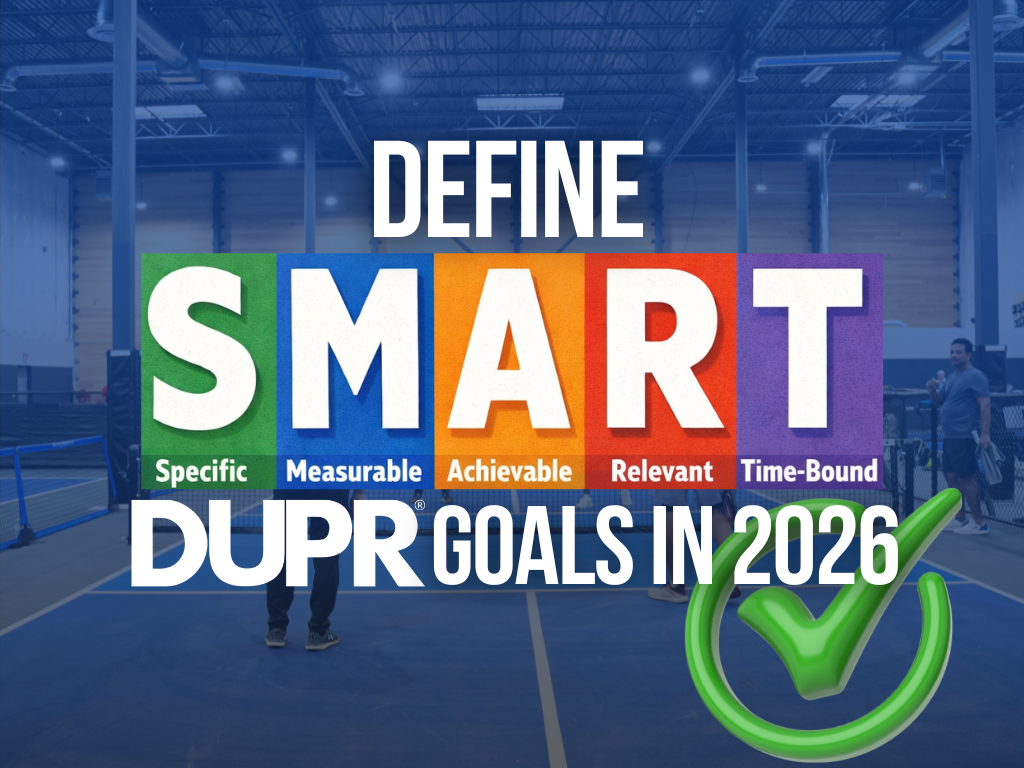
SMART goals are one of the simplest and most effective ways to turn motivation into action.
Here’s how they apply to pickleball:
S – Specific
Bad: “I want to win more games.”
Better: “I want to improve my third-shot drop consistency.”
M – Measurable
Bad: “I want to feel more confident at the kitchen.”
Better: “I want to reduce unforced errors at the kitchen during league play.”
A – Achievable
Set goals that challenge you without setting you up for frustration. If you’re a 3.5 player, “turn pro this year” probably isn’t the move.
A jump from 3.0 to 3.5 is very achievable with consistent work; going from 2.0 to 6.0 in one season is asking a bit too much.
R – Relevant
If your main goal is improving your DUPR rating, your time should reflect that:
- More tournament play
- More structured practice
- Fewer “random games with no purpose”
T – Time-bound
Goals without timelines fade fast.
Example: “By June 2026” or “by the end of the Collegiate National Championship”
Example SMART pickleball goal:
“By June 2026, I want to improve my DUPR rating by 0.25 by playing at least one DUPR Verified event per month and tracking my match results.”
The Missing Piece: How You Track Goals Matters
Tracking goals helps, but only if you do it the right way.
A large meta-analysis on goal progress monitoring (Harkin et al., 2016) found that tracking progress significantly improves goal achievement, as long as the tracking doesn’t become overwhelming or self-critical.
Here’s how to track without losing motivation:
Track Behaviors, Not Just Results
One of the biggest mistakes players make is tracking only outcomes:
- Wins and losses
- Ratings
- Medals
Those matter, but they’re not fully in your control.
Instead, track process goals, like:
- Number of matches played per month
- Practice sessions completed
- Events entered
- Specific habits (drops, resets, serve depth)
Research on self-concordant goals (Sheldon & Elliot, 1999) shows that people stay motivated longer when goals focus on actions they control, not just results.
Use Light, Consistent Check-Ins (Not Daily Pressure)
You don’t need a daily spreadsheet.
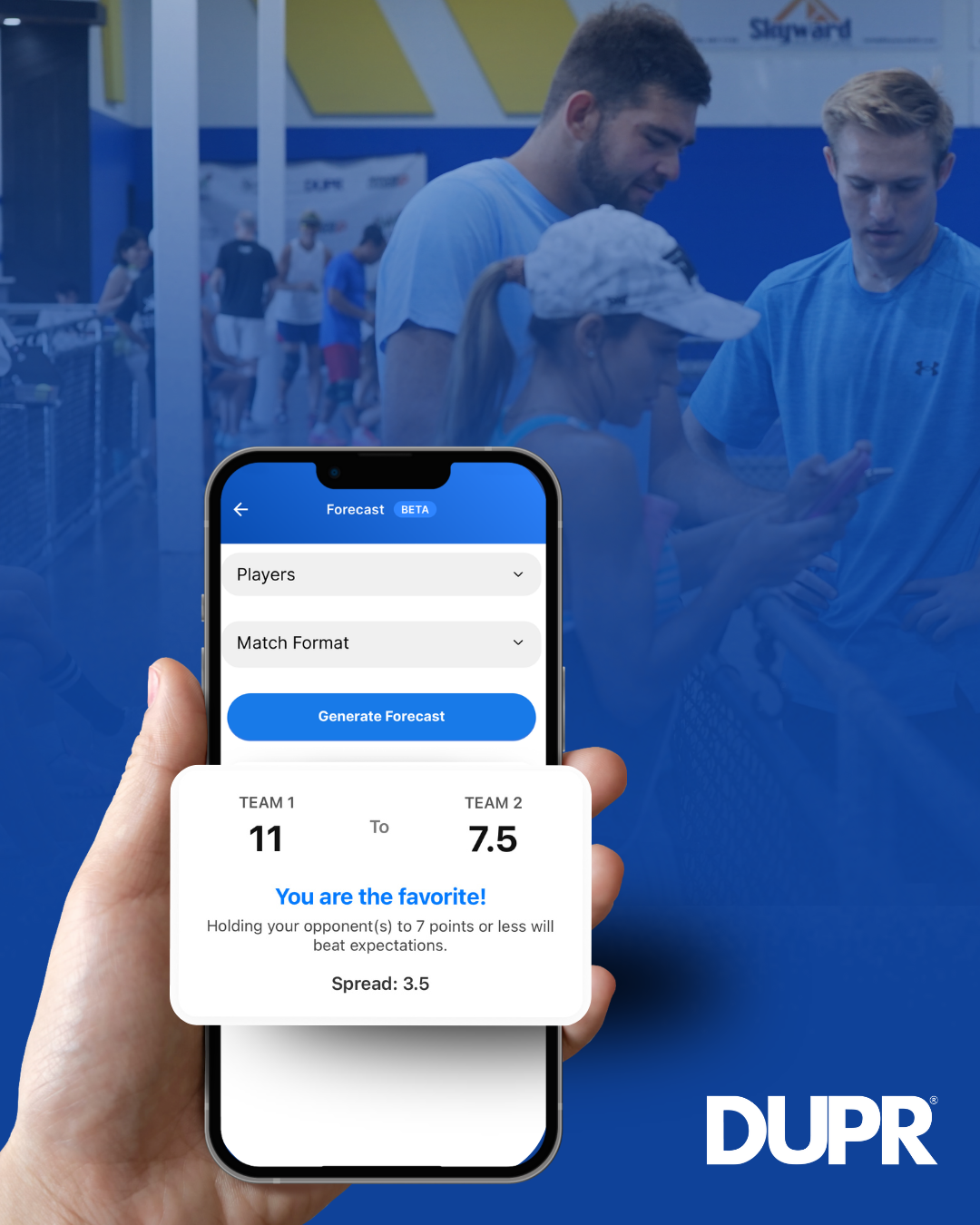
Research shows that weekly or biweekly check-ins work better than obsessive daily tracking, which often leads to burnout or avoidance. If your goal is to improve your DUPR Rating, there’s no need to check it every single day. Checking in every couple of weeks is usually enough to stay informed without getting frustrated. Trust the process.
Try this instead. Once per week, ask yourself:
- How many of my matches were logged into DUPR?
- How many practice sessions did I play?
- Did I work on my main focus area?
- What improved compared to last week?
Small, consistent reflection beats perfection every time.
Plan for Motivation Drops (Before They Happen)
Another powerful strategy comes from research on implementation intentions (Gollwitzer & Sheeran, 2006).
Instead of hoping motivation shows up, plan for when it doesn’t.
Example:
- “If I feel frustrated after a bad match, then I’ll focus on one technical takeaway instead of judging the result.”
- “If I skip a week, then I’ll schedule my next session immediately.”
Players who use “if–then” plans are far more likely to stay consistent over time.
Your 2026 Pickleball Reset
As we start 2026, here’s the simple framework to keep in mind:
- Define 1–3 SMART pickleball goals
- Track habits and reps, not just results
- Check in weekly, not obsessively
- Plan for setbacks with if–then strategies
- Focus on who you’re becoming, not just what you’re winning
Great pickleball improvement doesn’t come from one big resolution. It comes from clear goals, consistent action, and smart tracking over time.
If you do that, 2026 won’t just feel different; it’ll play different.
For more pickleball tips, check out our blogs page HERE.

OTHER TOP STORIES
Check out our other stories that may interest you
%20(1).jpg)
.jpg)
.jpg)


