
Stop the Spiral: Control Your Emotions and Play Your Best Pickleball
By Susie Reiner, PhD, Erik Korem, PhD, & Alex Auerbach, PhD
Have you ever been in total control of a match when suddenly one bad shot throws everything off? You miss an easy dink, start overthinking, and before you know it, you’ve gone from confident to completely rattled. The momentum disappears, and the game slips away, not because your skills vanished, but because your mind lost its rhythm.
If that sounds familiar, you’re not alone. This scenario plays out on pickleball courts everywhere. What separates players who bounce back quickly from those who unravel is not talent or athleticism, but how they manage their thoughts and emotions under pressure. The most consistent players don’t avoid mistakes; they’ve learned how to respond when things go wrong.
Why Good Players Lose Focus After Mistakes
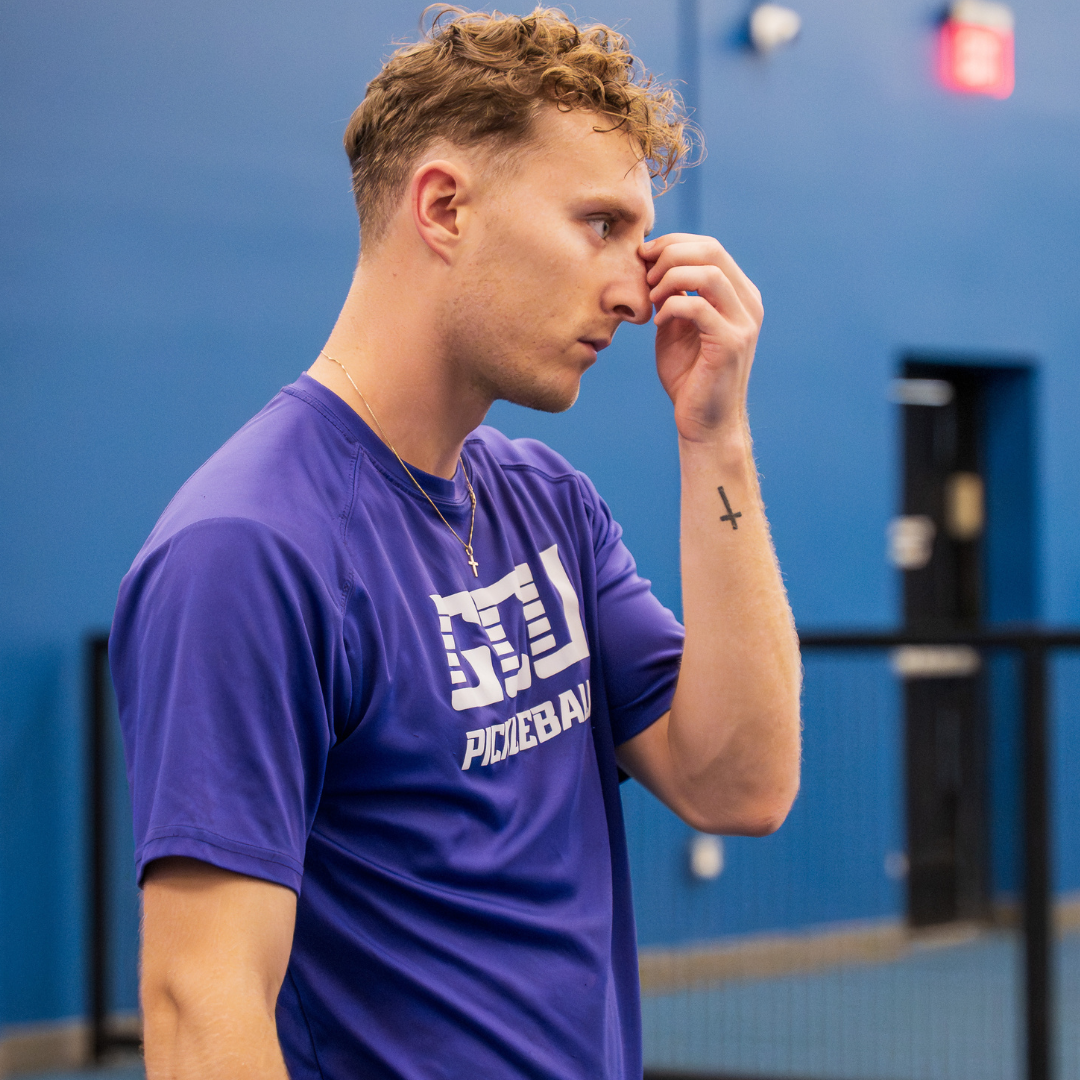
When you make a mistake in sport, your brain’s instinct is to analyze it. That instinct helps you learn over time, but during competition, it can work against you. Instead of letting the point go, your mind replays the error on a loop: How did I miss that? What was I thinking? While you’re stuck on the previous shot, your focus on the next one fades.
This pattern is known as a rumination loop. In sports psychology, rumination means getting caught in repetitive, negative thoughts about performance. When that happens, your attention divides between what already happened and what’s about to happen. That split focus weakens your ability to perform in the present moment.
A study published in Mindfulness by Josefsson and colleagues (2017) found that athletes who ruminated more had greater difficulty regulating emotions and coping under pressure, while those who trained to reduce rumination performed better in competition (1). Similarly, Roy et al. (2016) reported that elite team-sport athletes with lower rumination scores maintained steadier performance and longer competitive careers (2).
Physiologically, frustration after mistakes triggers a chain reaction in the body. Heart rate increases, breathing shortens, and muscles tense. These changes disrupt coordination and decision-making, two qualities critical to pickleball. Research shows that mental fatigue and negative self-focus reduce both technical precision and tactical accuracy in athletes under pressure (3).
When you miss a shot, your attention splinters, your body tightens, and the next point becomes harder to execute. That reaction doesn’t mean you’re weak; it simply reflects how the brain and body respond to stress. The good news is that you can train your mind to interrupt that pattern and recover faster.
The Release-Reset-Refocus Framework
Developed by sports psychologist Dr. Alex Auerbach and grounded in decades of research on performance psychology, this three-step process helps athletes break out of the mental loop, regain composure, and return to the present moment.
Step 1: Release
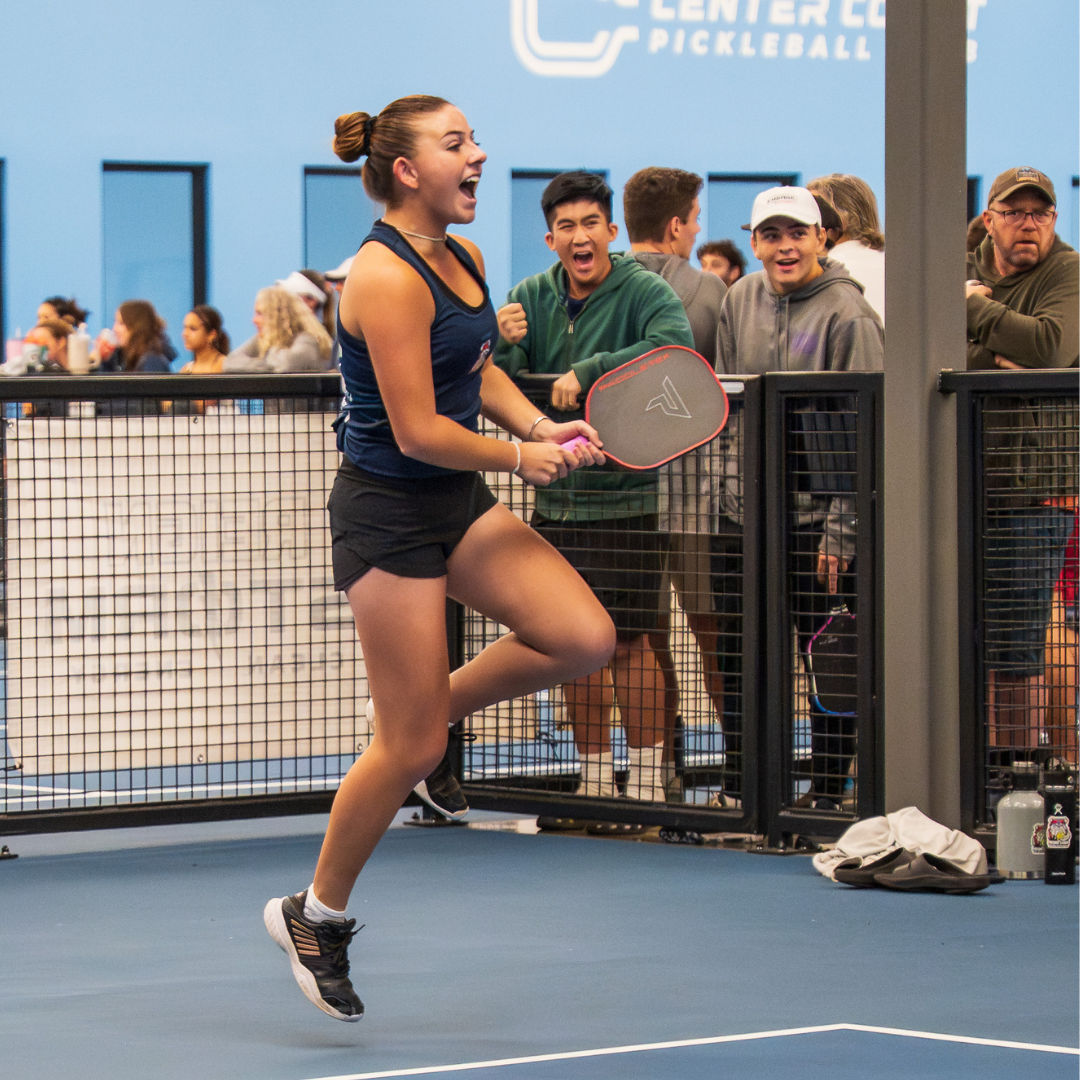
Start by consciously letting go of the mistake. Create a quick, deliberate cue that signals to your brain, “That point is finished.” You might clap your hands, tap your paddle against your thigh, or use a phrase like “Next point.”
In psychological terms, this cue acts as a circuit breaker. The physical action interrupts the mental replay, creating a separation between the past and the present. Consistency matters most. When you use the same cue each time, your brain begins to associate it with emotional reset and recovery.
Step 2: Reset
Next, bring your attention and body back to the present. This step reconnects your physical state with your mental focus.
Take a slow breath, wiggle your toes, or notice the feel of your paddle in your grip. These small sensory anchors re-establish control and calm. Research on mindfulness-based interventions shows that simple grounding actions can restore concentration and reduce performance anxiety in athletes (4).
Step 3: Refocus
Finally, focus on what’s relevant now. Ask yourself: What matters in this next moment?
That might mean checking your opponent’s position, visualizing your serve target, or focusing on a key tactical cue, such as “stay balanced” or “place it deep.” Task-focused attention, rather than self-focused thought, keeps your decision-making sharp. Studies show that athletes who maintain an external, task-oriented focus under pressure perform more consistently and avoid “choking” effects (5).
These three steps—Release, Reset, and Refocus—train you to shift quickly from a reactive state to an intentional one. You’re not ignoring the emotion, but you’re giving it a pathway so it doesn’t interfere with performance.
Using Reset-Refocus Between Every Point
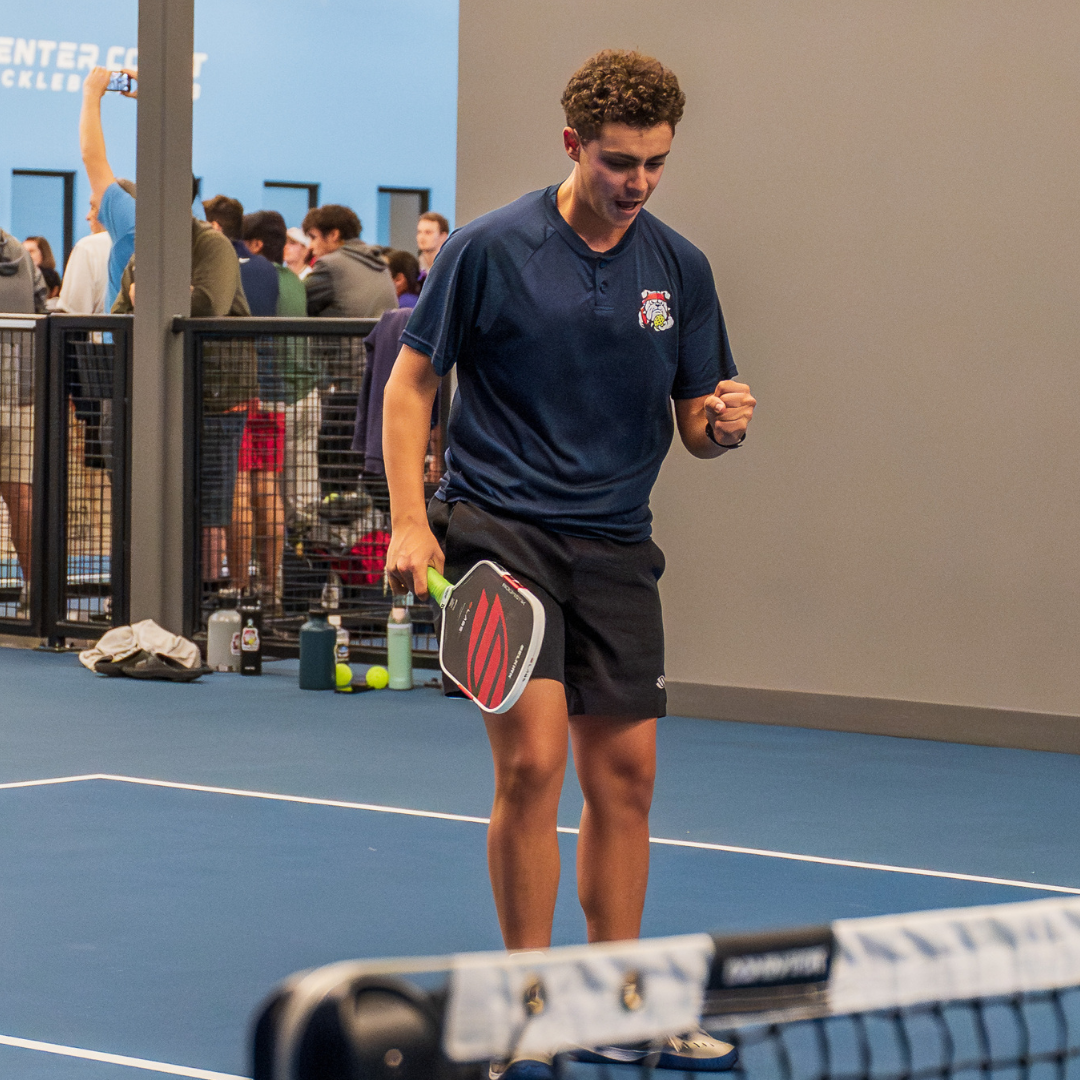
While the full Release-Reset-Refocus sequence is valuable after mistakes, you can use the Reset and Refocus steps between every point to keep your concentration sharp throughout a match.
Between points, build a quick, consistent mini-routine:
- Take a deep, controlled breath.
- Feel your paddle in your hand or tap your foot on the court to stay grounded.
- Then refocus: identify your next target, check your opponent’s stance, and remind yourself of a single tactical cue such as “play deep” or “stay aggressive.”
This between-point habit works like maintenance for your mental game. It keeps your attention tuned to the present and prevents emotional buildup from earlier points. Over time, this routine will help you stay composed even when matches get tight.
Making It Automatic
The Release-Reset-Refocus method only becomes effective when it’s practiced until automatic. If you try it for the first time during competition, it will feel unnatural. Begin using it during drills and practice matches so it becomes as routine as your warm-up.
Here’s how to make it stick:
- Integrate it into training. Each time you miss a shot in practice, use your Release cue and move directly into Reset-Refocus before the next rep.
- Keep cues consistent. Your brain thrives on repetition. Choose one cue and stick with it until it becomes second nature.
- Simulate pressure. During training, add small stakes—such as restarting a rally after an error—to mimic competitive tension. Practice recovering under these conditions.
- Reflect after matches. Note when you used your process and how quickly you regained focus. Self-awareness accelerates learning.
With consistent use, this method will become automatic. When you make a mistake, you’ll transition seamlessly into your mental reset rather than spiral into frustration.
Practical Tips for Pickleball Players
- Choose your trigger. Decide on a consistent Release action, such as a clap, a paddle tap, or a short phrase.
- Anchor your Reset. Use breath, physical awareness, or a simple grounding cue after every point.
- Direct your Refocus. Before each serve or return, remind yourself of one controllable objective.
- Practice deliberately. Rehearse the whole routine during every training session.
- Track your recovery time. Count how many points it takes to settle mentally after a mistake and work to shorten that number.
The Takeaway
Mistakes do not determine the outcome of a match. The way you respond to them does. Emotional spirals are predictable, which means they are also preventable. The Release-Reset-Refocus framework provides a structured, evidence-based approach to staying composed, recovering quickly, and performing your best under pressure.
To further strengthen your mental game, explore the AIM7 app, which offers personalized tools for focus, emotion regulation, and performance resilience. By mastering this process, you’ll turn frustration into focus and play with the calm confidence that defines great athletes.
References
- Josefsson, T., Ivarsson, A., Lindwall, M., Gustafsson, H., Stenling, A., Böröy, J., Mattsson, E., Carnebratt, J., Sevholt, S., & Falkevik, E. (2017). Mindfulness Mechanisms in Sports: Mediating Effects of Rumination and Emotion Regulation on Sport-Specific Coping. Mindfulness, 8(5), 1354–1363. https://doi.org/10.1007/s12671-017-0711-4
- Roy, M. M., Memmert, D., Frees, A., Radzevick, J., Pretz, J., & Noël, B. (2016). Rumination and Performance in Dynamic, Team Sport. Frontiers in psychology, 6, 2016. https://doi.org/10.3389/fpsyg.2015.02016
- Sabzevari, F., Samadi, H., Ayatizadeh, F., & Machado, S. (2023). Effectiveness of Mindfulness-acceptance-commitment based approach for Rumination, Cognitive Flexibility and Sports Performance of Elite Players of Beach Soccer: A Randomized Controlled Trial with 2-months Follow-up. Clinical practice and epidemiology in mental health : CP & EMH, 19, e174501792303282. https://doi.org/10.2174/17450179-v19-e230419-2022-33
- Noetel, M., Ciarrochi, J., Van Zanden, B., & Lonsdale, C. (2019). Mindfulness and acceptance approaches to sporting performance enhancement: A systematic review. International Review of Sport and Exercise Psychology, 12(1), 139-175.
- Vine SJ, Lee D, Moore LJ, Wilson MR. Quiet eye and choking: online control breaks down at the point of performance failure. Med Sci Sports Exerc. 2013 Oct;45(10):1988-94. doi: 10.1249/MSS.0b013e31829406c7. PMID: 23542893.

OTHER TOP STORIES
Check out our other stories that may interest you
.jpg)
.jpg)
%20(1).jpg)


