No matching results.
Search results
August 21, 2025
DUPR Partners with TeachMe.To to Offer Exclusive Insider Deal on Pickleball Lessons
DELRAY BEACH, Fla. and SAN DIEGO – August 21, 2025 – DUPR, the premier pickleball rating system, today announced a new benefit for its DUPR+ members: access to an exclusive insider deal on pickleball lessons through a new partnership with TeachMe.To, the leading marketplace for finding and booking in-person sports lessons, and the nation’s number one provider of pickleball lessons by volume.
This collaboration gives DUPR+ members a simple way to connect with vetted, high-quality pickleball coaches in their area—and the first lesson with TeachMe.To is free for subscribers. Whether players are looking to fine-tune their technique, develop new skills, or prepare for their next tournament, they can now book trusted local instructors with just a few clicks.
“Our mission at DUPR is to help pickleball players at every level get rated, improve and enjoy the game,” said Tito Machado, CEO at DUPR. “Partnering with TeachMe.To gives our DUPR+ community access to expert coaching that can make a real difference in their play.”
TeachMe.To offers a seamless booking experience, enabling players to find coaches by location, skill level, and availability, and read verified reviews before scheduling. TeachMe.To also connects people with local instructors in other sports as well — including tennis, golf, soccer and more. The company has over 5,000 active instructors on the platform, over 30,000 students, and has provided over 100,000 lessons to date.
The partnership reflects both companies’ commitment to growing the sport of pickleball and supporting its rapidly expanding community nationwide.
“The interest in pickleball continues to pick up momentum and there’s real demand for expert instructors that want to share their knowledge locally,“ said Nick O’Brien, Co-Founder and COO of TeachMe.To. “This partnership represents an opportunity for the DUPR community to not only access great coaching, but to also tap into their local pickleball economy and start teaching.”
About DUPR
DUPR (Dynamic Universal Pickleball Rating) is the premier global pickleball rating system and technology platform, trusted by the world's leading clubs, tournaments, leagues, and players. DUPR's dynamic rating system unifies pickleball across age, gender, and location by analyzing match results to accurately evaluate all players across a 2.000 - 8.000 scale. DUPR is the official pickleball rating of leagues, tournaments and clubs around the world, including United Pickleball Association (UPA), PPA, Major League Pickleball (MLP), Pickleball.com, Life Time, The Picklr, National Team Pickleball League, National Pickleball League. It also owns and operates Minor League Pickleball and Collegiate Pickleball, two of the biggest amateur leagues in the sport. Players and operators can visit www.dupr.com to sign up and learn more.
About TeachMe.To
Learning something new can be intimidating. That's why most of us don't start. TeachMe.To's mission is to make picking up new skills easy and accessible for everyone. We make getting started easy.
Media Contact:
Jeff Pecor
Tailwind Public Relations
206.948.1482
DUPR
Kyrill Hartog
VP Marketing & Communications
kyrill@mydupr.com
Partners
August 19, 2025
MLP Playoffs 2025: Format, Upsets & NYC Predictions
The regular season is in the books, and now it’s playoff time. This is where things get spicy: prize money, bragging rights, and egos are all on the line.
Playoffs are funny. You can grind all season, barely sneak into the bracket, and then suddenly hit your stride when it matters most.
An “almost perfect” example comes from the NBA this year. The Indiana Pacers slid into the postseason as the #4 seed in the East with a 50–32 record. Not exactly dominant, but once the playoffs hit, they caught fire, making an incredible run all the way to the Finals before falling to OKC in a tough seven-game series. That’s the beauty of playoffs: it’s not about how you start, it’s about peaking when it matters most.
How Playoffs Work
For those who don’t follow MLP as closely, here’s how the playoffs work: the top 10 Premier teams from the regular season qualify. The first-round play-in matches and quarterfinals took place in San Diego (Aug 15–17), while the semifinals and finals will go down in New York City (Aug 22–24).
The format is simple but intense:
- Play-in round: Single elimination, winner-take-all.
- Quarterfinals, semifinals, and finals: Best-of-three match series.
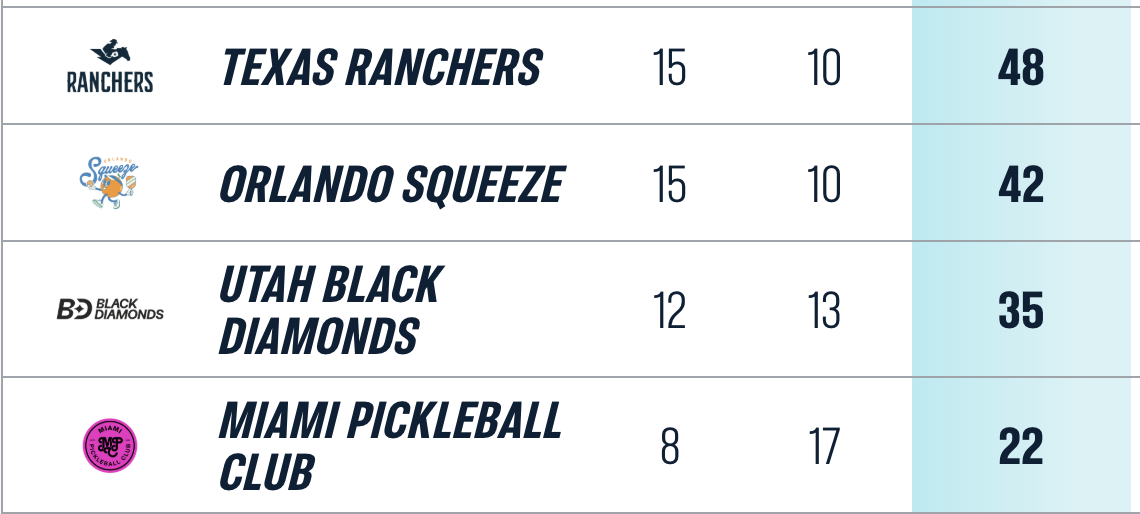
One of the coolest features of the MLP playoffs? Higher seeds get to choose their opponent. That twist always adds drama. For example, in the play-in round, the #7 seed Texas Ranchers picked the #10 seed Miami Pickleball Club, leaving the Orlando Squeeze to face off against the Utah Black Diamonds.
San Diego Quick Recap: Chaos, DreamBreakers, and Statement Wins
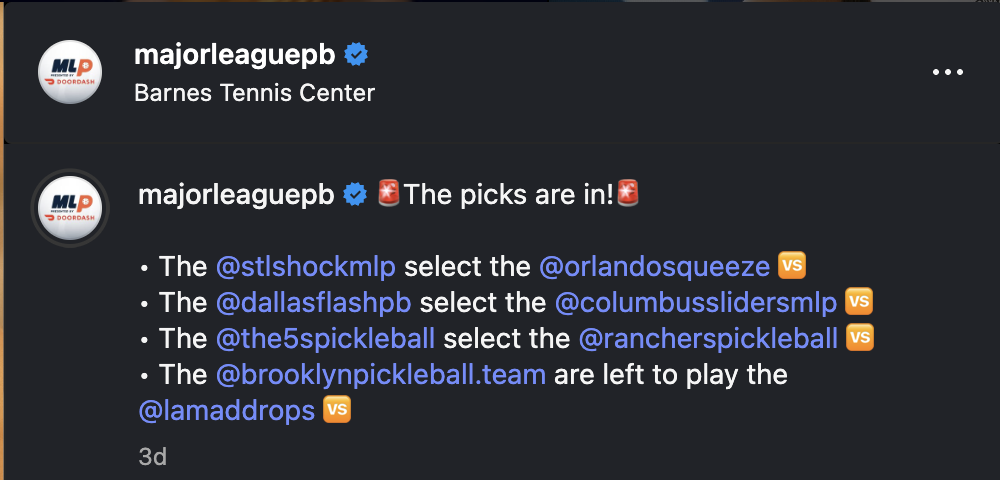
The most surprising move of the quarterfinals? Dallas Flash choosing the Columbus Sliders. Fans scratched their heads at the matchup… until it turned into one of the wildest battles of the weekend. Every single match went to a DreamBreaker, with the Sliders coming out on top and punching their ticket to NYC. The X-factor? Columbus’ men went a perfect 3–0 against JW Johnson and Augie Ge, a statement performance when it mattered most.
The rest of the quarterfinals were more straightforward. Three series ended in clean 2–0 sweeps. I honestly expected Brooklyn vs. LA Mad Drops to be tighter, but Ben Johns had the Brooklyn squad locked in, while Dekel Bar and the Mad Drops looked a step slow.
Over in Challenger, things unfolded exactly how I called it back at the start of the season: Las Vegas Night Owls vs. Nashville Chefs in the finals. After the Mari Humberg trade, D.C. Pickleball just couldn’t keep pace, and the door opened wide for Vegas and Nashville to step into the spotlight and compete for the title.
NYC Predictions: What’s Coming
Here’s how the semifinal matchups shake out in New York: St. Louis Shock vs. Columbus Sliders and The 5s vs. LA Mad Drops.
Shock vs. Sliders
It’d be a massive upset if the Sliders pull this one off. A best 2-out-of-3 is a whole different beast compared to single elimination, and the Shock are stacked from top to bottom. They hold the #1 Men’s Team Ranking, #3 Women’s, and #1 Mixed (check DUPR’s data post). Hard to bet against that. My pick: Shock cruise to the Finals.
5s vs. Mad Drops
This is where things get spicy. I see this one going the distance with multiple DreamBreakers on deck. The 5s hold the edge in women’s doubles, while the Mad Drops shine in men’s, which likely makes it 1–1 after genders. Mixed could easily split too, depending on pairings. So who takes the DreamBreaker? Both squads are strong, but I’m riding with the “on-paper underdog” LA Mad Drops.
That sets up a St. Louis Shock vs. LA Mad Drops Finals with the Shock looking for redemption after last year’s playoff collapse.
Don’t sleep on Challenger either. The finals pit the Las Vegas Night Owls vs. Nashville Chefs, and my money’s on Vegas bringing it home.
Why This Matters for You
So why should you care if you’re not playing pro pickleball? Easy: this is the same format a lot of clubs are starting to use for leagues and events. DreamBreakers, best-of-3 series, picking your opponent; it’s drama, but it’s also fun to play in.
Next time your club runs a DUPR league or team event, you’ll know the vibes:
- Expect crazy upsets.
- Expect clutch moments from players who peak under pressure.
- And remember: sometimes the underdog writes the best story.
Follow pros and keep working on your pickleball ratings!
Community
Pickleball Tournaments
August 18, 2025
16-Year-Old College Star Makes Waves at the English Open
If you’ve ever tried to juggle school, practice, and tournaments, you know how hectic life gets. Now imagine doing all of that… while being a full-time high school and college student. That’s exactly what Mary Monson is pulling off, and she just took her game all the way to the English Open.
Balancing it all out
At just 16 years old, Mary plays for Utah Tech University, works a part-time job, travels for tournaments, represents DUPR as an ambassador, and still finds time to train every single day.
“It gets really busy,” she laughed. “There’s no time to waste, so I’ve learned a ton of discipline and it’s helped me on and off the court.”
Sound familiar? Yeah, she’s living the same grind as every collegiate athlete, just on fast-forward.
Mary’s family support
For Mary, the English Open was more than just another tournament.
“My mom grew up in the UK and all of her family lives there. Competing in front of them meant the world to me.”
That kind of support hits different, and it gave her extra fire.
The international game is wild
“The European style is pure chaos,” she said with a smile. “Crazy angles, insane gets, super athletic points. It was entertaining, and honestly, I was impressed by the level of play.”
Even while sick, Mary pushed through, making the quarterfinals in doubles and mixed, taking down top players from both Europe and the U.S.
Favorite moment? A family double win
Mary’s highlight wasn’t just her own match.
“My Round of 16 was happening right next to my younger sister’s semifinal. We both won at the same time, celebrated together, and our whole family was there cheering. That was unforgettable.”
Big goals ahead
She’s just getting started. Here’s what’s on Mary’s vision board:
- Win a Collegiate National Championship with Utah Tech
- Grab her first pro medal
- Get drafted into MLP
- One day… play pickleball in the Olympics
Why this matters for you
Mary’s proof that you don’t need to wait until “later” to go after it. School, training, travel … It's a lot. But she’s showing that discipline + passion + love for the game = you can make it happen.
So the next time you’re cramming for an exam after a long practice, remember Mary’s story. She’s walking the same path and proving you can chase big goals without giving anything up.
For more stories on collegiate players, join our “College News” channel on Instagram.
College
Community
August 18, 2025
Is Pickleball the New Tinder?
A Harvard study on the psychology of social connection backs up what we all know: People who share common interests are more likely to match. Dating apps try to factor this in, but the reality is… they haven’t found the golden formula.
One reason is demographics. Younger users are over the swipe grind; Fortune reports that more than 75% of Gen Z users feel burnt out on apps like Tinder, Hinge, and Bumble. Some platforms have even seen a 10% drop in downloads year-over-year.
Instead, we’re experiencing a revival of IRL (in real life) interactions. So if you’re done with awkward “hey” messages and online scams, why not take it to the court instead? You’re already walking in with a BIG shared interest: pickleball. Worst case? You have a blast playing doubles. Best case? You walk away with your new life partner.
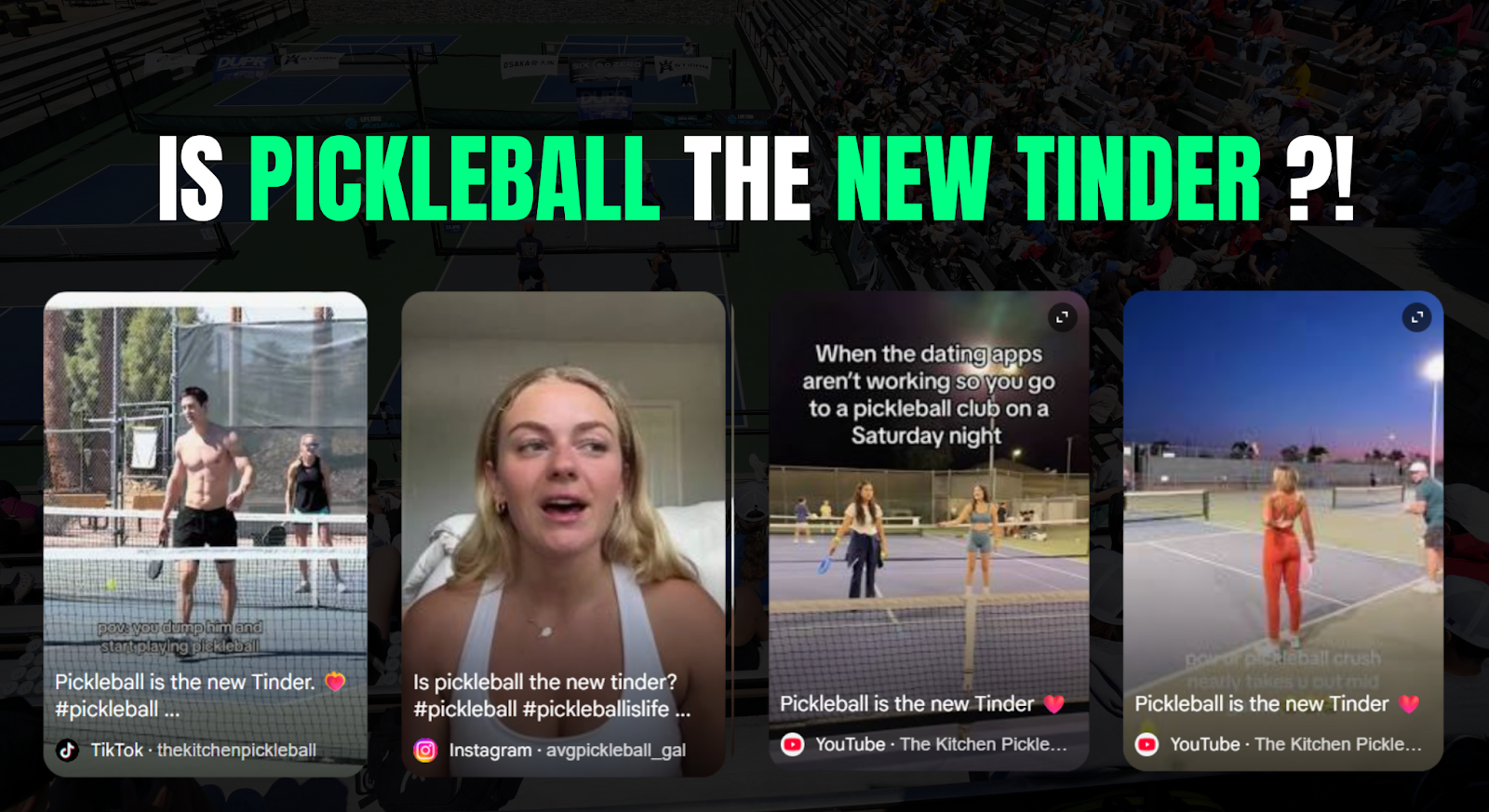
How to Meet Someone Playing Pickleball
Pickleball Speed-Dating
Let’s start with a huge pro: you already know you’re both active, because you chose to meet playing pickleball. And unlike a regular date where you spend half the time trying to think of the next question, here you’re actually doing something you both enjoy.
In just one 11-point game, you can learn way more about a person than you would over three coffee dates. You’ll see how they handle pressure, how they make quick decisions, how they communicate, and yes… how they react to winning (or losing) a tight point. Are they cool under pressure? Do they cheer you on after a missed shot?
Or do they go full championship mode and start poaching every ball?
The red and green flags are all out in the open without filters or perfectly curated dating profiles. Just two people, a couple of paddles, and the chance to find out if your connection is as good off the court as it is on it.
During a round robin, the most common open play format,players rotate partners every few minutes, so you get to meet a bunch of people without the pressure of a traditional date. The best part? There’s no awkward silence; pickleball gives you a built-in icebreaker.
Need conversation starters? Keep it sweet and simple by asking about their pickleball journey or their proudest DUPR rating. Want to spice it up? Go straight for the hot topic and ask what they think about DUPR’s latest algorithm update. (Pro tip: study it first so you can hold your ground in the debate.)
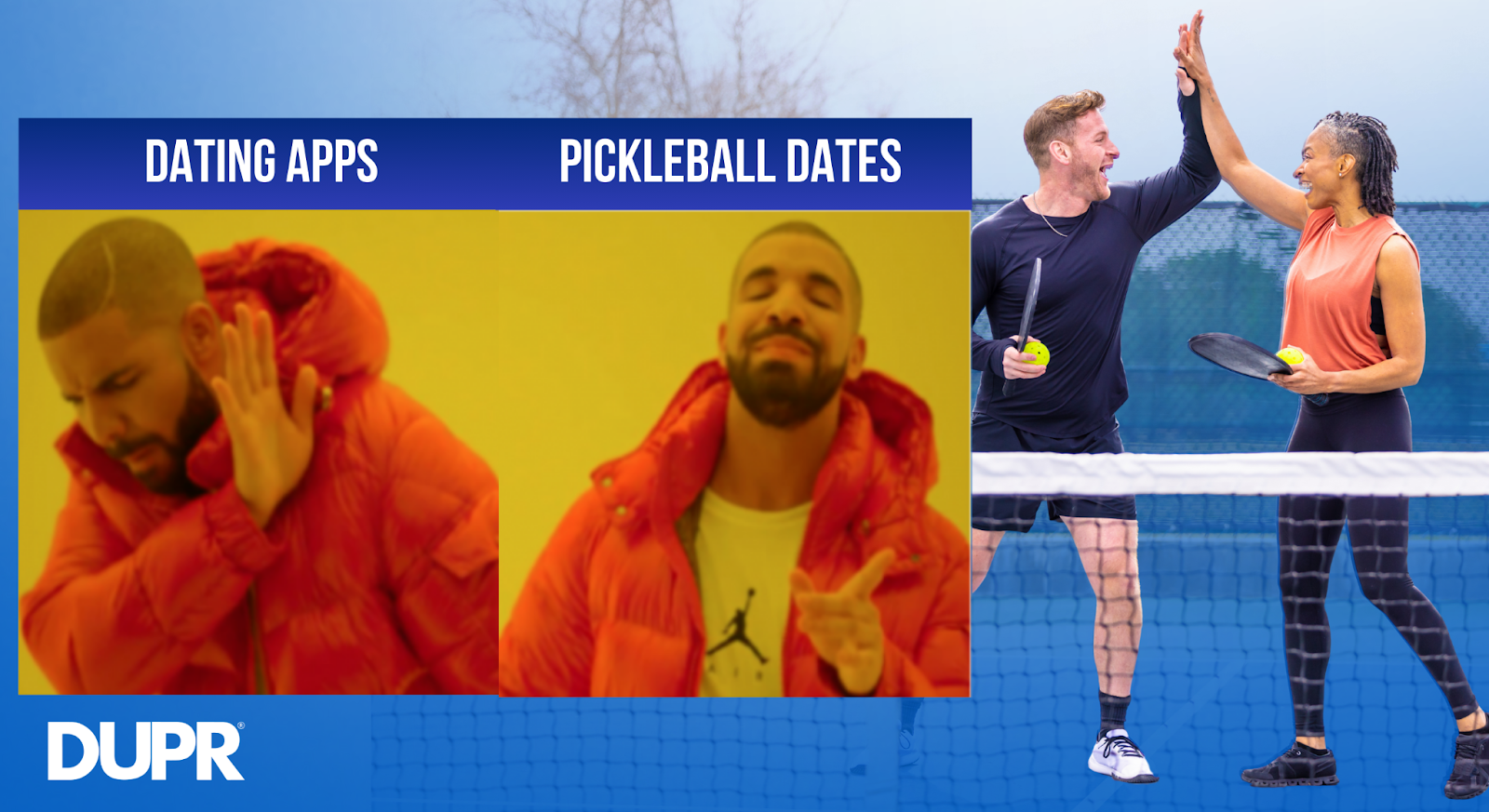
Singles & Mingles
More and more DUPR Clubs are adding Singles & Mingles to their weekly or bi-weekly programming. Think of it as open play with a twist: everyone there is single, ready to mingle, and has at least one passion in common (yep, pickleball).
You’ll play a few games, rotate partners, and then hang out afterward over snacks or drinks. The atmosphere is way more relaxed than a formal tournament, but still gives you that same rush of competition. And because it’s run at a DUPR Club, you know the matchups will be well-balanced, so you’re not spending the night chasing lobs or watching your partner hit every ball out.
It’s the perfect setup: you meet new people, get your DUPR logged, and maybe even line up your next date, all before you’ve even left the club.
How it’s different from Pickleball Speed Dating
While pickleball speed dating is all about quick rotations and getting to meet as many people as possible in a short time, Singles & Mingles is more of a slow-burn social night. You’ll spend longer on court with each partner, have more downtime to actually talk, and the post-play hangout is just as important as the games themselves. It’s less “fast-paced matchmaking” and more “building connections over a night of fun competition.”

From Rating Curiosity to a Matchmaking Concept
Sometimes love stories start with a serve and a third-shot drop. For Anneliese Niebauer, co-founder of the pickleball dating app “PickleMatch",” it started with a little DUPR curiosity.
“One time I was looking at my friends’ DUPRs and I went down a DUPR rabbit hole,” she mentioned at The Kitchen Talk podcast. “I was like, mmm… who is this guy? And I thought, ‘This should be a dating app.’”
While PickleMatch, a dating app for pickleballers, has grown into its own community (with a waitlist of over 700 people for their pickleball dating events), it’s that initial spark that highlights just how much DUPR is already connecting people. Whether it’s checking out local DUPR leaderboards, joining a DUPR Club, or getting matched up at a DUPR event, your rating isn’t just a number; it’s a conversation starter.
That’s the beauty of building relationships around the game. DUPR gives you a way to find evenly matched players, track your progress, and discover new events, while also opening doors to friendships (and maybe something more) you didn’t even know were out there.
Love at First Serve?
Let’s get a little corny for a second. Picture this: you’re telling your future kids the story of how you met. Would you rather say, “We met playing pickleball,” or “We swiped right”?
We’ll take the court story any day.
Check the DUPR App to see if your local club is hosting any pickleball dating events. If they’re not, send them our way! Our DUPR Clubs Team works with facilities to build out fun, high-value programming that keeps members engaged on and off the court.
Community
August 18, 2025
How To Communicate With Your Doubles Partner: Before, During and Post-Match Edition.
We’ve all been there: you step on the court with your doubles partner, excited to play… and by the second game, you’re giving each other the look. The truth is, poor communication can sink even the most skilled team, while good communication can make two average players feel like they’re playing like pros.
So let’s talk about how to actually talk to your partner before, during, and after the match; so you can win more points and still want to grab a drink together after.
Before the Match: Set the Vibes (and the Game Plan)
This is your chance to get on the same page before the first serve.
Ask the “what if” questions now
What should happen if they double fault? Miss an easy return? Blow an overhead?
Do they want silence? A “you got this”? A quick tip?
Every player is different and guessing wrong in the heat of the match can make things awkward real quick.
Talk strengths and weaknesses
If they hate lobs and you secretly love chasing them down, speak up. If you’re a poach machine at the net, make it known. The more you know about each other, the smoother it’ll go.
You don’t both have to be perfect; you just have to complement each other. Lean into what each of you does best, and trust your partner to cover their strengths while you cover yours.
Set a shared goal
Yeah, “let’s win” is the obvious one, but the magic happens when you get specific.
Maybe you decide, every return goes deep and we both approach the net. Or you serve to the “T” so your partner can sneak in for an erne. Those little game plans keep you locked in and give you something to rally around when things get tight.
Need help with game strategies? We’ve got a guide on where to serve and another on where to return so you can walk on court with a purpose.
Agree on signals
Hand signals for poaches, quick verbal cues like “switch” or “yours,” even a little nod. These tiny things can make a huge difference once the rally gets going.
There is no such a thing as “too much communication.”
During the Match: Be the Partner You’d Want to Play With
Call it early
A loud “mine” or “yours” saves rallies (and prevents those awkward paddle clashes).
Stay positive
No eye rolls, no sighs, no “come onnn.” Even if they keep missing every ball into the net, a quick “next one” or paddle tap goes a long way.
Give Quick, Useful Feedback (at the Right Time)
Remember that little pre-match chat you had about how they like to be spoken to when things get tough? Yeah… stick to it.
If they told you mid-game tips just add fuel to the frustration fire, resist the urge to “help” and save it for after the match.
When you do share ideas, pick your moment. Changeovers are perfect. Keep it short, specific, and positive. Skip the “Stop missing that shot” and go with “Let’s go after the middle because they’re wide open there.”
The goal is to keep your partner feeling confident and connected, not second-guessing every swing.
Read the room (aka your partner)
If they’re rattled, this is not the time to give them your TED Talk on third-shot drops. Sometimes, a high-five is all they need.
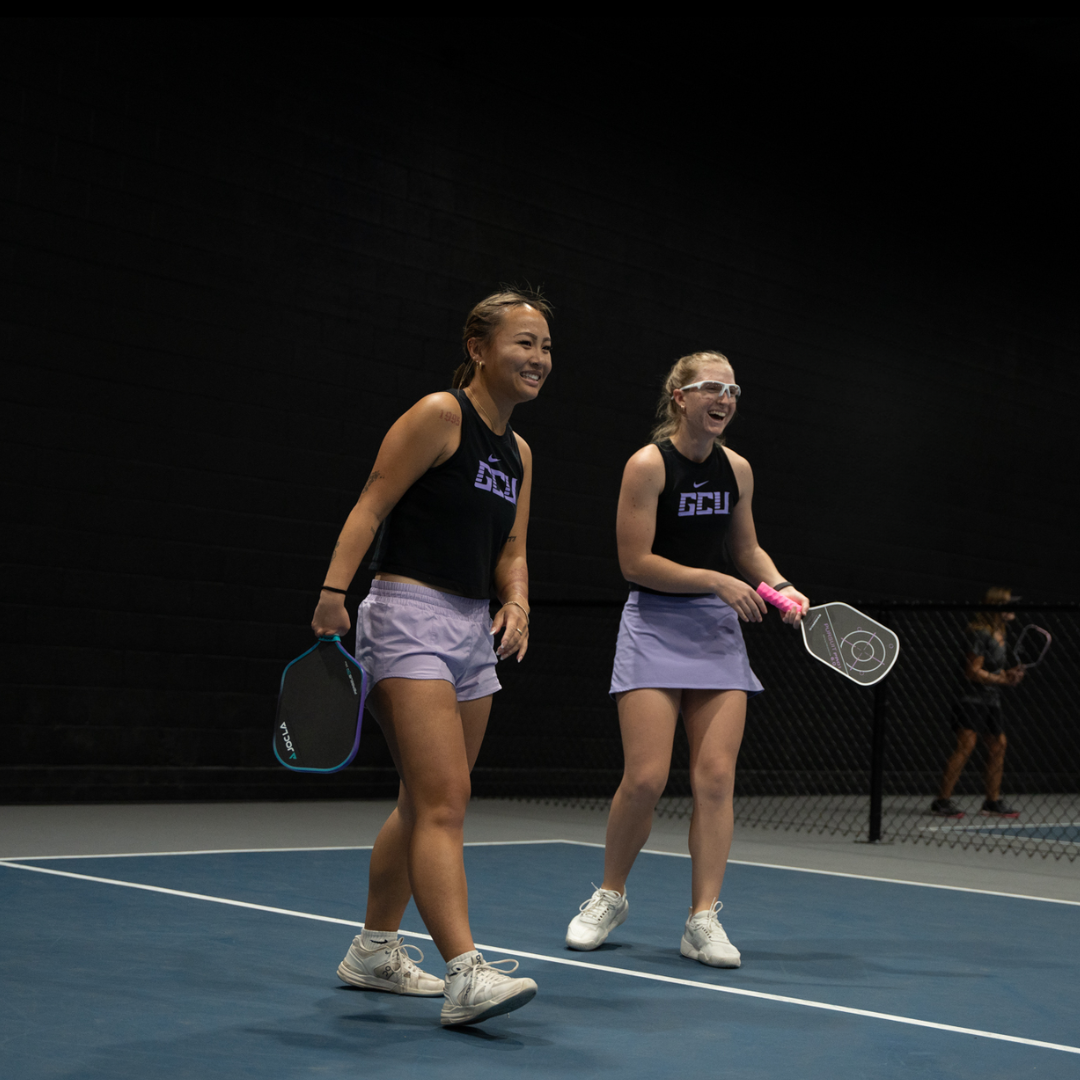
After the Match: Review Without Ruining the Vibe
Start with the good stuff
Call out the great teamwork, that one amazing rally, or how you fought back after being down 8–2.
Talk improvements as a team
It’s “we should try stacking” not “you need to cover the middle.” Big difference.
Make a plan for next time
Agree on one or two adjustments to test in your next match.
Bottom Line
Good doubles communication isn’t just about calling balls; it’s about building trust and having each other’s back.
Some players want tips mid-match, some just want silence and a fist bump. The only way to know? Ask them before you play.
Because winning is fun… but winning and still liking your partner after? That’s the real goal.
Pickleball Tips
August 15, 2025
Cracking the DUPR Code: How Pickleball’s Rating System Shapes the Game
“Ratings are crucial for creating competitive and fun pickleball experiences.” – Sarah Carpenter, DUPR Lead Data Scientist
Pickleball may be one of the fastest-growing sports in the world, but behind every thrilling rally and nail-biting tiebreaker is something far less visible: the rating system. At the heart of competitive balance is DUPR — the Dynamic Universal Pickleball Rating — a tool designed to make sure every match is as fair and exciting as possible.
In a recent webinar hosted by pickleball.com, which had over 1000 attendees, DUPR’s Sarah Carpenter (Lead Data Scientist) and Caroline Luelf (Director of Clubs) joined moderators Jenna and Christy Cook to unpack exactly how DUPR works, what’s changed, and how both players and tournament directors can use it to their advantage.
Why Ratings Matter More Than You Think
At first glance, a pickleball rating might seem like just another number next to your name. But Caroline was quick to point out that this number is the key to making the game enjoyable for everyone.
“Competitive, level-based play is essential for enjoyment,” she said.
Without accurate ratings, tournament brackets can become mismatched. A 3.5-rated player entering a 3.0 division will dominate (not exactly fun for anyone involved) while evenly matched games keep both sides engaged, with every rally carrying the thrill of possibility. That balance is what DUPR aims to protect, ensuring players leave the court feeling challenged, not frustrated.
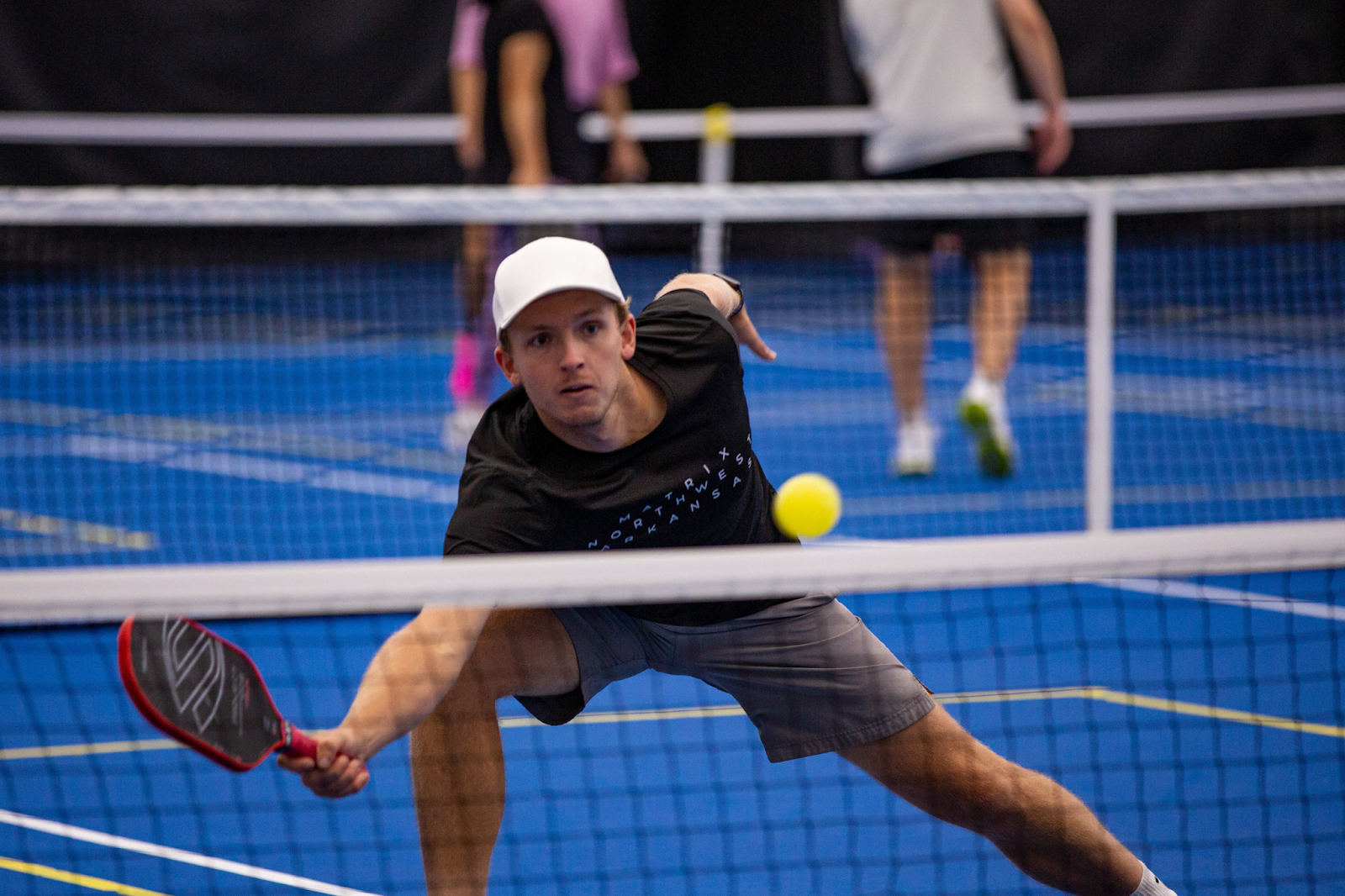
Inside the DUPR Algorithm
Sarah described the DUPR algorithm in simple terms: “It’s a machine that takes something in and spits something out in a consistent way.” Every player — whether they’re brand-new or a seasoned pro — is placed on the same scale.
Here’s how it works: before a match, DUPR calculates an expected score based on the combined ratings of both teams. After the match, it compares the actual score to the expected one. If you outperform what the system predicted, your rating moves up. If you underperform, it moves down.
One major recent change is that DUPR ratings can now go up with a loss if you outperform expectations, or down with a win if you underperform. The system updates instantly after results are uploaded, and while the order of uploads can technically affect the numbers, Sarah assured players the impact is negligible.
The Reliability Score: How Trustworthy Is Your Rating?
Alongside your DUPR rating is another number you might overlook — the reliability score. Think of this as the trust level of your rating. The more matches you play, the more recent they are, and the greater the variety of partners and opponents, the higher your reliability.
Matches uploaded by a tournament director, played in standard formats like best-of-three, and logged recently carry more weight. Players with higher reliability scores will see smaller shifts in their ratings from one match to the next, while newer or less active players may see bigger swings.
Improving Your DUPR Rating the Right Way
If you’re hoping to climb the DUPR ladder, Sarah and Caroline were clear: there are no gimmicks. The best way to improve your rating is to become a better player and log more competitive matches.
A lack of data is one of the biggest reasons players feel underrated, so signing up for DUPR-rated tournaments and leagues is essential. Playing “up” in a higher division will only help if you’re truly underrated and consistently winning at that level.
The algorithm isn’t trying to measure your very best day on the court; it’s predicting your typical performance. That means consistent overperformance is what really moves the needle.
Singles vs. Doubles: Two Different Worlds
One common misconception is that singles and doubles ratings are linked. They’re not. DUPR treats them as completely separate categories because, while some skills overlap, the games are strategically different.
Ninety percent of DUPR’s data comes from doubles, so if you care about your singles rating, you’ll need to actively seek out singles matches and get them logged.
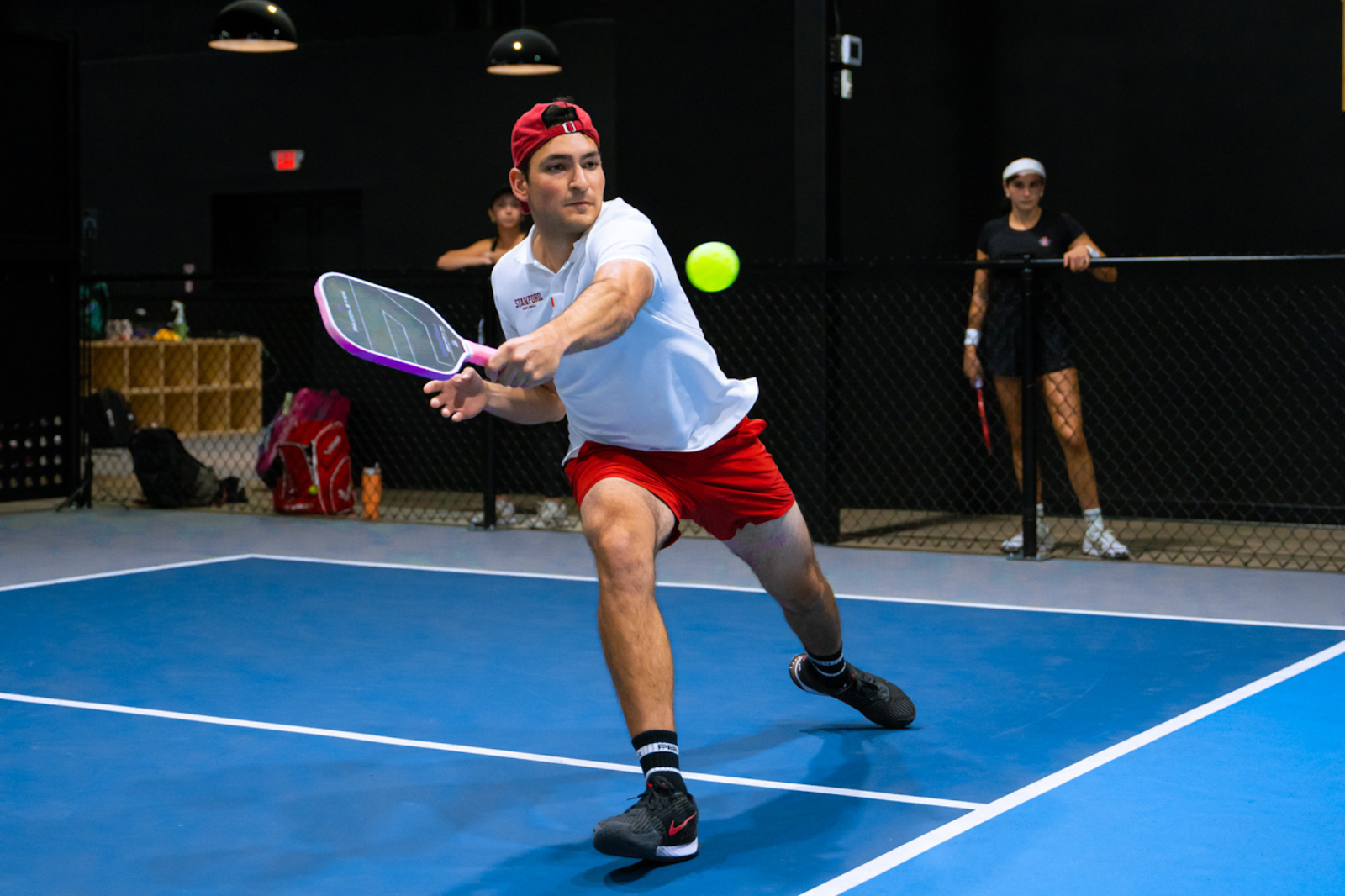
Advice for Tournament Directors
For directors, accurate ratings are the foundation of a smooth, fair competition. The panel recommended:
- Setting minimum and maximum ratings for each division
- Keeping brackets within a 0.5-point range where possible
The closer the ratings within a bracket, the more competitive — and enjoyable — the matches will be.
Extra Tools and New Features
DUPR is also working on features to make the system even more useful:
- Expected Score Tool: This predicts a match’s score before play begins. It’s great for analytical players, but not essential for everyone - some may find it adds pressure.
- DUPR Coach: For new players with no match history, this allows a coach to watch and assign a starting rating, which the algorithm will adjust over time.
- Transparency: Ratings currently display to three decimal places, which Sarah says is about player experience, not mathematical precision. It helps players see exactly how matches impact their number.
The Bottom Line
DUPR isn’t about rewarding wins or punishing losses; it’s about creating the most accurate, competitive, and enjoyable pickleball possible. As Sarah put it, “We are trying to rate every player as accurately as we can.”
If chasing decimal points stresses you out, her advice is simple: “Stop looking at them.” Focus on your game, play often, and trust the system to find your level.
Because at the end of the day, DUPR’s mission is the same as yours: to keep pickleball fun, fair, and fiercely competitive.
Community
DUPR Ratings
August 14, 2025
The Flying Pickle: Elevating Members Experience with DUPR+
In Meridian, Idaho, The Flying Pickle has built more than a pickleball club; it’s created a full ecosystem for players of every level. Between the quality of its facilities, the variety of its programs, and its focus on member experience, it has become a model DUPR Club other facilities are taking note of.
And now, with their franchise model, they are ready to expand nationwide
Adding Value With DUPR+
When The Flying Pickle decided to integrate DUPR+ into its Pro Membership package, it wasn’t about raising prices or chasing revenue. As Club Director Tristan Belue explains, it was about one thing: adding value for their most dedicated players.
“Our goal is to be a one-stop shop for everything pickleball. DUPR+ is just another way we can give more to our members,” said Tristan Belue, Club Director at The Flying Pickle.
The Flying Pickle’s Pro Members already enjoy perks like earlier schedule visibility, more concurrent reservations, and access to DUPR Verified Events. Adding DUPR+ simply made the membership “that much more valuable” and set the club apart from local competitors.

Every detail is designed to make the club a place people want to spend time, not just a place to play a match.
Programming That Keeps Courts Full
The Flying Pickle’s success is built on variety and consistency:
- Clinics & Drills: From “Learn to Play” for newcomers to skill-specific drills for advanced players.
- Open Plays & King of the Courts: Popular across multiple levels, with 3.5 Open Plays being the most in-demand.
- Leagues: Always packed, always logged to DUPR.
- Major Events: Including the Flying Pickle Open, which draws over 350 participants from across the country.
Belue’s approach for other directors: “Test and fail until you find what your members love and then keep doing it.”

Why Other Clubs Are Watching
The success of The Flying Pickle’s Meridian location has sparked plans for franchising the model. While expansion details are still being finalized, the approach of combining high-quality facilities, strong community programming, and integrated player tools like DUPR has proven effective in attracting and retaining members.
Interested in franchising with them? Learn more here.
For players, it’s a one-stop shop for everything pickleball. For club directors, it’s a case study in how thoughtful facility design and programming can build lasting engagement.
Interested in bringing the same value to your members? Fill out this form to see if you qualify to become a DUPR+ Club.
Clubs
Community
August 12, 2025
Strength Training: The Pickleball Hack No One Talks About
If you’re serious about improving your pickleball game, whether you’re chasing a higher DUPR rating or just looking to win more rec games, strength training isn’t optional. It’s the secret weapon that helps you move faster, hit harder, and play longer without breaking down.
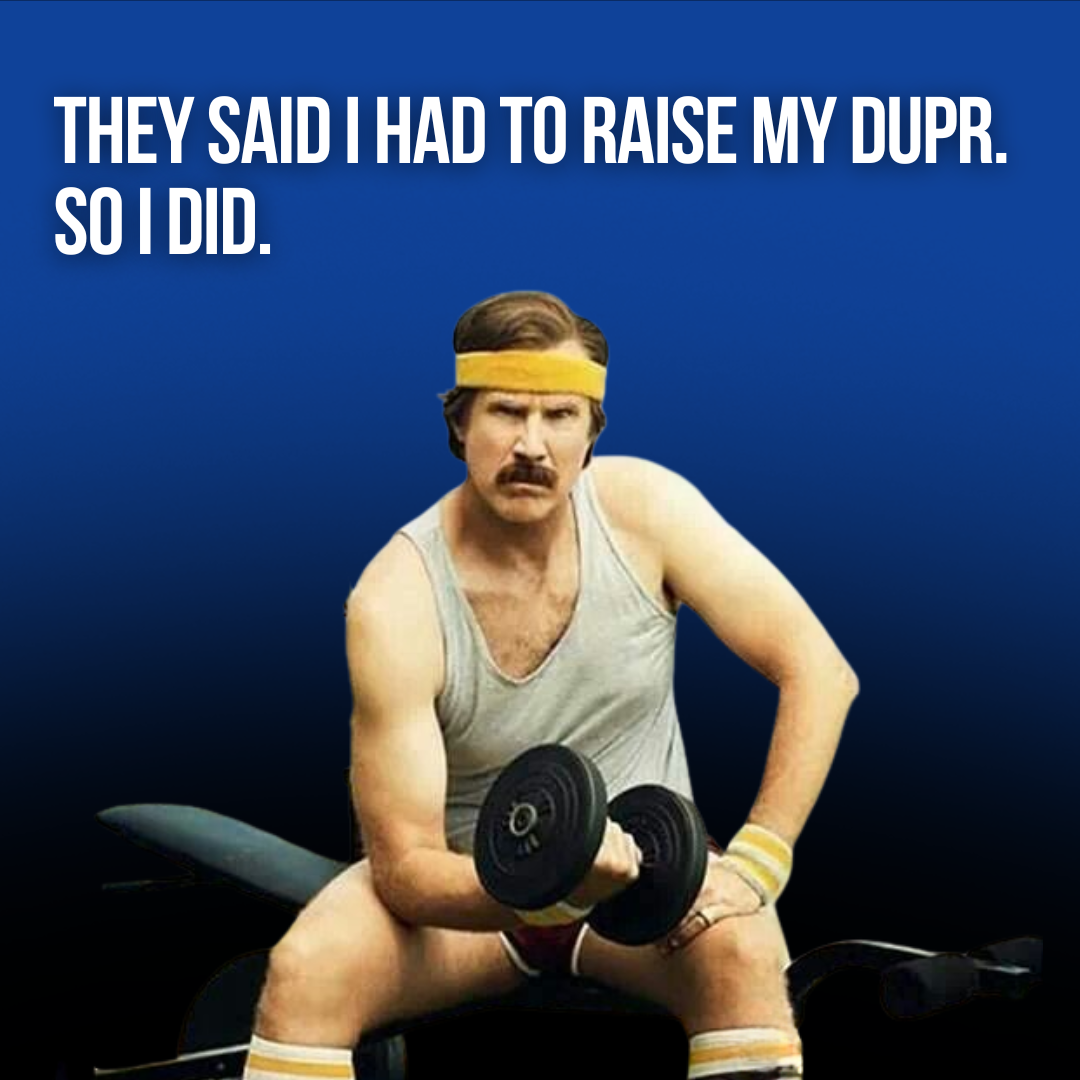
And with DUPR’s new partnership with GRAVL, you can now get personalized, pickleball-specific workouts that make training as smart as your strategy on the court.
Why Strength Training Matters for Pickleball Players
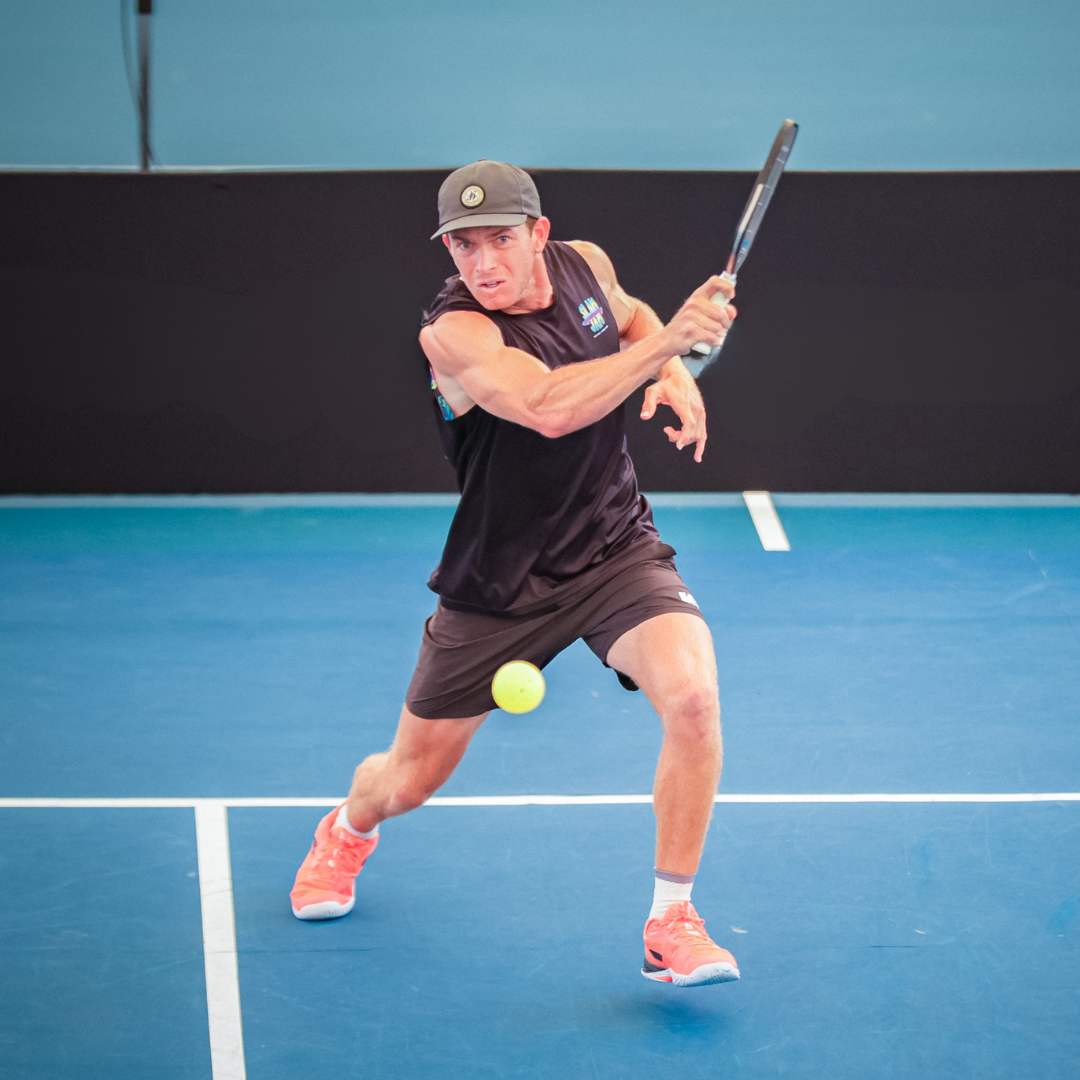
Pickleball might look low-impact to the casual observer, but competitive players know the truth: it’s an explosive, quick-change-of-direction sport that demands power, agility, balance, and endurance.
Here’s how strength training helps:
1. More Power in Your Shots
Stronger legs and core help you hold position and transfer energy into the ball with less effort.
2. Faster Court Coverage
Leg strength and stability training translate to quicker first steps, faster lateral movement, and the ability to recover between points.
3. Injury Prevention
Building muscle strength and improving joint stability reduces strain on knees, shoulders, and elbows, which are three of the most common pickleball injury zones.
4. Better Endurance
Strength work supports cardiovascular fitness and keeps you feeling fresh deep into long rallies and multi-match days.
How GRAVL Fits In
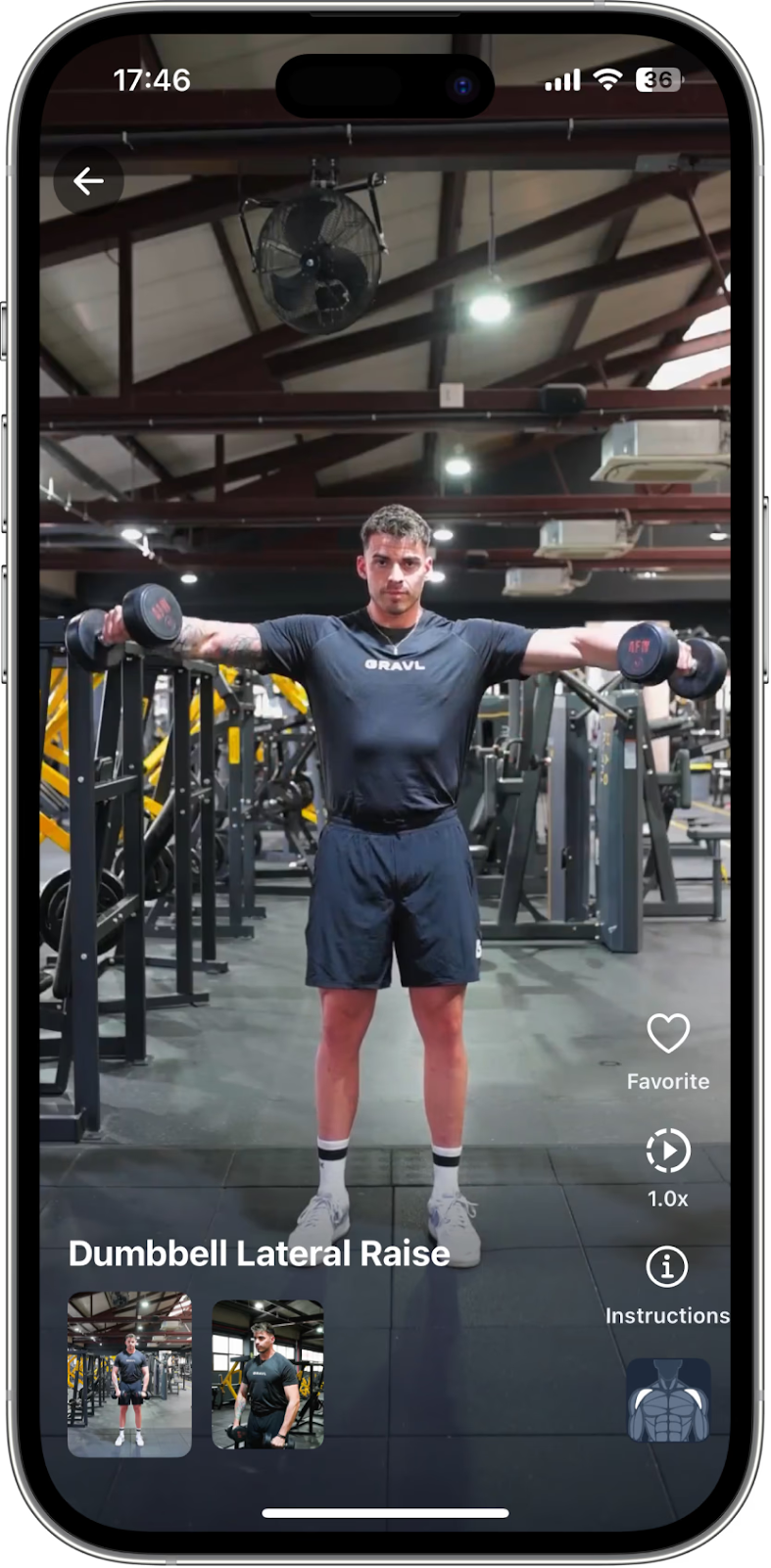
DUPR has teamed up with GRAVL to help players train smarter, not harder. GRAVL creates AI-powered, personalized workout plans that you can use to improve your physique and overall pickleball performance.
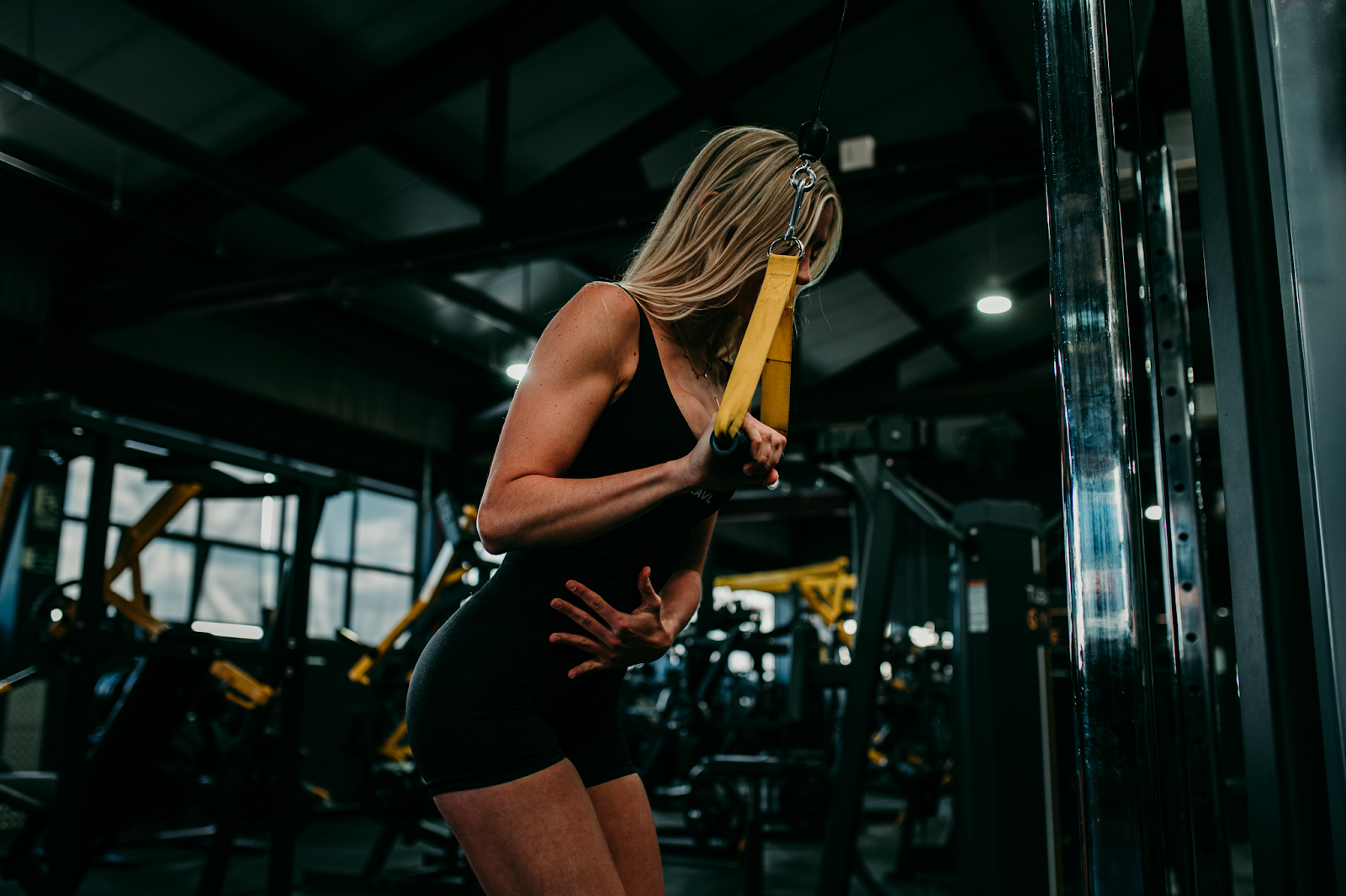
Whether you’re brand new to strength training or already lifting, you can use GRAVL to adjust your plan to match your skill level, fitness goals, and schedule, keeping you accountable along the way.
Here’s what you get with GRAVL:
- Personalized Programs: Every workout is tailored to your needs and updated as you progress.
- Coach Support: Message in-app anytime for training or app guidance.
- Performance Tracking: See your progress and how it impacts your game.
Exclusive for DUPR Players: Your First Month Free
We’re giving all DUPR players one month free using the code: DUPR.
And if you have DUPR Verified Events, you get 2 months free!
📲 Get the GRAVL app and start building the strength, balance, and endurance you need to dominate the court, now and for years to come.
Pickleball Tips
Community
Partners
College