No matching results.
Search results
November 9, 2026
How MACS is bringing veterans back to the pickleball court
An 85-year-old veteran, completely blind, showed up to a recent clinic planning to sit back and watch. By the end of the session, he was one of the happiest players on the court.
Moments like that are why Military Adaptive Court Sports (MACS) exists. The national nonprofit uses adaptive pickleball to help veterans recover, reconnect and compete. This Veterans Day, we’re spotlighting how MACS works, what pickleball has meant to the veterans in its clinics, and how the pickleball community can help.

What is Military Adaptive Court Sports?
MACS is a national nonprofit focused on the physical, mental and social well-being of veterans with physical disabilities, wounded service members and their families. Its mission is to make sure injury or disability is never a barrier to competition, camaraderie, community or a healthy lifestyle.
Lt. Commander Steven Harper, U.S. Navy (Retired), founded the organization. Today a nationwide network of coaches, volunteers and community partners runs MACS clinics in cities across the United States.
The program is growing fast. With support from the Department of Veterans Affairs, MACS reached more than 1,500 veterans through its clinics this past year, according to the organization. Since it started teaching pickleball in 2019, it has reached more than 7,500.
Why pickleball works for veterans
Many veterans leave the military carrying service-connected injuries, chronic pain, post-traumatic stress (PTSD) or a lost sense of community. Pickleball is quick to learn and adapts to a wide range of abilities. Veterans can play standing, from a sports wheelchair, while recovering from an injury or while adjusting to a new disability.
The physical benefits include better balance, coordination and endurance, built at each player’s own pace. The veterans in MACS clinics talk most about what happens off the court.
Participants have told MACS they sleep better, feel less irritable at home and feel closer to their families, especially their kids. Some say the intrusive suicidal thoughts they had before joining have stopped. Many say they finally have something to look forward to every week.
“Before joining MACS, I never imagined I’d be playing sports again. This program gave me back a sense of purpose, community, and confidence I hadn’t felt in years.”
U.S. Army Veteran, MACS Participant
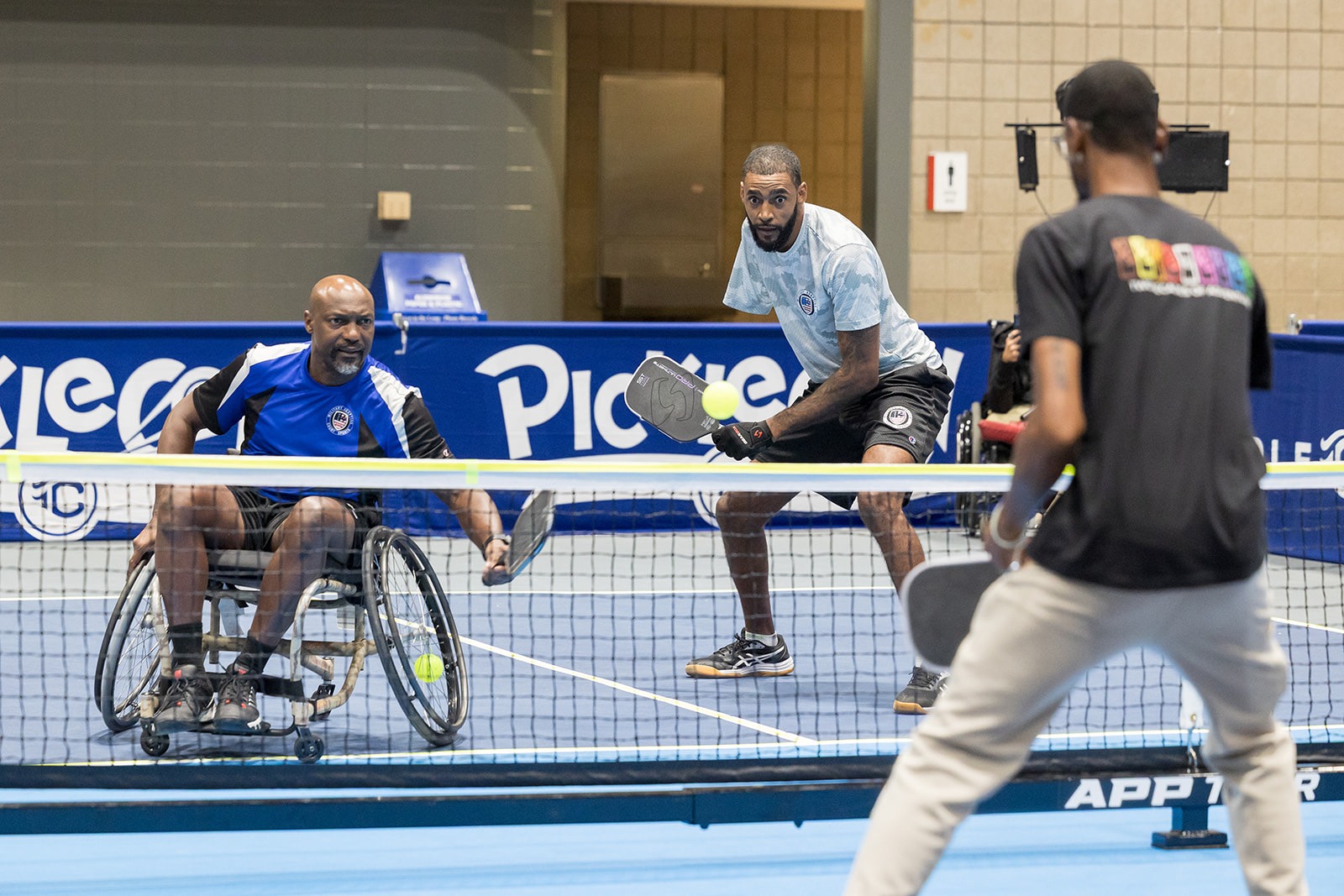
Inside a 6-week MACS clinic
MACS runs a turnkey program built around 6-week clinics, held in partnership with VA Medical Centers around the country. Each week, veterans work through a structured lesson, building fundamentals, technique and strategy one step at a time.
Clinics typically include 8 to 12 veterans, and coaches tailor them to a wide range of disabilities, including:
- Mobility impairments and amputations
- Neurological injuries
- Blindness and visual impairments
- Invisible wounds such as PTSD
MACS also works with veteran organizations, rehabilitation programs, recreation departments and industry partners to remove common barriers to playing: equipment, instruction, court access and cost.
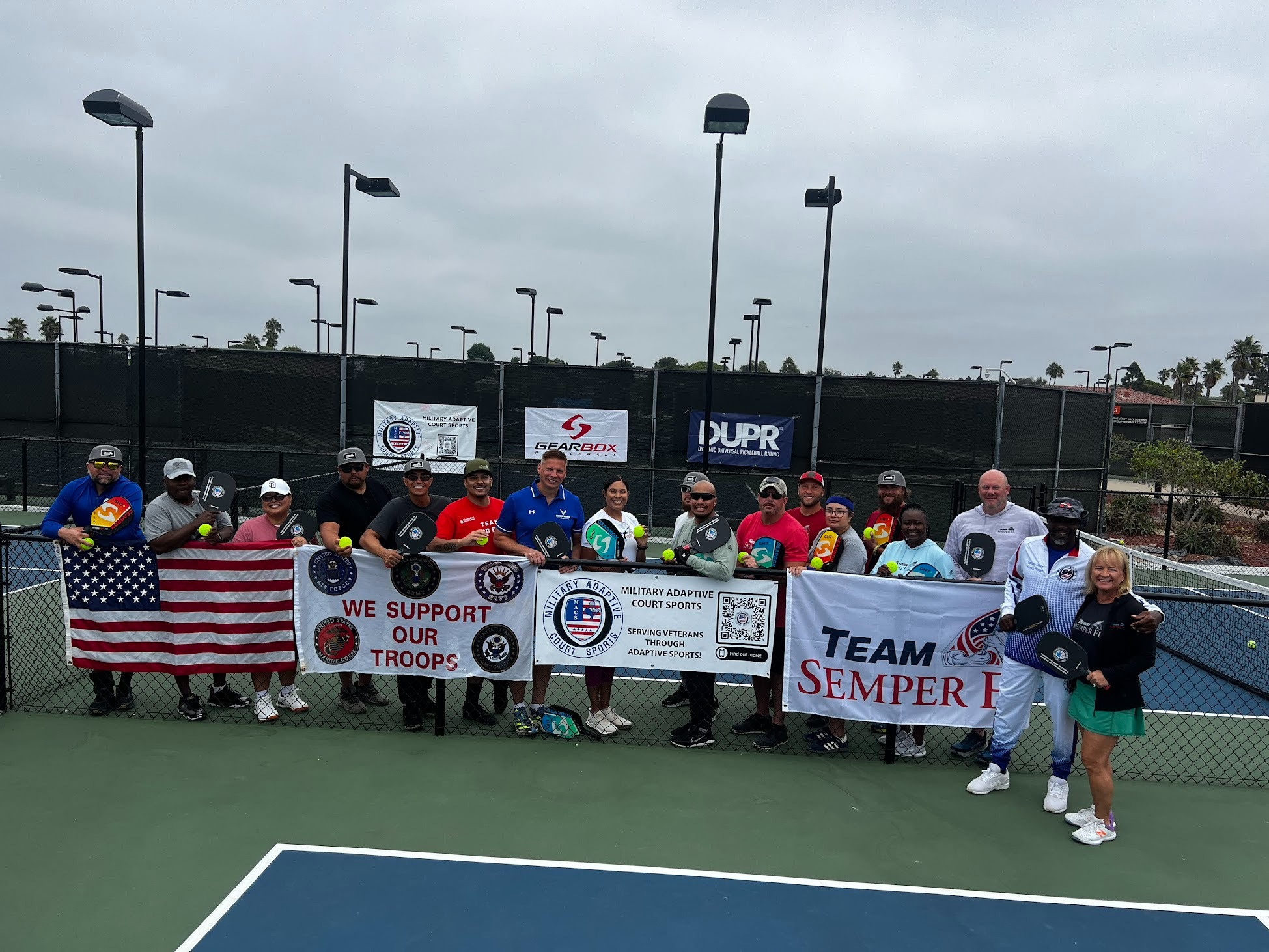
The veteran who planned to sit out
At a recent clinic for veterans who are blind or visually impaired, one 85-year-old participant arrived sure that playing wasn’t possible for him. His plan was to watch and enjoy the company.
A MACS coach worked with him one-on-one. The coach fed him balls, helped him find his position and talked him through every swing. Step by step, he started making contact.
By the end of the session, he was competing, having fun and cheering louder than almost anyone else on the court.
“Life is for living, not just existing. At Military Adaptive Court Sports, we believe every veteran deserves the opportunity to experience the joy of competition, the friendships of camaraderie, and the freedom of movement. Through adaptive court sports, especially pickleball, we’re proving that a disability doesn’t mean sitting on the sidelines. It means finding a new way to get in the game!”
Gabe George, MACS Pickleball Director
From clinic to competition with DUPR
For many veterans, finishing a clinic is the start. Plenty of graduates want to keep playing and enter competitive events.
MACS plans to introduce DUPR Coaching and ratings so those veterans can take that next step. A DUPR rating is built from real match results on a 2.000 to 8.000 scale. That gives every player a fair number for finding the right bracket, partner and level of play.
Veterans new to rated play can get a starting point through a Coach-Assigned DUPR Rating from a credentialed DUPR Coach. From there, every logged match sharpens the number.
Over the next year, MACS is on track to introduce more than 2,000 veterans and active duty service members to pickleball. Some of them could be at your club’s open play soon.
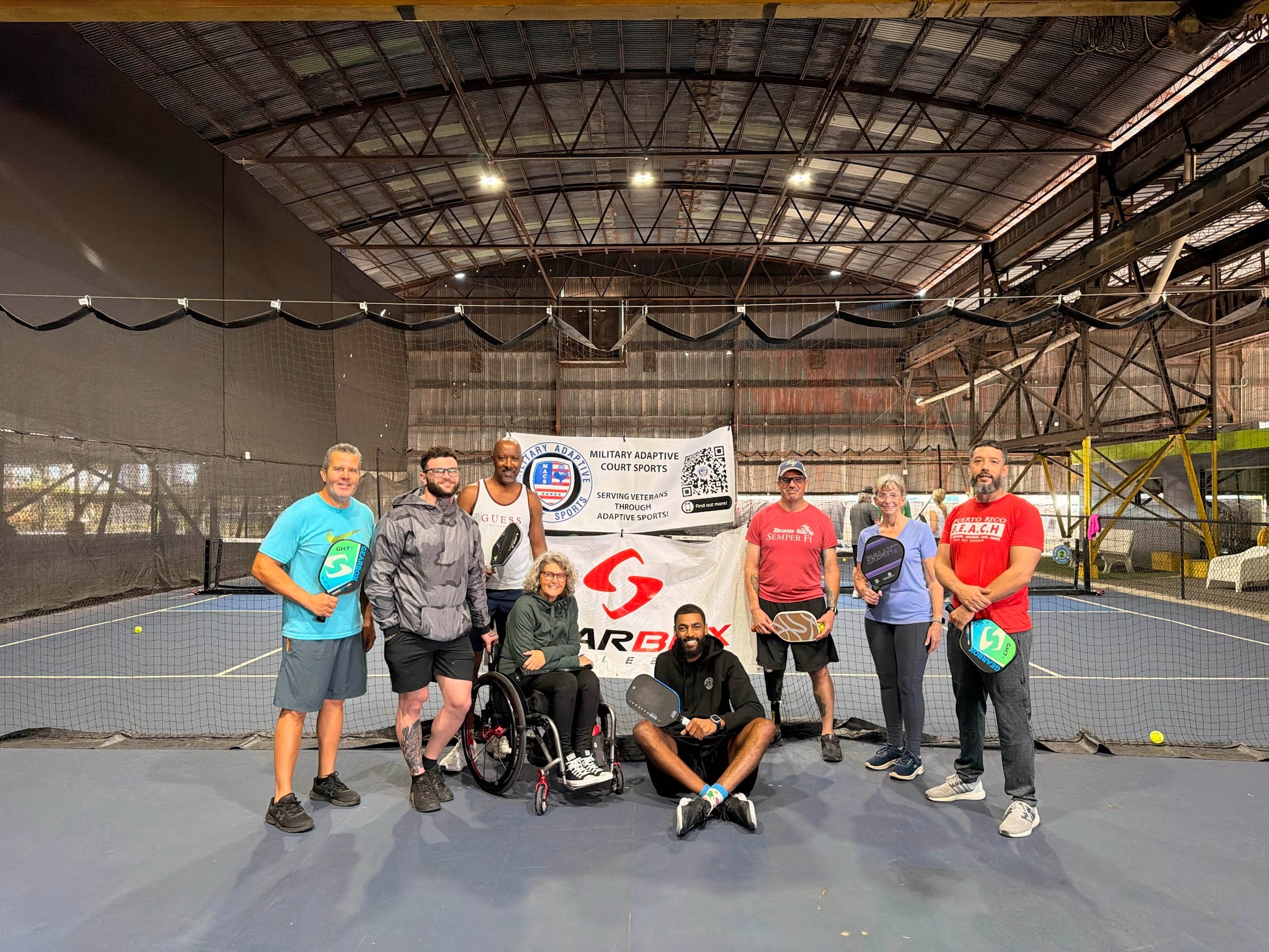
How to support veterans this Veterans Day
Veterans Day honors everyone who has served in the U.S. Armed Forces. MACS believes the best way to honor that service is to invest in what comes next for veterans. Here’s how the pickleball community can help:
- Volunteer as an instructor. MACS needs coaches to lead clinics in cities nationwide.
- Help behind the scenes. Volunteers coordinate between local instructors, VA Medical Centers and recreation facilities.
- Donate. About $150 covers one veteran for a full 6-week clinic. Donations help pay for court rentals and instructor expenses, which average about $5,000 per clinic. Give through the MACS GoFundMe.
- Follow and share. Find MACS on Facebook and Instagram.
“MACS gave me more than just a chance to play again. It gave me purpose, belonging, and the courage to keep moving forward.”
U.S. Veteran, MACS Participant
Conclusion
That 85-year-old veteran walked in expecting to watch and walked out a pickleball player. MACS is creating that same moment for thousands of veterans across the country. This Veterans Day, thank the veterans at your club, support a MACS clinic, and if you’re a veteran ready to compete, create your free DUPR account and log your first match.
Community
November 9, 2026
An American in Sabah on why DUPR rated tournaments matter
Robert McManus came to Kota Kinabalu in May on vacation and left with a doubles partner. Five months later, the retiree from Tennessee flew back to Sabah, Malaysia, to play the Borneo International Pickleball Open 2026 with that partner, local player Nick Chai.
The trip also gave Robert a clear view of how players in a fast-growing scene get rated. Here’s his story, what he saw at the Borneo Open, and why DUPR rated tournaments make a real difference for players who want a rating that matches their game.
A partnership that started on a court in Kota Kinabalu
Robert and his wife, Mindi, spent part of this year traveling through Southeast Asia, with stops in the Philippines and Vietnam. On their first visit to Sabah in May, Robert played at the APT Pickleball Court in Likas and met Nick.
Before Robert left, Nick asked if he’d come back to play again. When Robert found the Borneo Open listed on the Reclub app, he had his answer. The pair entered the Men’s Doubles Intermediate Division together.
“It’s a passion, I love it,” Robert told the Daily Express. He has played for almost three years and has competed in tournaments in the US, Mexico, the Dominican Republic, England, Vietnam, the Philippines and Malaysia.

500 players and a pickleball scene on the rise
The inaugural Borneo Open drew more than 500 registered players to The Good Club in Tanjung Aru, home to the largest pickleball court building in the state. Kelab Rekreasi Pickleball Borneo Sabah and Megas Mind Creative Development co-organized the event, and the Sabah Pickleball Association sanctioned it.
Robert was the only American in the draw, and the turnout surprised him.
“200 is already a large number. 300 is like a regional level competition but you have 500. Wow, such a good turnout,” he said.
He counts The Good Club, APT and Infinity Sports Arena in Kolombong among a growing list of dedicated venues around Kota Kinabalu. “It’s booming,” he said.
Why DUPR rated tournaments matter to local players
About two weeks after the Borneo Open, Robert learned the organizers had submitted the tournament’s results to DUPR.
“That’s actually great news. It’s a very good thing that the matches were submitted,” he said.
He cared because of how ratings work. Your DUPR rating is calculated from match results, and club and tournament results carry more weight than self-posted rec games because they’re verified. When a tournament director submits results, every match you play feeds your rating.
When results never get submitted, those matches never reach your profile. Robert noticed some local events used DUPR ratings to place players in brackets, then didn’t send results afterward. Players competed all weekend, and their ratings stayed exactly where they were.
What happens to ratings when results aren’t recorded
Robert pointed to three effects he saw in Kota Kinabalu:
- Players stay NR. New players can’t earn a first DUPR rating without rated matches to play in.
- Reliability stays low. Players who already have a rating build less match history behind it, which keeps their Reliability Score low.
- Ratings fall behind skill. He played against people whose strategy and shot-making were clearly ahead of their numbers.
“Many players do not match their recorded DUPR ratings simply because they have not had the opportunity to compete in tournaments that officially submit their results to the system,” he said.
He framed it as an outsider’s view. “I am not trying to be critical or complain, but simply offering an objective observation,” he said.
How to make sure your tournament matches count
Robert’s approach works in Sabah, Tennessee or anywhere else you play.
- Check the listing before you register. Events that send results to DUPR usually say so in the description or fact sheet.
- Ask the tournament director. Directors submit results after the event, and Robert said that typically happens the same day or within 72 hours.
- Check your match history afterward. If your matches aren’t on your profile, follow up with the organizer.
More than a rating
For Robert, the trip was about people as much as play. He and Mindi also visited Kuala Lumpur, Kuching, Labuan and the Tip of Borneo in Kudat, with plenty of laksa along the way.
“Obviously, it’s the gorgeous sunset... but more than that, it’s the people, very warm and welcoming. The community, mostly the pickleball community, is amazing here,” he said.
Organizing chairperson Datin Elaine Fong Yee Ling hopes he’ll bring more American players with him next time.
Every match you play in a DUPR rated tournament adds to a clearer picture of your game, wherever you play. Find a tournament near you, then check your match history once results come in.
Community
November 6, 2026
DUPR clubs hit 20,000 worldwide, and it keeps growing
As of October 2026, there are now 20,000 DUPR clubs around the world. That’s a record high, and the number climbs every week.
Clubs are currently adding about 2,000 new digital clubs on DUPR per month, and more countries than ever are recording results. Here’s where DUPR clubs are growing, what a DUPR club actually is, and how to set one up for free.
Where DUPR clubs are growing
Pickleball isn’t just an American sport anymore. More than half of all DUPR clubs are in Asia.
Here’s how the 20,000 clubs break down by region:
- Asia: 52.3%
- North America: 36%
- Europe: 5.5%
- Latin America: 3.3%
- Oceania: 2.2%
- Africa: 0.7%
DUPR has also hit a record number of active clubs and a record number of active countries recording results.
“More than half of DUPR clubs are now in Asia, and countries are recording more results than ever. With 2,000 new digital clubs joining every month, pickleball is growing into a truly global sport, and DUPR gives every one of those players a common language. We are thankful to all of our partners for being part of this journey and developing pickleball together within the DUPR ecosystem.”
Johnnie Carmichael, Director of International
What a DUPR club actually is
A DUPR club is a free digital club that a club, facility, or group sets up on the DUPR platform. This means that the club has a home on DUPR to organize programming and record results.
There’s no cost and no subscription. Once a club is set up, organizers can:
- Promote their DUPR events on the platform
- Add matches for club members directly to DUPR
- See ratings update almost instantly after results are added
That’s why DUPR is the world’s largest community of pickleball clubs. Any group that plays, from a weekly rec crew to a full facility, can get on the platform at no cost.
Why more DUPR clubs means a better rating for you
Your DUPR rating is only as accurate as the matches behind it. Every new club adding results gives the system more data to work with.
Club results carry 75% more weight in your DUPR rating than self-posted recreational matches. So when your club records matches on DUPR, your rating becomes more accurate, reliable, and reflective of your true skill level.
And with clubs in more countries than ever, your rating means the same thing wherever you play. DUPR doesn’t factor in age, gender, or location, so a 4.0 at your home club is a 4.0 across the world.
How to start a DUPR club for free
Setting up a DUPR club takes a few minutes and costs nothing. Head to the Start a Club page, fill out the DUPR Club Application, and start adding matches for your members.
Already play at a club that isn’t on DUPR yet? Send them this post.
Join 20,000 clubs on DUPR
Twenty thousand clubs, and 2,000 more joining every month. If your group plays regularly, it belongs on DUPR. Start a digital club for free and give your players a rating that reflects how they actually play.
Frequently asked questions
What is a DUPR club?
A DUPR club is a free digital club set up on the DUPR platform. Clubs use it to organize programming and add match results for their members.
Does a DUPR club run all of its events through DUPR?
No. A DUPR club is set up on the platform to organize programming and record results. It doesn’t mean DUPR runs every event at that club.
How much does it cost to start a DUPR club?
Nothing. DUPR clubs are completely free, with no subscription costs.
How many DUPR clubs are there?
There are 20,000 DUPR clubs worldwide as of October 2026, with about 2,000 new digital clubs added each month.
Where are most DUPR clubs located?
Asia has the most DUPR clubs at 52.3%, followed by North America at 36%, Europe at 5.5%, Latin America at 3.3%, Oceania at 2.2%, and Africa at 0.7%.
Do club matches affect my DUPR rating more than rec games?
Yes. Club results carry 75% more weight in your DUPR rating than self-posted recreational matches.
Clubs
November 6, 2026
Brooke Buckner: The Pickleball Mom Ranked World No. 4
In March 2020, Brooke Buckner had a newborn son, a coaching job she was about to leave, and no plans to compete again. A few months later, her mom dragged her to a pickleball court.
Today, the mom of three is the No. 4 women’s singles player in the world, a JOOLA athlete, and one of the hardest hitters in the pro game. On a recent episode of The Kitchen Pickleball, she talked about how she got here, how she trains around family life, and why she wants other parents to see what’s possible.

From junior Grand Slams to college coaching
Brooke grew up in Cleveland, Ohio, in a big family where sports were everything. Her older brothers played football, and she was their water girl. At age 7, she told her mom she was done with soccer. She only wanted to play tennis.
That decision stuck. She went on to play three of the four junior Grand Slams and spent two years chasing a pro tennis career. Around 16, an honest coach told her to think hard about the road ahead telling her “It’s not like this glamorous life”.
She chose college instead and played at Michigan under coach Ronni Bernstein. After graduating, she coached college tennis at Western Michigan, Yale, and UNC Charlotte. Then her son was born, and she stepped away to stay home with him.
How a new mom found pickleball
Going from a competitive career to life at home with a baby was a big shift. COVID made it feel a little less strange, she said, because everyone’s life had changed. But she still didn’t know what to do with herself.
Her mom, who had been playing pickleball for a few years, had a simple message. “You need to do something for yourself. You have to get out of the house,’” Brooke’s mom said.
A PPA employee named Chris Patrick spotted her mom at a local park and decided to take a chance on her. He connected her with a strong group of players in Charlotte, giving her the opportunity to test herself against tougher competition. “I was probably like a 4.0 max, and I finally got to play with the 5.0s,” she said. “I got absolutely annihilated.”
That’s a feeling plenty of players know. Playing up hurts at first, but it’s also one of the fastest ways to improve, and one of the fastest ways to move your rating.
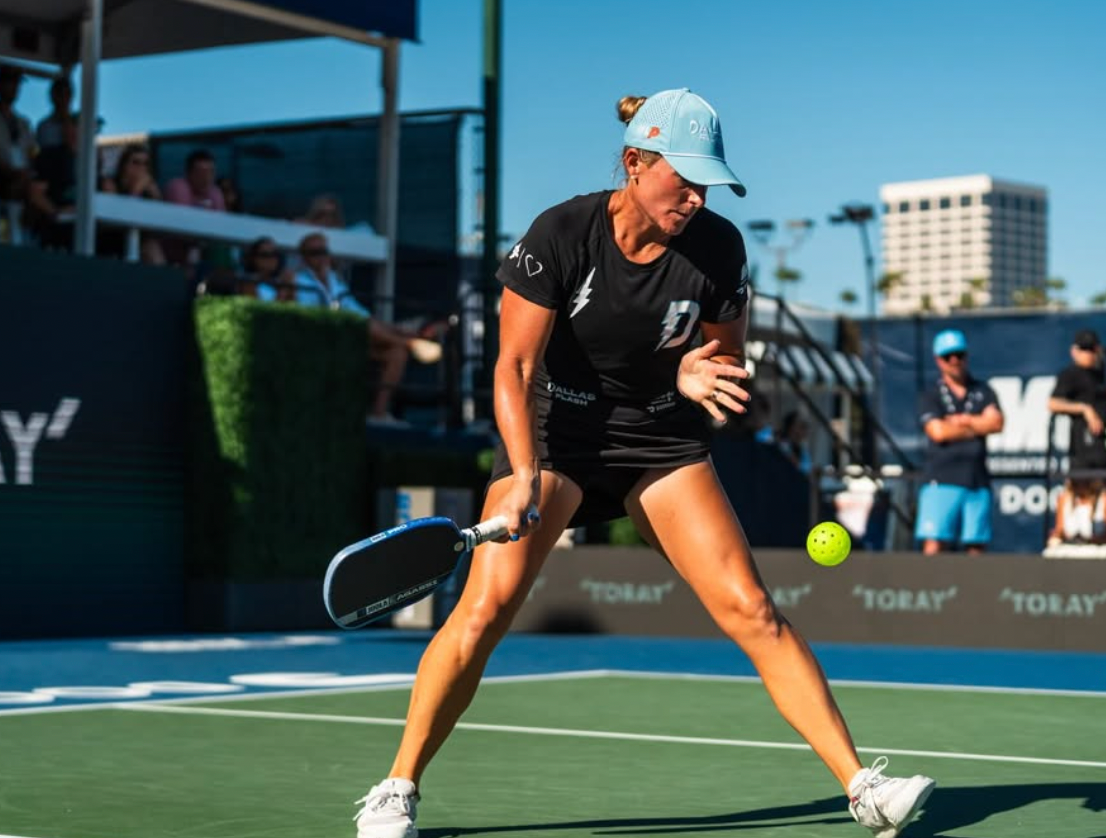
Why her singles rise started with timing
Brooke is refreshingly honest about her early success in singles. She played her first-ever singles point at the 2022 US Open, in the 5.0 bracket, and reached the final. “I got in at the right time when singles weren't very deep,” she said. “Women’s singles was not very good. I could hit some ground strokes.”
That’s no longer the case. With younger players coming up, she says you can’t stay near the top of women’s pro pickleball without real training. For Brooke, that means court work, gym work, and nutrition.
Her biggest improvement in the last year? Net coverage. She used to rely almost entirely on passing shots. Now she moves forward with more confidence.
Training like a pro as a mom of three
Brooke had her daughter in 2021, right as her pickleball career was taking off. Her kids are now the reason she has to train differently than the 20-somethings on tour. “I can’t put in the hours that I would if I was 24,” she said. “But I think what tennis taught me is how to train.”
She works with coach Mike Wolf, who is based in Kansas City. Plenty of pros move there to train full time. That isn’t an option for her. So they come to Charlotte, put in work with her at tournaments, and she makes trips to Kansas City when she can.
Her husband, Adam, wasn’t surprised when she told him she wanted to give pro pickleball a real shot. “I married an athlete,” he told her. She credits him for making it work while she’s on the road.
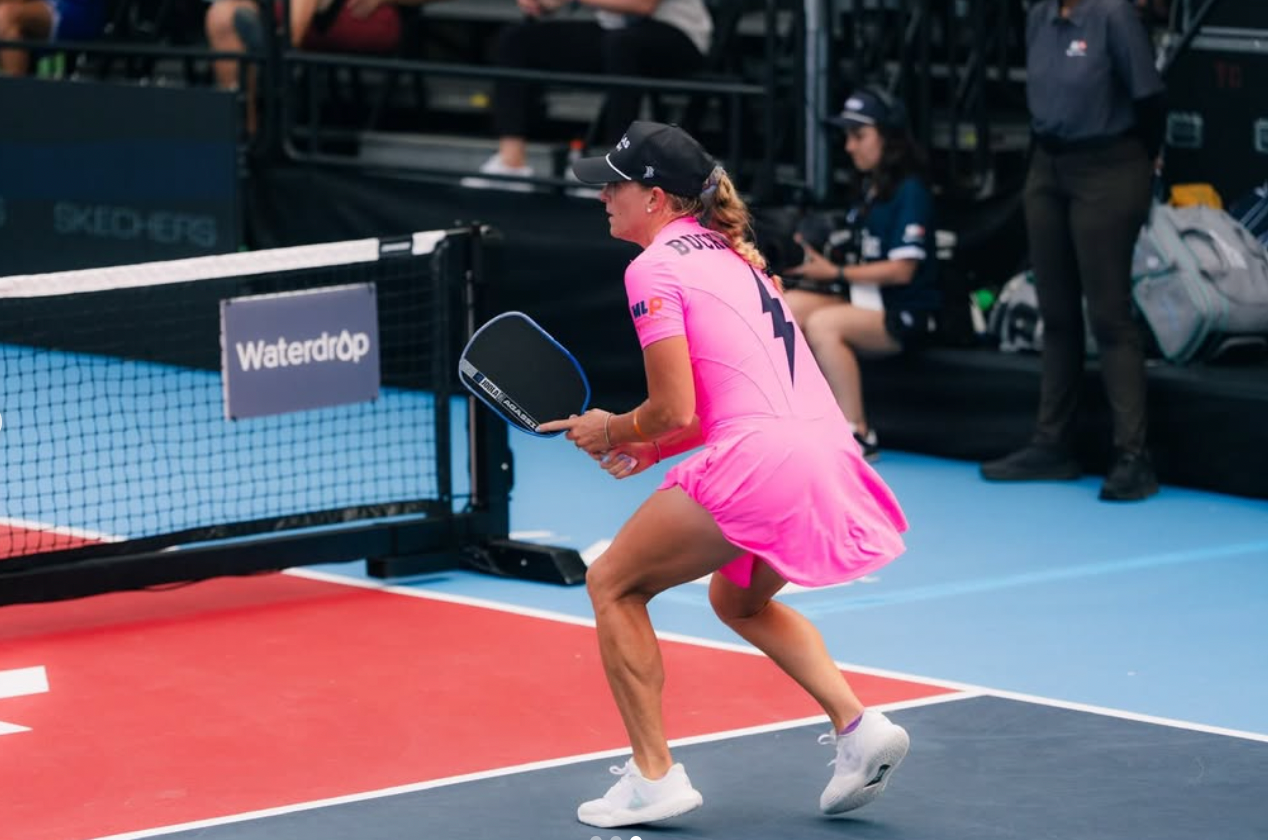
One piece of advice every player can use
Asked for the most underrated tip in pickleball, Brooke kept it simple. “If you find a strategy that works, you stick to it,” she said. “Too often people stray from the strategy that’s been working.”
Why do we abandon what’s working? Brooke thinks it comes down to focus. That applies on a pro show court and at your Tuesday night ladder.
What this pickleball mom wants others to know
Brooke went from coaching college tennis to being a stay-at-home mom to signing with JOOLA and joining Team Agassi. That journey matters most to her.
“I just want them to realize that you can still go do things once you start a family,” she said. “A lot of times people don’t realize that they can still chase their dreams once they have kids.”
She has no plans to leave the sport when she stops playing. “I love the people,” she said. “I will not leave once I officially retire.”
Brooke’s path started with her mom, one rec session, and a humbling night against 5.0s. Yours can start the same way. Log your matches on DUPR, play up when you get the chance, and find a tournament near you when you’re ready to see where your game stands.
DUPR Athletes
November 5, 2026
Power vs control paddles: which pickleball paddle fits you?
Twelve shots into a dink rally, your opponent floats one up and you load up for the putaway. It sails a foot long. Two points later, your reset pops up and gets slammed at your feet.
A paddle won't fix every miss, but it shapes how the ball comes off the face on every shot. This guide breaks down power vs control paddles, why most players land in the middle, and how to find the right pickleball paddle for your game.
If you're already comparing models, check out our top 10 pickleball paddle recommendations, backed by independent reviewer John Kew's testing data.
Power vs control paddles: what each one does
Every paddle sits on a spectrum. Power paddles send the ball off the face faster with less effort. Control paddles generally offer a more manageable response, making soft shots easier to place. All-court paddles sit in between.
Two terms come up in every paddle conversation:
Power is how hard the ball comes off your paddle on full swings: serves, returns, drives and overheads.
Pop is how fast the ball comes off on short swings: counters, punch volleys and resets.
Power paddles often have plenty of both, which helps you end points faster at the kitchen line. The cost is margin on soft shots, where extra pop can turn a reset into a sitter.
Power paddles: more pace, less margin
Power paddles often feature characteristics that support offensive play:
Elongated shape. A longer face adds reach and leverage on drives and serves. It also trades width for length, potentially making off-center contact less forgiving.
Livelier construction. Thinner cores and certain foam or thermoformed designs can produce faster ball speeds, although construction alone doesn't guarantee power.
More weight or swingweight. Additional mass can improve stability and drive through contact, but may slow your hands in fast exchanges.
The tradeoff shows up in the soft game. Drops, dinks and resets may require more precise touch, and blocked speed-ups can sail long. Expect an adjustment period before the pop feels predictable.
Control paddles: more forgiveness, less firepower
Control paddles offer a more predictable response, helping players manage pace on resets, drops and dinks.
Many use thicker cores or wider shapes that emphasize forgiveness. A wider face can help with off-center contact when you're stretched wide or jammed at your body.
The downside is firepower. Putaways may require more effort, and counters can lack the pace needed to pressure an opponent. Against players with livelier paddles, it can feel like you're always defending.
Still, control isn't just about equipment. Learning how to hit a consistent third shot drop can make a bigger difference than switching paddles alone.
All-court paddles: where most players land
All-court paddles, sometimes called hybrid paddles, blend both sides. A good all-court paddle gives you enough control to reset and drop, plus enough pop to finish when your opponent leaves a ball up.
If you're unsure where your game sits, start here.
These labels also shift over time. A paddle that counted as top-tier power a few years ago might rate as all-court today. Advancements in textured faces, foam construction and stability have expanded what's possible.
Long-term performance matters too. Some textured surfaces lose spin as they wear, so it's worth considering durability alongside power and control.
How you play points to your paddle
Your play style is the best starting point:
The attacker drives third shots and speeds up early. A power or high-end all-court paddle fits, as long as you can still drop when the drive isn't there.
The patient player wins long dink rallies by waiting for the pop-up. A control or low-power all-court paddle supports that game.
The all-court player is as comfortable resetting as speeding it up. An all-court paddle lets you do both.
Weight matters too. Lighter or lower-swingweight paddles can help players prioritize quick hands at the kitchen line. More substantial paddles may offer additional stability and depth on drives.
Then be honest with yourself. If your resets keep popping up, blocked speed-ups fly long, or your dinks float high, drilling will help, but a paddle with a little less pop might help too.
The goal is to find the most powerful paddle you can still play your best with.
Technique closes part of the gap. With a softer paddle, you can use a compact motion and let it absorb pace. With a power paddle, loosen your grip and adjust your paddle angle.
Not sure if it's the paddle or the shot? A credentialed DUPR Coach can watch you play and help identify the issue.
Does your paddle affect your DUPR rating?
Your paddle isn't part of the rating calculation. DUPR calculates your rating using match results, comparing how you scored against what was expected based on everyone's ratings.
Club and tournament matches carry more weight than self-posted rec games. Here's how your DUPR rating is calculated.
A paddle can still change how you perform in those matches. Break in a new paddle during rec play before bringing it to a league or tournament.
DUPR+ members can also use Rating Trend in DUPR Insights to monitor their performance over time. While it won't tell you whether a paddle caused a rating change, it can help you track results before and after switching.
How to test a paddle before you buy
Ask your club or local shop about demo paddles, or borrow a friend's. Then:
1. Dink crosscourt for five minutes. Floating balls may mean the paddle has more pop than you're comfortable controlling.
2. Hit resets from the transition zone while a partner drives at your feet.
3. Block speed-ups at the net and see whether counters stay in.
4. Drive and serve from the baseline to check your pace without overswinging.
5. Play a full rec game. Games reveal how a paddle performs under pressure.
Want a more structured practice session? Try our 10 pickleball drills for 4.0+ players, including resets, dinks and fast hands exchanges.
Shopping for a new paddle? DUPR+ members in eligible countries can receive a $30 JOOLA gift card with their $19.99 annual membership. See what's included in DUPR+.
Pick the paddle that fits how you win
The power vs control question comes down to how you win points.
Start with your play style, test honestly, and choose the most power you can handle without giving away easy errors.
Then put your paddle to work in competitive play and see how your results develop. When you're ready, explore our guide on finding pickleball tournaments and leagues.
Frequently asked questions
What is the difference between a power paddle and a control paddle?
Power paddles generally produce faster ball speeds, which helps on drives, serves and putaways. Control paddles offer a more manageable response, making it easier to place dinks, drops and resets.
What's the difference between power and pop?
Power describes how hard the ball comes off the paddle on full swings like serves and drives. Pop describes how fast it comes off on short swings like counters and punch volleys.
What is an all-court pickleball paddle?
An all-court, or hybrid, paddle sits between power and control. It combines touch for the soft game with enough pace for offensive shots.
Should beginners use a power or control paddle?
Control and all-court paddles are often more forgiving while you're building consistency. Many newer players do well with an all-court paddle, but demo a few before buying.
Will switching paddles change my DUPR rating?
Your paddle isn't directly factored into the match-based rating calculation. A new paddle can influence how you play while you adjust, so break it in during rec play first.
Does DUPR+ include anything for buying a paddle?
Eligible DUPR+ members in the USA, Canada, Australia, Brazil, Germany, Japan and India can receive a $30 JOOLA gift card toward JOOLA products. Terms and membership eligibility conditions apply.
Pickleball Tips
Data
November 5, 2026
DUPR Invests in RacquetX, Joining the Ownership Group as a Strategic Investor
The world’s leading pickleball ratings platform backs the annual meeting place for racquet sports, and the two companies launch the DUPR Awards, with the first winners revealed April 10, 2027, in Fort Lauderdale.
Key Highlights:
- DUPR joins the RacquetX ownership group as a strategic investor.
- DUPR and RacquetX launch the DUPR Awards, presented every year at RacquetX.
- Anyone can nominate from December 1. Public voting runs February 15 to March 15, 2027.
Fort Lauderdale, FL - November 5 — DUPR (Dynamic Universal Pickleball Rating), the world’s leading pickleball ratings platform, today announced an investment in RacquetX, the annual festival and business event for all racquet sports. With the investment, DUPR joins the RacquetX ownership group as a strategic investor.
DUPR is investing because it believes RacquetX is where the racquet sports industry should meet every year. Players, coaches, club operators, organizers and brands already meet there, on court and on the exhibition floor. As an owner, DUPR brings its global network of players, clubs and coaches to help that gathering grow.
The first thing the two companies are building together is the DUPR Awards, an annual program recognizing the people and places behind pickleball at every level, not only the pros. The first DUPR Awards will be presented Saturday night, April 10, 2027, at RacquetX 2027, and every year at RacquetX after that.
The DUPR Awards will celebrate the best of pickleball, from pro and amateur players to coaches, clubs and events, plus the technology and media partners growing the game.
How it works:
- Nominations: Opening soon. Anyone can nominate an organization or individual. Nominees do not need to be DUPR partners.
- Finalists: An independent Awards Panel of players, coaches, club operators, organizers, media and industry leaders selects the finalists.
- Public voting: One vote per verified DUPR account per category.
- Winners: 50% public vote, 50% Awards Panel. Fan Favorite is decided 100% by public vote.
- Integrity: Results are reviewed independently and sealed until the show. Sponsors can present a category but have no say in finalists or winners.
For a coach, club or local tournament, a nomination puts a year of work in front of the whole industry. Most Improved Player rewards verified progress at any level. And fans get a real vote: half the result in most categories, and all of it for Fan Favorite.
“RacquetX is where our industry should meet every year, and we want to help build it as a co-owner,” said Tito Machado, CEO of DUPR. “The DUPR Awards are the first thing we’re building together. Anyone can nominate, fans help pick the winners and every result is reviewed independently. We want this to be the Oscars of pickleball: the award a coach puts in their bio, a facility puts on its wall and a player remembers for life.”
For RacquetX, the investment adds an owner with reach into the clubs and players who drive the sport: “RacquetX was built to bring every part of racquet sports together in one place,” said Robyn Duda, CEO of RacquetX. “Having DUPR join our ownership group is a long-term commitment to this event and this community. The DUPR Awards give players, coaches and clubs one more reason to come to Fort Lauderdale in April, and a night on our stage that belongs to everyone who grows the game.”
RacquetX 2027 runs April 9–11 at the Broward County Convention Center in Fort Lauderdale, with nine indoor courts and an exhibition floor. Tickets and exhibitor information are at theracquetx.com.
Together, DUPR and RacquetX will give pickleball one night every year to recognize the people building the sport.
About DUPR
DUPR (Dynamic Universal Pickleball Rating) is the premier global pickleball rating system and technology platform, trusted by the world's leading clubs, tournaments, leagues, and players. DUPR's dynamic rating system unifies pickleball across age, gender, and location by analyzing match results to accurately evaluate all players across a 2.000 - 8.000 scale. DUPR is the official pickleball rating of leagues, tournaments and clubs around the world, including Global Pickleball Federation (GPF), USA Pickleball (USAP), United Pickleball Association (UPA), Professional Pickleball Association (PPA), Major League Pickleball (MLP), Pickleball.com, Life Time, The Picklr, National Team Pickleball League, National Pickleball League. It also owns and operates Minor League Pickleball and Collegiate Pickleball, two of the biggest amateur leagues in the sport. Players and operators can visit www.dupr.com to sign up and learn more.
About RacquetX
RacquetX is a festival and celebration of all racquet sports, uniting the community, the industry and enthusiasts from around the world. Founded in 2023, RacquetX brings together players, fans, brands and the business of racquet sports. The 2027 edition runs April 9–11 at the Broward County Convention Center in Fort Lauderdale, Florida, with nine indoor courts, an exhibition floor and programming for players, fans and industry. RacquetX also hosts the RacquetX City Series, with stops including Dallas and Phoenix. DUPR joined the RacquetX ownership group as a strategic investor in 2026. Learn more at theracquetx.com.
Partners
November 5, 2026
DUPR to Sponsor MiLP China Champions’ Journey to Global Finals
China’s growing Minor League Pickleball community will have a pathway to international competition, with DUPR and MiLP supporting the national champions’ trip to the United States.
SHENZHEN, China — November 5, 2026 — DUPR, the world’s most accurate and widely adopted pickleball rating system, will sponsor the champion teams at the 2026 MiLP China Championship to compete at the global 2027 MiLP Championships and Nation’s Cup in February 2027. The sponsorship will cover round-trip costs between China and the United States.
Taking place December 4–6, 2026, at Picklehead Oasis Club in Shenzhen, the 2026 MiLP China Championship highlights the continued growth of Minor League Pickleball (MiLP) beyond the United States. China has become the league’s largest market for events outside the U.S., creating new opportunities for players to compete, connect, and progress through the MiLP pathway.
The Minor League Pickleball Championships will bring together teams from more than 30 countries. Alongside the traditional MiLP format, with 50+ divisions, MiLP V3 and the debut of the Nations Cup.
“Minor League Pickleball is an important part of making competitive pickleball more accessible, and its growth in China shows how quickly the sport is expanding internationally,” said Cesar Clemente, VP Revenue of DUPR. “We want to give these players the opportunity to test themselves on a global stage and experience the community that makes MiLP special. Supporting the champions’ journey is one way we can help connect local competition with the global game.”
The sponsorship connects China’s domestic MiLP competition with one of the league’s premier international opportunities. By helping the winning team travel to the United States, DUPR and MiLP aim to create a clear pathway for players to progress from local competition to the global stage.
The 2026 MiLP China Championship takes place December 4–6 at Picklehead Oasis Club in Shenzhen. The selected team will complete its U.S. visa application process between December 7, 2026, and January 30, 2027, ahead of the 2027 MiLP Championships and Nation’s Cup in February 2027.
About Minor League Pickleball
Minor League Pickleball (MiLP) is the world’s largest team-based amateur pickleball competition. MiLP brings players of different skill levels together to compete in a fun, fast-paced environment. Owned and operated by DUPR, MiLP uses a four-player team format with gender-balanced doubles matchups, creating an accessible pathway for players to experience team competition, represent their clubs and communities, and progress toward regional, national, and global events.
About DUPR
DUPR (Dynamic Universal Pickleball Rating) is the premier global pickleball rating system and technology platform, trusted by the world's leading clubs, tournaments, leagues, and players. DUPR's dynamic rating system unifies pickleball across age, gender, and location by analyzing match results to accurately evaluate all players across a 2.000 - 8.000 scale. DUPR is the official pickleball rating of leagues, tournaments and clubs around the world, including United Pickleball Association (UPA), Professional Pickleball Association (PPA), Major League Pickleball (MLP), Pickleball.com, Life Time, The Picklr, National Team Pickleball League, National Pickleball League. It also owns and operates Minor League Pickleball and Collegiate Pickleball, two of the biggest amateur leagues in the sport. Players and operators can visit www.dupr.com to sign up and learn more.
The Dink MiLP
November 4, 2026
DUPR Performance vs. Skill Level: see where you win
Maybe you win most of your matches against lower-rated teams but struggle once opponents rate a half point higher. Your DUPR rating can’t show you that gap on its own.
DUPR Performance vs. Skill Level can. This DUPR+ feature sorts your match history by your opponents’ ratings and shows your win rate against each level. Here’s how it works, how to read it, and how to use it to plan your next step up.
What is DUPR Performance vs. Skill Level?
Performance vs. Skill Level is one of the DUPR Insights included with DUPR+. It analyzes your complete match history and groups your opponents into rating bands, showing how you perform against different levels of competition.
Your DUPR rating tells you where you are. Performance vs. Skill Level shows you how you got there and where you can go next.
The breakdown appears under your Doubles and Singles tabs.
How the opponent bands work
Each band groups your matches by the average DUPR ratings of the opponents you faced at the time of the match. So if you played a team rated 4.4 and 4.6 back in March, that match lands in whichever band covers 4.5, even if their ratings have changed since.
The number of bands depends on who you play. A wide range of competition gives you up to five bands. A more concentrated match history gives you fewer, so every band you see has enough matches behind it to mean something.
For each band, you’ll see:
- Opponent band: the rating range for that group of matches, such as 4.3 to 4.7
- Label: a performance label based on your win rate
- Win rate: the percentage of matches you won against that band
- Avg partner: the average DUPR of the partners you played with in those matches
- Record: your wins and losses against that band
What the performance labels mean
Every band gets one of five labels based on your win rate:
- Dominant: 75% win rate or higher
- Strong: 60% to 74% win rate
- Competitive: you’re holding your own
- Growing: more losses than wins, but you’re in the fight
- Challenge: tough competition with high upside
Most players see a pattern. Dominant and Strong labels tend to show up against lower-rated opponents, and the labels shift toward Growing and Challenge as the bands climb past your own rating.
The band where your label drops below Strong is the one to watch. That’s the level you’re working toward.
How to use it to improve your DUPR rating
Win rate and rating change are different things. Your DUPR moves based on how you score compared to what the ratings predicted, so a losing record in a Growing or Challenge band can still push your rating up if you keep those matches close.
Here’s how to put your breakdown to work:
- Find the band where your label drops. That’s the level to seek out at club nights, leagues and tournaments.
- Check your partner average. A losing record with a higher-rated partner reads differently than the same record with a lower-rated partner.
- Keep playing a wider range. More variety in your competition fills out more bands and gives you a fuller picture.
Then track your progress with Rating Trend, another DUPR+ Insight, and watch for a Growing band to turn Competitive or Strong.
How to get DUPR Performance vs. Skill Level
Performance vs. Skill Level is part of DUPR+, for only $19.99 a year. Membership also includes DUPR Replay, Metro Area Rankings, the Verified Player Checkmark, and a $30 JOOLA gift card for members in the USA, Canada, Australia, Brazil, Germany, Japan and India.
Once you’re a member, open the DUPR app and go to MyDUPR to find your breakdown.
Your DUPR rating, match history and access to DUPR events stay free for everyone.
See where your game stands
Your DUPR rating tells you where you are. Performance vs. Skill Level shows you how you got there and where you can go next. Join DUPR+ at dupr.com/duprplus, check your bands, and plan your next match against the level that’s still Growing.
FAQ
What is DUPR Performance vs. Skill Level?
It’s a DUPR+ feature that analyzes your complete match history, groups your opponents into rating bands and shows your win rate against each band.
How are opponent bands calculated?
Each band groups your matches by the average DUPR ratings of the opponents you faced at the time of the match.
How many bands will I see?
Up to five. Players with a wide range of competition see more bands, and players with a more concentrated match history see fewer.
What do the performance labels mean?
Dominant means a 75%+ win rate and Strong means 60% to 74%. Competitive means you’re holding your own, Growing means more losses than wins but you’re in the fight, and Challenge means tough competition with high upside.
Is Performance vs. Skill Level free?
No. It’s part of DUPR+, which costs $19.99 a year. Your DUPR rating stays free.
Does my win rate affect my DUPR rating?
Your rating moves based on how you perform compared to what the ratings predicted, so close losses to higher-rated teams can still raise it. Win rate is a way to read your results, separate from the rating calculation.
Does DUPR+ change how my rating is calculated?
No. DUPR calculates ratings the same way for every player.
DUPR+