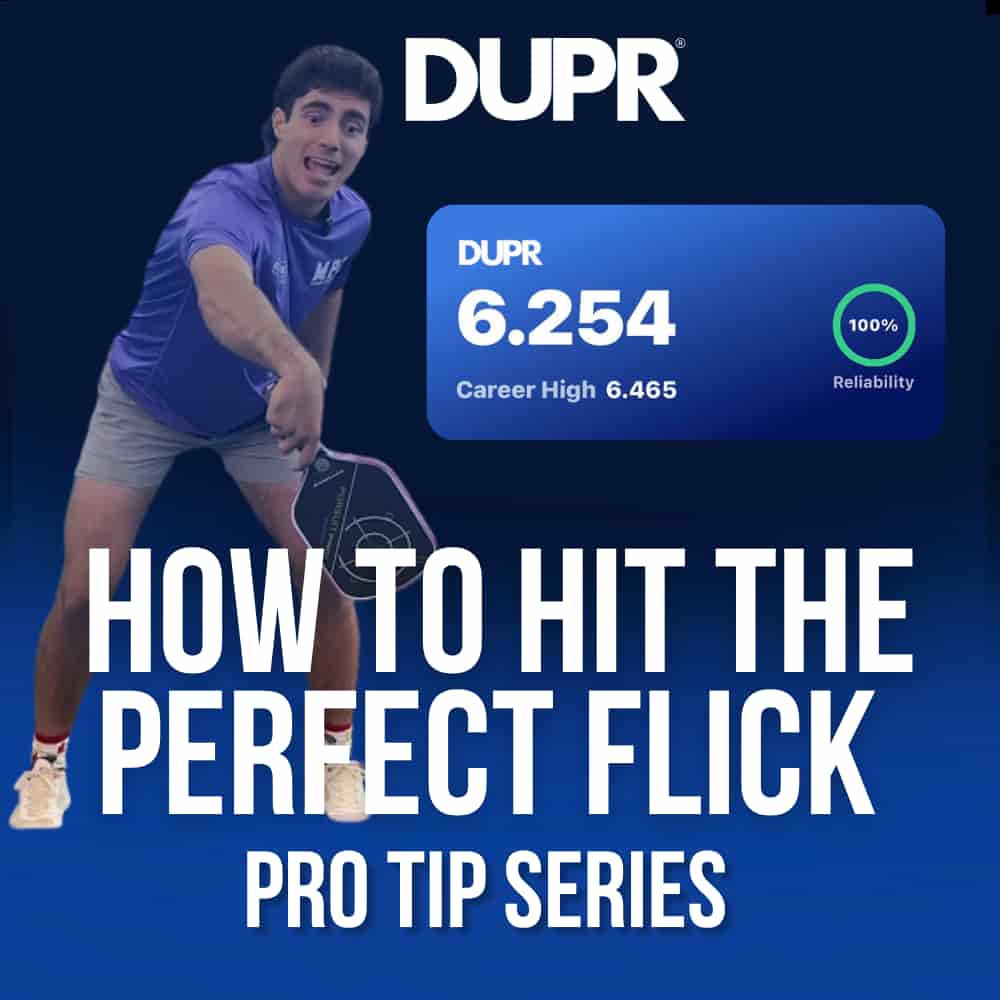
Master the Forehand Roll Dink with Zachary Marceau
.jpg)
Master the Forehand Roll Dink with Zachary Marceau
The forehand roll dink isn't just a fancy shot. It's how you take control of the net.
In this video, Richard Livornese Jr. brings out Zachary Marceau, a pro and one of the top collegiate pickleball players in the country, to break down the shot that everyone keeps asking about. If you've seen Zach in action, you already know why. Here's everything you need to know to add it to your game.
What is the forehand roll dink?
The forehand roll dink is a topspin dink that lets you create pressure and dictate play from the net, while also disguising your speedups and taking control of the whole rally at the net.
Roll vs. slice: when to use each
Zach uses both the roll and the slice, but they serve different purposes.
Use the roll when you have a neutral or dead ball. That's when you can get around the ball and start dictating play, going hard middle or hard outside to open up the court.
Use the slice when you're stretched out or the opposing player is sending rolling balls at you. The slice is your neutralizer. Aim it to the middle to take away your opponent's speed-up opportunities, then look for a ball you can get around and roll.
The goal with the roll: create holes and gaps in the opponent's defense. Hit it between the feet.
Hard roll vs. soft roll
There are two versions of the forehand roll, and you need both.
Hard roll: Use this when your opponent is stepping back instead of reaching into the kitchen. Get the ball to bounce at the kitchen line, or even 6 to 8 inches behind it.
Soft roll: This one lands shallower in the kitchen. You're aiming lower on the ball and spinning it shallow into the kitchen, so players reaching in can't get to it and are forced to take a step back and dink it back.
Know which one to pull out based on how your opponent is positioned. If they're reaching in, go soft. If they're backing off, go hard.
How to actually hit the shot
Here's where most people go wrong: too much wrist.
When you use a lot of wrist, the ball pops up high, and now your opponent is the one speeding up, not you.
What Zach does instead: lock the wrist in a soft, firm position and brush up with the arm. You're using topspin to bring the ball down into the kitchen, but the motion comes from the arm, not the wrist. Think of it like a 45-degree brushing motion, not too flat, not straight up.
The more consistent you keep that arm motion and the less you let the wrist take over, the more control you'll have.
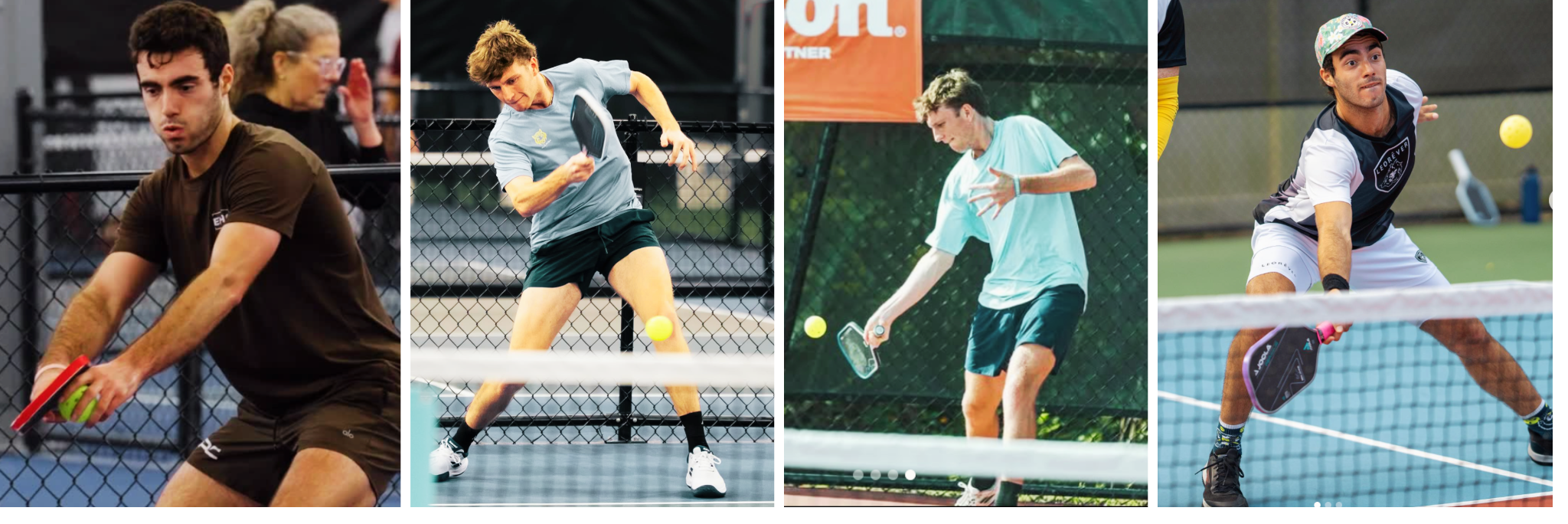
Footwork: the part most people skip
Footwork is what makes or breaks this shot. Zach's first rule: don't get cemented in place.
Stay in your ball zone, meaning you want to be able to move toward the ball and get around it, not just reach for it from the side.
The key concept here is cornering the ball: getting the ball in front of you, not off to the side. If a ball is one step to your right, don't just swing at it from where you're standing. Take that step, turn your body slightly, and hit it in a direct line to where you're aiming.
This matters especially for crosscourt shots. A lot of players try to flick the paddle crosscourt with their wrist while their feet are still pointing straight; that's a big misconception. Instead, rotate your body to face the direction you want to hit, and then it's just a normal shot. Brush up with the arm, aim lower on the ball, keep it tight, and get ready for the next ball.
Two keys to executing it right
Zach keeps it simple at the end:
Footwork. Get around the ball and make sure you're square to it, not off to the side
Keep your arm in a tight radius. The further you extend, the further the ball goes. Keep the motion compact, up not out. That's what keeps the ball bouncing in the kitchen instead of flying wide.
Why this shot changes your game
This shot is going to help you dictate play at the net, find your spots, and create opportunities on offense. And if you can create with your dinks, you're going to find major holes in your opponent's defense.
Add it to your game, get the footwork right, lock the wrist, and see how fast it changes the way you play at the net.
Ready to put it to the test in a rated match? Find a DUPR-rated event near you and see how it holds up.
Want to see it in action? Watch the full breakdown on Richard Pickleball's YouTube channel.
Follow us on Instagram for more tips, drills, and pickleball content.

.jpg)
%20(1).jpg)