
What Is the Kitchen in Pickleball? Everything You Need to Know!
%20(1).jpg)
If you have ever watched a pickleball match, you have probably heard someone shout "stay out of the kitchen!" and wondered what that means. The kitchen is one of the most important areas on a pickleball court, and understanding it is essential for every player, whether you are picking up a paddle for the first time or grinding your way toward a higher DUPR rating.
What Is the Kitchen in Pickleball?
The kitchen is the informal name for the Non-Volley Zone (NVZ), a seven-foot area on both sides of the net that extends the full width of the pickleball court. It includes the lines around it. According to official pickleball rules, you cannot volley the ball, meaning hit it out of the air, while standing in the kitchen or on the kitchen line. That one rule shapes virtually everything about how the game is played.
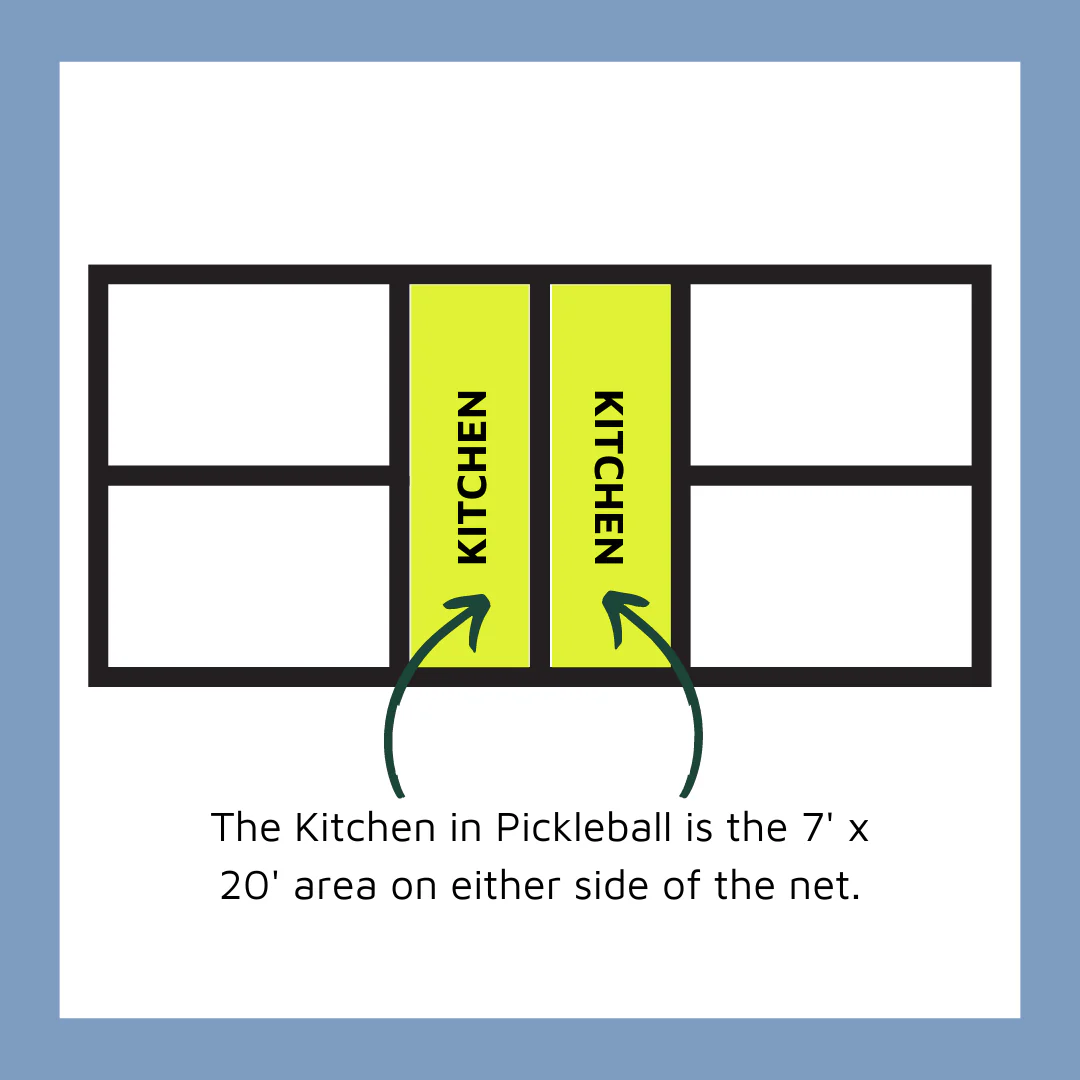
Kitchen Rules Every Pickleball Player Must Know
Knowing the kitchen rules inside and out is what separates recreational players from competitive ones at pickleball tournaments.
You cannot volley while standing in or on the kitchen line. Even if your feet are behind the line when you make contact, if your momentum carries you into the kitchen afterward, it is a fault. This is called a momentum fault, and it catches players off guard more often than you would think.
You can stand in the kitchen anytime you want, as long as you are not volleying. If the ball bounces in the kitchen first, you are free to step in and hit it. This is where the dink, one of pickleball's most strategic shots, comes into play.
You can also lean over the kitchen without stepping in. Because the non volley zone is a ground-level rule, reaching your paddle over the zone is legal as long as your feet stay behind the line.
Team momentum matters too. In doubles play, if your partner's movement causes either of you to enter the kitchen illegally during a volley, your team loses the rally. For a full breakdown of all kitchen rules pickleball players need to know, DUPR has you covered.
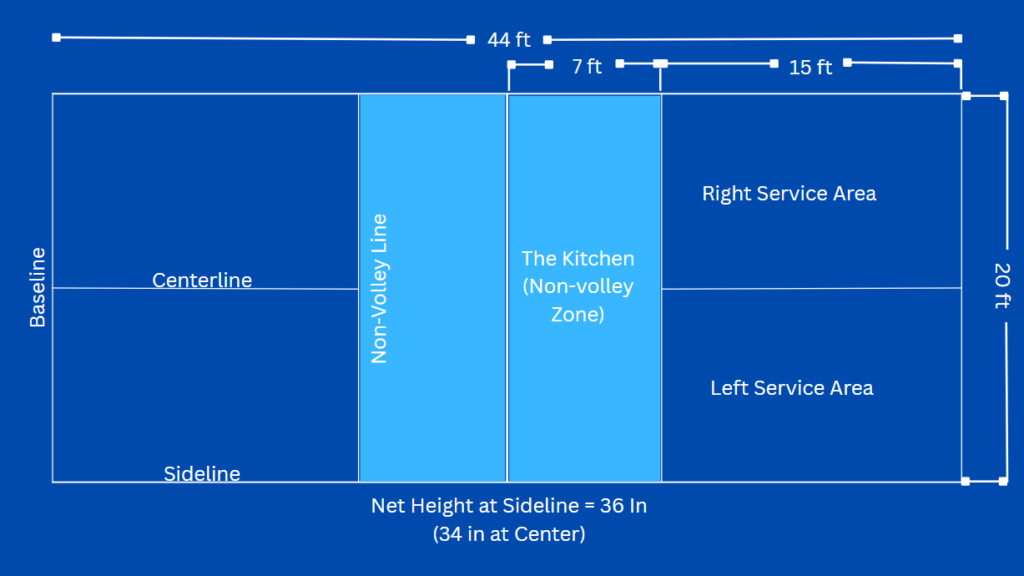
Why the Kitchen Changes Everything
The kitchen is not just a rule, it is the strategic heart of pickleball. Because neither player can volley from inside the non volley zone (NVZ), both sides are pushed to play at the kitchen line and engage in patient, precise dink exchanges. This is why pickleball rewards finesse and court IQ just as much as athleticism. A powerful drive means nothing if you cannot handle a well-placed dink rally at the net.
This dynamic is also why pickleball is uniquely cross-generational. The kitchen neutralizes raw power and rewards smart shot selection, meaning a seasoned 60-year-old and a 25-year-old with a big swing can compete on completely equal terms.
How Kitchen Play Affects Your DUPR Rating
Your DUPR rating reflects your true skill level across every match you play, and kitchen mastery is one of the clearest markers of skill. Players who consistently win dink battles, avoid kitchen faults, and control the non volley zone tend to outperform expectations in pickleball tournaments and climb the ratings faster. If you want to understand how your performance translates into rating movement, DUPR's Impact feature lets you see exactly how match scorelines affect your rating before you even play.
The Bottom Line
The kitchen is where pickleball is won and lost. Master the rules, respect the line, and learn to love the dink. Whether you are just starting out or preparing for your next tournament, brushing up on pickleball rules is always time well spent. And when you are ready to track your progress and compete with players at your level, DUPR is here to help every step of the way.

OTHER TOP STORIES
Check out our other stories that may interest you
%20-%20Announcement%20(1)%20(1).jpg)
%20(1).jpg)
%20(1).jpg)


