
How to Improve Your Pickleball Serve: Pro Tips From the Walker Sisters
.jpg)
A solid pickleball serve has benefits beyond simply starting a point. It can help:
- Position your opponent near the baseline
- Target weaknesses in your opponent’s return
- Put pressure on your opponent before the rally begins
Professional pickleball players Angie and Alex Walker of Walker Sisters Pickleball share their expertise and tips for improving your pickleball serve.
The Walker Sisters use a framework called the DHL method to help players develop a more consistent and strategic serve. Their approach includes:
- Developing proper body positioning and a consistent contact point
- Using your legs and body to help propel the ball toward the back of the service box
- Creating enough net clearance to generate additional depth
- Developing a low-to-high swing path
- Making contact with the ball out in front of your body
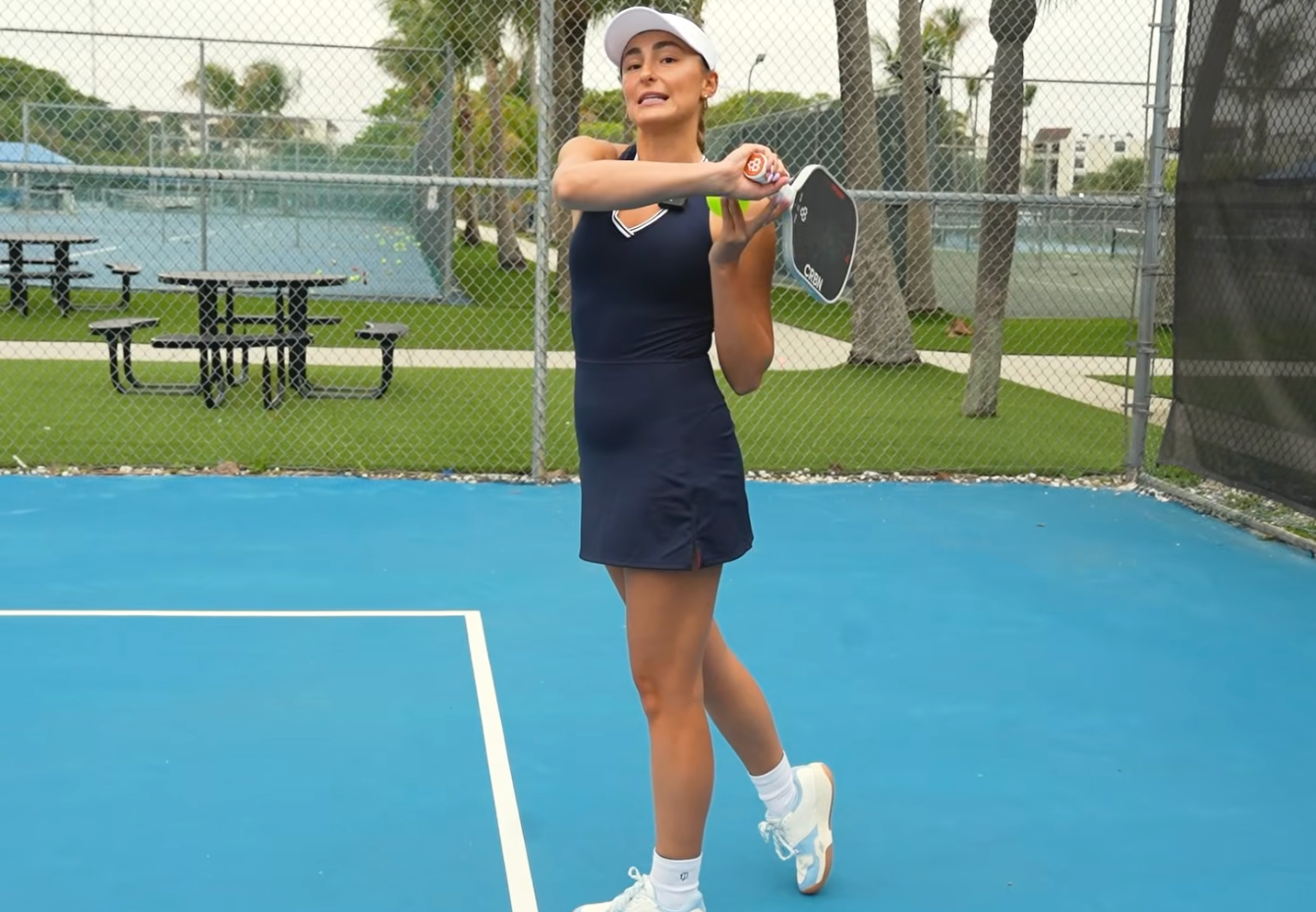
Using the Proper Pickleball Serve Technique
Players typically use either a volley serve or a drop serve in pickleball.
Volley serve: The player strikes the ball directly out of the air.
Drop serve: The player allows the ball to bounce before striking it.
For competitive players, developing a strong volley serve can be especially valuable.
Angie and Alex focus on developing a strong volley serve because it can generate both power and control. The goal is to create a fluid, repeatable motion that allows you to strike the ball comfortably and consistently.
According to Angie, one of the most important parts of the serve is using a low-to-high swing rather than trying to hit straight through the center of the ball. Think of the movement as similar to a forehand drive: start low and swing upward to generate power and control.
Use More Than Just Your Arm When Hitting a Pickleball Serve
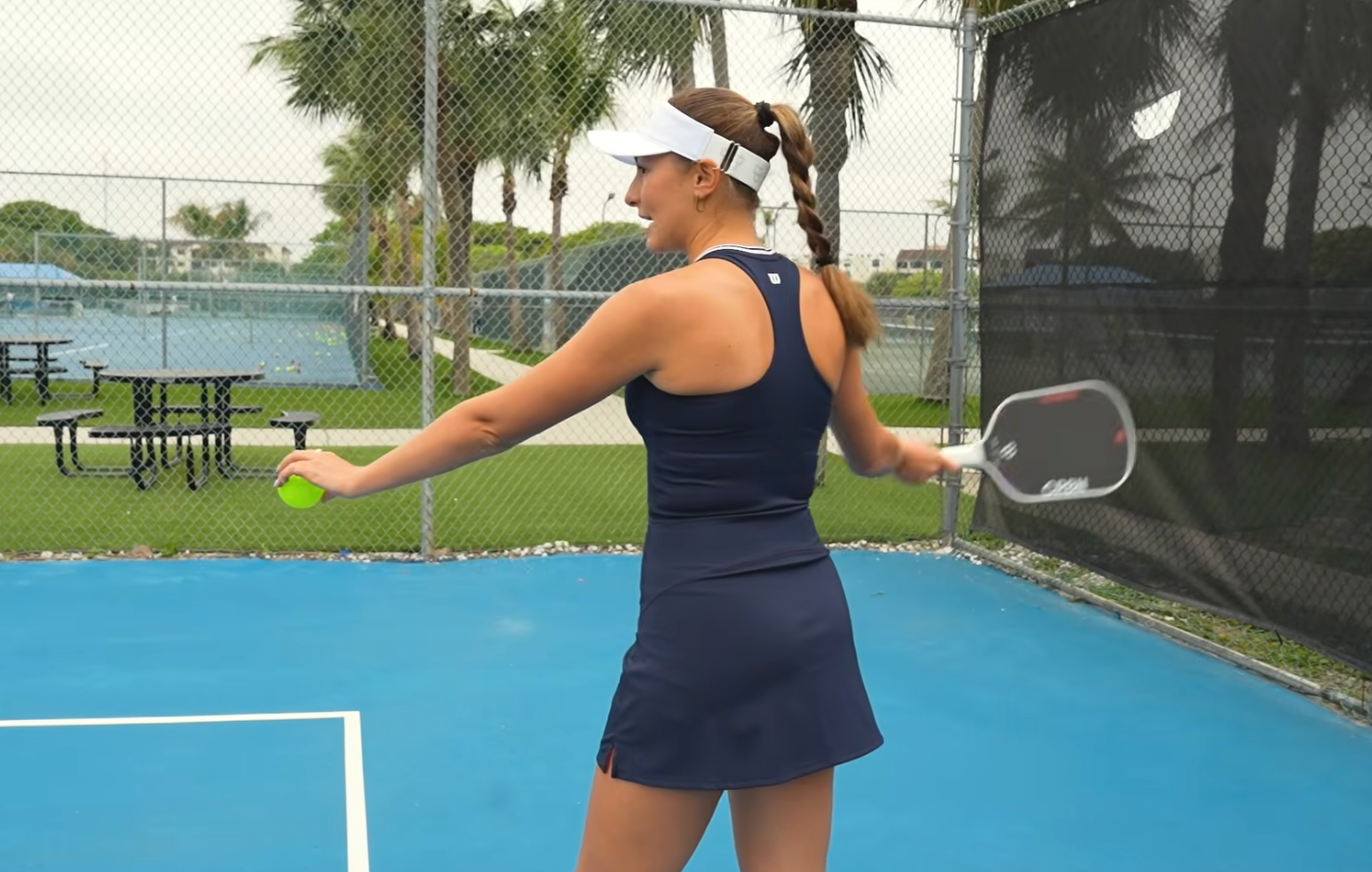
One simple way to improve your serve is to involve more of your body in the motion.
Instead of standing completely square to the court, try turning slightly sideways. For example, if you are right-handed, place your left foot forward and keep your right foot slightly behind you. If you are left-handed, reverse the position of your feet.
This stance gives your paddle more room to move through the ball while allowing you to use your legs and hips to generate additional power.
Your non-paddle hand can also help guide your contact point. Rather than keeping the ball too close to your body, hold your guide hand slightly in front of you so you can make contact comfortably at approximately hip height and out in front.
Make Contact Out in Front
Where you make contact with the ball can have a major impact on the quality of your serve.
According to Angie, it is best to make contact with the ball out in front of your body. This gives your paddle enough room to accelerate through the ball while making it easier to direct your serve toward your intended target.
After striking the ball, continue through your swing. Avoid stopping the paddle immediately after contact. A complete follow-through allows your momentum to carry through the shot and can help generate additional depth.
Hitting a Deep Pickleball Serve
Another major recommendation from the Walker Sisters is to get the ball deep.
A deep serve puts pressure on your opponent by forcing them to return the ball from farther behind the baseline. This can reduce their ability to step forward and attack the return.
However, depth does not necessarily come from swinging as hard as possible.
Instead, Angie and Alex recommend using your legs, body, and trajectory to help drive the ball deep into the service box. Creating some additional clearance over the net can also help generate greater depth.
Remember DHL: Depth, Height, Location
When working on your serve, remember three letters: DHL.
And no, we are not talking about the delivery company.
DHL stands for:
Depth
Whenever possible, try to send your serve toward the back of your opponent’s service box.
The deeper your serve lands, the farther behind the baseline your opponent may need to remain when returning the ball. This can give you more time to prepare for the next shot.
Height
Give the ball enough clearance over the net to create depth.
Trying to skim every serve just over the top of the net leaves less room for error and can limit your ability to consistently send the ball deep into the court.
Location
Once you have developed consistency with your serve, begin thinking about where you want to place the ball.
The Walker Sisters recommend letting your opponent’s tendencies influence your target.
If your opponent struggles with their backhand, consider serving toward that side. If they strongly prefer one side over the other, avoid consistently serving into their strength.
You can also experiment with serving directly toward your opponent’s body.
As Alex explains, body serves can be more effective than many players realize because they force the opponent to react quickly and create enough space to hit a comfortable return.
Don’t Always Serve to the Same Spot
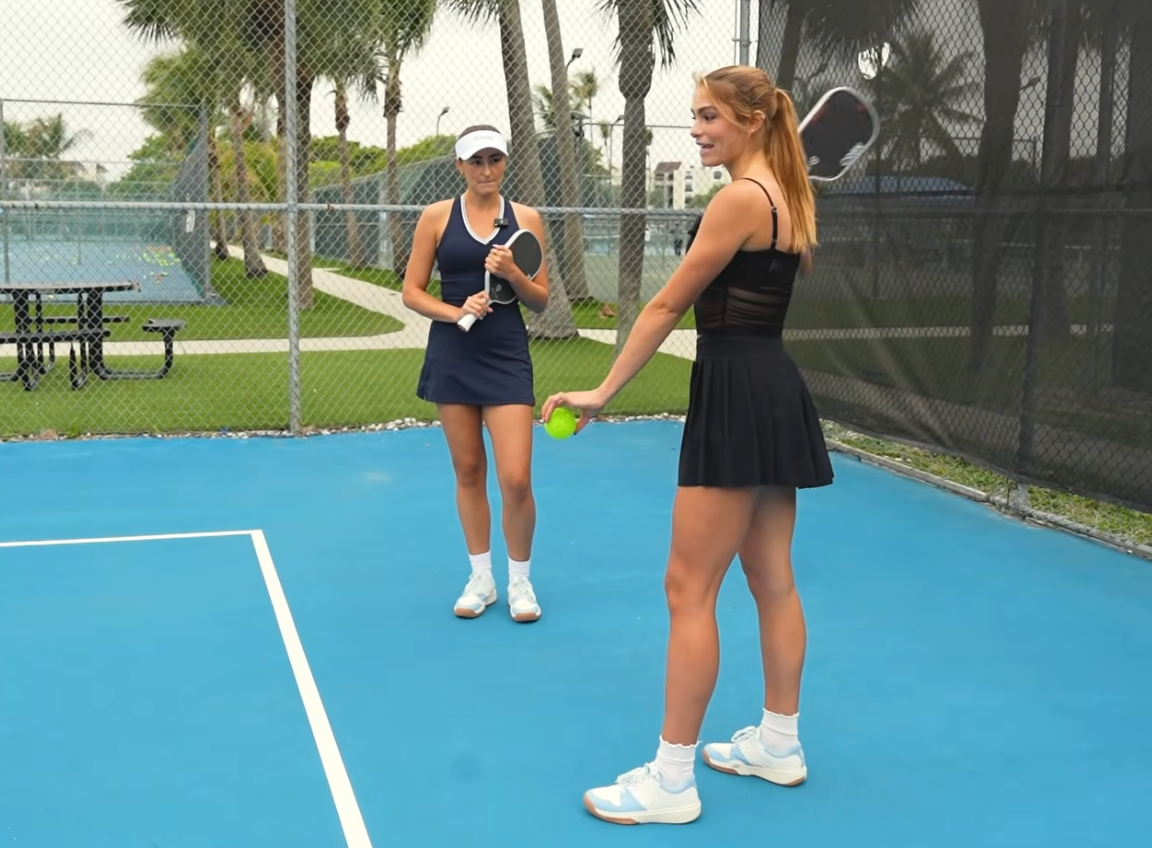
Placement is an important part of turning your serve into a strategic weapon rather than simply a way to start the point.
Depending on your position on the court and your opponent’s tendencies, you can experiment with:
- Serving wide
- Serving directly toward your opponent’s body
- Changing placement throughout a match
- Targeting the backhand or middle of the court
- Serving deep or shallow
- Changing the pace of your serve
Your goal is not always to hit an outright winner. Instead, an effective serve can put your opponent under pressure before the rally even begins.
Practice the Serve You Will Use in Matches
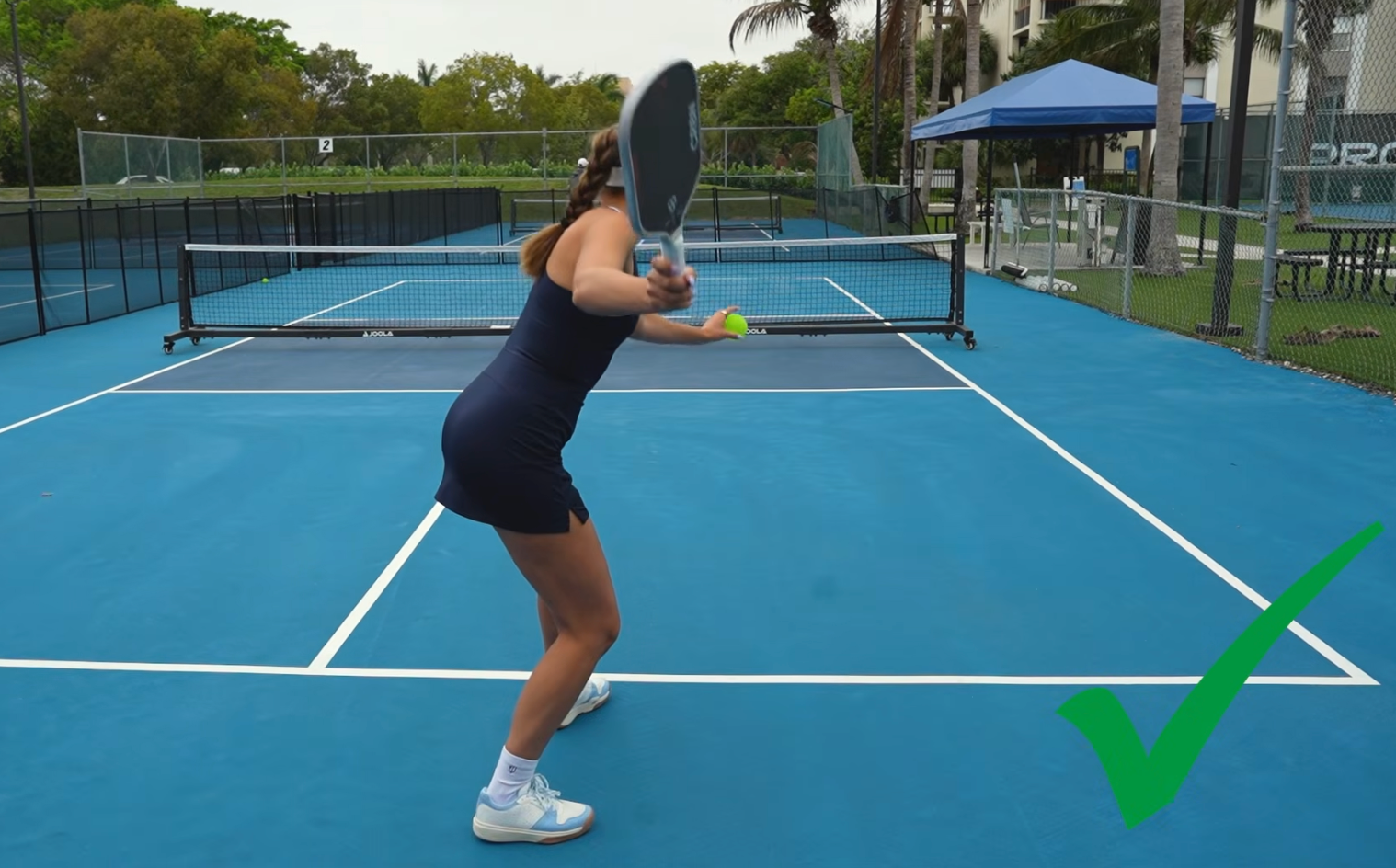
Developing a powerful serve is only useful if you can execute it consistently under pressure.
When practicing your serve, start by developing a repeatable motion.
First, make sure you can consistently recreate your stance and contact point. Then work on increasing your depth and adjusting your trajectory. Finally, begin experimenting with different placements.
The Walker Sisters’ DHL framework gives you three simple questions to ask:
- Are you hitting the ball deep?
- Are you giving yourself enough net clearance?
- Are you intentionally choosing where to place your serve?
As your serve continues to improve, testing it in live match situations can help you determine which strategies work best against different opponents.
Using the DUPR Rating system can also help you track your competitive performance over time and monitor how your game develops.
Putting the DHL Framework to Work on Your Pickleball Serve
The next time you approach the baseline, don’t focus only on getting your serve into the box.
Think DHL: Depth, Height, Location.
Use your entire body to generate power, make contact with the ball out in front of you, and use a low-to-high swing with a complete follow-through.
Then begin thinking strategically about where you want to place the ball.
Want to see these techniques in action? Visit Walker Sisters Pickleball for more instructional content from Angie and Alex Walker.
You can also check out DUPR’s guide to Depth, Height, and Location for a Better Pickleball Serve for more serving tips.
Finally, use DUPR to track your matches, monitor your rating, and follow your progress as your game improves.

.jpg)
.jpg)
.jpg)


