
Speed Up Like Ava: How to Attack Without Losing Control
).png)
A good pickleball speed up is not just about hitting the ball harder. It is about changing the pace, choosing the right target, and preparing for what happens next.
According to pro pickleball player Ava Ignatowich, one of the biggest mistakes players make is expecting the speed up itself to win the point.
It usually will not.
The speed up starts the hands battle. Your next shot is often the one that finishes it.
What is a pickleball speed up?
A speed up happens during a dink rally when a player changes the pace by attacking the ball. Instead of hitting another soft dink into the kitchen, the player sends a faster, flatter shot toward the opponent’s body.
Do not speed up simply because you are tired of dinking. The shot should have a purpose. You may be trying to force a predictable counter, create a pop-up, or set up a stronger next attack.
The goal is not always to win with the first speed up. It is to put yourself in a better position to finish the rally.
Learn Ava’s triangle concept

Before choosing your target, think about where the counter is most likely to go. Ava calls this the triangle concept.
When you speed the ball up straight ahead, the response will often come back in the same direction. When you attack across your opponent’s body, the counter is more likely to return on a diagonal.
The exact response depends on the opponent, but the triangle gives you a starting point. Instead of reacting once the ball is already coming at you, you can prepare for the most likely counter.
Your hands do not always need to move faster. They need to be waiting in the right place.
When to speed up off the bounce
An off-the-bounce speed up can work, but you need to choose the right ball.
Look for a dead dink that bounces relatively high. This gives you enough height to hit forward through the ball instead of lifting it.
Ava recommends avoiding balls that bounce below your knee. When the ball is that low, you have to hit upward, increasing the chance of putting it into the net or giving your opponent an easy counter.
Keep your preparation looking like a normal dink and add a small wrist flick around the point of contact.
No large backswing. No obvious change in motion.
The disguise is what makes the shot difficult to read. You can also use pickleball drills designed to improve consistency and shot control to practice the movement.
Think about placement before power
The goal is not maximum power.
Trying to hit too hard can make the shot easier to anticipate, send the ball long, or leave you unprepared for the counter.
A controlled attack that catches your opponent off guard can create a better next ball than a harder shot they see coming. This is also important when learning how to beat a banger in pickleball.
Your opponent’s paddle position can help you choose where to attack. When someone heavily favors their backhand, Ava targets the hip on their forehand side. When someone favors their forehand, she aims toward the opposite hip to force a more uncomfortable backhand.
Watch how they hold their paddle and adjust accordingly.
How to speed up out of the air
Before working on speed ups out of the air, become comfortable taking regular dinks out of the air.
Look for a ball in front of your body at around waist level or higher. If the ball is too low, guide it back into the kitchen as a soft dink instead.
Reach forward, stay low, and use a compact low-to-high wrist motion. For both forehand and backhand speed ups, prepare as though you are hitting a normal dink before adding the flick at the last moment.
Keep the motion compact. A large backswing makes the attack easier to read.
Speed up with a plan
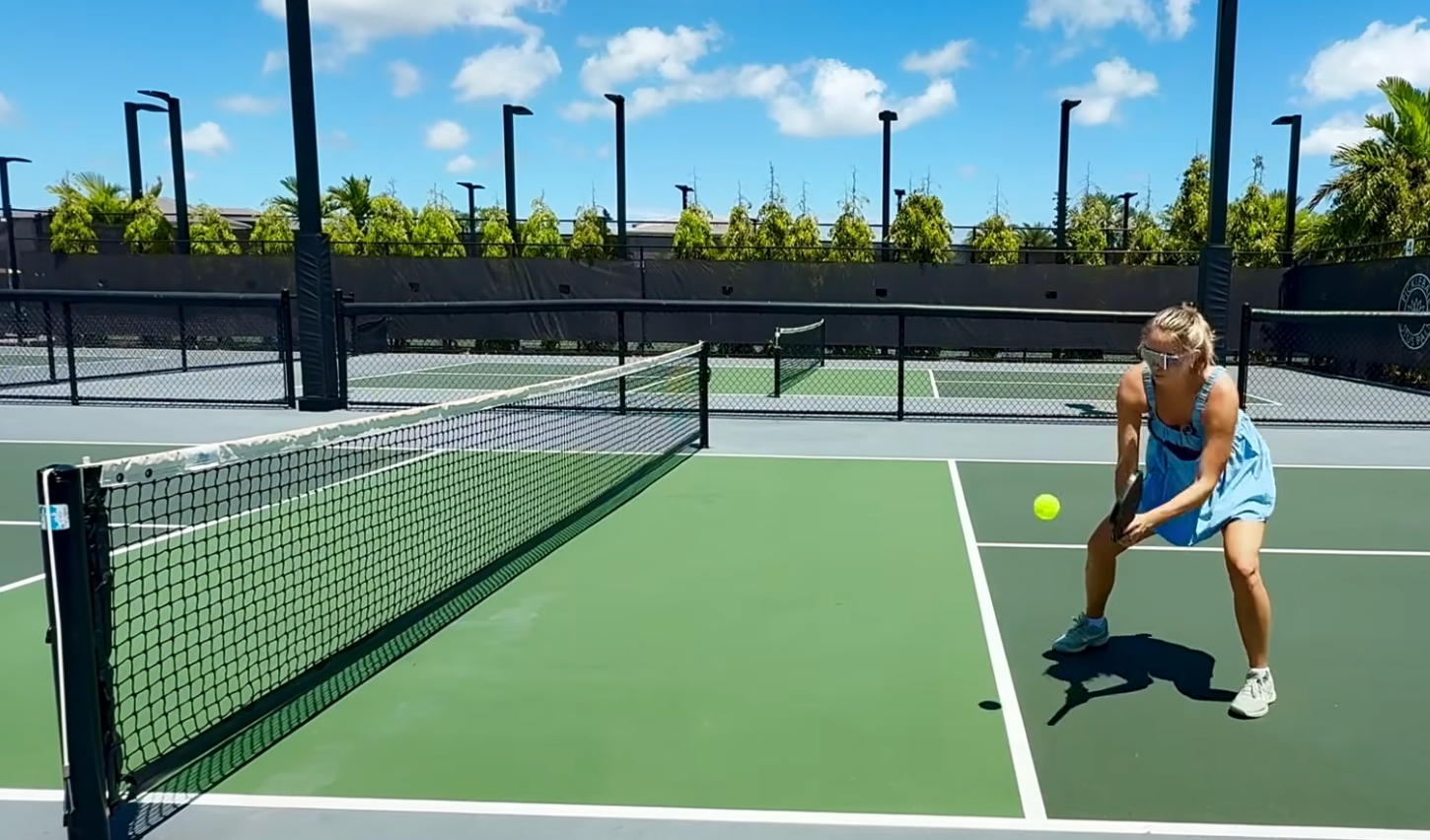
Sometimes the best attack begins one or two shots earlier. Ava may move an opponent with a dink toward one foot before attacking the open side of the body.
Think one shot ahead.
Where do you want to attack? Where is the counter likely to go? Which side should you prepare to cover?
Wait for a ball you can attack. Disguise the shot. Choose your target based on your opponent’s paddle position, and prepare for the counter before you make contact.
The first attack starts the exchange. Your preparation for the next ball gives you the opportunity to finish it.
Ready to test Ava’s speed-up strategy in a match? Find a DUPR-rated event near you and see how your attacks hold up when the pace changes. You can also learn how to establish and improve your DUPR rating.
Want to learn more from Ava? Watch her full speed-up video on YouTube for more examples, strategy, and on-court demonstrations.

)%20(1).jpg)
.jpg)
.jpg)


